



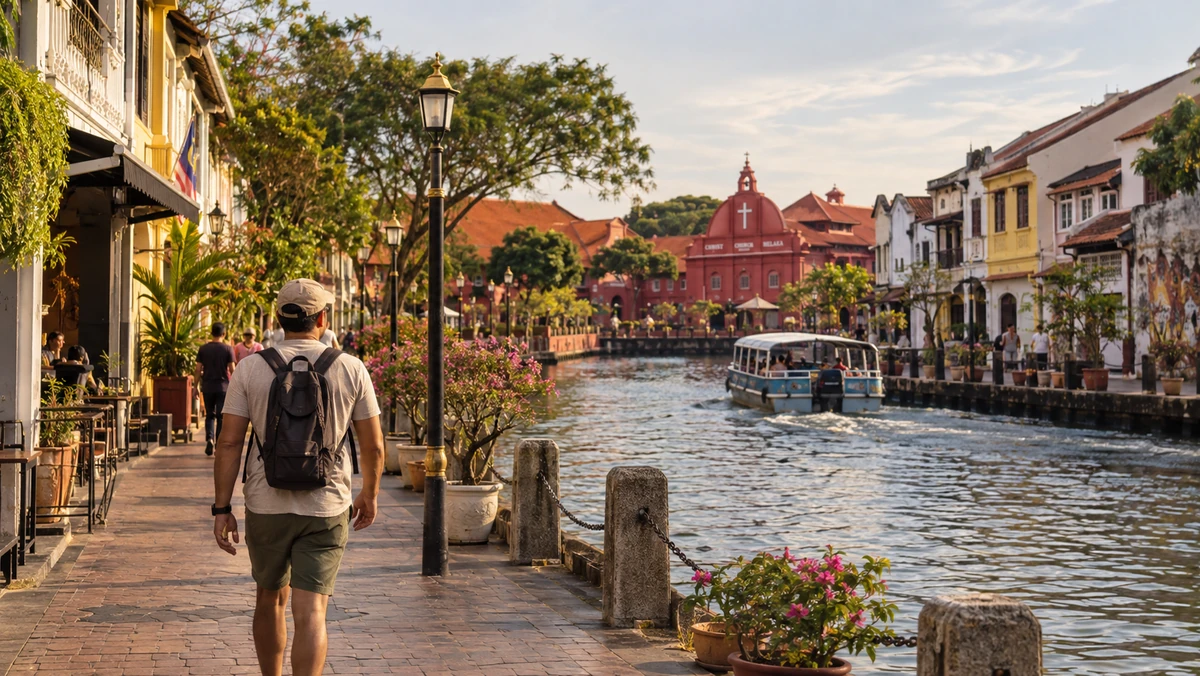
Malacca was easier to explore than I expected, but harder to rush. Most of the famous sights sit within a compact historic center, yet the heat, museums, food stops, and old side streets slowed me down in a good way.
I visited Malacca in July 2025, when the hot, humid weather shaped how I explored the city. I found mornings and evenings best for walking the historic center, while museums, cafés, and long lunches gave me a welcome break from the midday heat.
If you are deciding which things to do in Malacca are worth your time, one night and roughly a day and a half felt like the best balance. A day trip from Kuala Lumpur can cover the headline attractions, but staying overnight gives you Jonker Street after dark, the Melaka River in the evening, and enough time to see more than the red buildings around Dutch Square.
You will see two spellings while planning the trip. Melaka is the official Malaysian spelling, while Malacca remains widely used in English.
Melaka and George Town have been on the UNESCO World Heritage List since 2008. UNESCO recognizes them for more than 500 years of trading and cultural exchange involving Malay, Chinese, Indian, and European influences. That mix is the real reason Malacca is interesting. The Portuguese ruins and Dutch buildings are only part of the story. UNESCO World Heritage Centre – Melaka and George Town
Rather than treating the city’s attractions as 18 unrelated stops, I found it much easier to group them into a realistic two-day Malacca itinerary.
Before You Start: A Few Things I Learned
Central Malacca genuinely is walkable. Dutch Square, St. Paul’s Hill, A Famosa, Jonker Street, Harmony Street, the riverfront, and several museums are close enough to connect on foot.
My mistake was assuming short distances meant I could walk continuously through the middle of the day.
The humidity changed the pace more than the distance did. By early afternoon, shade and cold drinks had become more attractive than another historical building.
A better rhythm was simple:
Morning: exposed historic sights
Midday: museum, lunch, or café
Late afternoon: neighborhoods and riverfront
Evening: food, river cruise, and Jonker Street
The other important choice is weekday versus weekend.
Weekdays are calmer and easier for photography. Weekends bring bigger crowds but also the best-known Jonker Walk atmosphere. Tourism Melaka currently lists the Jonker Walk market for Friday, Saturday, and Sunday evenings, though schedules can change. Tourism Melaka – Jonker Walk
Day 1: Historic Malacca, Jonker Street and the River
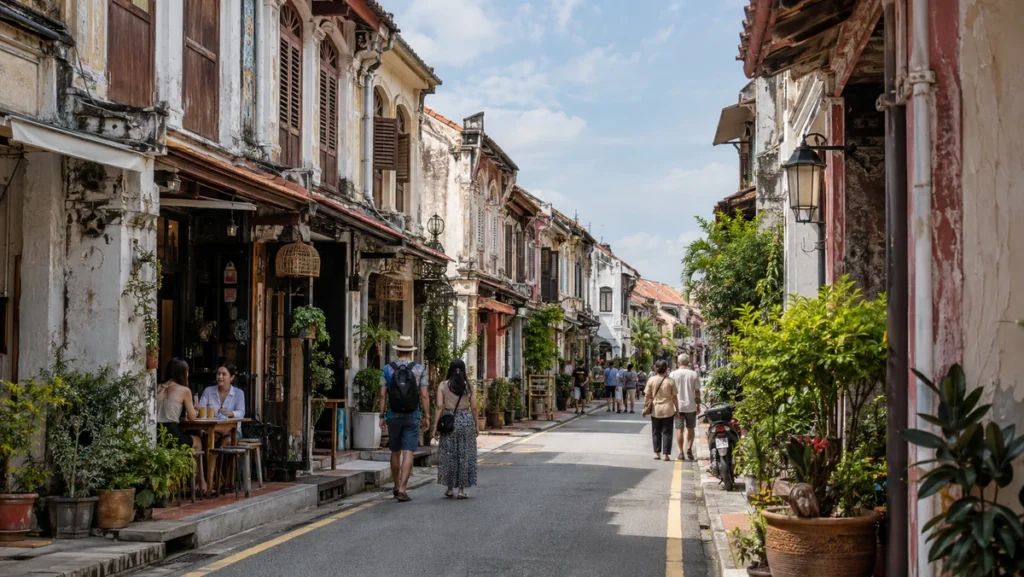
The first day covers the experiences I consider essential. Almost everything is concentrated around the UNESCO-listed historic center, so there is little reason to use a car.
1. Start at Dutch Square
I started at Dutch Square, also called Red Square, before the tour groups and heat built up.
The Stadthuys, Christ Church, Tan Beng Swee Clock Tower, and Queen Victoria Fountain sit tightly together, with the Jonker Street area just across the river.
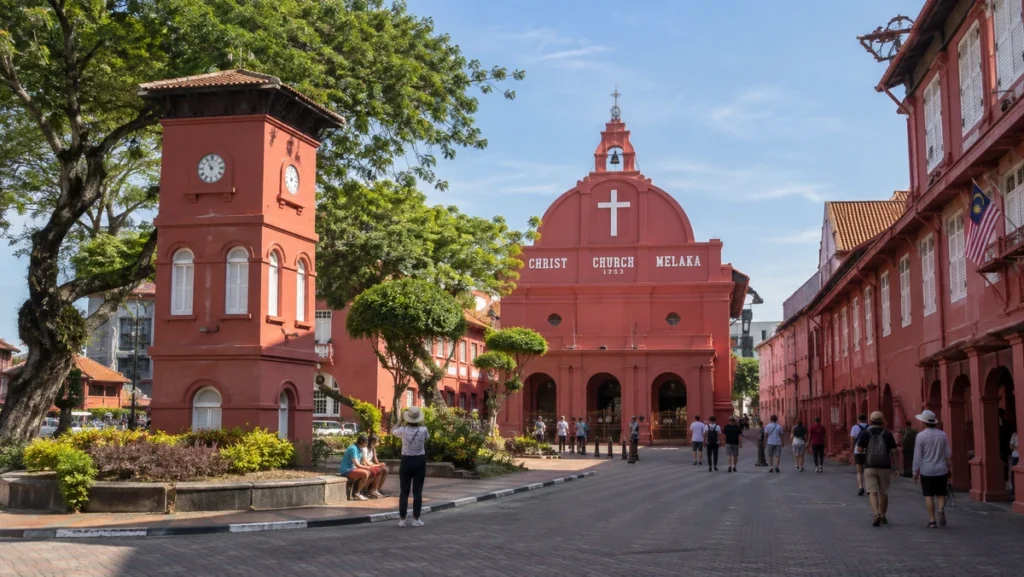
What surprised me was the size. Photographs had made Dutch Square seem like somewhere I might spend much of the morning. In reality, 20 to 30 minutes was enough to walk around, take photographs, and get oriented.
It is one of Malacca’s essential sights, but not one that needs a huge block of time.
2. Climb St. Paul’s Hill
From Dutch Square, I continued toward St. Paul’s Hill.
The roofless remains of St. Paul’s Church, old tombstones, weathered stone, and elevated position gave me a much stronger sense of Malacca’s age than the busy square below.

This was also where the Portuguese and Dutch periods began to make more sense as parts of the same historical sequence rather than dates I had read before arriving.
The climb is short, but doing it early was one of my better decisions.
Allow around 30 to 45 minutes.
3. Continue Down to A Famosa
From St. Paul’s Hill, A Famosa fits naturally into the same walking route.
What survives today is mainly Porta de Santiago, one gateway from the former Portuguese fortress.
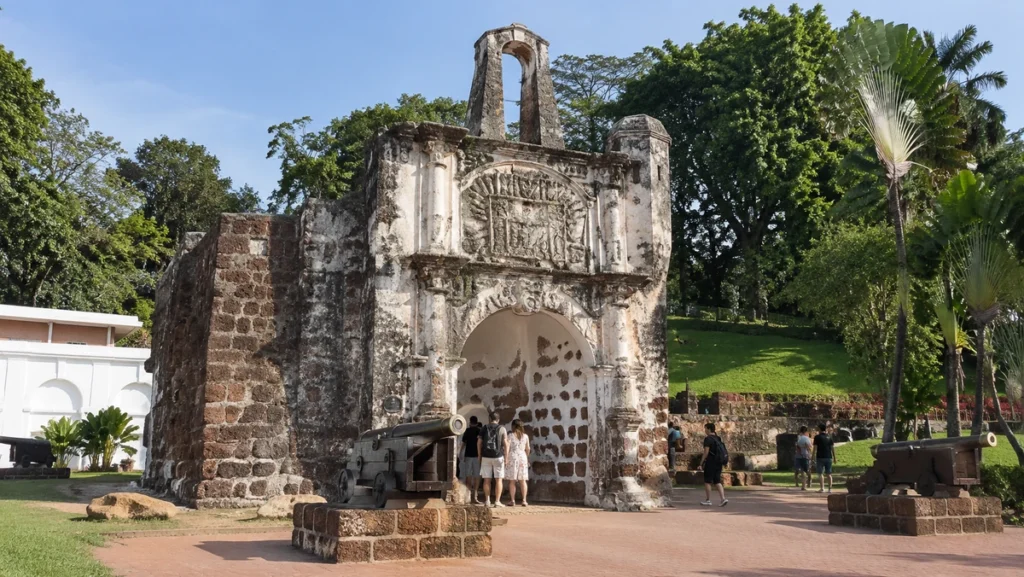
It was much smaller than I expected.
That did not make it disappointing. It simply showed why treating A Famosa as a standalone attraction can create unrealistic expectations.
Around 10 to 20 minutes was enough.
4. Add the Melaka Sultanate Palace Museum
The nearby Melaka Sultanate Palace Museum was useful because the historic center can otherwise become overly focused on European colonial rule.
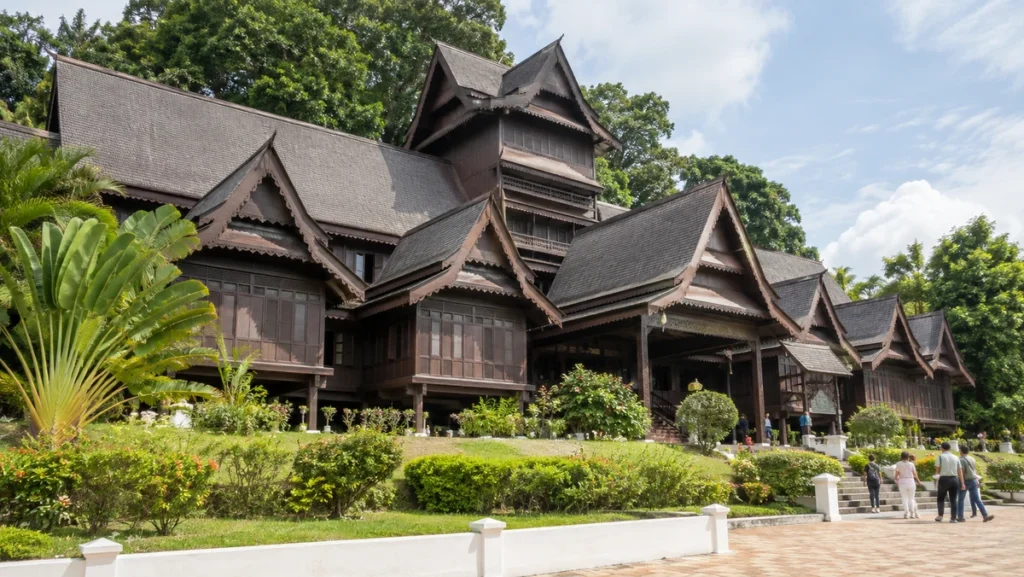
The reconstructed palace and exhibitions cover the Malacca Sultanate and help explain why the city was already an important trading center before the Portuguese arrived.
I found that context valuable before going deeper into Melaka’s colonial and multicultural history.
The museum is managed by PERZIM, the Melaka Museums Corporation, which publishes current visitor information for its museums. PERZIM – Melaka Museums Corporation
This was also a sensible point to move indoors as the morning became hotter.
5. Make Lunch a Peranakan Experience
By midday, I had no interest in squeezing in another outdoor landmark.
Instead, I made lunch part of the sightseeing.
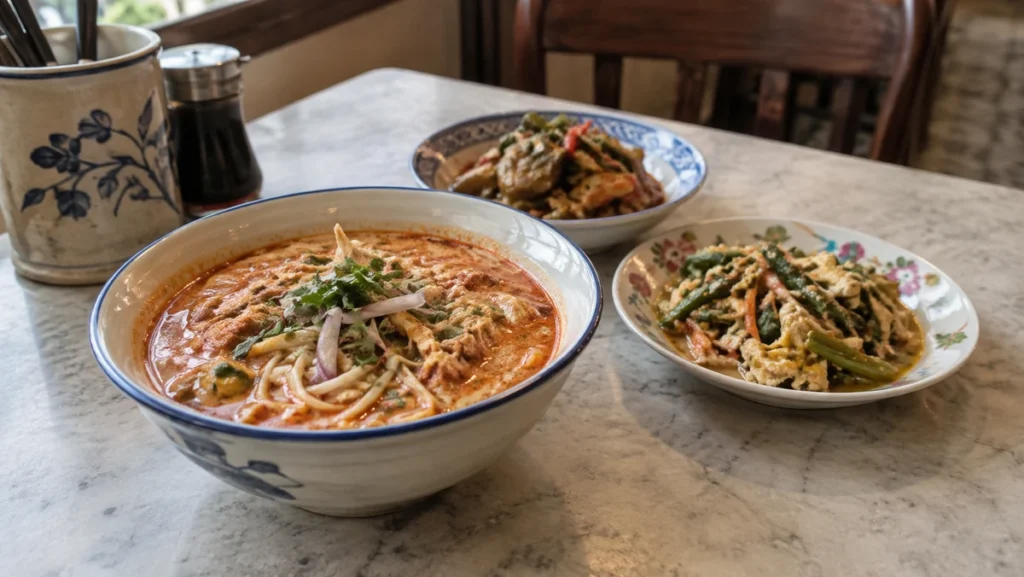
Nyonya cuisine comes from the same Peranakan cultural history visible in Malacca’s old houses and neighborhoods. I tried Nyonya laksa with several shared dishes and finished with cendol.
The meal did more to connect the city’s history with daily life than another quick museum stop would have.
It also taught me not to schedule an uphill walk immediately after a large lunch.
For me, spending money on one proper Peranakan meal was better value than trying to enter every paid attraction.
6. Visit the Baba & Nyonya Heritage Museum
After lunch, I headed to the Baba & Nyonya Heritage Museum.
This was one of the museums that genuinely changed how I understood Malacca.
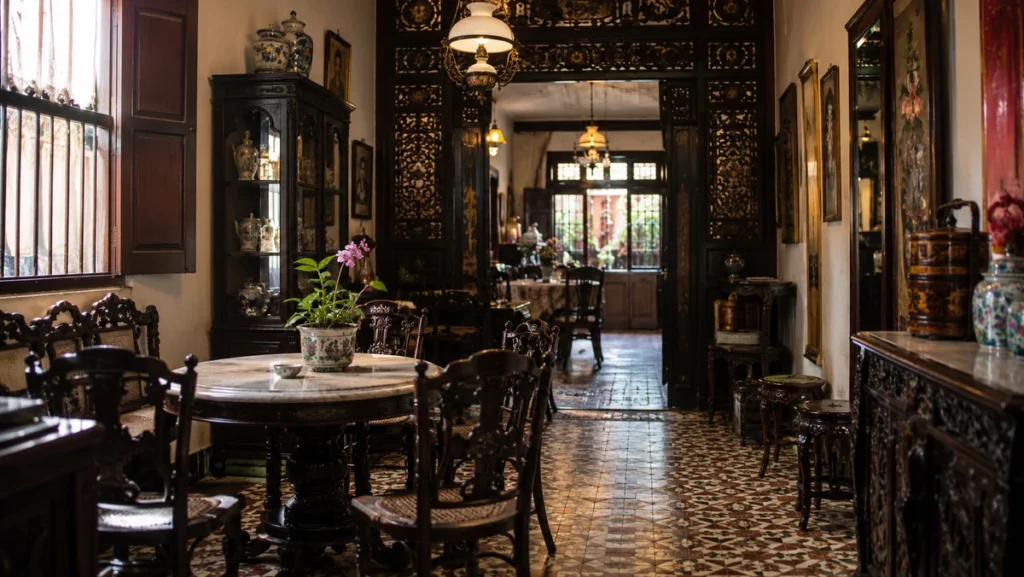
The historic townhouse gives context to Peranakan, Baba-Nyonya, and Straits Chinese culture through furniture, family rooms, decorative details, and the layout of the house itself.
Instead of another collection of dates, I was looking at how a family actually lived.
About an hour felt right.
Ticketing and visitor arrangements can change, so current details are best checked through the museum directly. Baba & Nyonya Heritage Museum
7. Explore Jonker Street Before the Night Market
I had expected Jonker Street to be mainly an evening attraction, but seeing it during the day first was worthwhile.
Without the night-market stalls and dense crowds, it was easier to notice old shophouses, antique stores, cafés, temples, and side streets.
This was where I stopped following the itinerary minute by minute.
A cold drink and twenty minutes of doing nothing helped far more than adding another attraction.
If you enjoy architecture or photography, daytime Jonker deserves its own look.
8. Walk Harmony Street
From Jonker, I continued toward Jalan Tukang Emas, commonly associated with Harmony Street.
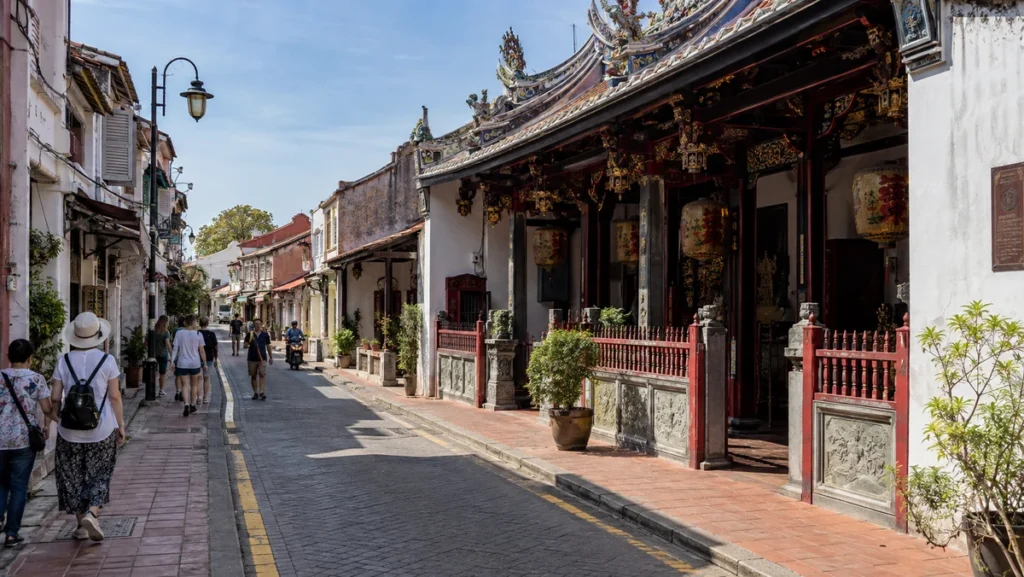
The area includes Cheng Hoon Teng Temple, Kampung Kling Mosque, and Sri Poyyatha Moorthi Temple, placing Chinese, Islamic, and Hindu religious traditions within a compact neighborhood.
I found it more meaningful to treat the area as one cultural walk instead of turning each building into a separate checklist item.
This part of Malacca gave the UNESCO description of a multicultural trading city much more meaning.
Allow around 45 minutes to an hour if religious architecture and cultural history interest you.
9. Look for Street Art Without Chasing It
Street art began appearing naturally as I moved toward the river.
I had saved several mural locations beforehand but soon stopped checking them.
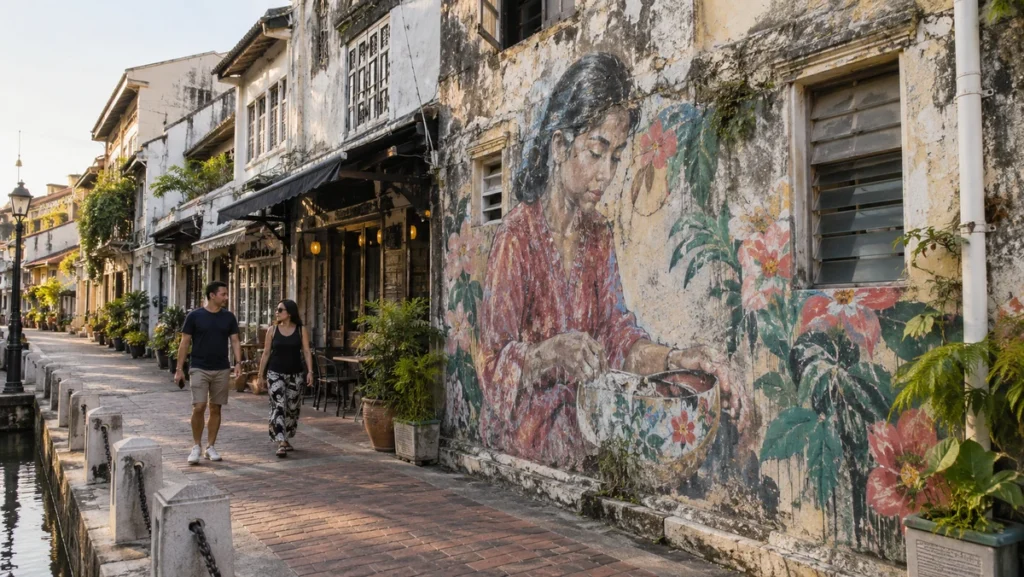
Some of the better scenes were not famous artworks at all. Painted walls, old façades, narrow lanes, cafés, and shophouses often worked better together than the individual murals I had planned to find.
Leaving extra time around the river was enough.
10. Walk Along the Melaka River
The Melaka River Walk became one of my favorite free things to do in Malacca.
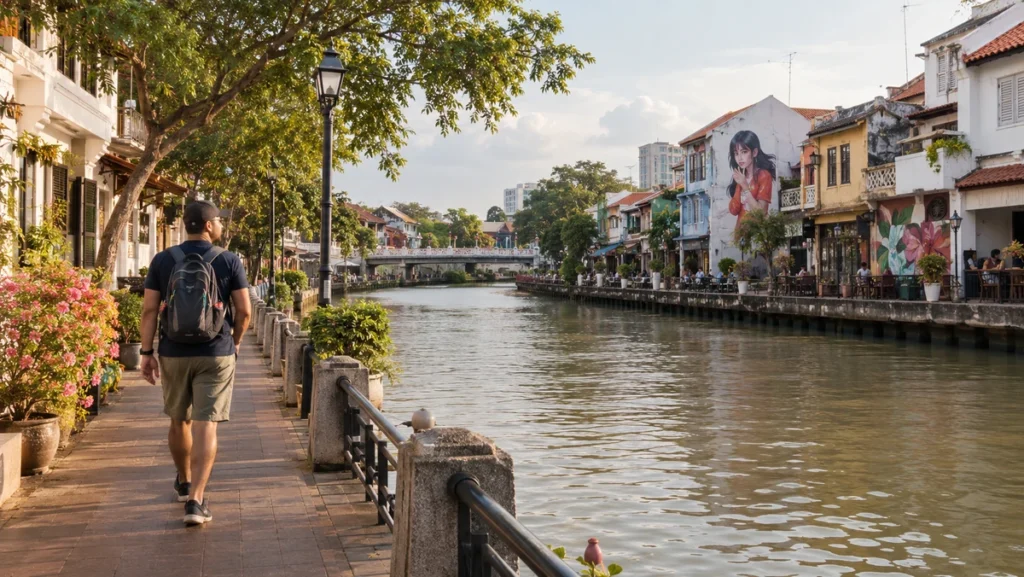
Some sections have murals, cafés, bridges, and restored buildings, while others feel quieter.
Timing made the difference. Walking beside the river late in the day was far more enjoyable than doing it at noon.
I also liked exploring it on foot before seeing the same area from a boat because walking allowed me to stop whenever something caught my attention.
11. Take the Melaka River Cruise After Dark
I initially suspected the Melaka River Cruise might be one of those attractions that survives mainly because every guide recommends it.
The evening trip changed my mind.
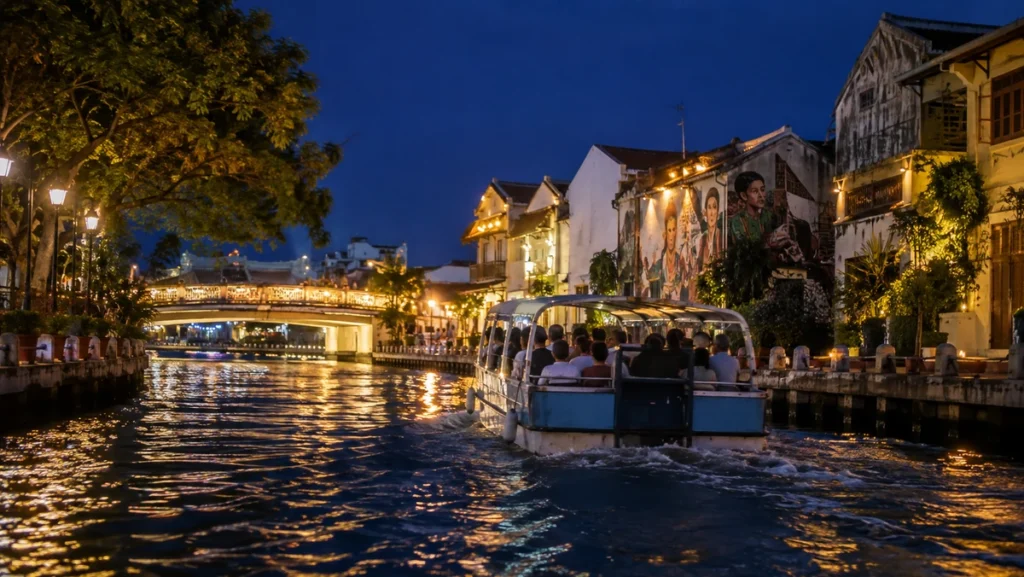
The official operator describes the standard journey as roughly 45 minutes, passing through several heritage and riverside areas. Official Melaka River Cruise
Once the bridges and buildings were illuminated, the river looked noticeably different from the version I had walked beside earlier.
Weather can affect operations, so checking the official site on the day makes sense.
If I were cutting costs, I would keep the free river walk. If I had room in the budget, I would add the cruise after dark.
12. Finish at the Jonker Street Night Market
On market nights, I would finish Day 1 back at Jonker Street.
By evening, the street had transformed into food stalls, souvenirs, lights, music, and thick pedestrian traffic.
It was fun but clearly tourist-oriented.
I enjoyed it much more once I stopped expecting a quiet local market. Instead of joining every long queue, I tried a few snacks and treated the atmosphere as the main experience.
Day 1 route:
Dutch Square → St. Paul’s Hill → A Famosa → Sultanate Palace Museum → Peranakan lunch → Baba & Nyonya Heritage Museum → Jonker Street → Harmony Street → street art → Melaka River Walk → River Cruise → Jonker Night Market
Day 2: Quieter Heritage, Local Neighborhoods and Sunset
The second day is less essential but more varied. It moves beyond the famous heritage core and shows sides of Malacca that are easy to miss on a Kuala Lumpur day trip.
13. Start at Kampung Morten and Villa Sentosa
Kampung Morten gave me a useful change from European colonial buildings and Chinese shophouses.
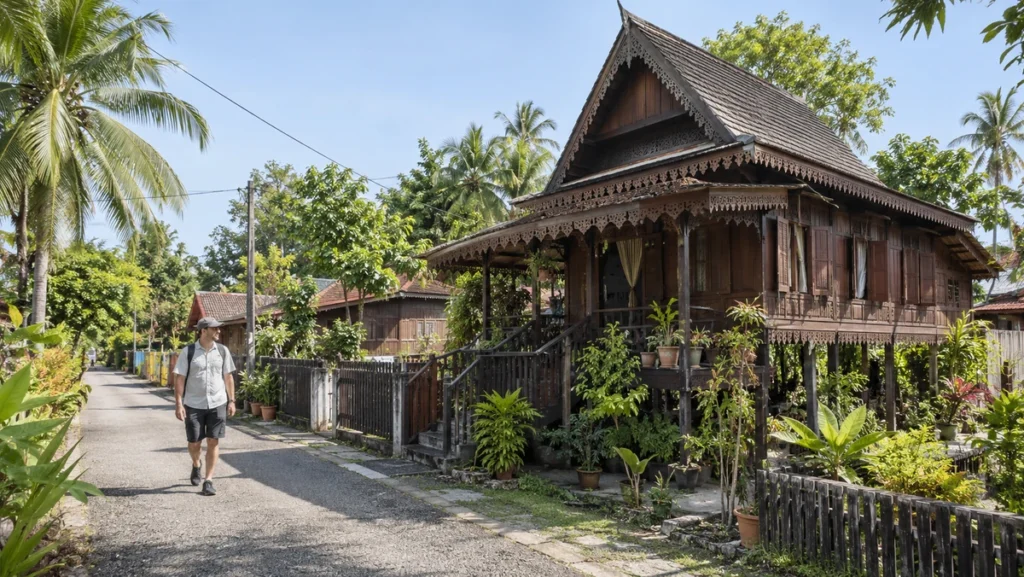
Traditional Malay houses line parts of the village beside the river, including Villa Sentosa, one of its best-known homes.
The neighborhood added something missing from the standard heritage circuit: Malay residential culture.
Nothing here demanded that I hurry, which was precisely why I liked starting the second day here.
14. Slow Down at Bukit Cina
From there, I continued to Bukit Cina.
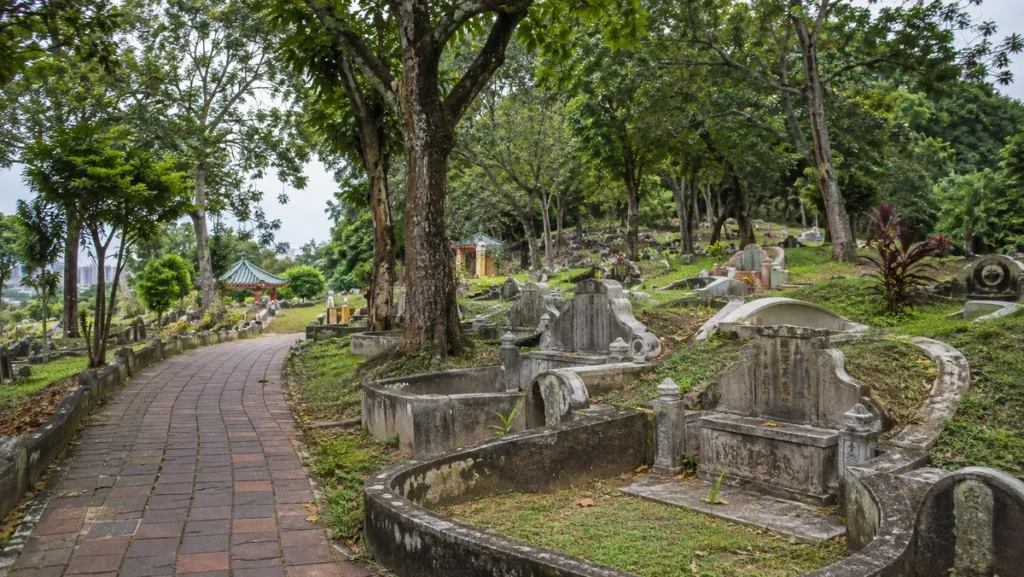
The historic Chinese cemetery and surrounding greenery felt surprisingly removed from the busiest tourist streets.
After the previous day’s crowds, the quieter atmosphere was welcome.
I would not prioritize Bukit Cina over Dutch Square, Jonker Street, or the Baba & Nyonya Heritage Museum on a day trip. With more time, though, it adds another layer to Malacca’s long Chinese history.
15. Visit the Maritime Museum If the Subject Interests You
The enormous Flor de la Mar replica makes Malacca’s Maritime Museum difficult to miss.
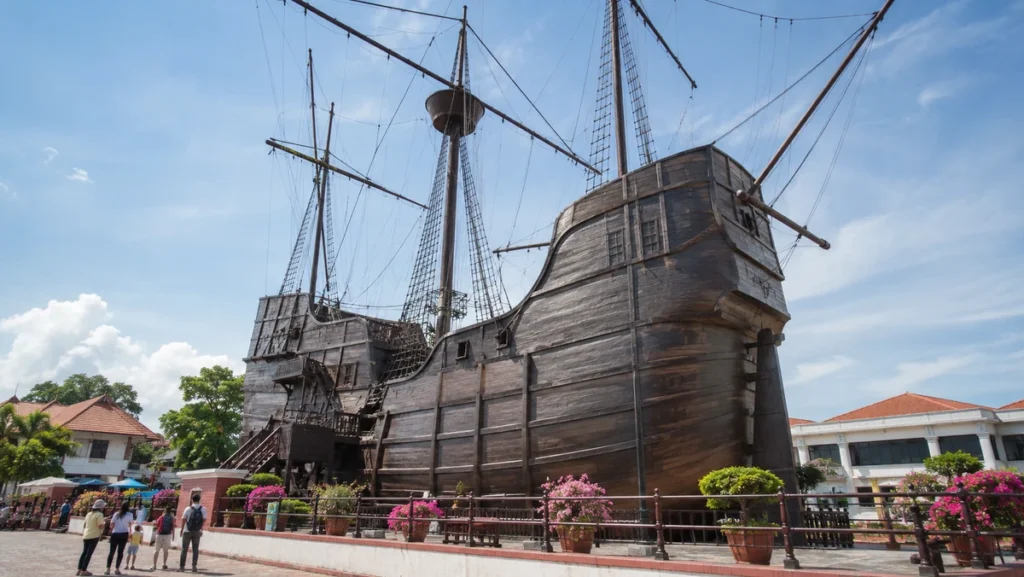
By the second day, I already understood more clearly why maritime trade and the Strait of Malacca mattered to the city’s rise, which made the museum more relevant.
Still, this was one of the easier attractions to skip.
If ships, colonial trade, or maritime history interest you, allow about an hour. If they do not, I would spend the time on food or neighborhoods instead.
Museum information is available through the same official PERZIM network linked earlier.
16. Try a Few Famous Malacca Foods
Rather than turn every meal into a restaurant mission, I used Day 2 to fill in a few foods I had missed.
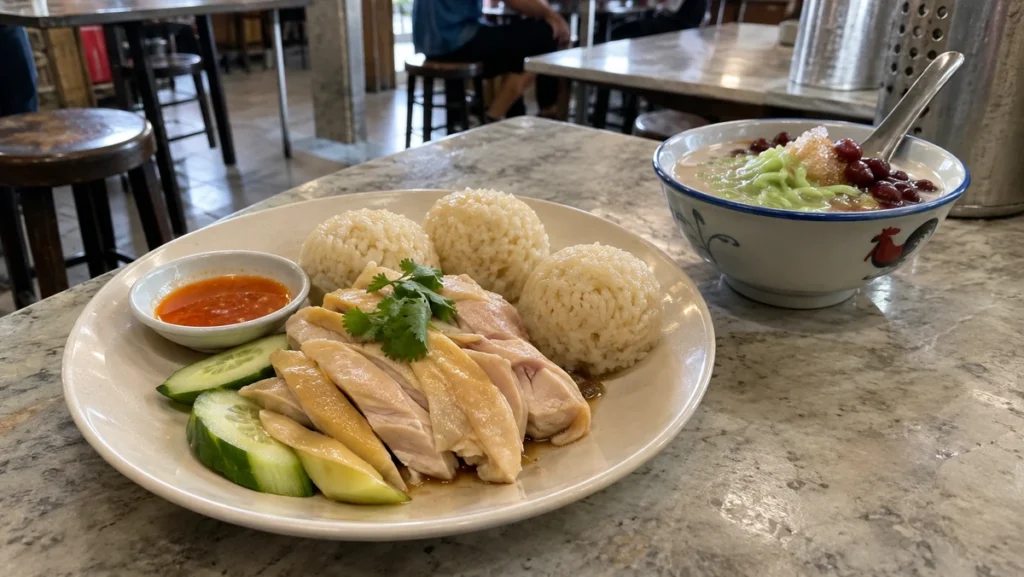
The names that kept appearing were chicken rice balls, Nyonya laksa, cendol, satay celup, asam pedas, and coconut shakes.
Trying all of them was unnecessary.
Chicken rice balls were worth experiencing once, although the presentation was more memorable to me than any dramatic difference in flavor. Cendol was simpler but much more satisfying after several hours outside.
My food experience improved once I stopped treating famous dishes like trophies.
17. Visit the Portuguese Settlement
Later in the day, I headed beyond the central walking circuit to the Portuguese Settlement.
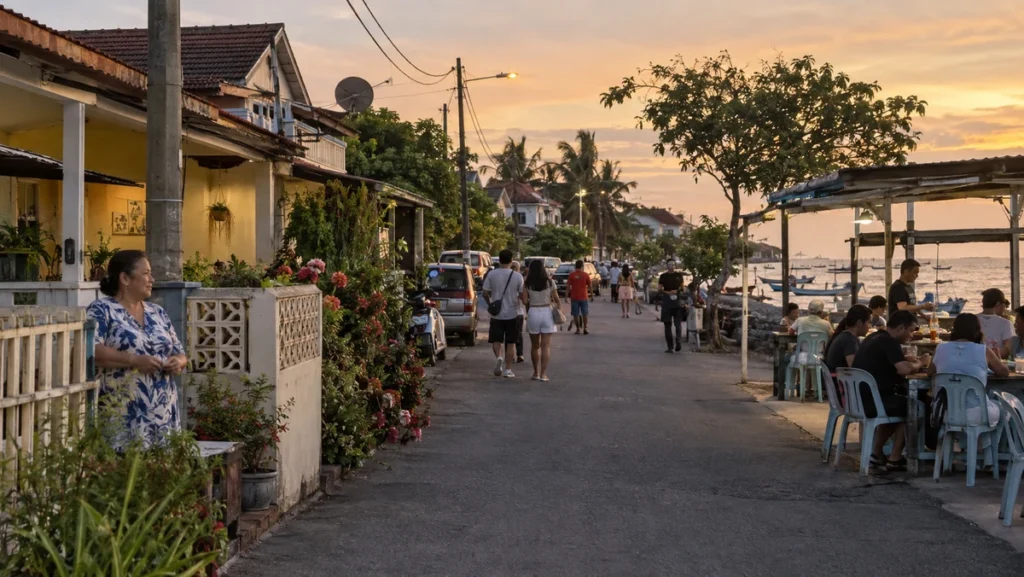
A Famosa explains part of Malacca’s Portuguese colonial history. The settlement adds the living-community side.
It is associated with the Kristang community, whose culture developed through centuries of interaction between Portuguese settlers and local communities.
Because this area requires separate transport, it does not belong in an already crowded central-Malacca day.
With two days, it makes much more sense.
18. Finish at the Melaka Straits Mosque
My final major stop was the Melaka Straits Mosque, often called the Floating Mosque.
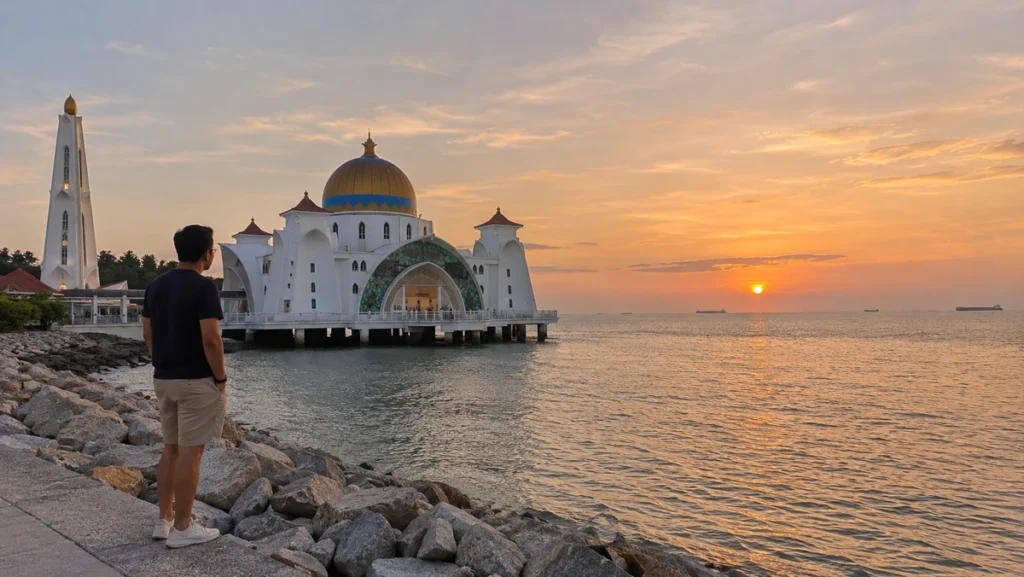
It sits away from the historic center, so going there involves a separate ride rather than another short walk.
Visiting around sunset made the detour worthwhile.
The mosque’s waterfront setting beside the Strait of Malacca felt completely different from Jonker Street and Dutch Square. It was one of the few moments on the trip when the dense city seemed to fall away.
It remains an active place of worship, so respectful clothing and behavior are important.
Tourism Malaysia also highlights the mosque’s waterfront location and sunset views. Tourism Malaysia – Melaka Straits Mosque
Day 2 route:
Kampung Morten → Villa Sentosa → Bukit Cina → Maritime Museum if interested → local food → Portuguese Settlement → Melaka Straits Mosque at sunset
If You Only Have One Day in Malacca
One day is enough to understand why Malacca is worth visiting, but I would resist trying to fit all 18 experiences into it.
Keep the route almost entirely within the historic center:
Dutch Square → St. Paul’s Hill → A Famosa → Sultanate Palace Museum → lunch → Baba & Nyonya Heritage Museum → Jonker Street → Harmony Street → Melaka River
If your visit falls on a Jonker Night Market evening, stay for the market and add the River Cruise after dark if your schedule allows.
I would leave Kampung Morten, Bukit Cina, the Maritime Museum, Portuguese Settlement, and Straits Mosque for a longer visit rather than losing hours moving between scattered attractions.
| Time Available | What Fits Best | Main Trade-Off |
|---|---|---|
| Day trip | Historic center + one museum + river | Little time after dark |
| 1 night | Core sights + river + evening Jonker | Best balance for most trips |
| 2 nights | Adds neighborhoods, mosque and slower meals | More relaxed and complete |
| 3 days | Museums, cafés and slower exploration | More than most short trips need |
Getting Around Malacca Without a Car
I found a car unnecessary for the area most visitors come to see.
Dutch Square, St. Paul’s Hill, A Famosa, Jonker Street, Harmony Street, the riverfront, and several museums can be linked naturally on foot.
For Kampung Morten, the Portuguese Settlement, and Melaka Straits Mosque, ride-hailing was much more practical.
Intercity buses normally arrive at Melaka Sentral, which is outside the historic center rather than beside Jonker Street. From there, you still need a final transfer into the Old Town.
That makes Malacca easy to fit into a wider Kuala Lumpur–Malacca–Singapore itinerary without renting a car.
What I Would Skip With Limited Time
Trying to visit every museum was the first thing I stopped doing.
After several history-heavy attractions, the information began to merge together. Another hour wandering the old neighborhoods often added more to the trip.
Taming Sari Tower can make sense if you specifically want an elevated city view, but it would not replace St. Paul’s Hill, Jonker Street, or the river on my short list.
I also would not build a Malacca trip around the beach. The city’s strongest experiences are its heritage, food, religious diversity, neighborhoods, and riverside atmosphere rather than a classic tropical beach day.
The brightly decorated trishaws around Dutch Square are entertaining to see, but I never needed one for basic sightseeing. The core area worked better on foot.
The Planning Mistake I Would Not Repeat
My poorest decision was scheduling too many outdoor sights around midday.
Everything looked close on the map, so I kept adding another stop. Eventually, finding shade and something cold to drink mattered more than the building in front of me.
Moving the squares, hill, and longer walks into the morning and late afternoon fixed the problem. Museums and lunch filled the hotter middle of the day, while Jonker Street and the river worked naturally in the evening.
That became the most useful lesson from my trip.
Malacca does not need a frantic itinerary. Some of its most famous landmarks take less time than expected, and the city became more memorable when I left space between them for an old townhouse, a temple courtyard, a Nyonya meal, or an unplanned walk beside the river.
For most Malaysia itineraries, one overnight stay is enough to experience the essential sights without turning Malacca into a checklist. Two nights are better if you want the quieter neighborhoods and cultural layers beyond Jonker Street.