



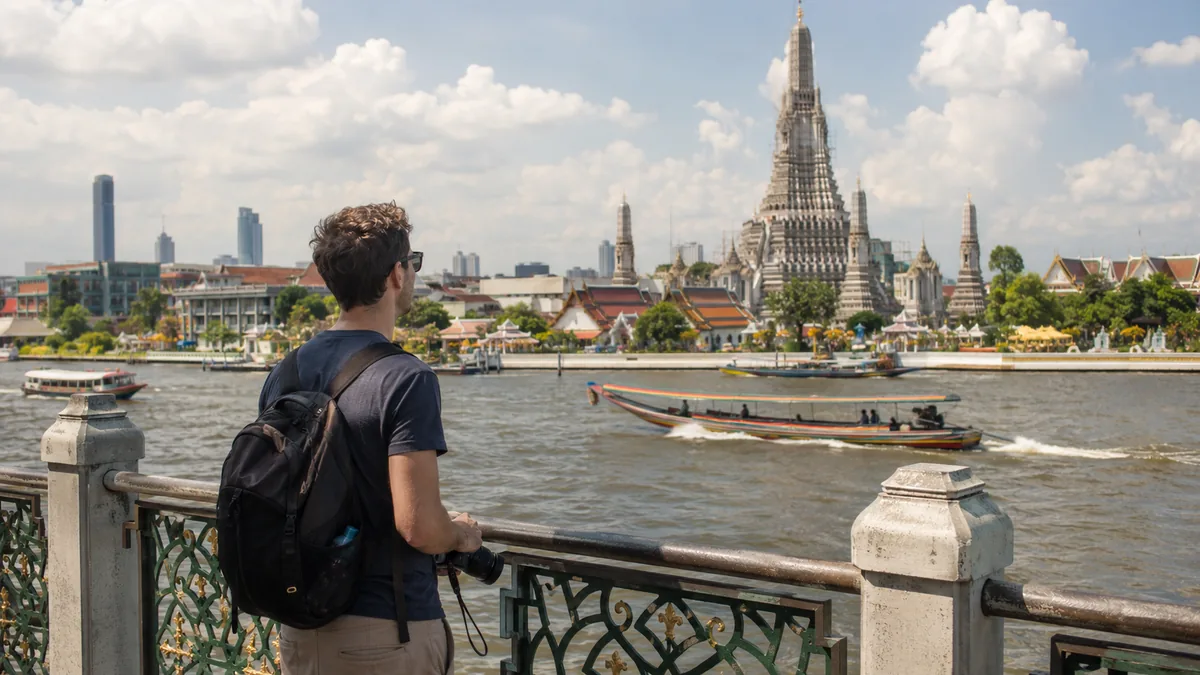
Bangkok gave me the opposite problem from most cities: I never struggled to find things to do. The hard part was deciding which experiences deserved my limited time.
For a first trip, I found it much easier to stop treating Bangkok like one giant checklist. The Grand Palace, Wat Pho, and Wat Arun belonged together. Chinatown deserved an evening rather than a rushed food stop. Siam, the parks, and Bangkok’s skyline showed me a completely different side of the city. Once I grouped attractions by area instead of constantly crossing Bangkok, the trip became far less tiring.
I visited Bangkok in March 2026, and the heat shaped how I planned each day. Exploring the city firsthand helped me figure out which sights were genuinely worth the time and which were easier to skip.
If you have only two or three days, don’t try to cover everything below. Start with the temples around Rattanakosin, ride the Chao Phraya River, eat your way through Chinatown, choose one market, and add one experience such as Muay Thai, a Thai massage, a cooking class, or a canal trip.
Best Things to Do in Bangkok at a Glance
| Experience | Best For | Time to Allow | Cost Level | My Take |
|---|---|---|---|---|
| Grand Palace & Wat Phra Kaew | First-time visitors | 2–3 hours | $$$ | Essential once |
| Wat Pho | Temples, culture | 1–1.5 hours | $$ | Worth it |
| Wat Arun | Architecture, river views | About 1 hour | $$ | Essential |
| Chao Phraya boat ride | Views, transport | 30–90 min | $ | Excellent value |
| Chinatown | Food, atmosphere | 2–4 hours | $–$$ | Don’t rush it |
| Chatuchak Market | Shopping, food | 2–4 hours | Free to enter | Great when the timing works |
| Talat Noi & Song Wat | Walking, local atmosphere | 2–3 hours | $ | Better than expected |
| Thai massage | Rest, cultural experience | 1–2 hours | $$ | Money well spent |
| Muay Thai | Evening experience | 2–3 hours | $$$ | Worth paying for |
| Jim Thompson House | History, architecture | 1–2 hours | $$ | Good change of pace |
| Benjakitti & Lumpini | Parks, walking | 1–2 hours | Free | Best early or late |
| Thai cooking class | Food lovers | 3–4 hours | $$$ | Better with 3+ days |
| Pak Khlong Talat | Markets, photography | 45–90 min | Free | Easy to combine |
| Bangkok skyline | Sunset, city views | 1–2 hours | $$–$$$ | Choose one viewpoint |
| Canal tour | Local Bangkok, waterways | 1.5–3 hours | $$–$$$ | More interesting than another mall |
The Best Things to Do in Bangkok
1. Start at the Grand Palace and Wat Phra Kaew
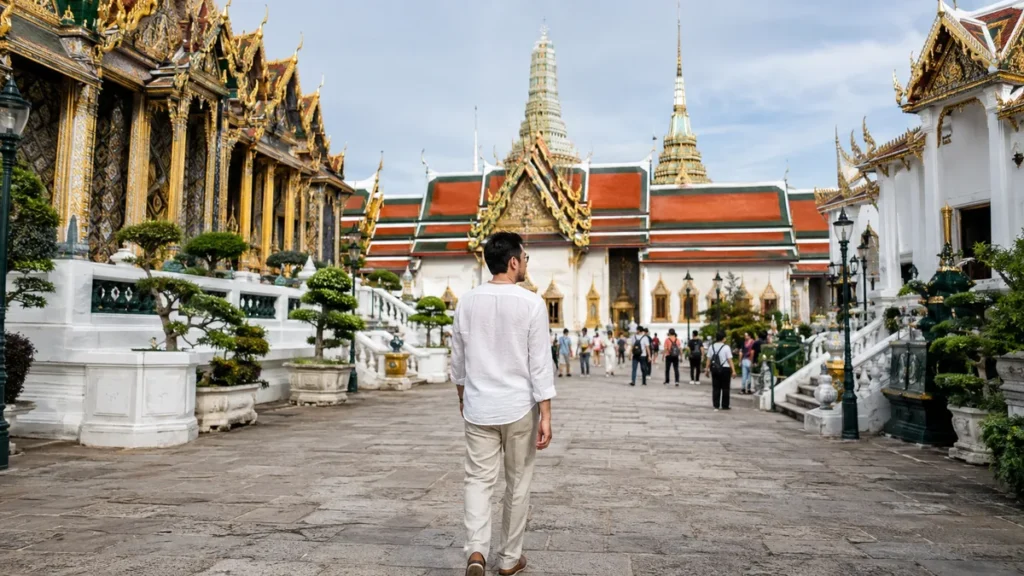
The Grand Palace was the obvious place to start my first Bangkok trip, but it was also where timing made the biggest difference.
The complex is packed with gilded roofs, murals, courtyards, guardian figures, and intricate decorative details. Photographs prepared me for the gold; they didn’t prepare me for how much there was to look at in every direction.
Inside the palace grounds, Wat Phra Kaew, or the Temple of the Emerald Buddha, is one of Thailand’s most important religious sites.
Getting there early was worthwhile. By later in the morning, the combination of heat, open courtyards, and tour groups made the experience noticeably more tiring.
As of September 2026, foreign admission is 500 baht. The official Grand Palace website lists visiting hours as 8:30 a.m. to 4:30 p.m., with tickets sold until 3:30 p.m. Royal ceremonies can occasionally affect access, so I checked the official schedule before visiting. Grand Palace official visitor information
The dress code is also stricter than at casual tourist attractions. Sleeveless tops, short shorts, torn trousers, and several other types of unsuitable clothing are prohibited. I found it easier to dress correctly from the start instead of relying on finding something to cover up at the entrance.
Best combination: Grand Palace → Wat Pho → ferry across the Chao Phraya → Wat Arun.
Keeping those sights together saved me from unnecessary trips across Bangkok.
2. Walk to Wat Pho and See the Reclining Buddha
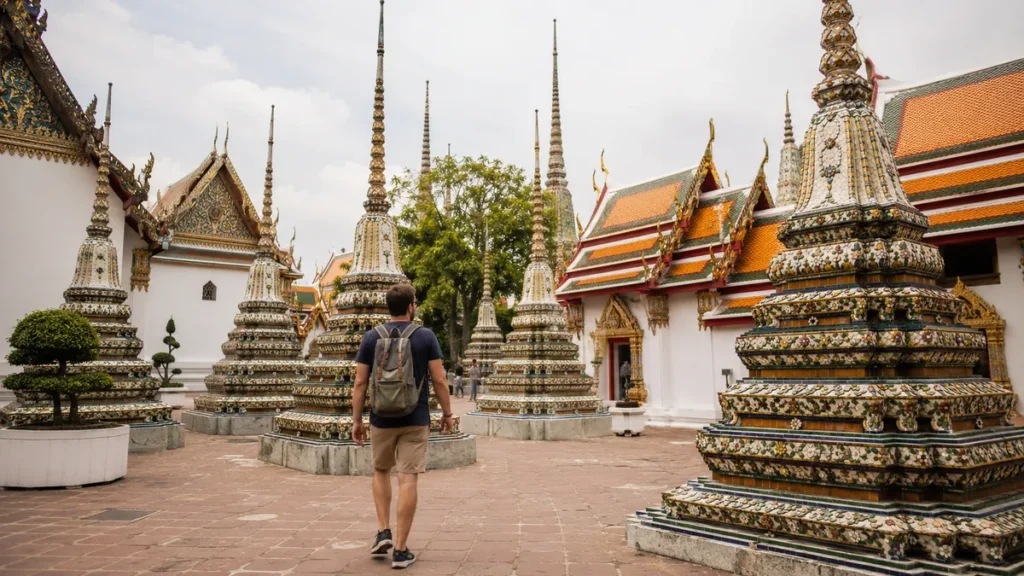
Wat Pho sits beside the Grand Palace, so separating the two into different sightseeing days makes little sense.
The enormous Reclining Buddha attracts most of the attention, but I spent more time than expected wandering through the temple grounds. After the visual intensity of the Grand Palace, Wat Pho felt easier to explore at my own pace.
It also has an important association with traditional Thai medicine and Thai massage, which gives the temple more depth than simply being another ornate religious site.
The official temple information currently lists admission at 300 baht and visiting hours from 8:00 a.m. to 7:30 p.m. I still checked the official site shortly before going because admission prices and visitor rules can change. Wat Pho official visitor information
One lesson I learned quickly in Bangkok was that more temples do not automatically create a better day. After the Grand Palace and Wat Pho, I was ready for something visually different.
Fortunately, it was directly across the river.
3. Cross the Chao Phraya to Wat Arun
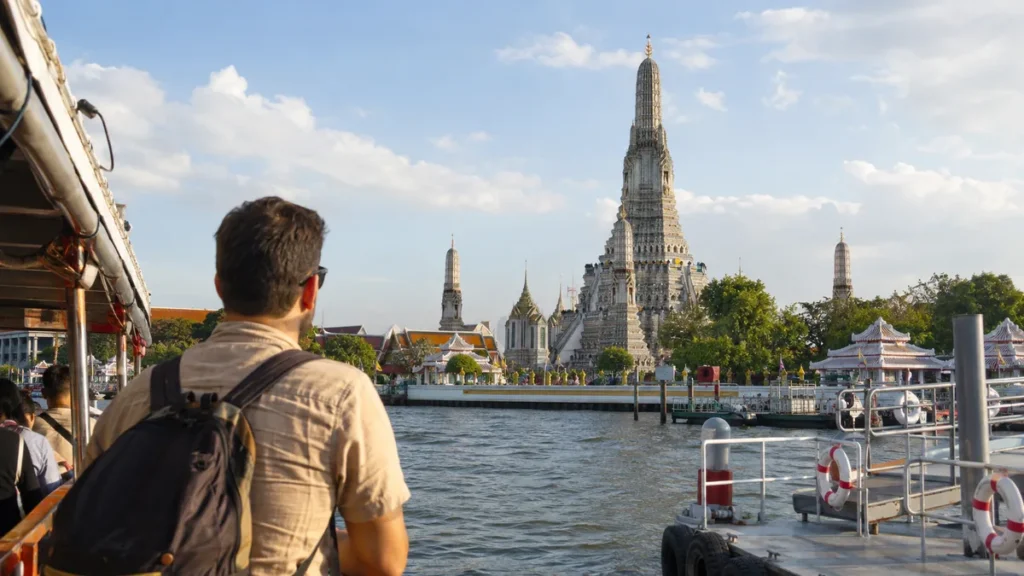
The short river crossing to Wat Arun, or the Temple of Dawn, was far more enjoyable than sitting in another taxi.
Its towering central prang looks completely different from the gold-heavy architecture around the Grand Palace. Up close, the porcelain and ceramic decoration was much more noticeable than it had been in photographs.
Wat Arun’s position beside the Chao Phraya River is a big part of its appeal. The temple feels connected to the water rather than simply sitting beside it.
The temple currently lists opening hours of 8:00 a.m. to 6:00 p.m. and an adult foreign visitor fee of 200 baht. Wat Arun official website
For a first Bangkok trip, this was one temple I wouldn’t cut.
Even if temple fatigue has already set in, seeing Wat Arun across the river later in the day is still worthwhile.
4. Use the Chao Phraya River as Transportation
One of my early planning mistakes was treating the Chao Phraya River as a sightseeing attraction instead of part of Bangkok’s transport system.
Once I started using boats, riverside Bangkok became much easier to understand.
The public boat network connects useful areas around Old Bangkok, Chinatown, Sathorn, and other riverside districts. It also provided something road transport couldn’t: moving through the city without spending the entire journey looking at traffic.
The breeze on the river was welcome after several hours walking through temples.
As of September 2026, the Chao Phraya Express Boat’s Orange Line is listed at a flat 18-baht fare, with the current service schedule effective from June 24, 2026. Routes and operating patterns can change, so I checked the operator before relying on it. Chao Phraya Express Boat routes and fares
The important thing is knowing that not every boat is the same. Bangkok has express boats, cross-river ferries, tourist boats, private long-tail boats, and dinner cruises. Their purpose and prices are very different.
5. Eat Your Way Through Chinatown After Dark
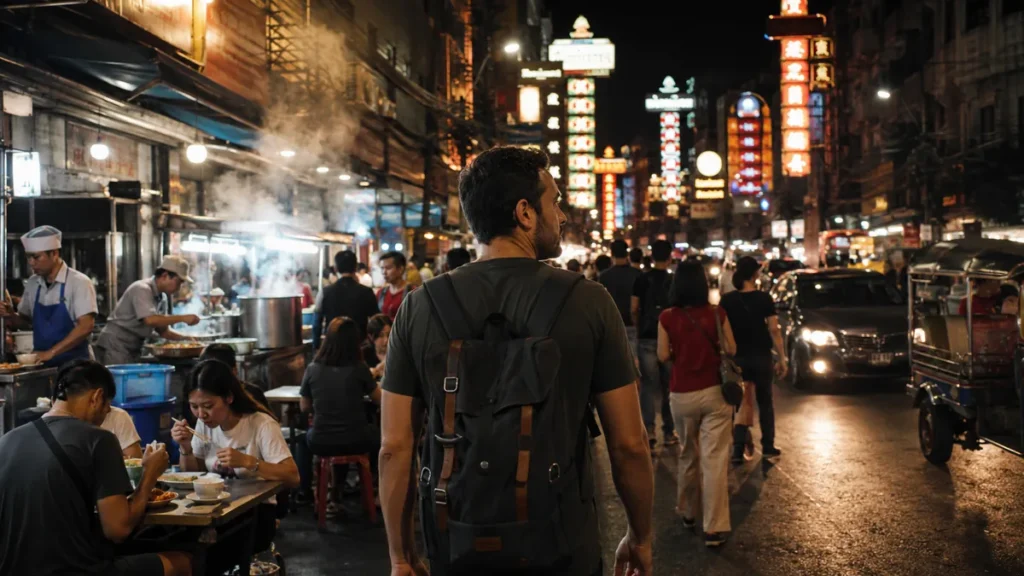
If I had to choose one Bangkok neighborhood for an evening, I would pick Chinatown around Yaowarat Road.
The area became far more interesting after dark. Woks hissed beside the street, seafood cooked over charcoal, scooters slipped through gaps in traffic, and the smell of grilled meat, fruit, spices, and desserts changed every few meters.
Trying to arrive with a perfect food checklist would have made the evening feel like work. I had a better time ordering smaller portions and moving on whenever something else looked good.
Noodles, grilled food, and mango sticky rice made more sense to me than booking an expensive restaurant simply because it appeared on a list.
Chinatown or Khao San Road?
For food and atmosphere, Chinatown won easily.
Khao San Road made more sense for travelers specifically looking for backpacker nightlife, inexpensive drinks, and a louder party scene.
I didn’t find it essential simply because it appears in so many Bangkok itineraries.
6. Wander Through Talat Noi and Song Wat
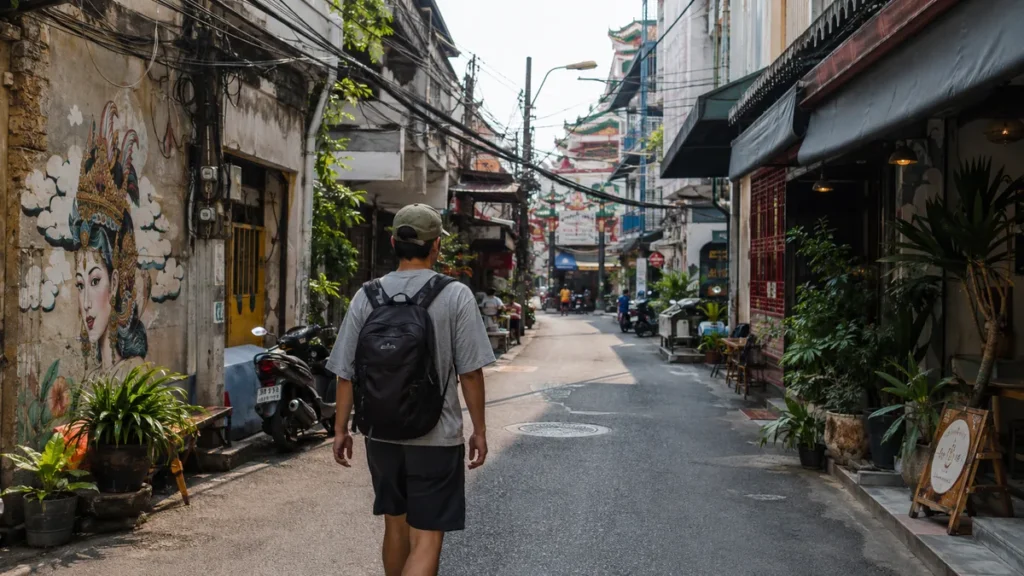
After several major attractions, Talat Noi gave me something I badly needed: somewhere interesting without a checklist.
Old shophouses, Chinese shrines, workshops, street art, scooters, and narrow lanes made it enjoyable simply to walk.
Nearby Song Wat felt slightly more polished, with restored buildings, cafés, small businesses, and traces of Bangkok’s historic trading culture.
Neither neighborhood needed half a day.
What made them useful was their location. I could connect them naturally with Chinatown rather than making another journey across the city.
That kind of geographic planning became one of the biggest differences between an enjoyable Bangkok day and an exhausting one.
7. Visit Chatuchak Weekend Market When the Timing Works
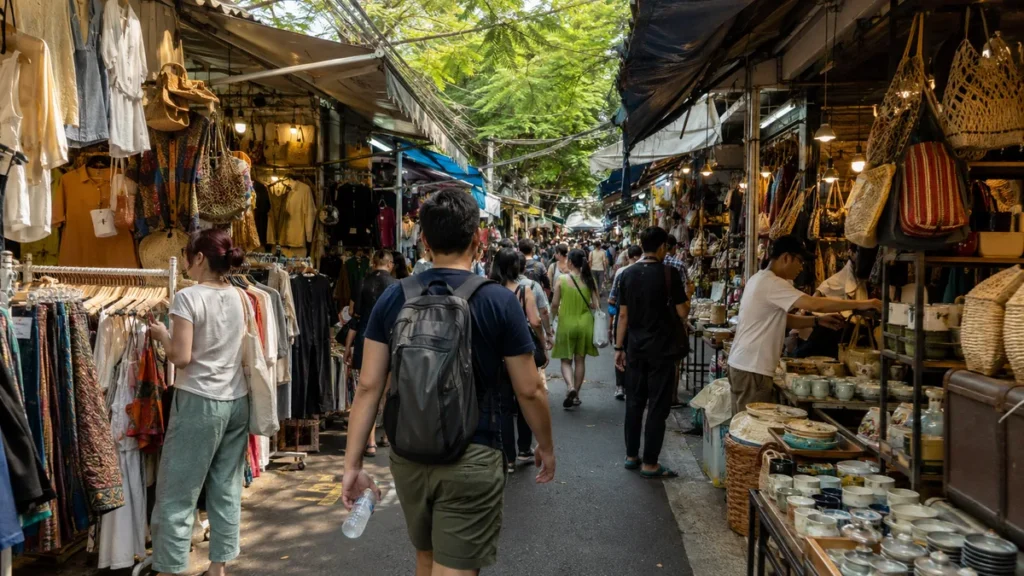
Chatuchak Weekend Market, also known as JJ Market, is enormous.
At first, I tried to understand the layout and see as much as possible. That plan didn’t last long.
The better approach was wandering through whichever sections caught my attention—clothes, ceramics, crafts, homeware, souvenirs, and food—without treating the market as something that had to be completed.
The heat also affected how long I wanted to stay.
If your Bangkok dates naturally line up with the main weekend market, Chatuchak is worth considering. I wouldn’t rebuild a short three-day trip around it, though. Bangkok has too many stronger first-time experiences to lose half a day simply because one famous market happens to be open.
8. Get a Traditional Thai Massage
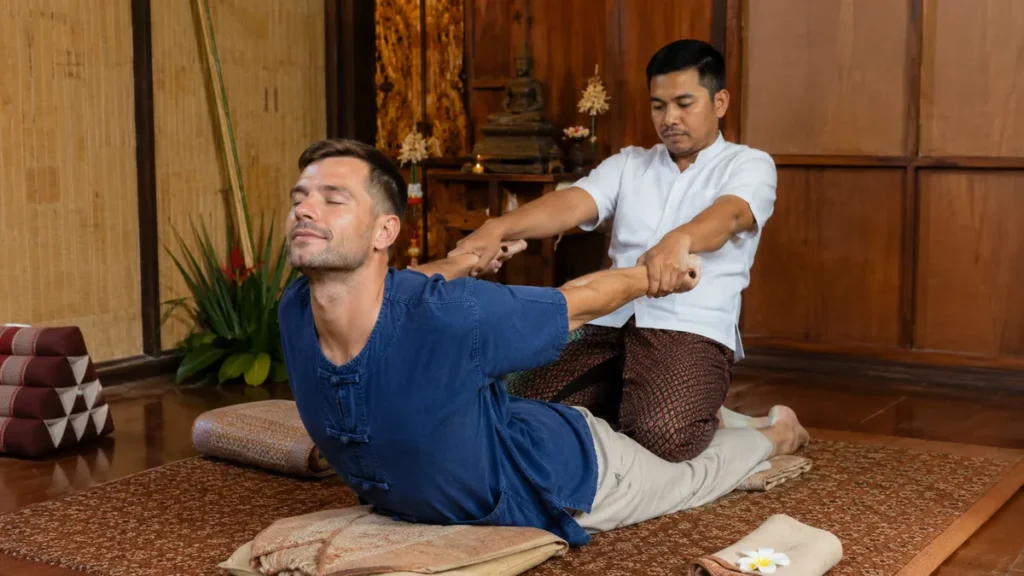
After long days walking around Bangkok, a Thai massage stopped feeling like a luxury and started feeling like trip maintenance.
Traditional Thai massage can involve pressure and assisted stretching rather than the gentle treatment some travelers expect from a spa massage. Knowing that beforehand makes it easier to choose the right treatment.
Wat Pho has a particularly strong historical connection with traditional Thai medicine, but massage shops are found throughout Bangkok.
I preferred places with clearly displayed services and prices rather than accepting offers from people approaching tourists on busy streets.
This was one area where choosing a clean, established business mattered more to me than finding the absolute cheapest option.
9. Watch Live Muay Thai
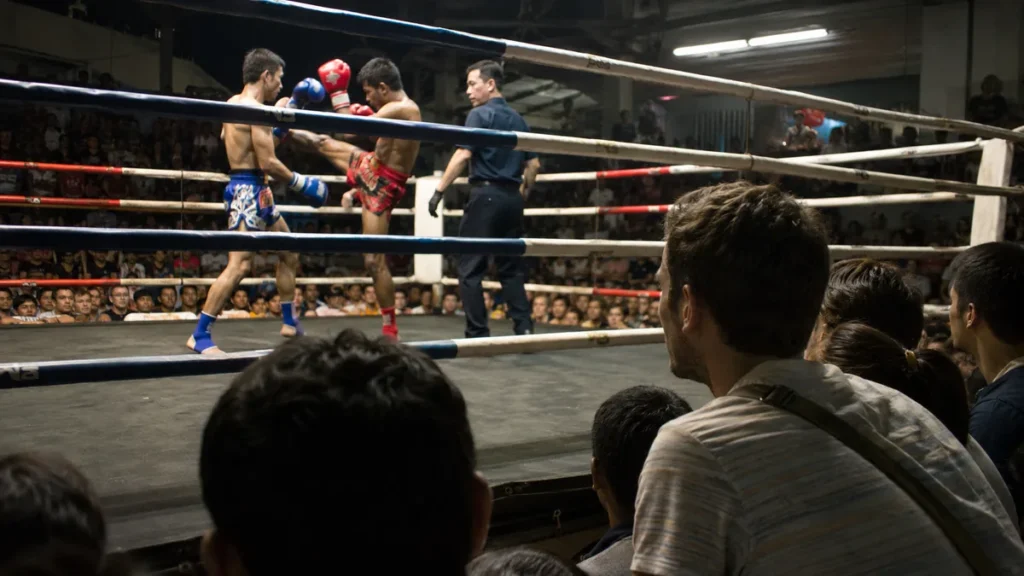
Watching Muay Thai added something completely different to the trip.
After several days of temples, food, markets, and neighborhoods, spending an evening at a live fight changed the rhythm.
The ceremony, music, crowd reaction, and atmosphere around the bouts were as interesting as the fighting itself.
Rajadamnern Stadium is one of Bangkok’s best-known venues. Fight schedules and ticket prices vary, so this is one experience worth checking close to your actual travel date rather than relying on an old itinerary.
If I had to choose where to spend extra money, a memorable cultural event appealed to me more than another generic sightseeing cruise.
10. Visit the Jim Thompson House
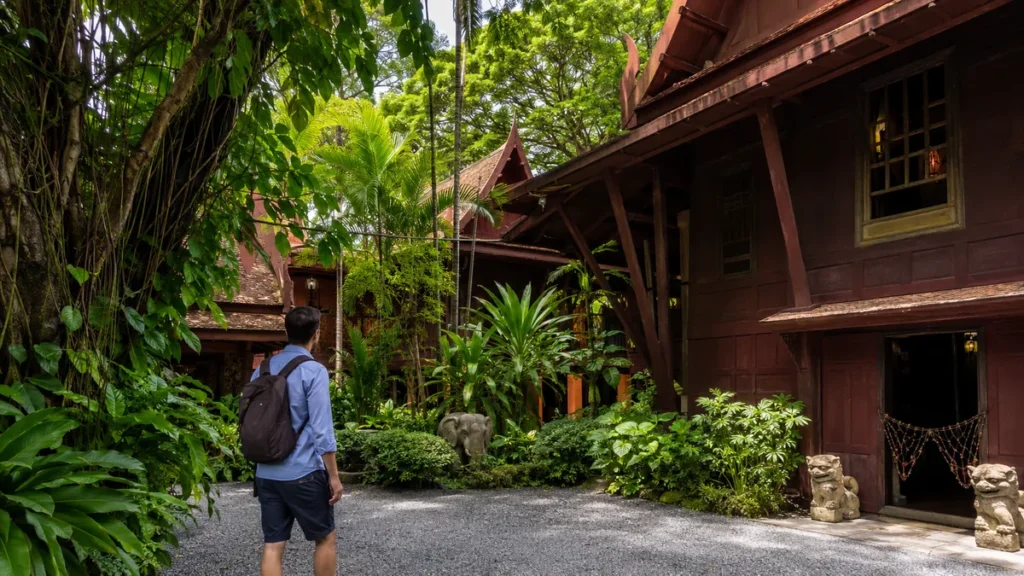
The Jim Thompson House worked well when I needed a break from enormous temple complexes.
Traditional Thai teak buildings, gardens, art, and the story of the American businessman closely associated with Thailand’s silk industry made it an easy cultural stop without consuming half a day.
Its location near Siam is another advantage.
I paired the area with modern Bangkok rather than travelling there as a standalone excursion.
That became a general rule for my trip: if an attraction required crossing Bangkok for only an hour of sightseeing, I questioned whether it really belonged in the itinerary.
11. Slow Down in Benjakitti and Lumpini Parks
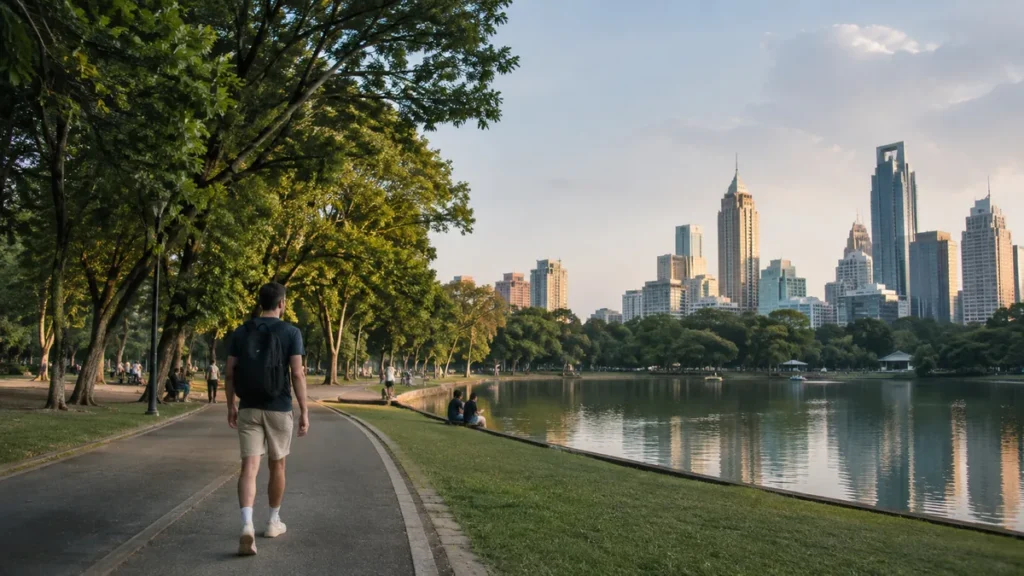
I hadn’t expected Bangkok’s parks to become memorable parts of the trip.
They did.
Benjakitti Park offered wetlands, broad paths, open views, and a skyline backdrop that felt completely different from the tight streets around Old Bangkok.
Lumpini Park felt more established and lived-in, especially around its paths and lake.
Midday wasn’t the time I wanted to explore either of them.
Early morning or late afternoon was much more comfortable, and the parks worked especially well when I needed a break from temples, shopping, and traffic.
12. See Contemporary Bangkok at BACC
Bangkok makes it easy to become overly focused on temples and royal history.
The Bangkok Art and Culture Centre, usually shortened to BACC, added a contemporary side to the trip.
Its location near National Stadium and Siam makes it particularly useful during the hottest part of the day or when rain interferes with outdoor sightseeing.
Exhibitions change, so I treated it as a flexible stop rather than planning an entire day around one specific show.
It also reminded me that modern Bangkok is much more than shopping malls and rooftop bars.
13. Take a Thai Cooking Class
Eating Thai food was easy.
Understanding how Thai dishes balance salty, sour, spicy, and sweet flavors took more effort.
A Thai cooking class can fill that gap, especially if it includes a market visit or ingredient introduction rather than simply handing everyone prepared ingredients.
I wouldn’t prioritize a three- or four-hour class during a two-day Bangkok stop.
With three or four days, it becomes much easier to justify.
This was also one experience where a smaller, hands-on group seemed more valuable than choosing purely by price.
14. Walk Through Pak Khlong Talat
Pak Khlong Talat, Bangkok’s flower-market district, worked well because it didn’t demand a large block of time.
Bundles of orchids, roses, marigolds, and other flowers filled stalls and working areas. It felt like a functioning market first and a tourist attraction second.
That mattered to me.
Because it sits close to Bangkok’s historic riverside area, it was easy to combine with Old Bangkok rather than making a separate journey just for the market.
15. Choose One Bangkok Skyline View
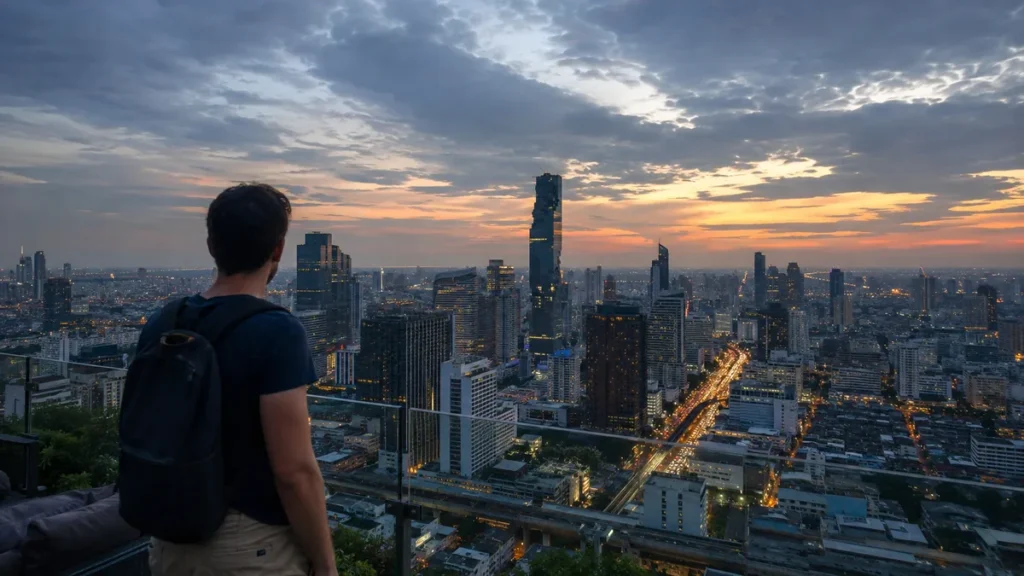
Bangkok looks completely different from above.
The city stretches far beyond the historic areas most first-time visitors explore on their first day.
Rooftop bars and observation decks are scattered across Bangkok, including King Power Mahanakhon and several hotel rooftops.
My mistake was initially considering more than one.
Once I thought about the cost, paying several times for variations of the same skyline made little sense.
Pick one.
If the view matters more than cocktails, an observation deck may make more sense. If you’re already planning rooftop drinks or dinner, paying separately for another viewpoint may add little.
16. Explore the Thonburi Canals
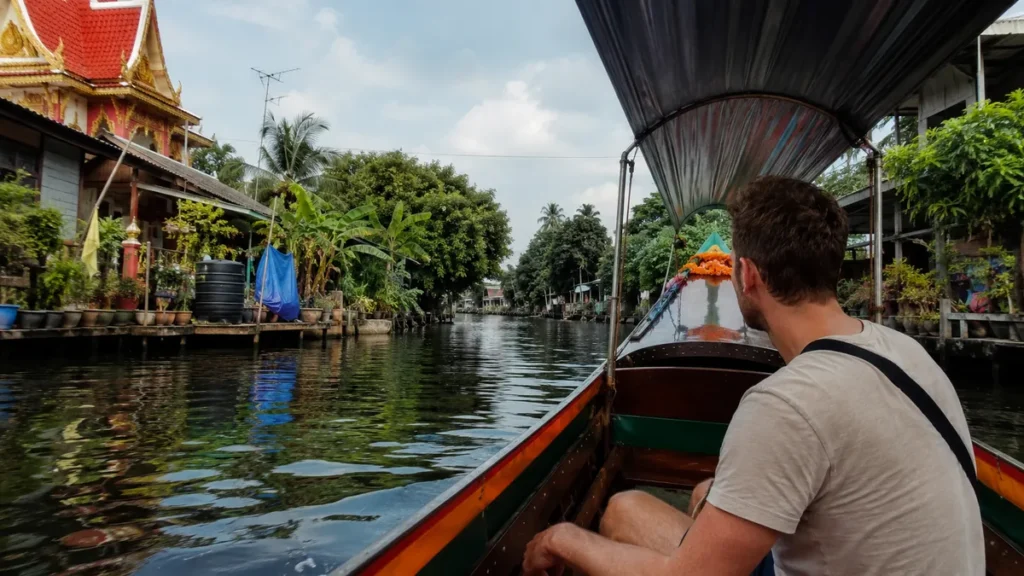
The Chao Phraya shows Bangkok at scale.
The Thonburi canals, or khlongs, reveal a more intimate side.
A long-tail boat can pass homes, temples, waterside businesses, and residential areas that feel far removed from the towers of Sukhumvit and Siam.
This was one experience where I paid close attention before agreeing to anything.
Private boat prices and routes vary, particularly around tourist areas. Make sure the duration, route, stops, and total price are clear before departure.
For me, a canal trip offered more contrast than spending another afternoon inside a shopping center.
17. Experience Modern Bangkok Around Siam
I initially treated Bangkok’s malls as something I could see in almost any major city.
That wasn’t completely fair.
The Siam area—around Siam Paragon, MBK, and other large shopping centers—showed a very different version of Bangkok from Rattanakosin or Chinatown.
Food courts, supermarkets, Thai brands, cinemas, cafés, and enormous air-conditioned interiors are part of everyday urban Bangkok.
They also become much more appealing when the afternoon heat starts draining your energy.
I wouldn’t trade a morning at Wat Arun for a mall.
As a midday break or rainy-day backup, however, Siam worked very well.
18. Climb the Golden Mount
Wat Saket, better known to many visitors for the Golden Mount, felt less intense than Bangkok’s headline temples.
The gradual climb gave me increasingly wide views across older parts of the city without the polished feeling or expense of a modern observation deck.
I still wouldn’t rank it above Wat Pho or Wat Arun for a first trip.
But if those major temples are already covered and you want one more, Wat Saket is a better addition than trying to collect temples simply for the sake of it.
19. Leave One Bangkok Evening Unplanned
One of the better decisions I made was leaving part of an evening open.
Bangkok became easier after dark. The temperature dropped, food streets grew busier, temples and towers lit up, and neighborhoods I had crossed during the day felt different.
An evening didn’t need an expensive reservation.
Some combinations that made sense were:
riverfront at sunset → Chinatown dinner → Talat Noi
Benjakitti Park → Sukhumvit dinner → rooftop drink
Muay Thai → late-night noodles
The key was leaving enough energy to enjoy the evening instead of arriving exhausted after ten hours of sightseeing.
20. Consider Bang Krachao for a Quieter Day
After several days of traffic and dense streets, Bang Krachao offers a completely different idea of Bangkok.
The green area across the river is known for quieter roads, vegetation, and cycling.
It isn’t one of my priorities for the first 48 hours in Bangkok.
With four or five days, especially if you enjoy cycling or want a break from central-city sightseeing, it becomes much easier to justify.
That distinction matters.
A place can be enjoyable without being essential.
21. Take One Good Day Trip, Not Several
Bangkok is surrounded by popular excursions, but I wouldn’t sacrifice too much city time on a first visit.
Ayutthaya is the day trip I’d prioritize for history. The former Siamese capital offers temple ruins and a historic landscape that feels very different from central Bangkok
.
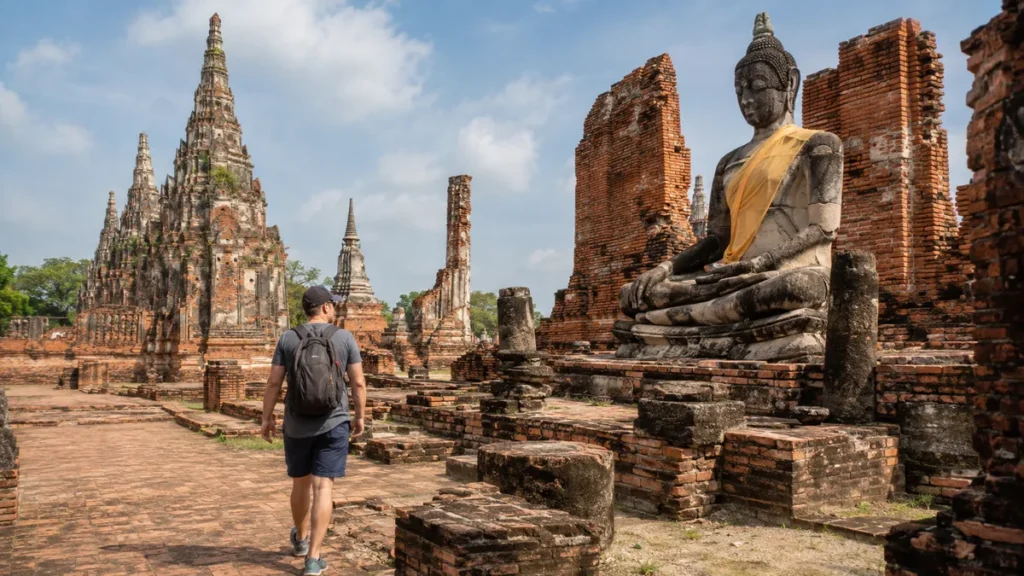
Floating-market tours, particularly those visiting Damnoen Saduak, are also heavily promoted.
The important thing I learned while planning was that famous floating markets are not simply quick central-Bangkok attractions. Travel time matters, and some are heavily oriented toward tourism.
With only three days, I preferred staying in Bangkok.
With four or five days, Ayutthaya becomes much easier to fit in without sacrificing the city itself.
How I’d Spend 3 Days in Bangkok
My biggest planning improvement was organizing days geographically rather than by attraction popularity.
Day 1: Old Bangkok and the Chao Phraya
Grand Palace and Wat Phra Kaew → Wat Pho → Wat Arun → Pak Khlong Talat → Chinatown
This is the day to start early.
It contains several outdoor attractions, so I wouldn’t add another major temple simply because there appears to be room on the map.
Day 2: Neighborhoods and Modern Bangkok
Talat Noi → Song Wat → Jim Thompson House or BACC → Siam → skyline view
This day felt much more varied than another full day of temples.
Day 3: Choose the Bangkok Experience You Care About Most
Pick one main experience instead of trying to do everything:
- Shopping: Chatuchak
- Culture: Muay Thai
- Food: Thai cooking class
- Local Bangkok: Thonburi canal tour
- Green space: Benjakitti and Lumpini
- History: Ayutthaya day trip
That choice is more useful than an itinerary pretending every traveler wants exactly the same Bangkok trip.
Getting Around Bangkok Without Wasting Half the Day
The transport system looked more confusing before the trip than it felt once I started using it.
My basic rule became:
BTS or MRT for modern Bangkok, boats for the riverside, walking within individual neighborhoods, and taxis or ride-hailing services for the gaps.
The BTS Skytrain is especially useful around Siam, Sukhumvit, Silom, and Sathorn. Because fares depend on the journey and can change, I checked routes and current prices directly with the operator. Official BTS Skytrain routes and fares
The MRT is also useful for Chinatown and parts of Old Bangkok.
Tuk-tuks were enjoyable once, but I stopped thinking of them as the obvious budget transportation choice. Agree on the fare before getting in.
I was also cautious around suspiciously cheap sightseeing offers or strangers claiming a major attraction was suddenly closed. When something sounded wrong, checking the attraction directly was easier than arguing about it on the street.
Which Bangkok Attractions Are Actually Worth It?
This was the question I cared about more than simply finding additional places.
| Attraction | Worth It If… | Lower Priority If… |
|---|---|---|
| Grand Palace | It’s your first Bangkok trip | You’ve already visited several major Thai royal sites |
| Wat Arun | Architecture and river scenery appeal to you | Very little—I’d keep it for most first-timers |
| Chinatown | Food and street atmosphere matter | You dislike dense, crowded streets |
| Chatuchak | You enjoy markets and shopping | Your dates don’t line up naturally |
| Khao San Road | You want backpacker nightlife | Food, culture, and quieter evenings matter more |
| Damnoen Saduak | A famous floating market is a priority | You only have 2–3 days |
| Dinner cruise | You want an easy, polished evening | Food quality or value matters more |
| Multiple rooftops | Nightlife is central to the trip | One skyline view is enough |
| Extra temples | Temple architecture is a major interest | Wat Phra Kaew, Wat Pho, and Wat Arun already satisfied you |
The best Bangkok itinerary isn’t the one containing the largest number of attractions.
It’s the one where you still have enough time and energy to notice the city between them.
How I Planned Around Bangkok’s Heat and Rain
The days I planned badly were the ones with several outdoor stops stacked together around midday.
A much better rhythm was:
| Time | What Worked Best |
|---|---|
| Morning | Temples, markets, outdoor walking |
| Midday | Lunch, museum, mall, massage |
| Late afternoon | Parks, neighborhoods, river |
| Evening | Chinatown, Muay Thai, rooftop, night market |
Bangkok’s tropical climate affects sightseeing more than it appears to when you’re planning from an air-conditioned room.
Water, shade, light clothing, and realistic pacing mattered.
During wetter periods, I kept an indoor alternative such as BACC, Jim Thompson House, a mall, massage, or cooking class in mind instead of treating rain as a ruined day.
Mistakes I’d Avoid on a First Bangkok Trip
Crossing Bangkok Too Often
Several attractions can look close enough on a map but become inconvenient once traffic, stations, and transfers are involved.
Grouping attractions by neighborhood saved far more time than trying to optimize purely by distance.
Starting the Grand Palace Too Late
The palace deserves time, and the heat becomes harder to ignore as the morning goes on.
Starting early was one of the easiest improvements I made.
Planning Too Many Temples
Bangkok has hundreds of temples.
That doesn’t mean a first-time visitor needs to see ten.
Wat Phra Kaew, Wat Pho, and Wat Arun already provide a strong introduction.
Treating Every Tuk-Tuk Offer as Transportation
A tuk-tuk ride can be fun.
That doesn’t make every offer good value.
I treated it as an experience rather than my default way of getting around.
Assuming Every Bangkok Boat Is the Same
This caused more confusion than I expected.
Public express boats, cross-river ferries, tourist boats, private canal tours, and dinner cruises serve completely different purposes.
Check what you’re boarding before paying.
Ignoring Temple Clothing Rules
Lightweight clothes that covered my shoulders and knees saved unnecessary hassle.
Temple etiquette isn’t something I wanted to figure out while standing at the entrance.
Booking Every Evening
Bangkok is one of those cities where an unplanned evening can be better than another attraction reservation.
Some of my favorite stretches involved little more than walking, eating, and seeing where a neighborhood led.
FAQ About Things to Do in Bangkok
What are the absolute best things to do in Bangkok for a first-time visitor?
For a first visit, I’d prioritize the Grand Palace and Wat Phra Kaew, Wat Pho, Wat Arun, a Chao Phraya boat ride, and an evening in Chinatown. After those, choose experiences according to your interests rather than following someone else’s checklist.
How many days do you need in Bangkok?
Three full days gives a first-time visitor a good balance. Two days can cover the major highlights at a faster pace, while four or five days gives you time for neighborhoods, markets, canals, and possibly Ayutthaya without rushing.
What are the best free things to do in Bangkok?
Walking through Chinatown, Talat Noi, Song Wat, Benjakitti Park, Lumpini Park, and parts of the riverside costs little or nothing. Markets can also be enjoyable without buying anything, although food has a way of changing that plan.
What can you do in Bangkok when it rains?
Indoor or mostly indoor options include BACC, Jim Thompson House, Thai massage, cooking classes, Siam’s shopping centers, food courts, cafés, and museums. Rather than cancelling a whole day, I found it easier to rearrange outdoor sightseeing around the weather.
Is Bangkok expensive for sightseeing?
Bangkok can be relatively inexpensive once you move beyond the major admission tickets. Public transportation, local food, parks, markets, and neighborhood walks help keep costs down. Rooftop bars, organized tours, observation decks, premium restaurants, and private transportation increase the budget quickly.
Is Bangkok safe for first-time visitors?
Normal big-city awareness covered most situations for me. Traffic, inflated tourist transport prices, misleading sightseeing offers, and protecting valuables in crowded areas deserved more attention than dramatic safety fears. I used established transportation, confirmed prices before rides, and avoided people pushing unsolicited tours.
Final Thoughts
Bangkok became much easier once I stopped asking how many attractions I could fit into each day.
The temples around Rattanakosin gave me the Bangkok I had imagined before the trip. The Chao Phraya helped me understand how the older parts of the city fit together. Chinatown delivered the food and nighttime energy, while Talat Noi, the parks, canals, and ordinary neighborhood walks filled in the spaces between famous landmarks.
For a first trip, I wouldn’t chase 30 attractions.
I’d start early, group places geographically, choose fewer experiences that genuinely interested me, and leave enough time to eat, wander, and still enjoy Bangkok after sunset.