



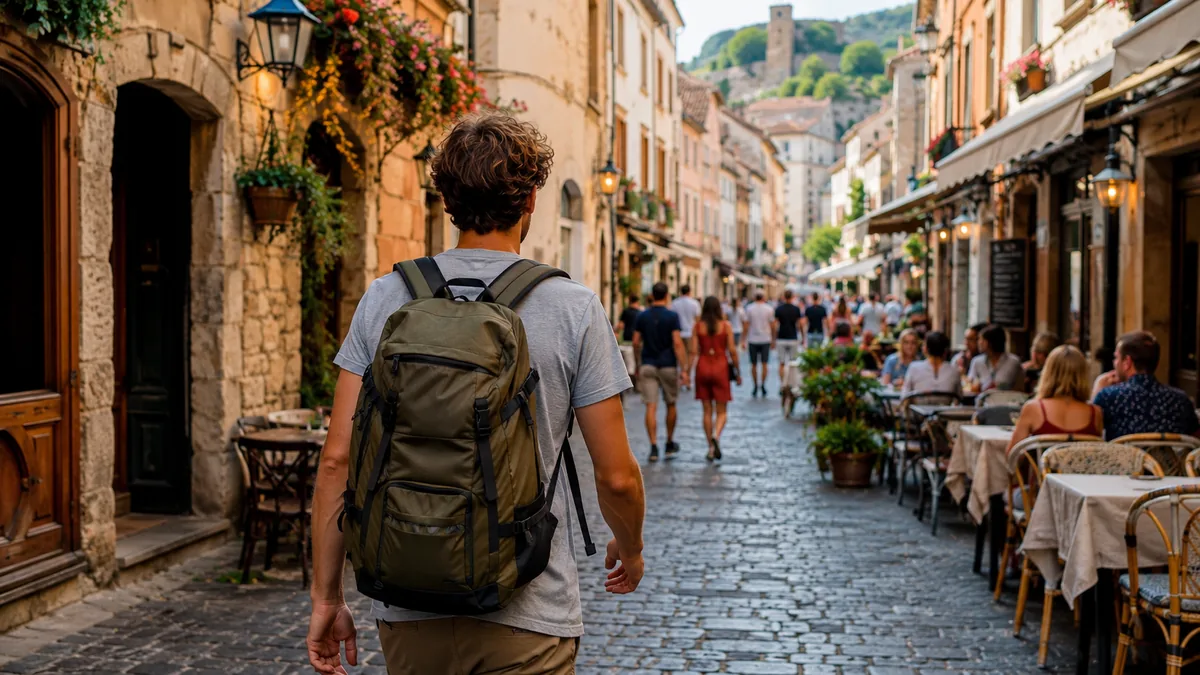
Backpacking travel is a flexible, independent way of traveling where you carry most of what you need with you, move between different places, and usually keep costs down with hostels, guesthouses, public transportation, and simple local food.
That was roughly how I understood backpacking before the trip. The reality felt a lot messier—and much more interesting.
I had pictured huge backpacks, uncomfortable hostel beds, instant noodles, and twenty-somethings disappearing around Southeast Asia for six months.
Some of that existed.
But backpacking turned out to be much less about the backpack than I expected. It was really about how I traveled.
Plans stayed flexible. I carried less. Buses and trains replaced many taxis. Some nights I slept in hostel dorms. Other nights, a quiet guesthouse or private room felt worth the extra money.
There were beautiful mornings, delayed buses, excellent street food, wet laundry hanging beside bunk beds, and at least one moment when I wondered why I had packed an extra pair of shoes.
That mix was backpacking.
It wasn’t always glamorous. It wasn’t always the cheapest possible way to travel either. But it gave me more freedom, more ordinary local moments, and a different way of experiencing a destination.
What Does Backpacking Mean in Travel?
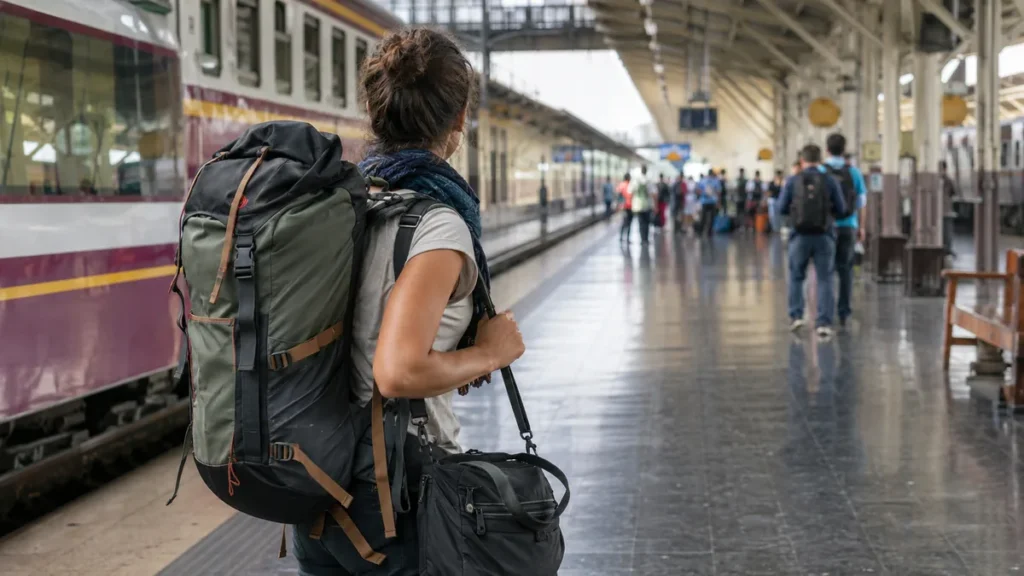
In travel, backpacking means moving independently between destinations while carrying relatively light luggage and usually keeping an eye on your budget.
A backpacker might stay in hostels, guesthouses, homestays, or inexpensive private rooms. Buses and trains often replace expensive transfers. Meals might come from local restaurants, markets, street-food stalls, or hostel kitchens.
The itinerary is usually more flexible than a traditional vacation.
That doesn’t mean having no plan at all.
I still checked transportation, entry requirements, accommodation, and basic safety information. The difference was that not every hour had already been decided before I arrived.
That freedom became one of the best parts.
Backpacking Travel vs Wilderness Backpacking
The word backpacking can be confusing, especially in the United States.
Someone saying, “I’m going backpacking,” may mean traveling through several countries with a backpack.
Someone else may mean hiking for several days while carrying a tent, sleeping bag, food, and camping equipment.
They are very different experiences.
| Backpacking travel | Wilderness backpacking |
|---|---|
| Focuses on traveling between destinations | Focuses on hiking and camping |
| Hostels, guesthouses and homestays | Tents, campsites and shelters |
| Buses, trains and flights | Mostly walking |
| Clothes and travel essentials | Camping and outdoor equipment |
| Cities, towns and countries | Mountains, forests and trails |
| Culture and travel experiences | Hiking and nature |
Travel backpacking was the version that appealed to me.
I liked exploring during the day and having a real bed waiting at night.
Usually.
What a Backpacking Trip Actually Feels Like
My old vacation routine had been predictable.
I booked a hotel, arrived, unpacked everything, visited the main attractions, returned to the same room each night, packed again, and went home.
Backpacking changed that rhythm.
Everything traveled with me.
I checked into one place, stayed for a few nights, packed again, walked to a station, caught a bus or train, and started over somewhere new.
At first, constantly moving felt exciting.
Then I discovered how much time ordinary travel tasks actually consumed.
Checking out took time.
Finding the bus station took time.
Waiting took time.
Laundry definitely took time.
Even deciding where to eat sometimes became another task after a long day.
Those parts rarely appeared in the polished backpacking videos I had seen online.
Yet some of the most memorable moments came from those ordinary days.
A quick breakfast from a neighborhood bakery.
Standing beside local commuters at a bus stop.
Finding a small restaurant one street away from the tourist area.
Watching scenery change through a train window.
Trying to dry socks before checkout.
Backpacking made the spaces between attractions feel like part of the trip.
Backpacking vs a Regular Vacation
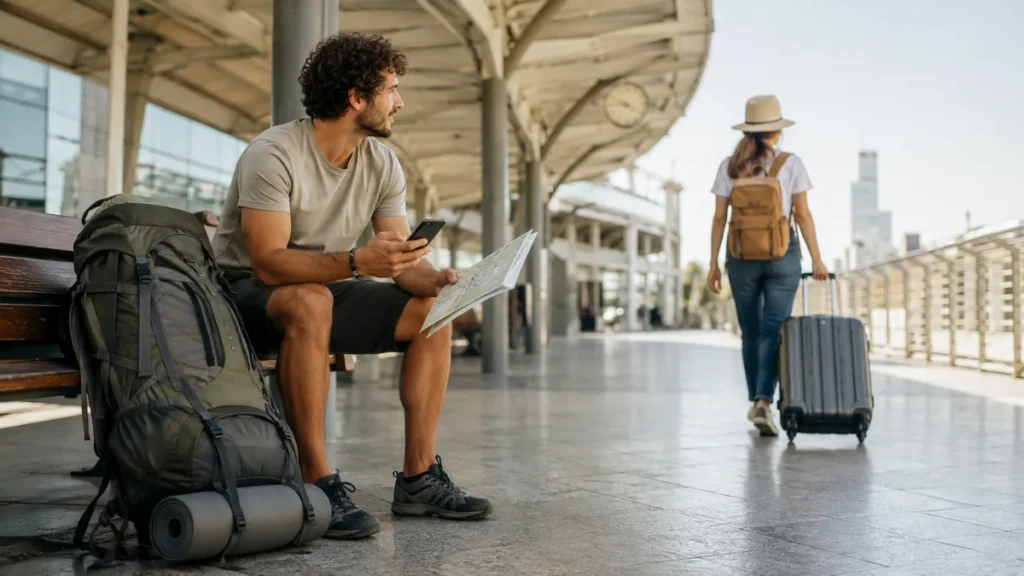
Neither style is automatically better.
They simply produce different kinds of trips.
| Backpacking travel | Regular vacation |
| Flexible route | More fixed itinerary |
| Light luggage or backpack | Suitcase common |
| Hostels and guesthouses | Hotels and resorts |
| Buses, trains and public transport | Taxis, rental cars and tours |
| Often several destinations | Usually fewer bases |
| More independent planning | More pre-booking |
| Budget-conscious | Convenience-conscious |
| Often longer trips | Often shorter trips |
| Frequent packing | Less moving around |
| More uncertainty | More predictable comfort |
The biggest difference for me was mobility.
When nearly everything was already organized inside one backpack, leaving for another city felt easier.
The downside was that I never completely unpacked.
There was always one slightly crumpled shirt hiding somewhere.
Do Backpackers Have to Travel Cheaply?
No.
This was one of the first backpacking stereotypes that disappeared for me.
Budget travel and backpacking overlap heavily, but backpacking doesn’t have a fixed daily spending limit.
One traveler might sleep in the cheapest dorm available.
Another might choose a smaller four-bed dorm.
Someone else might book a private room in the same hostel.
All three could still be backpacking.
What mattered more was the overall travel style: independent planning, relatively light luggage, moving between places, and being flexible about where the trip went next.
My own thinking changed from:
How can I make everything as cheap as possible?
to:
What am I happy to save money on, and what is actually worth paying for?
That worked much better.
Saving $15 on accommodation didn’t feel like a win when a terrible night’s sleep ruined the following day.
On the other hand, using a bus instead of an expensive transfer sometimes saved enough for an activity or a better meal later.
That balance made more sense than chasing the lowest price every time.
Where Do Backpackers Stay?
Hostels were the obvious option, but they weren’t the only one.
I started mixing accommodation depending on location, price, how social I felt, and how badly I needed some quiet.
| Accommodation | What worked well | Main downside | Best for |
| Hostel dorm | Cheap and social | Noise and limited privacy | Solo backpackers |
| Private hostel room | Privacy with hostel atmosphere | Often much more expensive | Couples or rest nights |
| Guesthouse | Quiet and personal | Less social | Longer stays |
| Homestay | Local connection | Less independence | Cultural experiences |
| Budget hotel | Comfortable and private | Less backpacker atmosphere | Recovery days |
| Apartment | Kitchen and extra space | Can feel isolated | Longer stops |
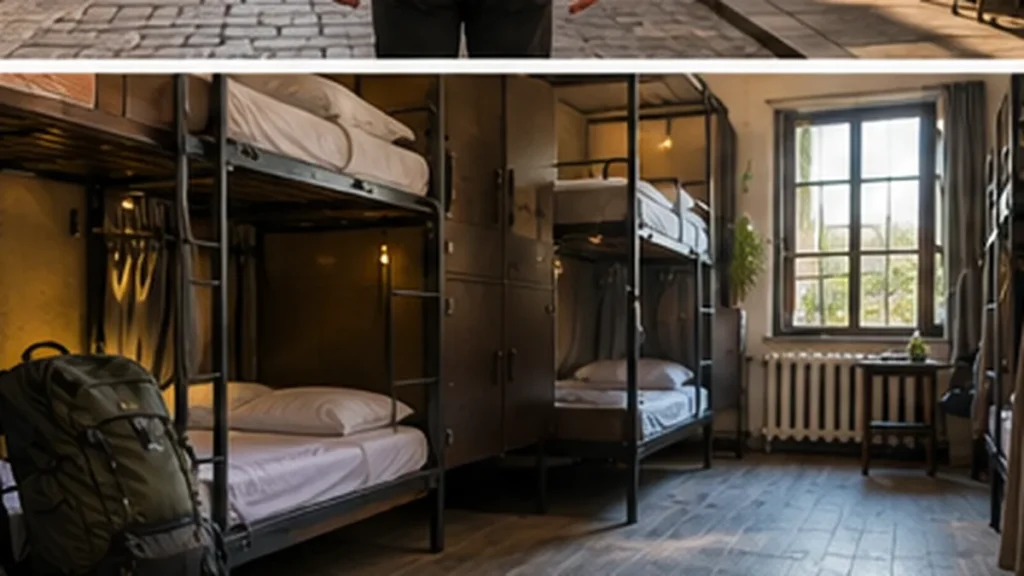
Hostels surprised me.
I had imagined basic metal bunk beds and nothing else.
Some were exactly that.
Others had privacy curtains, lockers, shared kitchens, organized activities, work areas, cafés, private rooms, and common spaces filled with travelers planning their next destination.
The atmosphere mattered much more than I expected.
My Biggest Hostel Mistake
One hostel had excellent reviews, so I booked it without reading the comments carefully.
That was a mistake.
It was a party hostel.
A very good party hostel, apparently.
At 1 a.m., surrounded by music and doors opening every few minutes, the high rating finally made sense.
After that, I stopped looking at the score alone.
I searched recent reviews for words such as:
- quiet
- party
- social
- lockers
- bathrooms
- curtains
- location
- street noise
- cleanliness
The cheapest hostel bed wasn’t always the best value.
Sometimes paying a little more bought a much better night’s sleep.
How Do Backpackers Get Around?
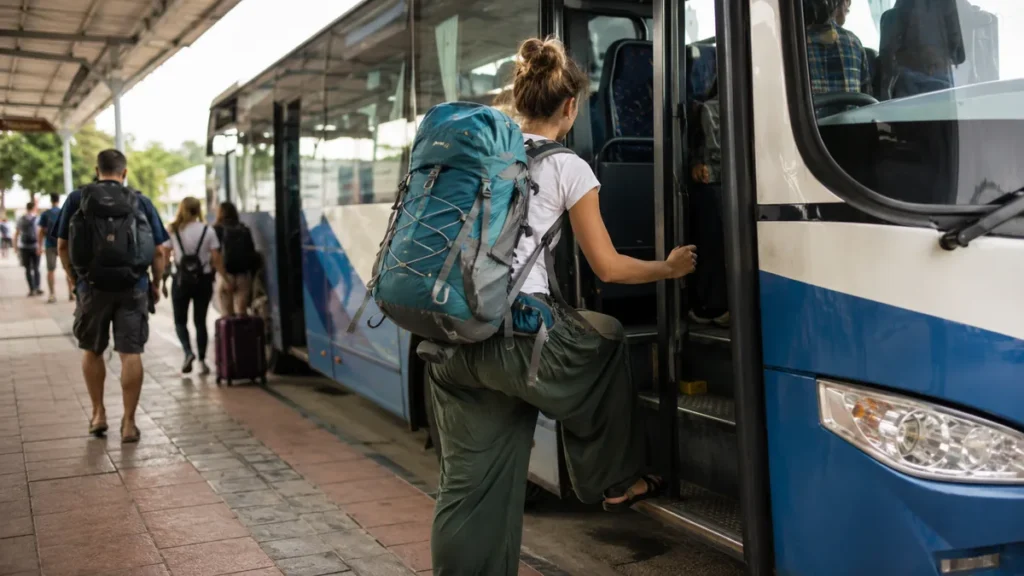
Buses and trains quickly became my default.
They were often cheaper than flying, but I also liked seeing what existed between two destinations instead of jumping from airport to airport.
Local buses, metros, trains, and walking covered most everyday movement.
Occasionally, a budget flight made more sense for a long distance.
The important part was checking the full cost.
A flight that looked cheap could become much less attractive after adding baggage fees, airport transport, and the time needed to reach an airport far outside the city.
| Transport | When it worked well | What caught me out |
| Train | Connecting major cities | Popular routes could sell out |
| Bus | Cheap regional travel | Traffic and delays |
| Night bus | Long-distance routes | Sleep quality varied |
| Metro/local bus | Getting around cities | Ticket systems took time to understand |
| Walking | Neighborhoods and short distances | A heavy backpack changed what “short” meant |
| Budget flight | Very long distances | Baggage and airport costs |
| Taxi/rideshare | Late arrivals | Higher cost |
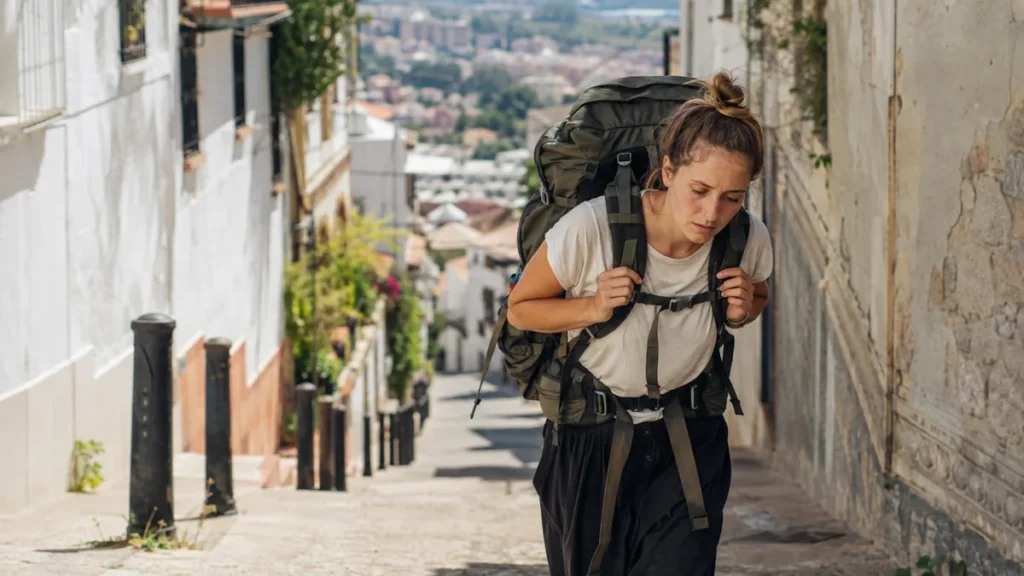
Walking gave me one of my earliest practical lessons.
A 30-minute walk looked perfectly reasonable on a map.
It looked much less reasonable halfway uphill with a full backpack.
After that, I checked elevation, heat, road conditions, and whether sidewalks actually existed.
What Do Backpackers Eat?
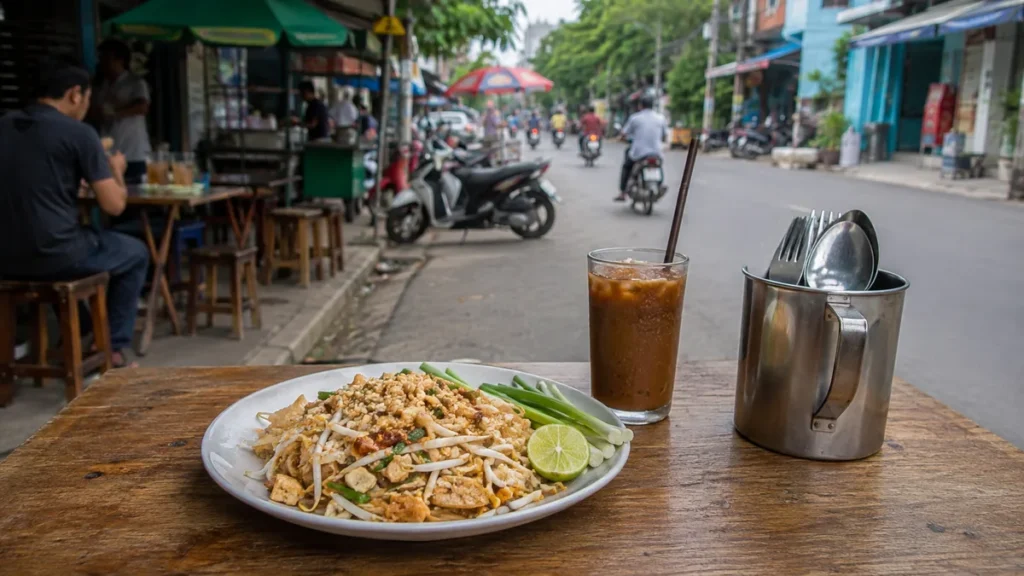
My backpacking meals looked nothing like a perfectly curated travel feed.
Some days included great local dishes.
Others included bread, fruit, coffee, and something I bought at a station because the bus was leaving in five minutes.
Food often told me more about a neighborhood than another hour of sightseeing did.
A busy morning market showed what people actually ate for breakfast.
A tiny restaurant filled with locals often told me more than a restaurant menu covered in tourist photos.
The smells stayed with me too.
Fresh bread.
Grilled meat.
Spices I couldn’t identify.
Coffee from a crowded counter.
Something frying loudly beside a market stall.
Backpacking also changed my idea of “budget food.”
It didn’t have to mean instant noodles every night.
Sometimes a small family-run restaurant was cheaper than a café beside the main attraction.
And usually much better.
Do Backpackers Really Live Out of One Backpack?
Often, yes.
But the backpack isn’t the whole identity.
Packing light helped because I kept moving.
It meant fewer things to carry up stairs, onto buses, through stations, and between accommodation.
My first packing mistake was preparing for imaginary situations.
I packed clothes for dinners that never happened.
Extra shoes.
Too many “just in case” items.
The shoes annoyed me most.
They took up a ridiculous amount of space and somehow felt heavier every time I changed cities.
Over time, the bag became simpler.
What Actually Earned Space in My Backpack
| Item | Why it stayed |
| Comfortable walking shoes | Used every day |
| Light clothing layers | Worked across different conditions |
| Packing cubes | Kept the bag organized |
| Small padlock | Useful for hostel lockers |
| Reusable water bottle | Useful throughout the day |
| Power bank | Important on long transport days |
| Small day bag | Better for sightseeing |
| Basic first-aid items | Helpful for minor problems |
| Laundry bag | Kept dirty clothes separate |
| Copies of important documents | Useful backup |
Packing light also became much easier once I accepted that wearing the same clothes repeatedly was normal.
Laundry mattered more than outfit variety.
For air travel in or from the United States, I checked the official TSA travel guidance rather than assuming what was allowed in my carry-on.
How Much Does Backpacking Travel Cost?
I learned quickly that asking, “How much does backpacking cost?” was a bit like asking how much a vacation costs.
The answer depended completely on where I went and how I traveled.
A daily budget that felt comfortable in Thailand disappeared surprisingly fast in Switzerland.
So did the difference between staying in an eight-bed dorm and booking private rooms.
Instead of chasing one universal daily number, I watched a few main categories.
| Expense | How I kept it manageable |
| Accommodation | Compared dorms, guesthouses and private rooms |
| Transportation | Used public transport and booked expensive routes earlier |
| Food | Mixed local restaurants, street food and simple meals |
| Activities | Paid for experiences I genuinely cared about |
| Unexpected costs | Kept emergency money separate |
The funny part was how much time I initially spent worrying about tiny purchases.
I hesitated over coffee.
Then I booked a last-minute train that cost many times more.
That changed my budgeting.
I focused on the big three first:
sleep, move, eat.
If accommodation, transportation, and food stayed under control, the rest of the budget became easier to manage.
Backpacking Isn’t Always Slow Travel
Backpacking is often associated with slow travel.
My first route was anything but slow.
I tried to fit too many stops into too few days.
It looked excellent while planning.
On the map, every new city felt like another exciting opportunity.
In real life, changing accommodation every two days became tiring.
Three nights in a destination didn’t always equal three sightseeing days.
One day might include arriving.
Another included laundry or planning the next route.
Then suddenly it was time to leave again.
Moving constantly became overrated very quickly.
The trip improved once I stopped treating destinations like boxes to tick.
Staying longer gave me time to notice ordinary things.
The same bakery filling up each morning.
A quieter street behind the station.
The café where locals stopped before work.
Which bus stop had shade.
Which supermarket stayed open late.
Those tiny details were never the reason I chose a destination.
But they were often what made it feel familiar.
Solo Backpacking vs Backpacking With Friends
Both had advantages.
| Solo backpacking | Backpacking with friends |
| Complete control of plans | Decisions are shared |
| Easy to change direction | Less decision fatigue |
| Easier to meet new people | Built-in company |
| Can feel lonely occasionally | Less personal space |
| Some costs may be higher | Certain costs can be split |
| Builds independence | Easier during stressful moments |
The tiring part of solo backpacking wasn’t always loneliness.
It was decision-making.
Where should I eat?
Which hostel?
Which train?
Should I stay another night?
Was this bus actually going where I thought it was?
After a long travel day, even simple decisions felt bigger.
At the same time, solo backpacking made social situations easier in unexpected ways.
Other solo travelers talked during hostel breakfasts.
Conversations started on walking tours.
Someone asked where I was heading while waiting for a bus.
Being alone often made me more approachable.
Is Backpacking Safe?
Backpacking never felt automatically dangerous, but being flexible didn’t mean switching off common sense.
Simple habits mattered.
I kept my passport secure.
Cards and cash weren’t all stored together.
I checked how to get from the station to my accommodation before arriving somewhere late.
Offline maps were downloaded before long travel days.
I also checked local risks instead of assuming every destination required the same precautions.
For U.S. travelers, the U.S. Department of State publishes destination-specific travel advisories, entry information, safety guidance, and emergency information.
Health preparation mattered too, especially on longer international trips.
The CDC Travelers’ Health pages provide destination-specific health guidance, including information about vaccines and health risks.
Spontaneity was part of backpacking.
Skipping basic research didn’t need to be.
Check Passport and Visa Rules Before You Go
This wasn’t the exciting part of backpacking.
It was still one of the most important.
Before crossing borders, I checked:
- passport validity
- visa requirements
- permitted length of stay
- onward-travel rules
- travel insurance
- entry requirements
- exit requirements
I never relied on an old blog post alone for these details.
Official rules can change.
For U.S. passport and international travel information, I used Travel.State.Gov.
For European destinations, the European Union’s official Your Europe travel guidance was useful for checking entry and travel information.
Official sources were boring compared with planning beaches, food, and hostels.
They were also much more important when something changed.
My First Backpacking Mistakes
The mistakes taught me more than my original packing checklist.
I Moved Too Quickly
Five destinations looked exciting during planning.
By the fourth hostel check-in, another reception desk wasn’t exciting at all.
Leaving more time between stops made the trip much better.
I Carried Too Much
I packed for imaginary versions of myself.
Real travel-me wore the same comfortable clothes again and again.
I Chose Hostels by Price Alone
Cheap didn’t automatically mean good value.
Location, noise, cleanliness, lockers, transport access, and atmosphere mattered.
I Planned Every Day
A rigid itinerary removed one of backpacking’s best advantages.
Some places deserved another day.
Others didn’t.
Leaving gaps made it easier to adjust.
I Underestimated Travel Days
A three-hour bus ride wasn’t a three-hour task.
Checking out, reaching the station, waiting, traveling, getting to the next accommodation, and checking in could take most of the day.
I Confused Cheap With Good Value
The absolute cheapest option sometimes cost me in other ways.
Poor sleep.
Bad location.
Extra transportation.
Lost time.
Paying slightly more occasionally saved an entire afternoon.
I Forgot to Schedule Nothing
At first, doing nothing felt like wasting a travel day.
Later, slow afternoons became necessary.
Sitting in a café, doing laundry, sorting photos, or simply wandering without trying to “see” anything helped me enjoy the trip more.
Why Do People Go Backpacking?
Saving money was one reason.
It wasn’t the whole reason.
For me, the bigger attraction was time combined with independence.
Lower daily costs made longer trips possible.
Public transport made moving independently easier.
Hostels created opportunities to meet people.
Flexible planning meant I could stay longer somewhere I liked.
Backpacking also pushed me outside routines without turning every day into a dramatic adventure.
The change was smaller than the phrase “travel changed me” suggests.
I became less bothered by imperfect plans.
Better at solving small problems while tired.
Less interested in squeezing an attraction into every hour.
More comfortable changing direction when something wasn’t working.
And more willing to accept that not every travel day needed to be amazing.
Those changes were worth more than simply saying I had visited another destination.
Who Is Backpacking Travel Best For?
Backpacking worked best when I wanted:
- more than one destination
- a flexible itinerary
- control over my travel budget
- local transportation
- simple accommodation
- independent planning
- opportunities to meet other travelers
- longer trips
- less luggage
- more freedom to change plans
It didn’t work as well when maximum comfort was the main goal.
There is also no rule saying backpacking belongs only to gap-year students.
Age mattered much less than comfort level, mobility, travel style, and tolerance for uncertainty.
A backpacker could be 20, 40, or 60.
The accommodation might change.
The budget might change.
The basic travel style could remain the same.
How to Plan Your First Backpacking Trip
My planning became much simpler after the first overcomplicated route.
Start With a Region
Instead of choosing ten disconnected places, I started with one region.
Southeast Asia and Europe, for example, have well-established backpacking routes, but transport, costs, seasons, and distances work very differently.
Choose Fewer Destinations
I stopped trying to see everything.
A shorter list usually produced a better trip.
Check Transportation Before Booking Everything
Places that looked close on a map were not always easy to reach.
I checked the actual bus, train, ferry, or flight connections first.
Research Entry Requirements Early
Passport and visa problems could ruin the entire route.
Those checks came before booking cheap non-refundable tickets.
Book the First Few Nights
Having somewhere confirmed after arrival removed a lot of stress.
After that, plans could stay more flexible.
Leave Gaps in the Itinerary
Not every day needed a reservation.
Those open days became useful when I wanted to stay longer, rest, or change direction.
Keep Emergency Money Separate
I treated this money as if it didn’t exist unless something genuinely went wrong.
That small buffer made flexible travel feel much safer.
Is Backpacking Worth It?
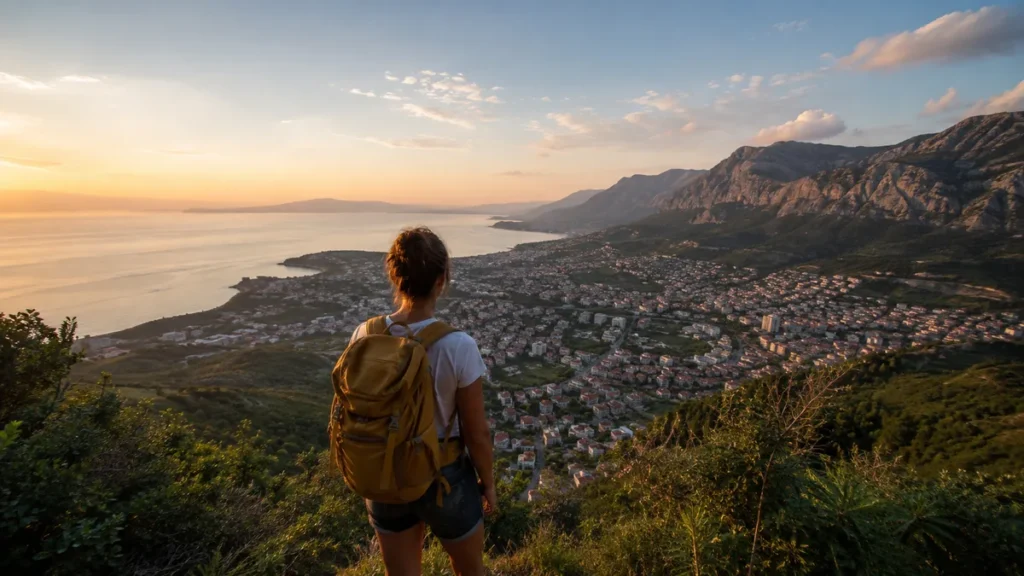
For me, backpacking was worth it when I wanted freedom more than perfect comfort.
What surprised me most was how little the famous attractions mattered once the trip was over.
I still remembered them, of course.
But I remembered other things just as clearly.
The bakery I kept returning to because breakfast was cheap and good.
The stranger who explained which bus platform I needed.
The hostel kitchen conversation that lasted much longer than expected.
The relief of putting my backpack down after walking farther than planned.
The first properly quiet private room after several nights in dorms.
Backpacking had plenty of frustrating moments too.
Constant packing became tiring.
Dorm rooms could be noisy.
Transport rarely worked exactly as neatly as the timetable suggested.
Privacy disappeared quickly when several people were sharing the same room.
There were days when a quiet hotel, taxi, and completely planned itinerary sounded fantastic.
Still, those trade-offs were usually worth it.
The best part wasn’t traveling as cheaply as possible.
It was having enough freedom to decide what happened next.
So, What Is Backpacking Travel Really?
After stripping away the stereotypes, backpacking travel was simply a more independent, mobile, and flexible way of seeing the world.
Yes, there was usually a backpack.
Budget mattered too.
Hostels, dorm rooms, homestays, guesthouses, public transportation, buses, trains, street food, and packing light all became part of the experience.
But none of those things alone defined backpacking.
The real difference was freedom.
Freedom to move.
Freedom to stay.
Freedom to spend less on one thing and more on another.
Freedom to change a route after the trip had already started.
Some days were exciting.
Some were uncomfortable.
Some involved incredible views.
Others involved washing socks in a sink and hoping they dried before checkout.
That mix was exactly what made backpacking different from a normal vacation.
For me, the simplest definition became this:
Backpacking travel means traveling with fewer things, more flexibility, and enough independence to let the journey change after it begins.
Backpacking Travel FAQs
Do You Have to Use a Backpack to Be a Backpacker?
Not necessarily.
A backpack makes frequent movement easier, especially on buses, trains, stairs, and uneven streets. But the travel style matters more than the luggage itself.
Someone traveling independently with a small suitcase could still have a very similar experience.
How Long Does a Backpacking Trip Need to Be?
There is no minimum.
A backpacking trip might last two weeks, several months, or longer.
The style of travel matters more than the number of days.
Do Backpackers Always Stay in Hostels?
No.
Hostels are popular because they can be affordable and social, but backpackers also use guesthouses, homestays, budget hotels, private hostel rooms, and apartments.
I liked mixing them depending on how much privacy I needed.
Is Backpacking the Same as Budget Travel?
Not exactly.
They overlap heavily.
Backpacking usually adds light luggage, frequent movement, independent planning, and a more flexible itinerary.
Someone can travel cheaply while staying in the same hotel for a week without really backpacking.
Is Backpacking Only for Young Travelers?
No.
Backpacking is a travel style, not an age group.
The backpack, room type, budget, and pace might change with age, but independent travel can work for many different kinds of travelers.
Is Backpacking Good for Solo Travelers?
It can be.
Hostels, walking tours, shared transportation, and common spaces make it relatively easy to meet other people.
The trade-off is handling every decision yourself.
Is Backpacking Always Cheap?
No.
Destination, accommodation, transportation, activities, and personal comfort level can change the budget dramatically.
Backpacking made it easier for me to control costs, but it didn’t require choosing the cheapest option every time.
What Is the Hardest Part of Backpacking?
For me, constant movement and decision-making became more tiring than carrying the backpack.
Once I slowed the route down and stopped planning every hour, backpacking became much more enjoyable.