



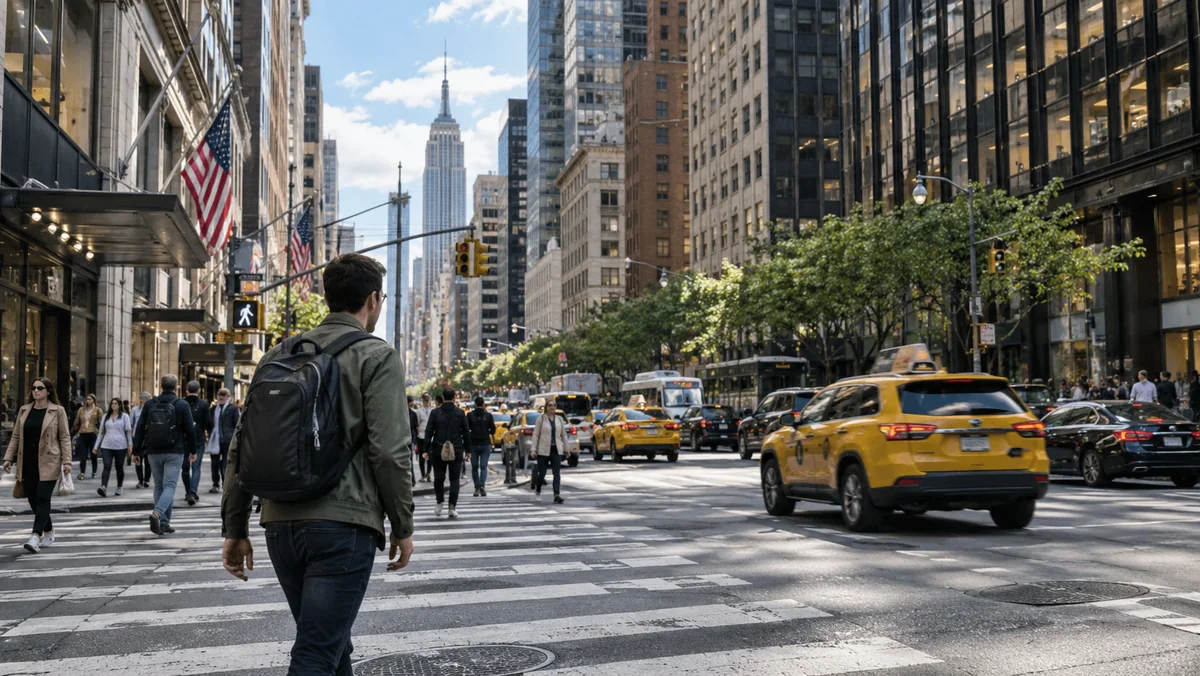
New York was never difficult because I couldn’t find enough to do. The problem was deciding what deserved my time.
I visited New York City in May 2026, when the weather was mild enough for long walking days, although a light jacket still helped in the mornings. I quickly learned that planning New York attraction by attraction does not work particularly well. Places that looked close on a map sometimes involved longer walks, subway transfers, crowds, and far more time than expected.
For a first trip, four to five days felt much more realistic than trying to squeeze everything into a weekend. The trip also became easier once I divided the city into areas: Midtown, Central Park, the West Side, Lower Manhattan, Greenwich Village, and Brooklyn.
I did not need three observation decks or every famous museum. One good skyline view, one or two museums, several free attractions, and enough time to walk through neighborhoods gave me a much better feel for the city.
These are the 21 things to do in New York I would put highest on a first-trip list, along with realistic costs, time needed, booking advice, and the attractions that make sense to visit together.
My New York Shortlist at a Glance
| Experience | Time to Allow | Typical Adult Cost | Book Ahead? | Best For |
|---|---|---|---|---|
| Central Park | 2–4 hours | Free | No | Walking and classic NYC |
| Brooklyn Bridge + DUMBO | 2.5–3 hours | Free | No | Skyline views |
| Statue of Liberty + Ellis Island | 4–6 hours | $25.50+ ferry | Yes | History |
| One observation deck | 1.5–2 hours | About $39–46+ | Yes | Skyline views |
| Grand Central Terminal | 30–45 min | Free | No | Architecture |
| Rockefeller Center + Fifth Avenue | 1.5–2 hours | Free to explore | Paid attractions only | Midtown |
| Broadway show | 2.5–3 hours | Roughly $70–200+ | Usually | Evening experience |
| The Met | 2.5–4 hours | $30 | Useful | Art and history |
| High Line | 1–1.5 hours | Free | No | Walking |
| Chelsea Market | 1–1.5 hours | About $15–30 for food | No | Lunch |
| 9/11 Memorial & Museum | 2–3 hours | Memorial free; museum $24–36 | Useful | Modern history |
| Staten Island Ferry | 60–75 min return | Free | No | Harbor views |
Prices were checked in September 2026 where possible, but ticket prices can change by date, ticket type, and demand.
Midtown Manhattan
1. Look Up Before Leaving Grand Central Terminal
I originally treated Grand Central Terminal as somewhere I would pass through on the way to another attraction.
That changed as soon as I entered the Main Concourse.
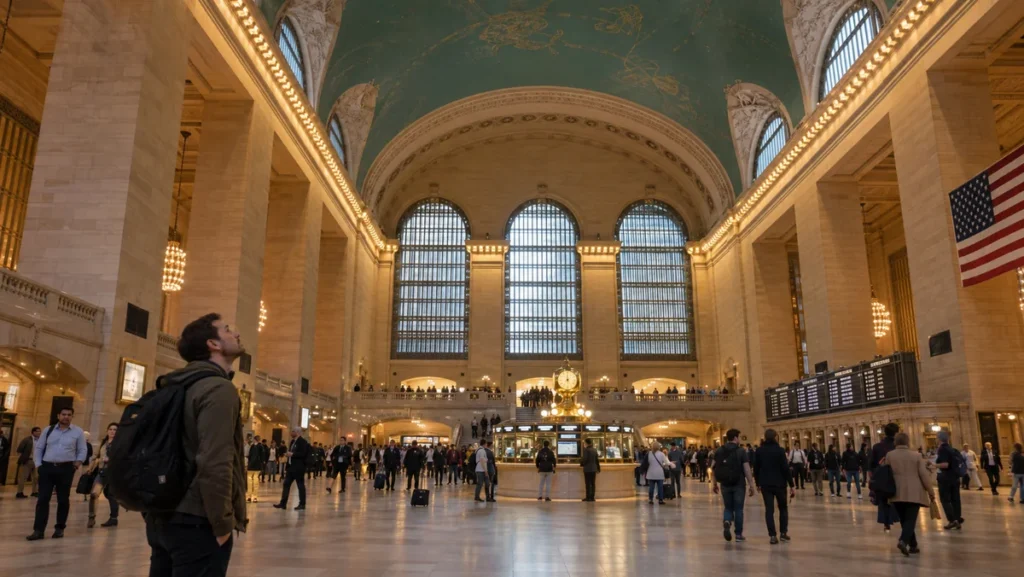
The astronomical ceiling, huge windows, stonework, and constant flow of commuters made it feel more like a landmark than a station. I also liked that seeing the main spaces did not take much time.
Around 30–45 minutes felt enough without rushing.
Grand Central is also well positioned for sightseeing. Bryant Park and the New York Public Library are about a 10-minute walk away, while SUMMIT One Vanderbilt sits right beside the terminal.
Cost: Free
Allow: 30–45 minutes
Combine with: Bryant Park, New York Public Library, SUMMIT One Vanderbilt
2. Take a Break at Bryant Park and the New York Public Library
Bryant Park worked better as a pause between attractions than as a major sightseeing stop.
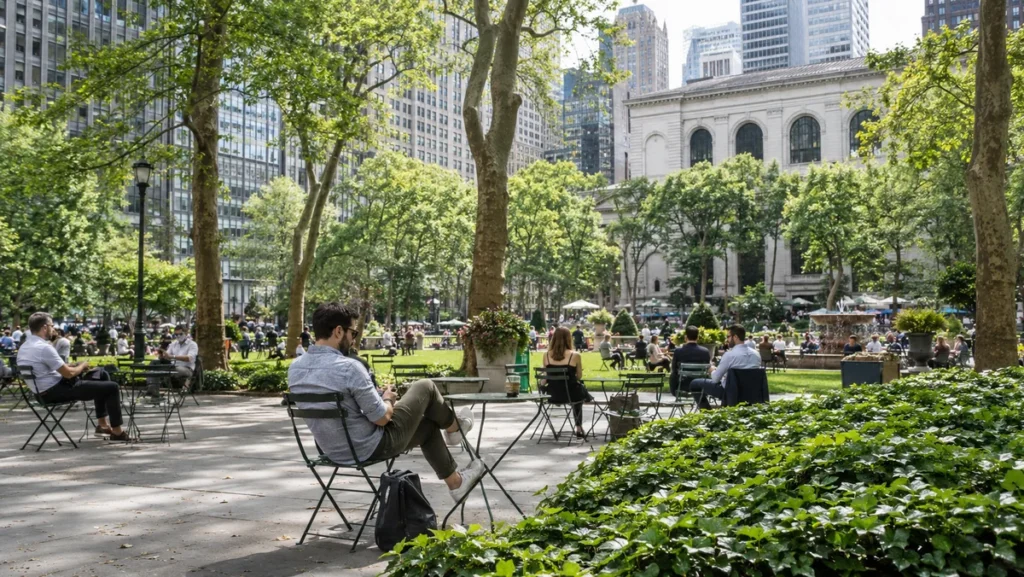
The New York Public Library’s Stephen A. Schwarzman Building faces Fifth Avenue, while the park sits directly behind it. After busier Midtown streets, I liked having somewhere to slow down.
Allow 45–90 minutes for both.
It was also a useful reminder that an expensive New York itinerary does not need to be filled entirely with ticketed attractions.
Cost: Free
Allow: 45–90 minutes
3. Walk Fifth Avenue and Rockefeller Center Together
Fifth Avenue, St. Patrick’s Cathedral, and Rockefeller Center make more sense as one walk than three separate stops.
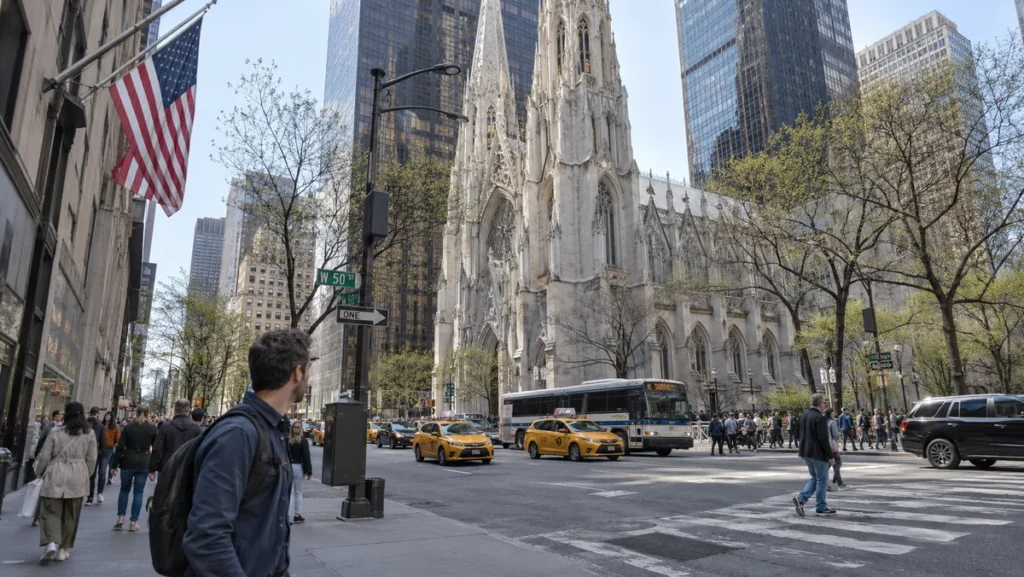
The route gave me the New York I had seen in films: yellow taxis squeezed between buses, glass towers reflecting older stone buildings, busy sidewalks, and familiar landmarks appearing between ordinary city blocks.
Allow roughly 1.5–2 hours before adding an observation deck.
Rockefeller Center becomes particularly crowded during the Christmas season, but even in May the area was easier earlier in the day.
4. Choose One Observation Deck
New York makes it surprisingly easy to spend hundreds of dollars looking at variations of the same skyline.
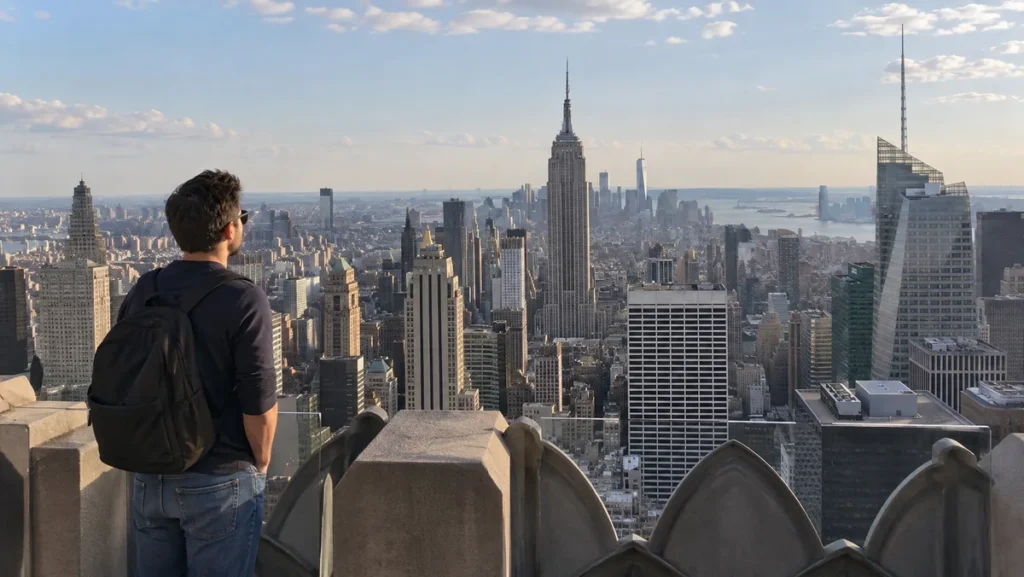
There are several excellent observation decks, but I saw little reason to book more than one on a first trip.
| Observation Deck | Current Starting Price | Best Reason to Choose It | Main Trade-Off |
|---|---|---|---|
| Empire State Building | From $46 | Historic skyscraper and classic experience | The Empire State Building is missing from your skyline view |
| Top of the Rock | From $42 | Excellent Midtown view including the Empire State Building | Less immersive than SUMMIT |
| Edge | From $42 + $2 processing fee | Outdoor platform and glass floor | Fits best with a Hudson Yards day |
| SUMMIT One Vanderbilt | From $39–44 + $3 online fee | Mirrors, installations, and skyline | More sensory and photo-focused |
| One World Observatory | Roughly $39+ | Strong Lower Manhattan perspective | Indoor viewing experience |
The Empire State Building now lists its standard 86th-floor experience from $46. Top of the Rock starts at $42, Edge general admission starts at $42 plus a processing fee, and SUMMIT’s standard experience starts around $39–44 plus its online fee.
For the classic skyline, Top of the Rock made the most sense to me because the Empire State Building remained part of the view.
Choose the Empire State Building instead if being inside the historic skyscraper matters more. Edge fits naturally into a Hudson Yards day, while SUMMIT feels more like an immersive attraction built around the skyline.
Whatever you pick, sunset is the slot I would reserve ahead.
Check current Top of the Rock tickets
5. See Times Square After Dark
Times Square was exactly as chaotic as I expected.
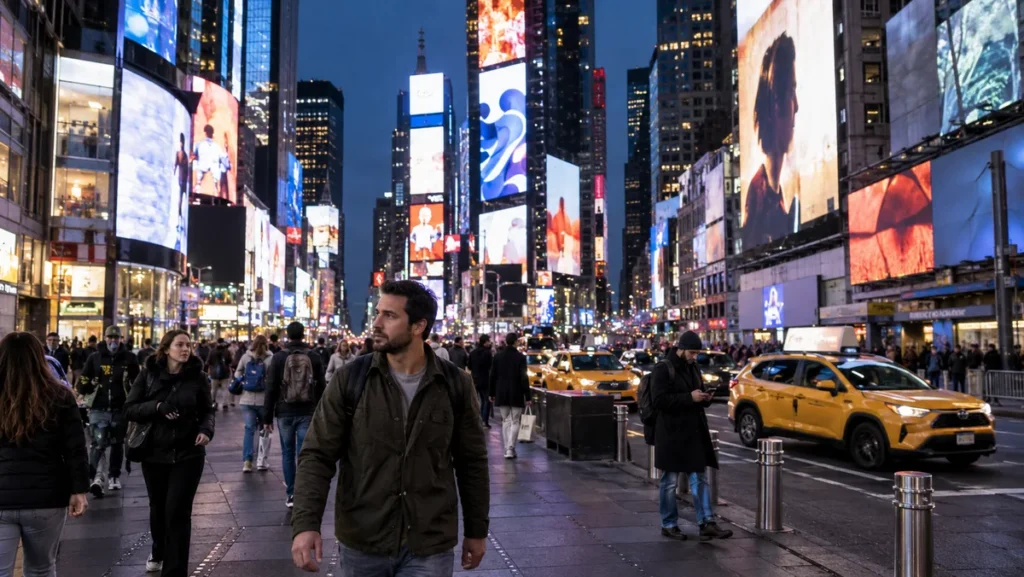
Bright screens covered almost every direction, traffic crawled beside packed sidewalks, and people seemed to move everywhere at once.
I was glad I saw it. I was also glad I did not give it half a day.
About 30–60 minutes was enough, particularly after dark when the lights create the atmosphere most visitors are expecting.
Times Square worked best as part of an evening around Broadway rather than a major daytime attraction.
Cost: Free
Allow: 30–60 minutes
Best time: After dark
6. Use One Evening for Broadway
Broadway added something completely different from another museum or skyline view.
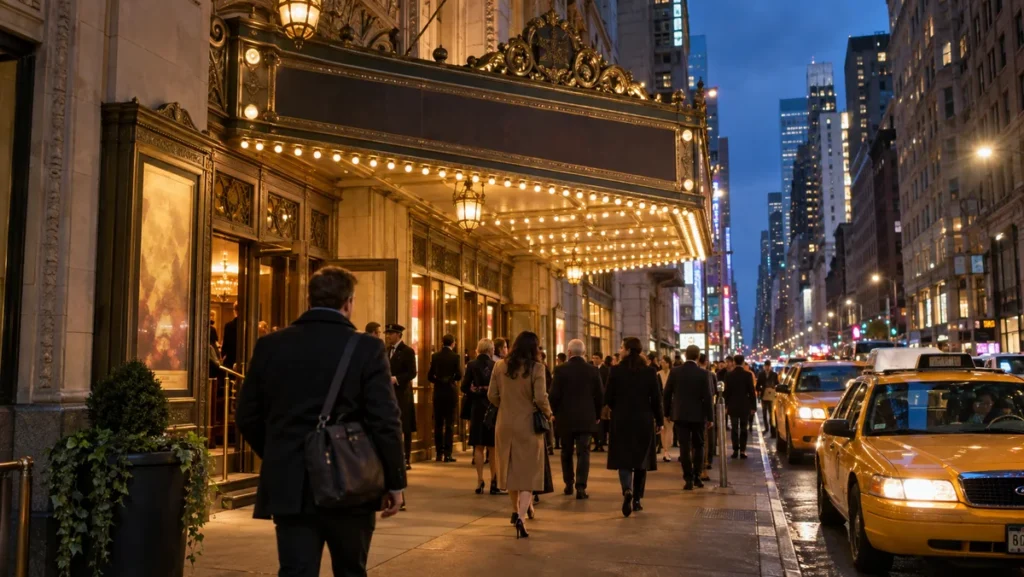
Most performances take roughly 2.5–3 hours, so a show fits neatly into an evening without using much daytime sightseeing time.
Ticket prices vary enormously. For planning, I would allow roughly $70–200+ per person, with popular productions and premium seats costing considerably more.
Same-day discounts and ticket lotteries can reduce that if your plans are flexible.
For me, this was one of the easier splurges to justify because it gave the trip something that none of the daytime attractions could replace.
Central Park and the Museums
7. See Part of Central Park, Not All of It
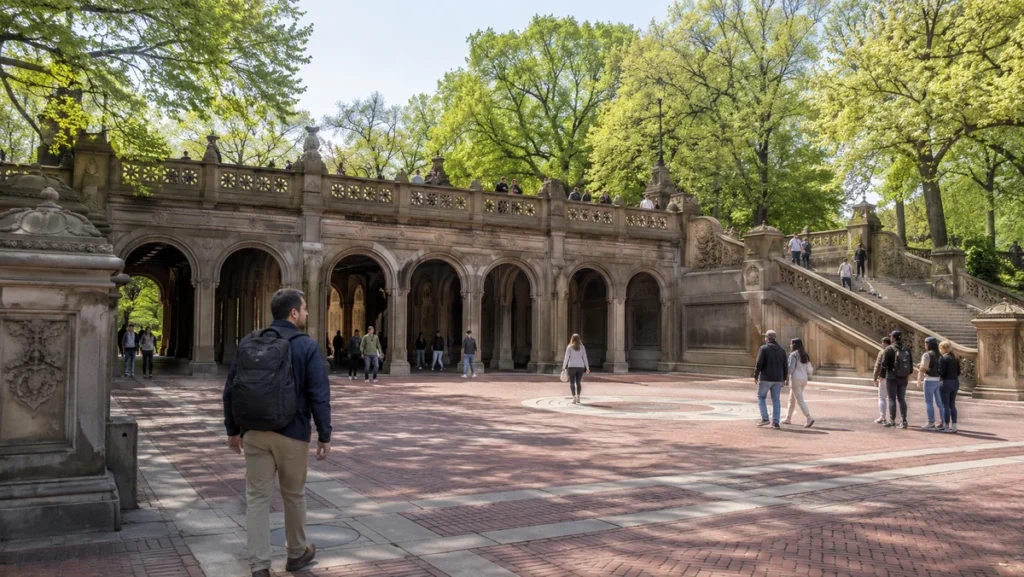
My first mistake with Central Park was thinking I should somehow “see” the whole park.
That is not realistic on a normal sightseeing day.
Once I focused on a smaller section, the experience became much better.
A good first route is:
The Mall → Bethesda Terrace → Bethesda Fountain → Bow Bridge → lake area
Allow two to four hours, depending on how often you stop.
Central Park also pairs naturally with The Met on the east side or the American Museum of Natural History on the west side.
Cost: Free
Best for: Walking, photography, slower mornings
8. Give The Met a Plan, Not an Entire Day by Default
The Metropolitan Museum of Art is enormous.
Walking in without deciding what I wanted to see would have been an easy way to lose half a day.
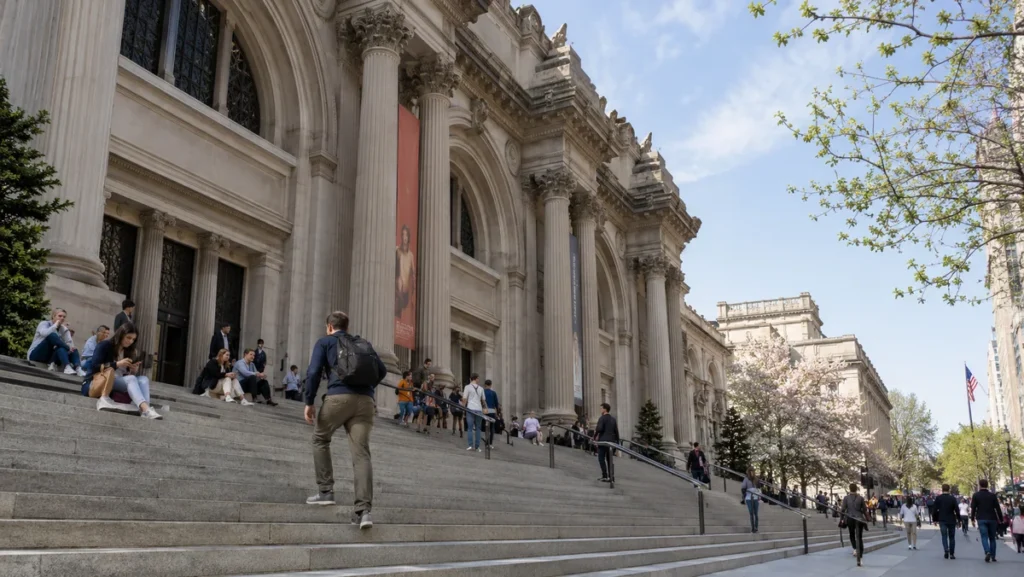
For most first-time visitors, 2.5–4 hours is enough to concentrate on a few collections. Someone deeply interested in art could easily stay much longer.
Current general adult admission is $30. New York residents and eligible students from New York, New Jersey, and Connecticut have pay-what-you-wish admission.
The location beside Central Park is another reason The Met works so well in a first-trip itinerary. There is no need to lose an hour crossing the city between attractions.
Check current Met visitor information
9. Choose the American Museum of Natural History if Science Wins
I would not try to properly see both The Met and the American Museum of Natural History on the same short day.
They are both too large.
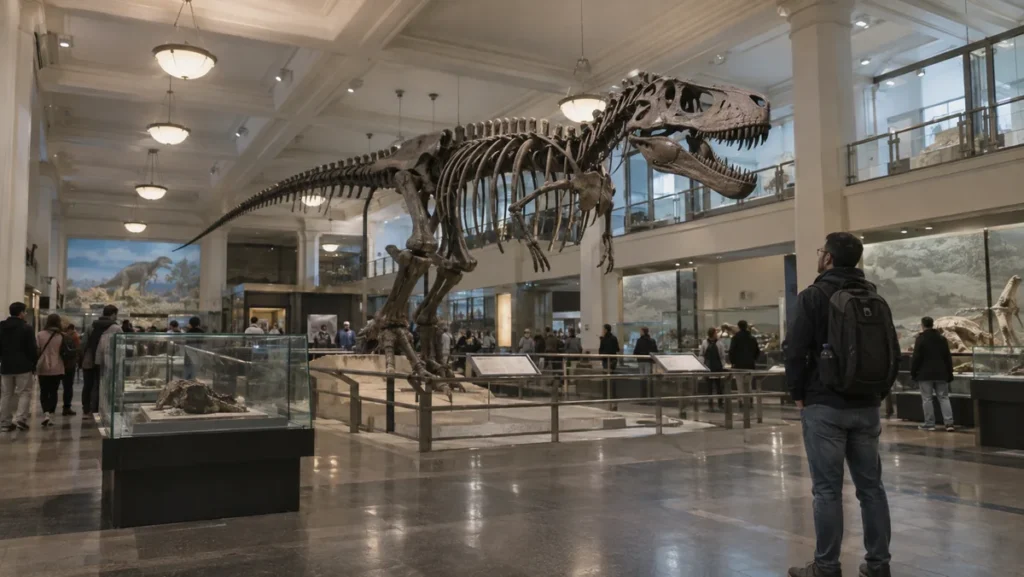
The American Museum of Natural History is the more obvious choice for dinosaurs, fossils, space, science, and many family trips.
Allow roughly 2.5–4 hours.
For visitors from outside New York State, standard general admission is currently $37 for adults. New York State residents can choose what they pay for general admission with valid ID. The museum is normally open daily from 10 a.m. to 5:30 p.m., except Thanksgiving and Christmas.
For a four-day trip, choosing between this museum and The Met made more sense than squeezing in both.
The West Side
10. Walk the High Line as Part of a Bigger Route
The High Line made far more sense once I stopped treating it as an isolated attraction.
It connects naturally with Hudson Yards, Chelsea Market, and Little Island, turning several separate stops into one easy West Side day.

The elevated route mixes gardens, old railway infrastructure, changing architecture, street views, and glimpses toward the Hudson.
Allow 60–90 minutes if you want to stop rather than simply walk through.
Cost: Free
11. Eat at Chelsea Market Because You Are Already There
Chelsea Market was useful partly because of where it sits.

After walking the High Line, I was already nearby. That made it a better lunch choice than travelling across Manhattan for a restaurant I had saved online.
Budget around $15–30 per person for a casual meal.
The main downside was the crowd. Around normal lunch hours, finding somewhere to sit could take longer than ordering the food.
Allow: 60–90 minutes
Best combined with: High Line and Little Island
12. Slow Down at Little Island
Little Island was one of the quieter breaks in my West Side day.
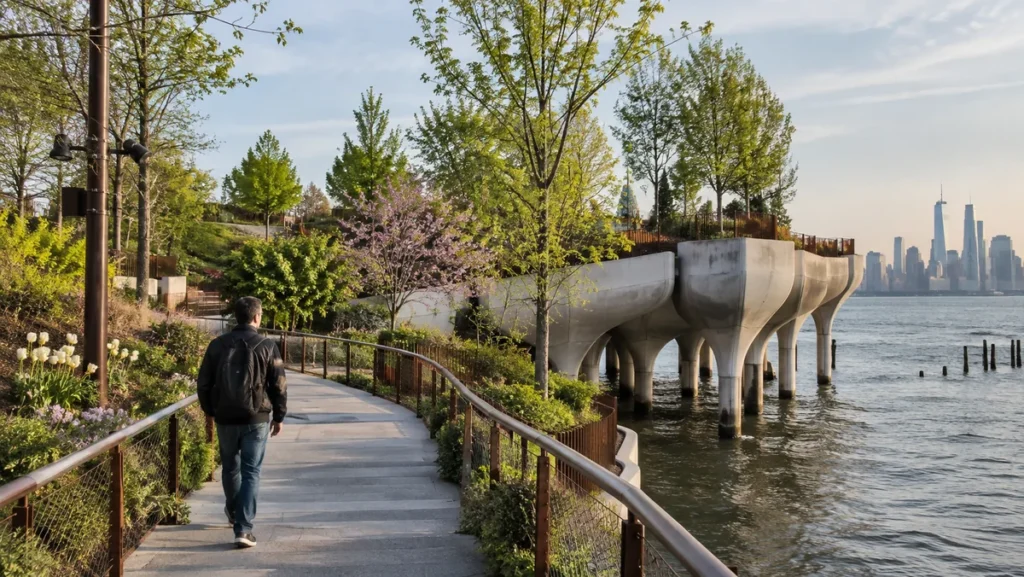
Around 45–60 minutes was enough to walk through the landscaped paths, sit beside the Hudson, and take a break from traffic and crowds.
I would not cross the city specifically for it on a short trip.
Combined with the High Line and Chelsea, though, it fits perfectly.
Cost: Free
13. Treat Hudson Yards as a Starting Point, Not a Half-Day Attraction
Hudson Yards felt noticeably different from older parts of Manhattan.
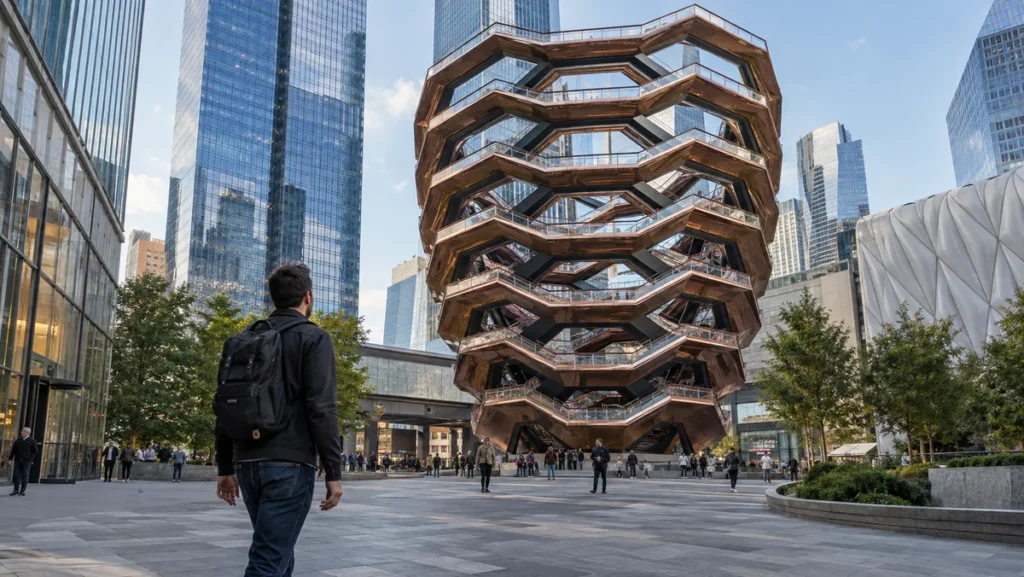
Its appeal is modern architecture, Edge, the Vessel exterior, shopping, and its access to the High Line.
Unless you are visiting Edge, there is little reason to give Hudson Yards several hours.
It worked best as the start or finish of my West Side route.
Greenwich Village and SoHo
14. Leave Some Time Unplanned in Greenwich Village
Greenwich Village was more enjoyable because I did not arrive with a long checklist.
Washington Square Park gave me an obvious starting point, but I spent more time wandering smaller streets toward the West Village.
This is also an easy part of town to work food into the day naturally.
A pizza slice, bagel, sandwich, coffee, or casual meal can cost roughly $10–25 per person, depending on where you stop.
Allow 1.5–2.5 hours, or longer if you enjoy walking neighborhoods without a fixed route.
15. Continue Into SoHo if You Still Have Time
SoHo fit naturally after Greenwich Village.
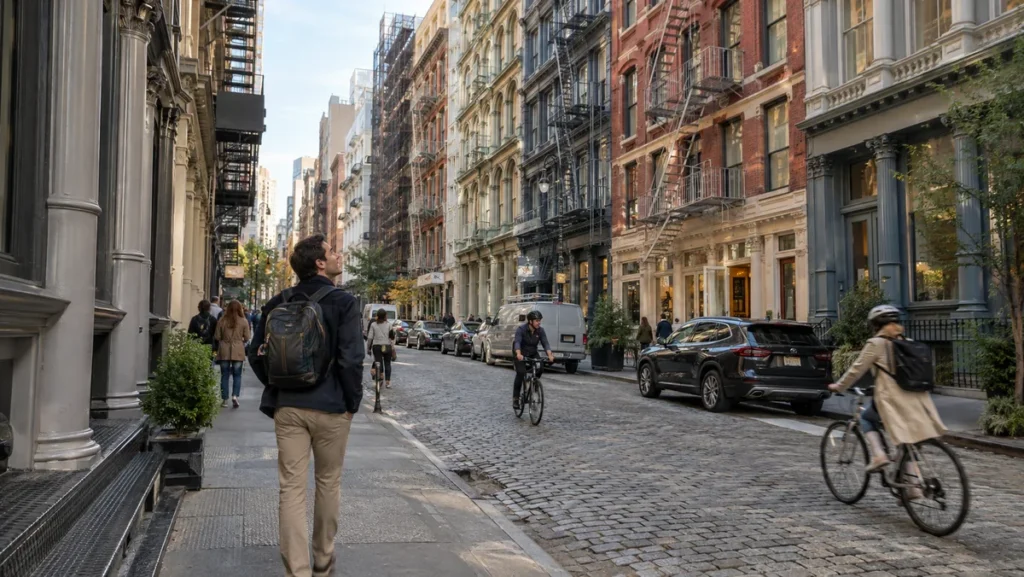
The cast-iron buildings interested me more than the shopping, and walking the neighborhood costs nothing unless you disappear into the stores.
Around one to two hours was enough.
On a three-day trip, though, SoHo would be one of the first places I shortened before cutting Central Park, Brooklyn Bridge, or Lower Manhattan.
Lower Manhattan
16. Give the Statue of Liberty and Ellis Island Half a Day
This was one place where I underestimated the logistics.
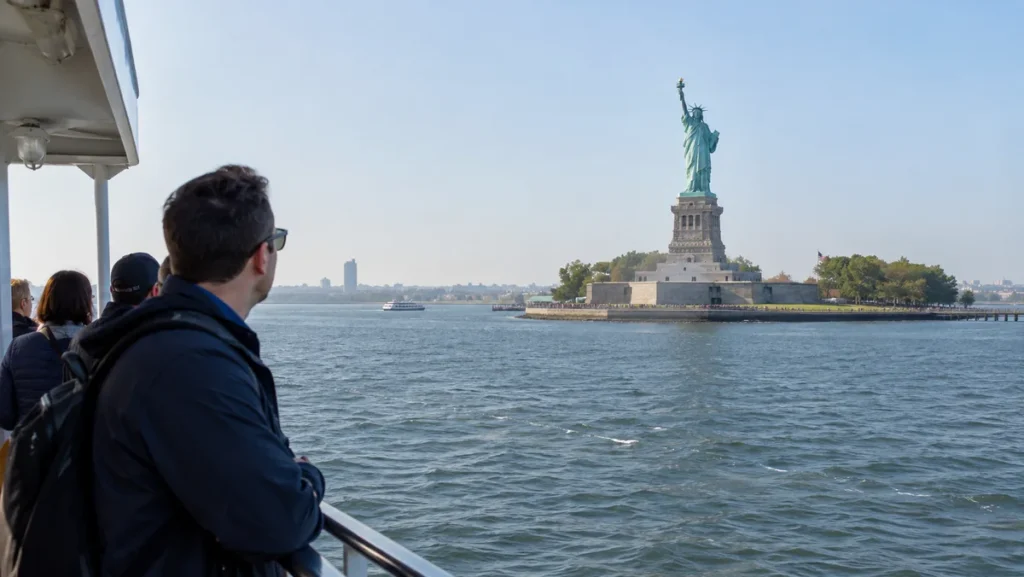
Seeing the Statue of Liberty from Manhattan is easy. Taking the ferry, going through security, visiting Liberty Island, continuing to Ellis Island, and returning to Manhattan takes much longer.
The National Park Service currently lists the adult ferry ticket at $25.50. There is no separate NPS entrance charge for the museums on Liberty and Ellis Islands, although pedestal and crown access require specific tickets and availability is limited.
For both islands, allow roughly four to six hours. The National Park Service itself notes that visiting both can take most of the day.
Starting early makes a real difference.
I would not combine this with Central Park or an Uptown museum. Once back at The Battery, staying in Lower Manhattan is far more efficient.
Plan your Statue of Liberty and Ellis Island visit with the National Park Service
17. Walk Through the Financial District
One of my better decisions was staying downtown after returning from Liberty and Ellis Islands.
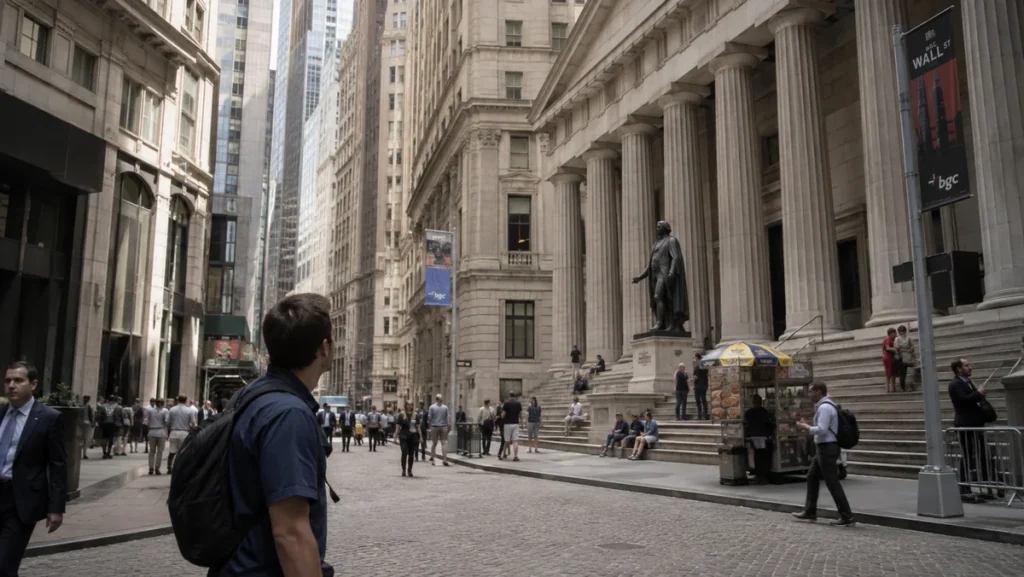
The Battery, Wall Street, Federal Hall, Trinity Church, the New York Stock Exchange exterior, and the World Trade Center area are close enough to connect on foot.
Allow around 60–90 minutes.
It also saved me from disappearing onto the subway only to return downtown later.
18. Decide Separately on the 9/11 Memorial and Museum
The outdoor 9/11 Memorial and the museum require very different amounts of time.
Visiting the memorial itself is free.

Current museum admission runs from $24–36, depending on ticket category. I would allow roughly two hours inside rather than treating it as a quick addition to the day.
The subject matter also made rushing feel inappropriate.
If your schedule is already full, the outdoor memorial and Oculus still fit naturally into a Lower Manhattan walk.
Check current 9/11 Memorial & Museum admission
Brooklyn
19. Walk the Brooklyn Bridge Toward Brooklyn
Brooklyn Bridge was one of the free experiences I would keep even on a short New York trip.
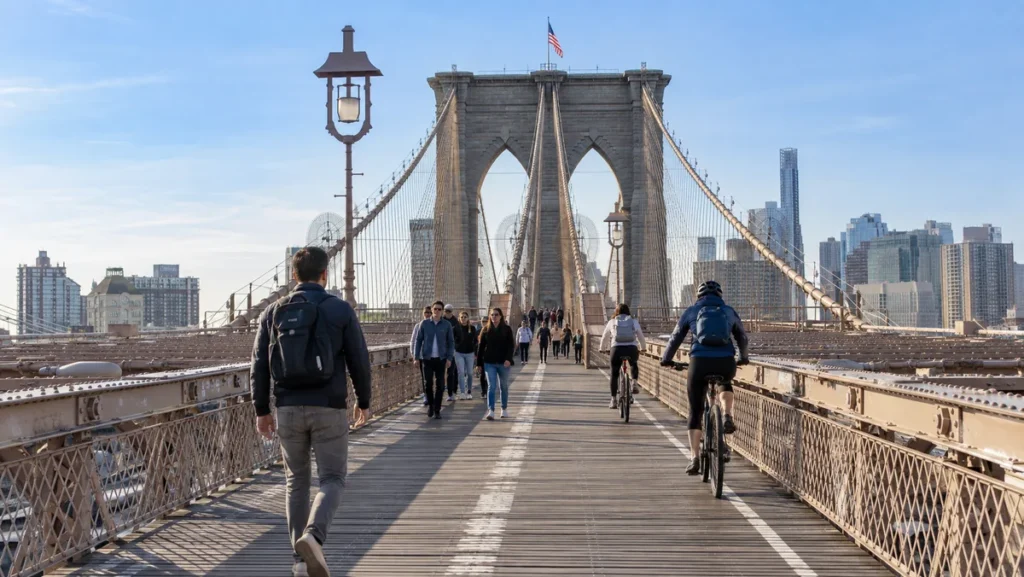
Allow 45–75 minutes because the crossing gets much slower once you start stopping for photographs and skyline views.
I preferred walking from Manhattan toward Brooklyn because I finished in DUMBO instead of arriving back among Lower Manhattan traffic.
Earlier in the morning also gives you more room on the pedestrian path.
20. Stay in DUMBO After Crossing the Bridge
Crossing the Brooklyn Bridge and immediately turning around would have been a waste.
I stayed around DUMBO, Brooklyn Bridge Park, and the waterfront instead.
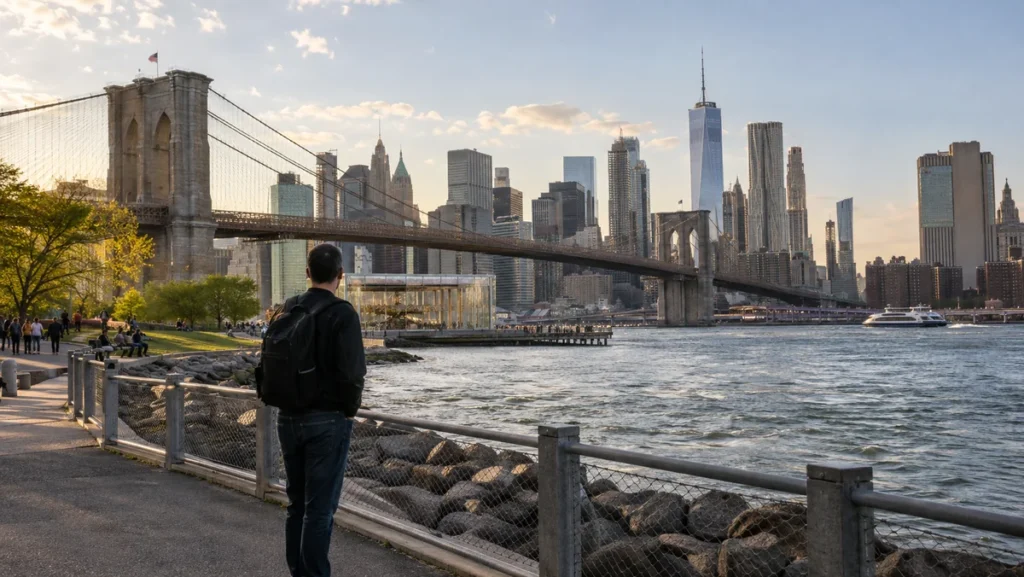
The views back toward Lower Manhattan were some of my favorite city views of the trip, and the familiar Manhattan Bridge street perspective added another classic New York scene without an admission ticket.
Allow another 1.5–2 hours after the bridge.
On a five-day trip, I would give Brooklyn more time rather than adding yet another Midtown attraction.
Cost: Free apart from food
21. Take the Staten Island Ferry for a Free Harbor Ride
The Staten Island Ferry solves a very different problem from the Statue of Liberty ferry.
It does not take you to Liberty Island, but it gives you harbor views without an admission ticket.
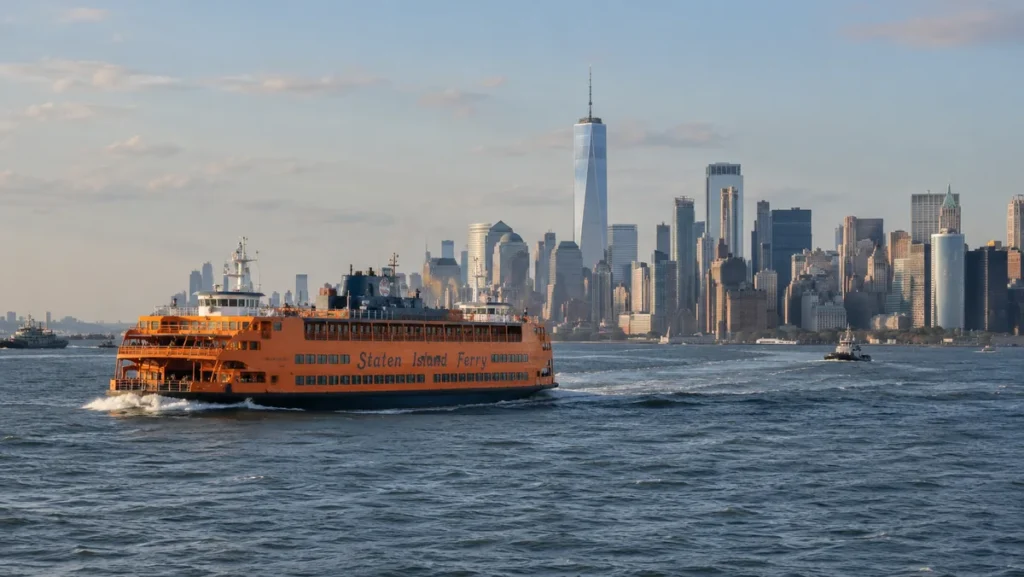
NYC DOT confirms that the ferry is free and that the journey between Whitehall Terminal and St. George takes about 25 minutes each way.
Allow roughly 60–75 minutes for an out-and-back trip because passengers leave the boat at the terminal before making the return journey.
For anyone who mainly wants a harbor view of the Statue of Liberty rather than a full island visit, this is the much easier option.
Check the official Staten Island Ferry schedule
The Planning Mistakes I Would Avoid Next Time
The biggest time-waster was planning around individual attractions instead of neighborhoods.
A day that jumps between Central Park, Chelsea, Lower Manhattan, and Brooklyn may look possible when each stop is viewed separately. In reality, station walks, waiting, transfers, meals, and crowds quickly eat into the day.
A few things I would avoid next time:
- Booking several observation decks on the same trip.
- Trying to properly see The Met and AMNH in one day.
- Giving Times Square several daytime hours.
- Treating Liberty and Ellis Islands as a quick two-hour excursion.
- Crossing the city just for a restaurant.
- Taking a taxi for a journey the subway handles more efficiently.
- Filling every evening with reservations.
Once I started planning by area, New York became much easier.
A 5-Day New York Itinerary That Actually Fits Together
| Day | Morning | Afternoon | Evening | Approx. Paid Sightseeing |
|---|---|---|---|---|
| Day 1 – Midtown | Grand Central, Bryant Park, NYPL | Fifth Avenue, Rockefeller Center, observation deck | Times Square + Broadway | About $115–250 |
| Day 2 – Lower Manhattan + Brooklyn | Statue of Liberty + Ellis Island | Wall Street + 9/11 Memorial | Brooklyn Bridge + DUMBO | About $26–62 |
| Day 3 – Central Park | Central Park | The Met or AMNH | Upper East/West Side dinner | About $30–37 |
| Day 4 – West Side | Hudson Yards + High Line | Chelsea Market + Little Island | Greenwich Village | Mostly free; food extra |
| Day 5 – Flexible | MoMA or more Brooklyn | SoHo or neighborhood wandering | Staten Island Ferry | About $0–30 before food |
With only three days, I would concentrate on the first three days and make harder choices about museums and the Statue of Liberty.
Four days gives a better balance.
Five leaves enough room to enjoy New York rather than simply move through it.
Getting Around New York
For almost everything in this guide, walking and the subway were enough.
The 2026 MTA subway and local bus base fare is $3, and OMNY has a $35 rolling seven-day fare cap when you keep using the same eligible payment method.
For me, the subway was usually better than a taxi when crossing Manhattan.
Walking made more sense for short trips inside the same neighborhood.
The only trap was assuming that because New York is walkable, I should walk everywhere. Ten or fifteen extra minutes here and there adds up quickly when a sightseeing day already involves several miles.
A rental car would have added more problems than it solved.
Check current MTA fares and transit information
What a Day in New York Can Cost
The biggest variable is how many paid attractions you stack into the same day.
| Travel Style | Food | Local Transport | Attractions | Approx. Daily Total* |
|---|---|---|---|---|
| Budget-focused | $35–55 | $6–15 | $0–35 | $41–105 |
| Mid-range | $60–100 | $6–20 | $40–110 | $106–230 |
| Comfortable | $100–180 | $20–60 | $100–250 | $220–490 |
*Excluding accommodation and shopping.
The easiest way to save money was not avoiding paid attractions altogether.
It was choosing them carefully and filling the rest of the day with places such as Central Park, Brooklyn Bridge, the High Line, Greenwich Village, Little Island, Bryant Park, and the Staten Island Ferry.
Best Time to Visit New York
May suited my trip because so much of the itinerary involved walking.
Each season has its own trade-offs.
| Period | Weather | Crowds | Prices | Best For |
|---|---|---|---|---|
| March–May | Cool to mild; some rain | Moderate to high | Moderate to high | Parks and walking |
| June–August | Hotter and humid | High | High | Long daylight and outdoor events |
| September–November | Mild, then cooler | High | Often high | Walking and fall scenery |
| December | Cold | Very high around major sights | High | Christmas atmosphere |
| January–February | Cold; possible snow or ice | Generally lower | Often better value | Museums and lower crowds |
For a trip built around long neighborhood walks, Central Park, the High Line, and Brooklyn Bridge, late spring or early fall gives the easiest balance.
Final Thoughts
New York became much better once I stopped trying to complete it.
One skyline view was enough. One major museum in a day was enough. Times Square did not need hours, and every famous restaurant did not justify crossing Manhattan.
The days I enjoyed most had a natural rhythm: Central Park followed by a museum, the High Line into Chelsea and Greenwich Village, or Lower Manhattan ending with a walk across Brooklyn Bridge.
If I planned the trip again, I would keep the attraction list shorter and protect more time for simply walking.
That was when New York felt least like a checklist and most like New York.