



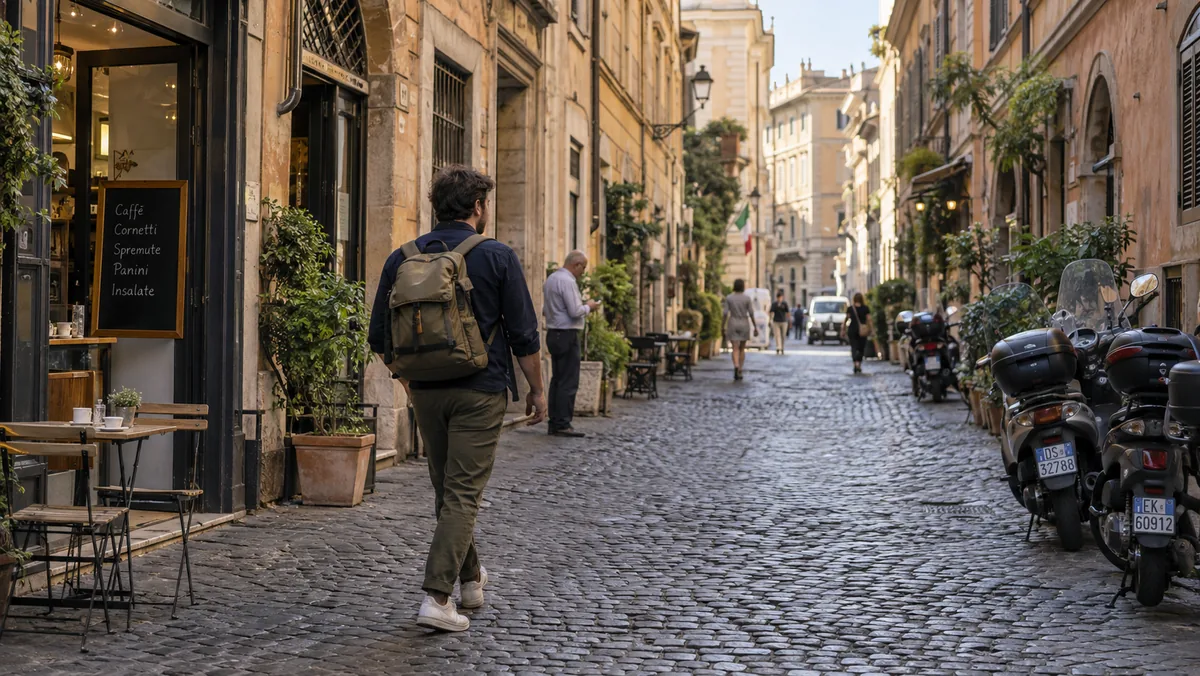
Rome looked manageable when I first mapped everything out. The Colosseum, Pantheon, Trevi Fountain, Vatican, and Spanish Steps all seemed close enough that I thought I could fit more into each day than I actually could.
I visited Rome in September 2026, when the afternoons were still warm and several hours on stone streets felt longer than they looked on Google Maps. The biggest lesson from the trip was simple: Rome gets much easier when you book only the attractions that genuinely need reservations and group everything else by area.
For a first visit, three full days is enough for the major sights. Four felt much better. With only two days, I would focus on the Colosseum and Forum, Vatican City, Pantheon, Trevi Fountain, and an evening in Trastevere rather than trying to collect every landmark.
Rome attractions worth booking ahead
| Attraction | Realistic Time | Adult Cost | Booking | Best Paired With |
|---|---|---|---|---|
| Colosseum | 75–90 min | €18 standard | Essential | Roman Forum |
| Roman Forum & Palatine Hill | 2–3 hr | Included with Colosseum ticket | Same ticket | Colosseum |
| Vatican Museums | 3–4 hr | €20; €25 reserved online | Strongly recommended | St. Peter’s |
| St. Peter’s Basilica | 1–2 hr | Free; optional reservation from €7 | give mOptional | Vatican Museums |
| Pantheon | 30–45 min | €7 | Useful at busy times | Piazza Navona |
| Trevi Fountain | 20–30 min | Free; €2 basin access | Usually no | Spanish Steps |
| Galleria Borghese | 2 hr | €16 + €2 booking fee | Mandatory | Villa Borghese |
| Castel Sant’Angelo | 1.5–2 hr | €18 | Useful | Vatican City |
| San Clemente excavations | 45–60 min | €10 | Sensible | Colosseum |
| Baths of Caracalla | 1–1.5 hr | €8, sometimes plus exhibition fee | Usually no | Aventine Hill |
Colosseum tickets currently open 30 days before the visit, and standard admission includes the Roman Forum and Palatine Hill. (colosseo.it)
The Vatican Museums charge €20 at the ticket office or €25 through the official online reservation system. The Vatican also warns visitors about unofficial websites that imitate its ticket portal. (museivaticani.va)
Those were the two reservations I settled first.
1. Book the Colosseum before you arrive
The Colosseum was one of the few Rome attractions where advance planning made a noticeable difference.
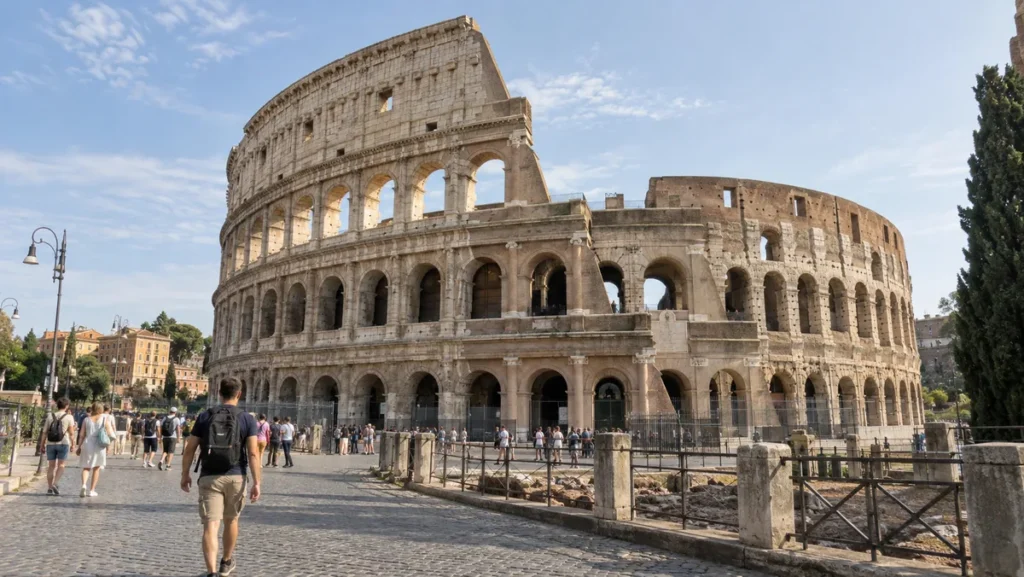
I booked a morning slot and was glad I did. By late morning, the stone around the archaeological area was already heating up, and starting early meant I reached the Forum before the strongest part of the afternoon.
Standard admission is €18 and includes a timed Colosseum visit plus the Roman Forum and Palatine Hill. Tickets currently go on sale 30 days ahead. (colosseo.it)
The Colosseum itself took me about 75–90 minutes. I never felt the need to stretch it into a half-day visit.
Time: 75–90 minutes
Cost: €18
Booking: Yes
Pair with: Roman Forum, Palatine Hill, San Clemente
2. Give the Roman Forum more time than the Colosseum
I underestimated the Roman Forum before the trip.
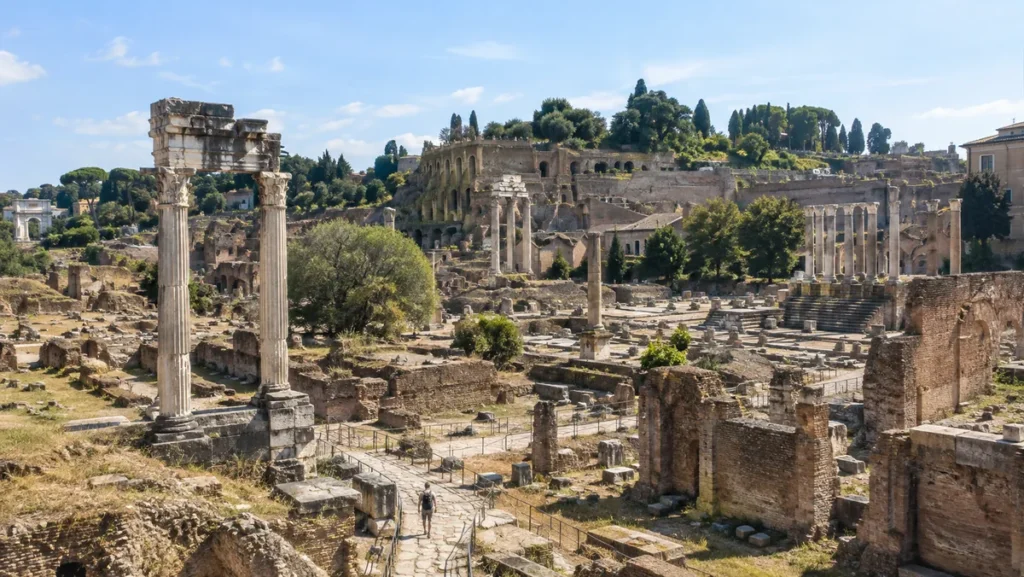
On a map, it looked like somewhere I could walk through after the Colosseum. Once inside, the distance between ruins, climbs, viewpoints, and Palatine Hill quickly added up.
The Via Sacra, Temple of Saturn, House of the Vestal Virgins, Arch of Titus, and Palatine views made much more sense once I stopped rushing.
Two hours is possible. Three is more comfortable, especially if you enjoy Roman history.
There is also less shade than I expected, so water and decent shoes mattered more here than at almost any other stop.
Time: 2–3 hours
Cost: Included with the Colosseum ticket
Best time: After an early Colosseum entry
3. Treat the Vatican Museums as half a day
Trying to see everything in the Vatican Museums would have ruined the visit for me.
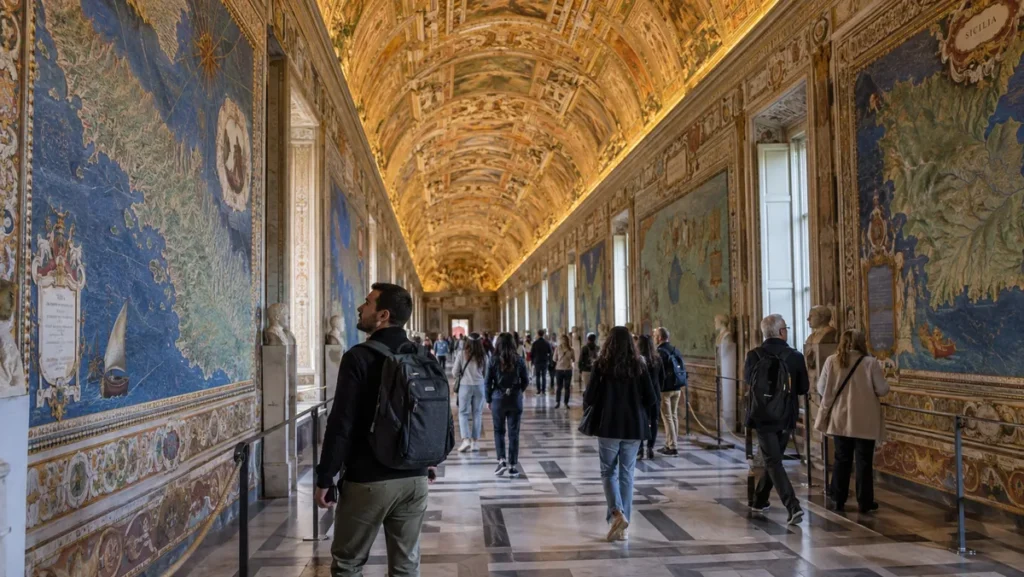
I focused on the Gallery of Maps, Raphael Rooms, major classical works, and the route toward the Sistine Chapel instead of stopping at every room.
Adult admission is €20, with a €5 fee added for official online reservations. The museums are currently open Monday to Saturday from 8:00 a.m. to 8:00 p.m., with final entry at 6:00 p.m. (museivaticani.va)
Three hours worked for me. Four would suit someone more interested in art.
I would not follow the Vatican Museums with another major museum. By the end, I wanted food and daylight more than another gallery.
Time: 3–4 hours
Cost: €20 walk-up; €25 officially reserved online
Booking: Strongly recommended
Official Vatican Museums tickets
4. Visit St. Peter’s Basilica early
St. Peter’s Basilica is close to the Vatican Museums, but the two do not feel like one continuous attraction once security and visitor flows are involved.
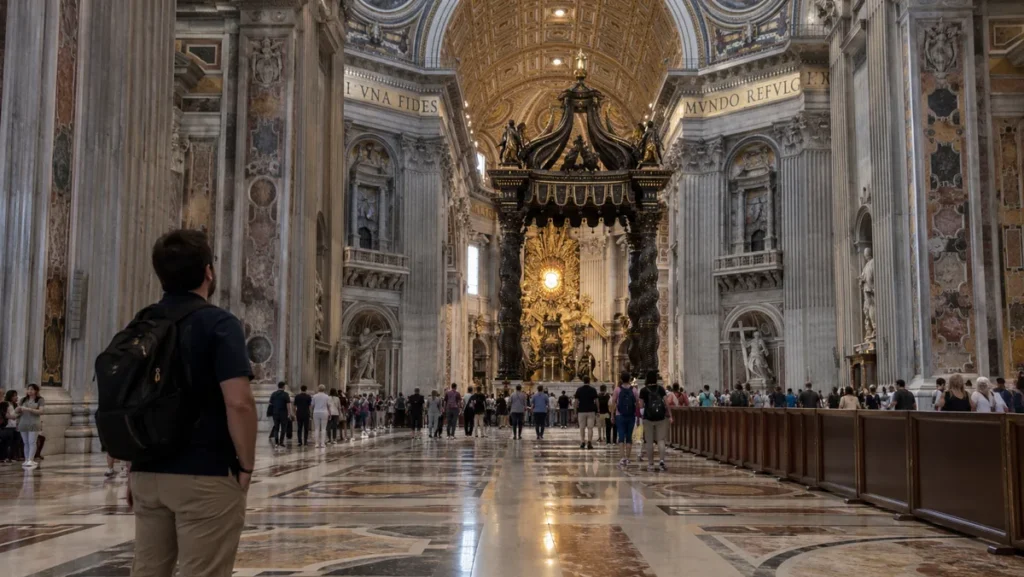
Entry to the Basilica itself is free. An optional timed reservation with a digital audio guide currently starts at about €7, although security checks still apply. (basilicasanpietro.va)
Inside, Michelangelo’s Pietà and Bernini’s Baldachin were the details that held my attention most.
Allow more time if you plan to climb the dome. That turns a short Basilica visit into a much bigger part of the day.
Time: 1–2 hours, longer with the dome
Cost: Free; optional timed reservation from €7
Best time: Early morning
Official St. Peter’s Basilica information
5. Go inside the Pantheon
The Pantheon was one place where the interior changed my impression of the building.
From Piazza della Rotonda, the columns and façade are impressive. Inside, the dome, oculus, marble floor, and changing light make the engineering much easier to appreciate.
Since July 1, 2026, standard admission has been €7. (direzionemuseiroma.cultura.gov.it)
Most people need only 30–45 minutes, so it fits neatly between Piazza Navona and Trevi Fountain.
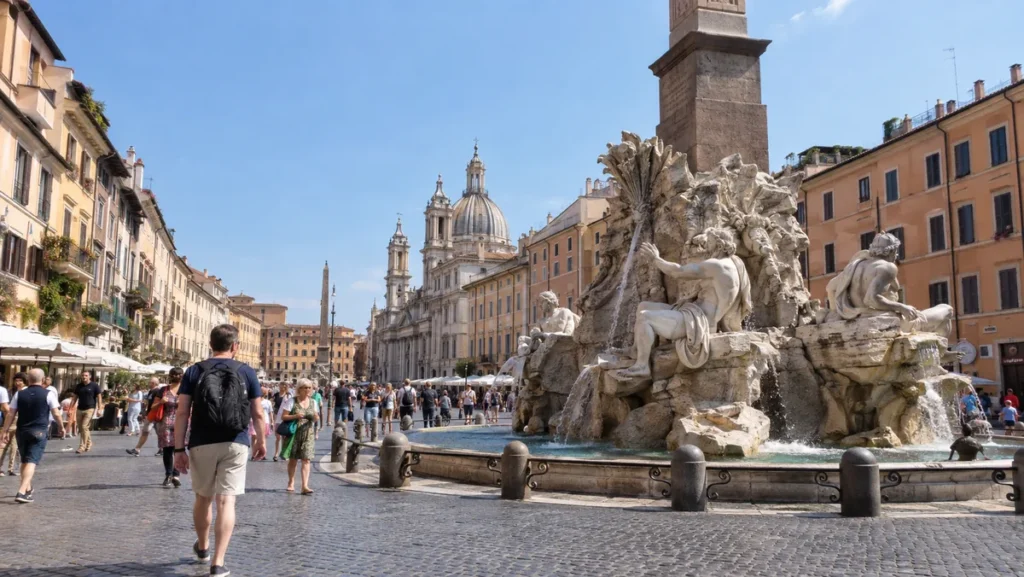
Time: 30–45 minutes
Cost: €7
Booking: Helpful during busy periods
6. See Trevi Fountain before the crowds build
Trevi Fountain felt like two different places depending on the hour.
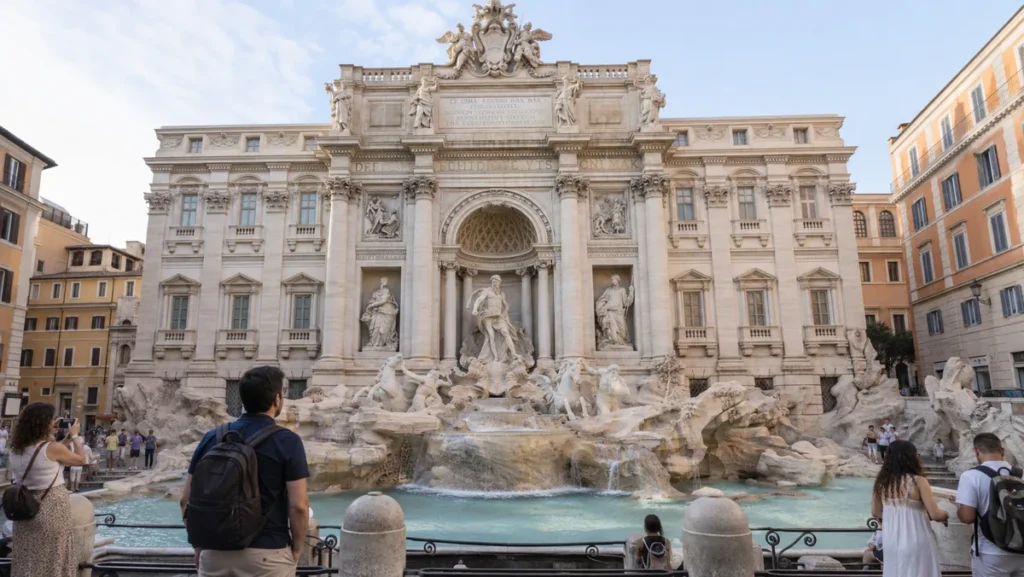
Early in the day, the water was the loudest thing I noticed. Later, the square was dominated by tour groups, conversations, and people trying to move toward the front.
Since February 2, 2026, tourists and non-residents pay €2 to enter the controlled basin area closest to the fountain between 9:00 a.m. and 10:00 p.m. The fountain is still visible for free from the rest of the square. (turismoroma.it)
If access is moving quickly, €2 is minor. If there is a long queue, I would stay in the free area.
Time: 20–30 minutes
Cost: Free; €2 for basin access
Best time: Early morning
Official Trevi Fountain information
7. Walk from the Pantheon to Piazza Navona
Piazza Navona worked best as part of a walk rather than a destination that needed its own itinerary block.
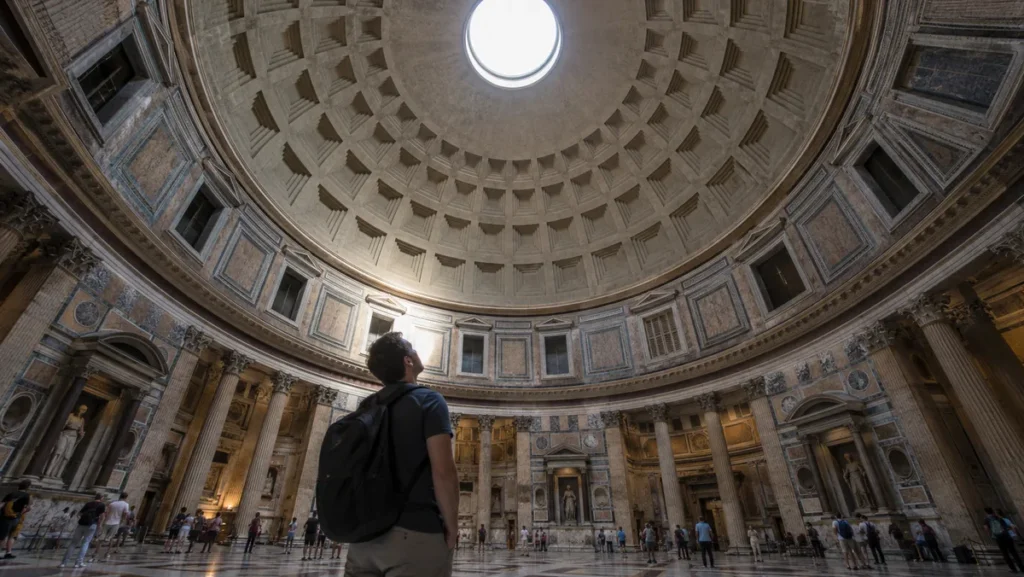
I came from the Pantheon, spent time around Bernini’s Fountain of the Four Rivers, then continued toward Campo de’ Fiori.
No ticket, no reservation, no transport.
That sequence was one of the easiest parts of the trip.
Time: 30–45 minutes
Cost: Free
Pair with: Pantheon and Campo de’ Fiori
8. Keep the Spanish Steps short
The Spanish Steps were worth seeing, but I did not need long there.
I walked through Piazza di Spagna, looked up toward Trinità dei Monti, and continued through the surrounding streets toward Trevi Fountain.
Twenty or 30 minutes felt enough.
If the area is packed when you arrive, come back later rather than standing around waiting for the crowd to thin.
Time: 20–30 minutes
Cost: Free
Pair with: Trevi Fountain and Piazza del Popolo
9. Visit Castel Sant’Angelo after the Vatican
I expected the exterior of Castel Sant’Angelo to be the most interesting part.
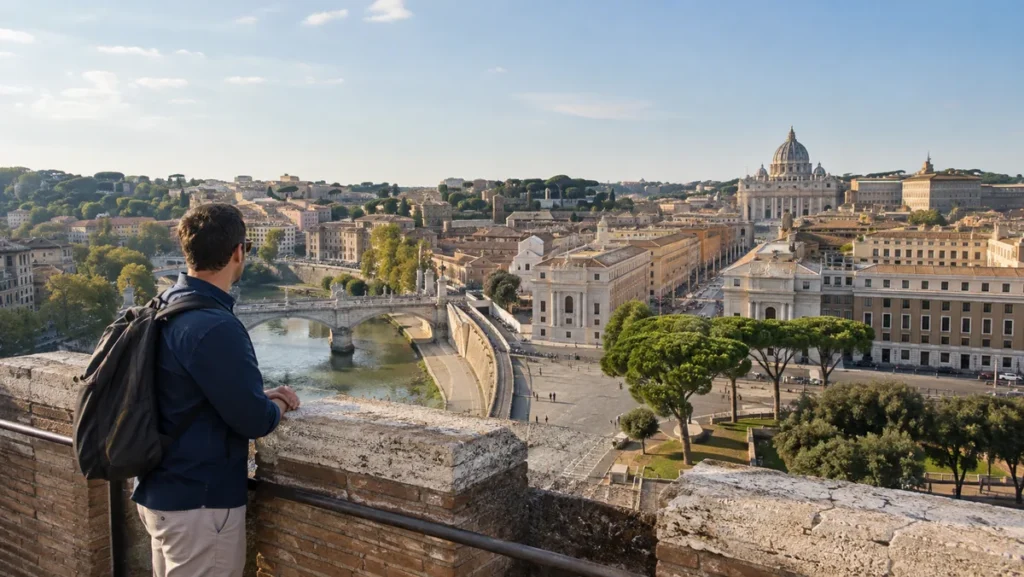
The inside surprised me.
As I moved upward, the building shifted from Roman mausoleum to fortress and papal residence. The terrace view toward St. Peter’s was the highlight.
Full-price admission rose to €18 on July 1, 2026. (direzionemuseiroma.cultura.gov.it)
It makes the most sense after the Vatican because the two areas fit naturally together.
Time: 1.5–2 hours
Cost: €18
Pair with: Vatican City and Ponte Sant’Angelo
10. Give Trastevere an evening
Trastevere was one of the places where I stopped watching the clock.
Late in the afternoon, the streets were quieter. By evening, restaurant tables filled, bars got louder, and the area changed completely.
I walked around Santa Maria in Trastevere, had a drink, and stayed for dinner rather than treating the neighborhood as another box to tick.
A casual trattoria meal generally costs around €15–30 per person before much alcohol, while dinner with wine can easily reach €30–45.
Carbonara, cacio e pepe, amatriciana, and supplì all fitted naturally into an evening here.
Time: 2–4 hours
Cost: Free to explore; roughly €20–40 for dinner and a drink
Best time: Late afternoon into evening
11. Reserve Galleria Borghese before the trip
Galleria Borghese was much easier to enjoy than the bigger museums.
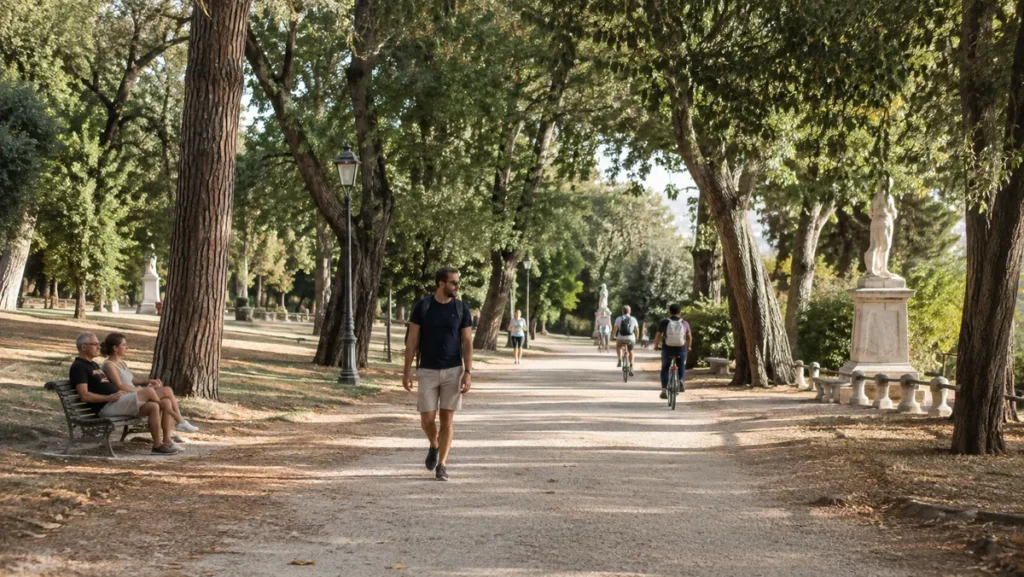
Reservations are compulsory, and normal visits last two hours. The adult ticket costs €16 plus a €2 reservation fee. (galleriaborghese.cultura.gov.it)
Bernini’s sculpture was the main reason I stayed focused from start to finish, with Caravaggio, Raphael, Titian, and Canova adding enough variety without becoming overwhelming.
The limited entry system actually helped.
Time: 2 hours
Cost: €18 total
Booking: Mandatory
Pair with: Villa Borghese
Official Galleria Borghese tickets
12. Slow down in Villa Borghese
After the gallery, I walked through Villa Borghese instead of heading straight to another attraction.
That hour was more useful than I expected.
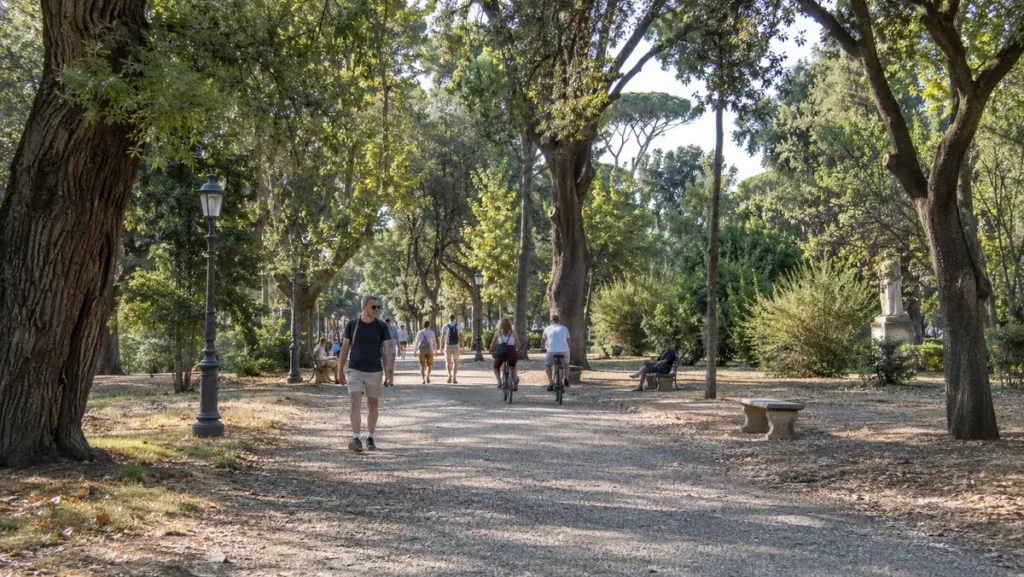
By then, museums, churches, and stone streets had started to blend together. A park gave the day some breathing room.
I continued toward Piazza del Popolo on foot.
Time: 1–2 hours
Cost: Free
Pair with: Galleria Borghese and Piazza del Popolo
13. Use the Capitoline Museums for context
The Capitoline Museums made more sense after I had already walked through the Forum.
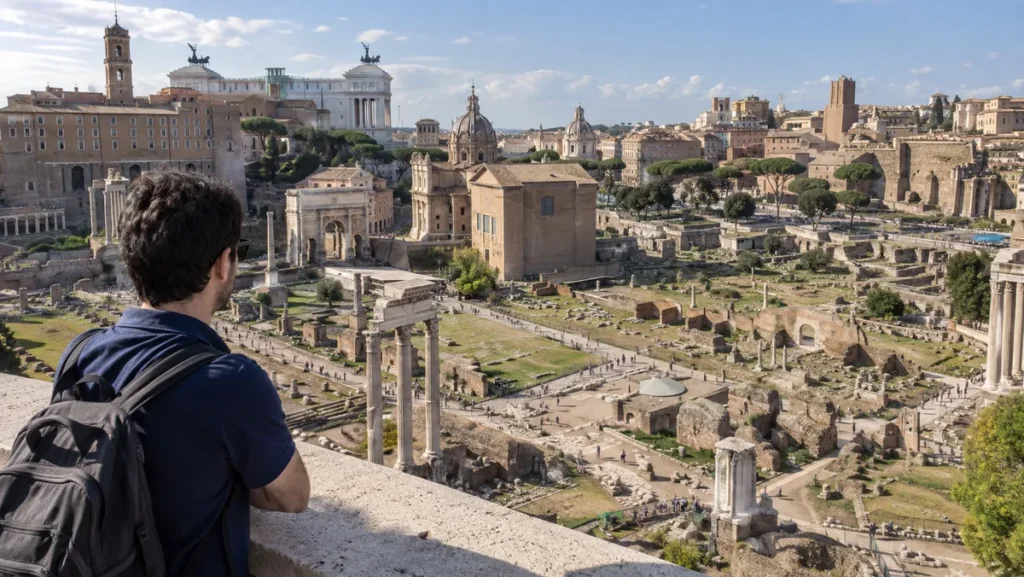
Sculpture, bronzes, inscriptions, and views over the archaeological area helped connect names and periods that had started to blur together.
I would not put the museums ahead of the Colosseum or Vatican on a short trip, but they work well with three or four days.
Time: 2–3 hours
Typical admission: Roughly €15–17 depending on exhibitions
Pair with: Piazza Venezia and Roman Forum
14. Go underground at San Clemente
San Clemente made Rome’s historical layers feel physical.
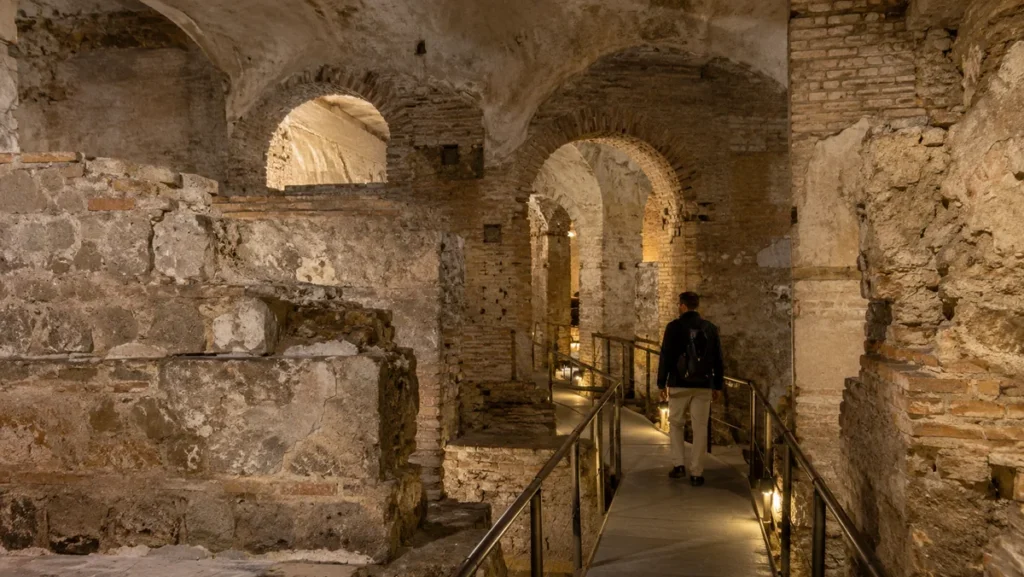
The present basilica sits above earlier Christian spaces and Roman remains below.
Walking downward through those periods made more sense to me than reading another timeline.
The archaeological excavations cost €10, and capacity is controlled. (basilicasanclemente.com)
The underground levels involve stairs and are not fully accessible for visitors with limited mobility.
Time: 45–60 minutes
Cost: €10
Pair with: Colosseum
15. Visit the Baths of Caracalla for quieter ruins
The Baths of Caracalla felt more spacious and less intense than the Roman Forum.
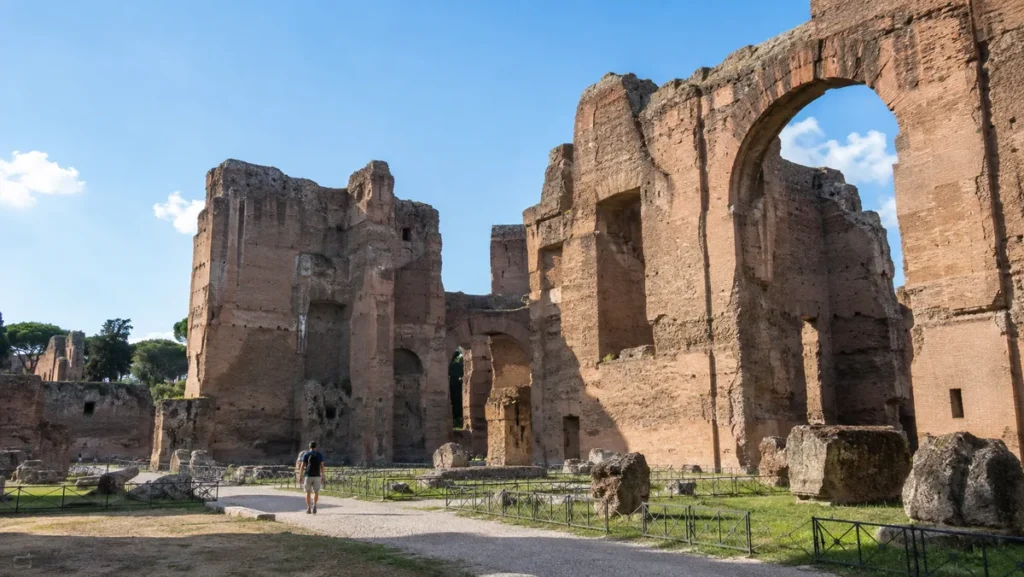
The surviving walls are tall enough to show the scale of the original complex, but the site was easier to absorb without constant crowd pressure.
General admission is €8, with temporary exhibitions sometimes adding a supplement. (cultura.gov.it)
With only two days, I would skip it. With four, it is worth the extra stop.
Time: 1–1.5 hours
Cost: €8, sometimes more during exhibitions
Pair with: Aventine Hill
16. Walk up Aventine Hill
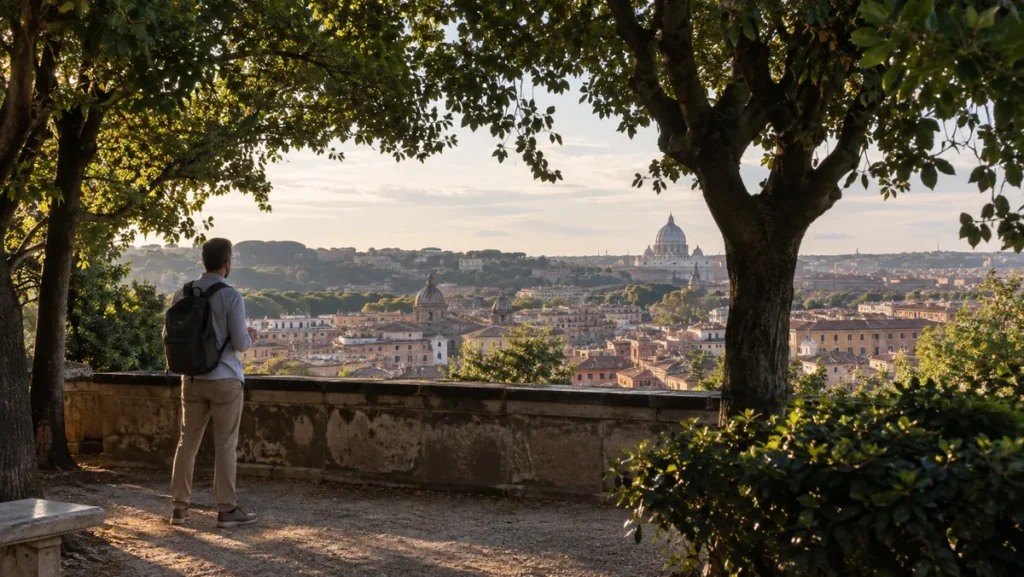
Aventine Hill was one of my favorite free stops.
I walked through the Orange Garden, stayed for the city view, and continued toward the famous keyhole.
The keyhole itself took seconds.
The walk was the better part.
If there is a long queue only for the keyhole, I would not wait.
Time: 45–75 minutes
Cost: Free
Pair with: Testaccio or Baths of Caracalla
17. Walk through the Jewish Ghetto
One of my best walking routes connected Campo de’ Fiori, the Jewish Ghetto, Portico d’Ottavia, and the Tiber.
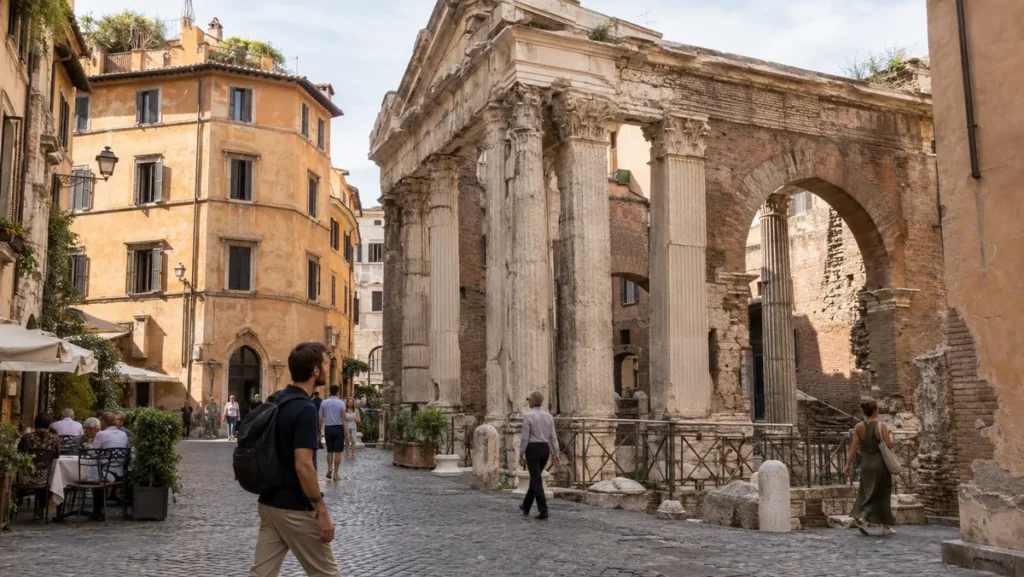
Ancient structures sit beside narrow streets, restaurants, and buildings still used as part of everyday city life.
This was also the right place to try carciofi alla giudia, the crisp Jewish-Roman fried artichoke associated with the neighborhood.
Time: 1–2 hours
Cost: Free; roughly €15–30 for a casual meal
Pair with: Campo de’ Fiori and Trastevere
18. Eat in Testaccio
Testaccio gave me a break from sightseeing without feeling like wasted time.
I came mostly for food.
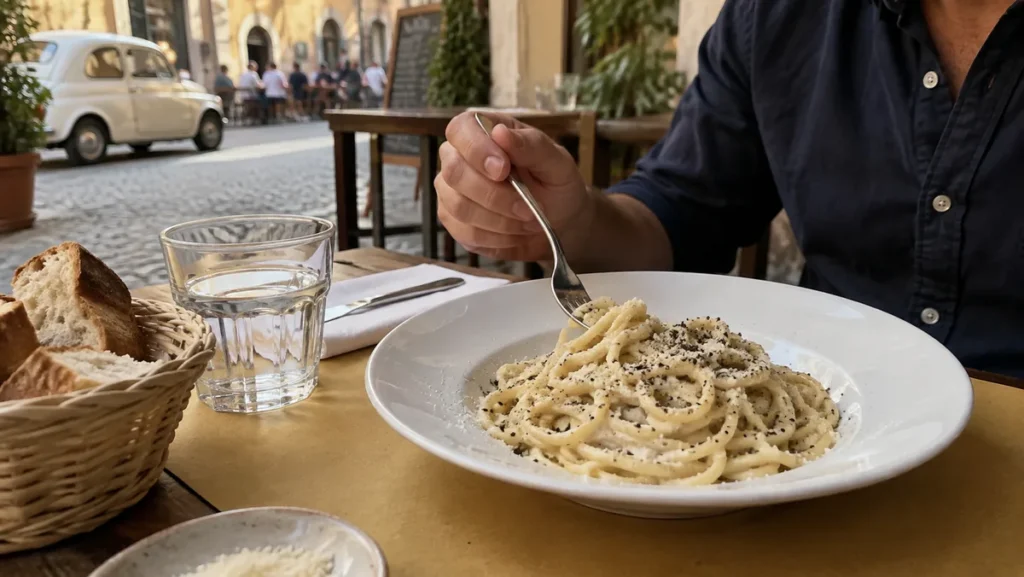
A simple lunch of pizza al taglio, supplì, or market food can cost around €10–20, while a traditional sit-down meal is more likely €20–35 per person before much wine.
After several days of famous landmarks, a couple of hours eating and walking without checking a reservation time felt good.
Time: 2–3 hours
Food budget: Roughly €10–35+
Pair with: Aventine Hill
19. Save the Appian Way for a longer trip
The Appian Way needs more time than it appears to.
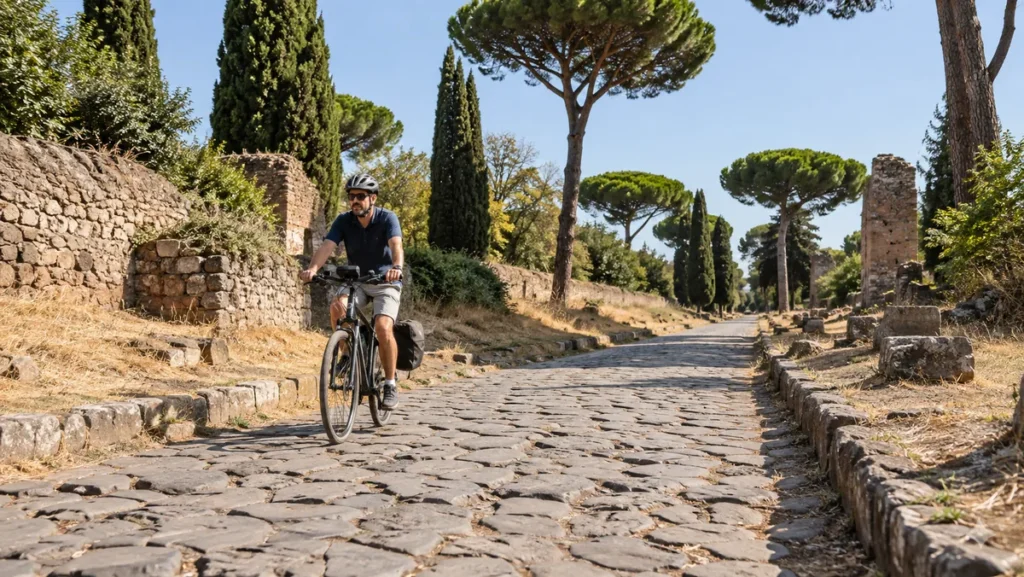
Once I reached stretches of old paving, tombs, stone walls, and umbrella pines, central Rome felt surprisingly far away.
Walking is free. Bike rental commonly costs around €15–25 or more, depending on the type of bike and duration.
Add a catacomb visit and this easily becomes half a day.
Time: 3–5 hours
Cost: Free to walk; roughly €15–25+ for a bike
Best for: Four-day or longer stays
20. Finish a Trastevere day on Gianicolo Hill
Gianicolo gave me the wide city view I wanted without another ticket.
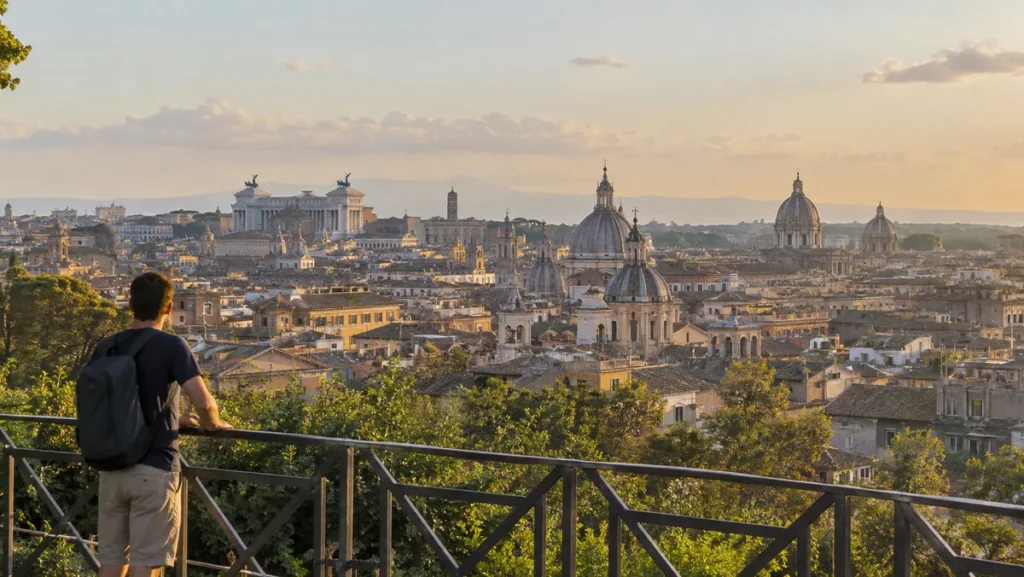
Instead of focusing on one monument, the panorama takes in domes, rooftops, and the shape of Rome as a whole.
I combined it with Trastevere rather than crossing the city specifically for the viewpoint.
The uphill walk is noticeable after a long day. Taking a bus or taxi up and walking down is a reasonable option.
Time: About 1 hour
Cost: Free
Best time: Late afternoon
The Rome lines I would skip
Not every queue is worth joining.
The clearest example was Trevi Fountain basin access. The €2 fee is minor, but if the controlled area has a long queue, the fountain is still clearly visible from the free section.
I would treat the Spanish Steps the same way. If they are packed, keep walking and return later.
I also would not choose the Vatican Museums’ free last Sunday of the month only to save €20. Saving money is not always worth losing time to heavier crowds.
Advance booking also does not remove every line. A ticket can solve the ticket-office queue, but security checks still exist at places such as St. Peter’s Basilica.
Group Rome by area
This saved me more time than any transport trick.
| Area | Sights That Work Together | Realistic Time |
|---|---|---|
| Ancient Rome | Colosseum, Roman Forum, Palatine Hill, San Clemente | 5–7 hr |
| Vatican | Vatican Museums, St. Peter’s, Castel Sant’Angelo | 6–8 hr |
| Historic Center | Pantheon, Piazza Navona, Trevi Fountain, Spanish Steps | 4–5 hr |
| Trastevere & Tiber | Jewish Ghetto, Trastevere, Gianicolo | 4–6 hr |
| Borghese | Galleria Borghese, Villa Borghese, Piazza del Popolo | 4–5 hr |
| South Rome | Baths of Caracalla, Aventine Hill, Testaccio | 4–5 hr |
| Appian Way | Via Appia Antica and catacombs | Half day |
Rome became much easier once I stopped ranking everything individually and started planning by neighborhood.
Walking beat public transport surprisingly often
Central Rome is compact enough that walking frequently made more sense than waiting for a bus.
Pantheon to Piazza Navona, Trevi Fountain to the Spanish Steps, and the Jewish Ghetto to Trastevere were all easy on foot.
For longer journeys, ATAC’s BIT ticket costs €1.50 and is valid for 100 minutes. Current tourist passes cost €8.50 for 24 hours, €15 for 48 hours, and €22 for 72 hours. (atac.roma.it)
Because I walked so much, individual tickets were often cheaper than an unlimited pass.
Official Rome public transport fares
A realistic three-day Rome itinerary
Day 1 — Ancient Rome and the historic center
8:30 a.m. — Colosseum
Allow about 90 minutes.
10:15 a.m. — Roman Forum and Palatine Hill
Allow 2.5–3 hours.
1:15 p.m. — Lunch in Monti
Budget roughly €15–25.
3:00 p.m. — Pantheon
4:00 p.m. — Piazza Navona
5:00 p.m. — Trevi Fountain
5:45 p.m. — Spanish Steps
Day 2 — Vatican and Trastevere
8:00 a.m. — St. Peter’s Basilica
10:00 a.m. — Vatican Museums
Allow 3–4 hours.
2:00 p.m. — Lunch in Prati
Budget roughly €15–25.
3:30 p.m. — Castel Sant’Angelo
6:00 p.m. onward — Trastevere
Stay for dinner.
Day 3 — Art and slower Rome
9:00 a.m. — Galleria Borghese
11:00 a.m. — Villa Borghese
1:00 p.m. — Lunch
3:00 p.m. — Aventine Hill
4:30 p.m. — Testaccio
Evening — Jewish Ghetto or return to your favorite central neighborhood
With a fourth day, I would add the Appian Way, Baths of Caracalla, Capitoline Museums, or simply leave more time unplanned.
What I would prioritize on a first trip
If I had only two full days in Rome, I would protect time for the Colosseum, Roman Forum, Vatican Museums, St. Peter’s Basilica, Pantheon, Trevi Fountain, and one evening in Trastevere.
Piazza Navona and the Spanish Steps are easy additions because they fit naturally between other sights.
I would leave the Appian Way, Baths of Caracalla, Testaccio, and Capitoline Museums for a longer stay rather than rushing through them just to increase the number of places I had visited.
That was the main thing Rome changed about the way I planned the trip.
Booking the Colosseum, Vatican Museums, and Galleria Borghese ahead saved time. Grouping attractions by area saved even more.
But some of the moments I remembered best from my September visit happened between reservations: church bells in Trastevere, stopping for espresso without checking the clock, tired legs on the cobbles, and realizing that another twenty-minute walk through Rome was usually better than another twenty minutes in line.