



Berlin is a city I would never reduce to a list of famous landmarks. The Brandenburg Gate, Berlin Wall, Reichstag, museums, street art, food, parks, and nightlife all matter, but the real appeal comes from seeing how different sides of the city fit together.
What makes Berlin stand out is the contrast. You can spend the morning learning about the Cold War, walk past street art in the afternoon, eat döner in Kreuzberg, and finish the night beside the Spree or inside a techno club.
For a first trip, three days gives you enough time to see the essentials. Four or five days is better if you want to slow down, explore neighborhoods, and see more than the usual tourist trail.
I visited Berlin in June 2025, when the long, warm days made it easy to combine the city’s historical sights with parks, neighborhoods, and time along the Spree. The summer weather also gave me a chance to experience Berlin’s outdoor side, from Tempelhofer Feld to lively Sunday afternoons at Mauerpark.
This guide covers the best things to do in Berlin in 2026, including what is truly worth your time, what needs advance booking, what can be skipped on a short trip, and where to experience a more local side of the city.
Best Things to Do in Berlin at a Glance
These are the Berlin experiences I would put at the top of a first-time itinerary.
| Experience | Best For | Time Needed | Cost | Book Ahead? |
|---|---|---|---|---|
| Brandenburg Gate | First-time visitors | 20–30 min | Free | No |
| Reichstag Dome | History and views | 1–1.5 hrs | Free | Yes |
| Berlin Wall Memorial | Cold War history | 1–2 hrs | Free | No |
| East Side Gallery | History and street art | 45–60 min | Free | No |
| Museum Island | Museums and culture | 3+ hrs | Paid | Recommended |
| Holocaust Memorial | History | 30–60 min | Free | No |
| Topography of Terror | WWII history | 1.5–2 hrs | Free | No |
| Tempelhofer Feld | Local Berlin | 1–3 hrs | Free | No |
| Mauerpark | Sunday atmosphere | 2–3 hrs | Free | No |
| Kreuzberg | Food and nightlife | 2–4 hrs | Varies | No |
| Spree River Cruise | Relaxed sightseeing | 1–3 hrs | Paid | Recommended |
| Berlin TV Tower | Panoramic views | 1–2 hrs | Paid | Recommended |
If You Only Have Time for Five Things
If I had to cut Berlin down to only five experiences, I would choose the Brandenburg Gate, Reichstag Dome, Berlin Wall Memorial, East Side Gallery, and Museum Island.
These five places give you a strong introduction to the city. You get German politics, Cold War history, the Berlin Wall, art, architecture, and museum culture without spending the whole trip moving between dozens of attractions.
If another few hours are available, use them for a neighborhood rather than another landmark. Kreuzberg would be my pick because it adds food, street life, bars, and a completely different side of Berlin.
Important Berlin Updates for 2026
A few major changes can affect how you plan a Berlin trip in 2026, especially around Museum Island and the Reichstag.
The Pergamonmuseum Is Closed
The Pergamonmuseum is completely closed in 2026, so do not follow older Berlin itineraries that tell you to walk inside.
A large part of the museum is scheduled to reopen on June 4, 2027. Some sections will remain under renovation for much longer.
Museum Island is still worth visiting. The Neues Museum, Altes Museum, Bode Museum, and Alte Nationalgalerie give you plenty of alternatives.
If ancient history is your main interest, the Neues Museum is the one I would look at first.
Book the Reichstag Before Your Trip
The Reichstag Dome is free, but advance registration through the German Bundestag is required.
This is one attraction I would arrange before arriving in Berlin. Same-day spaces can sometimes be available, but there is no reason to depend on that when the visit can be planned ahead.
The dome also has scheduled maintenance closures during parts of the year, so check the official Bundestag information close to your travel date.
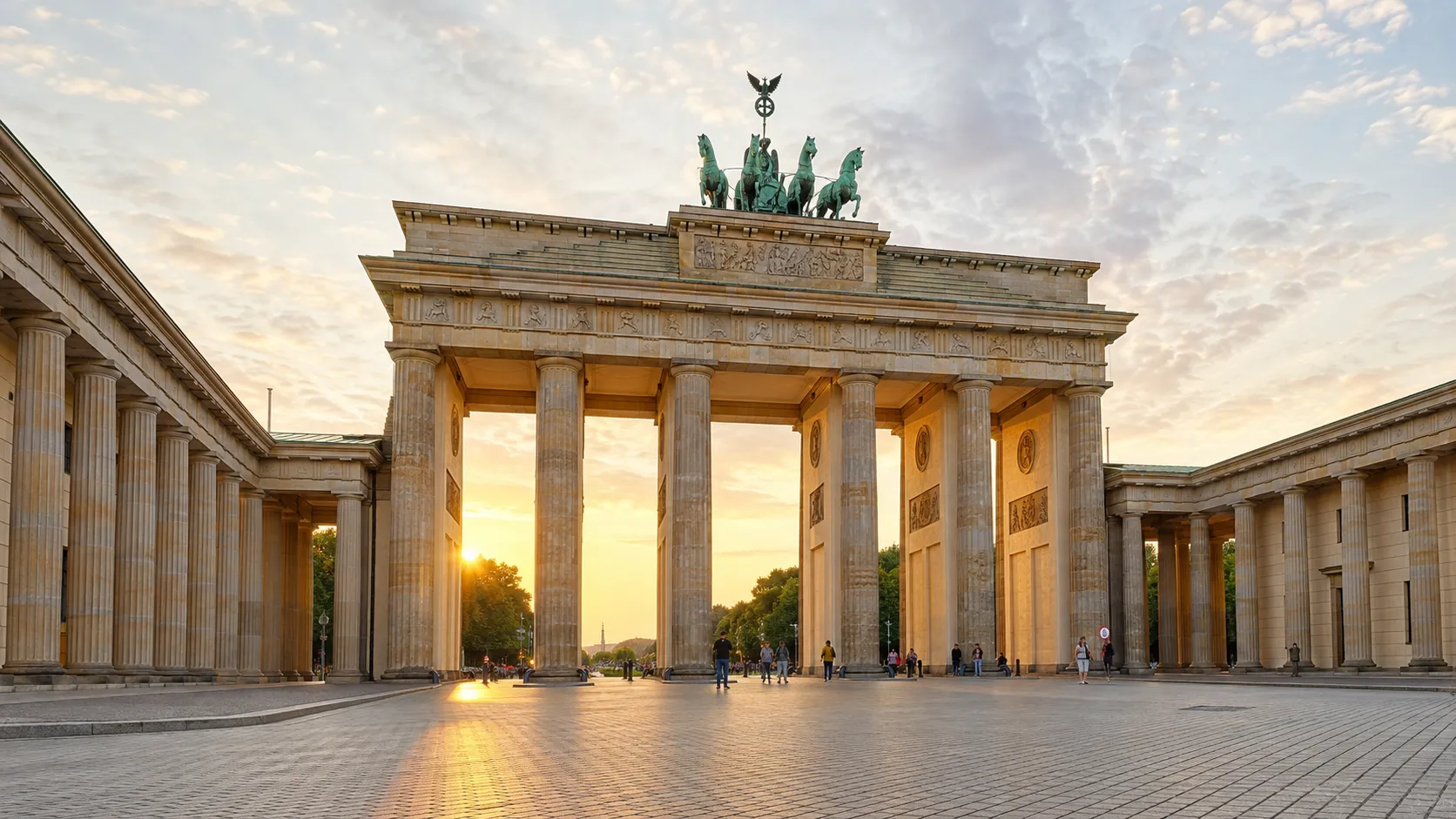
1. Start at the Brandenburg Gate
The Brandenburg Gate is the best place to begin a first visit to Berlin.
The gate is one of those landmarks that means more once you understand what has happened around it. It survived war, stood beside a divided Berlin, and later became a symbol of German reunification.
You do not need hours here. Around 20 to 30 minutes is enough to look around, take photos, and understand the setting.
What I like most about using Brandenburg Gate as a starting point is the location. The Reichstag, Tiergarten, Holocaust Memorial, and Unter den Linden are all close enough to reach on foot.
Come early if you want a quieter experience. By late morning, this area can become packed with tour groups.
It is also worth seeing after dark. The illuminated columns give the square a much calmer feel than the busy daytime scene.
2. Go Inside the Reichstag Dome
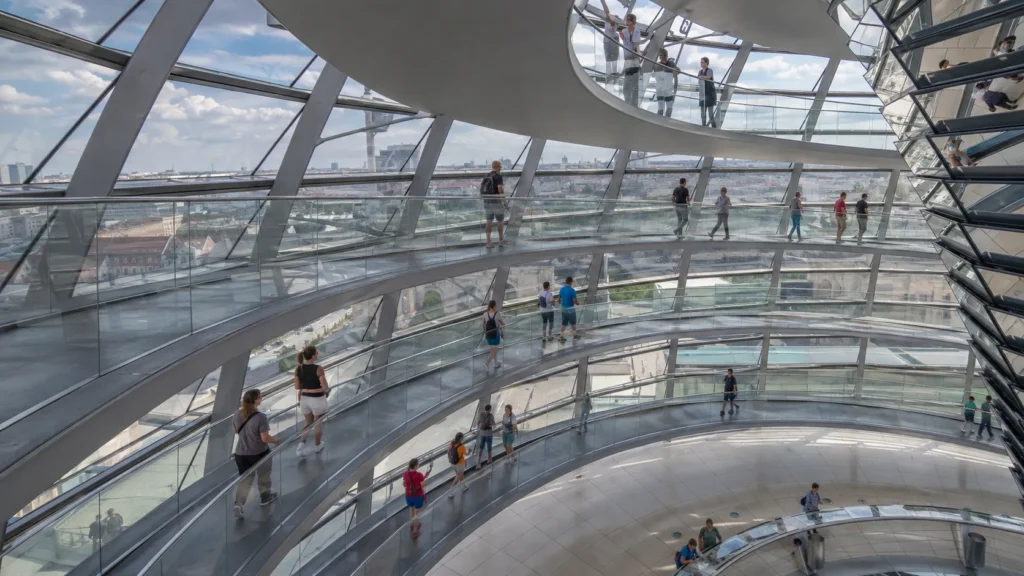
The Reichstag Dome is one Berlin attraction that deserves a place on almost every first-time itinerary.
The historic Reichstag Building is home to the German Bundestag, while the modern glass dome sits above it.
Inside, a spiral walkway slowly rises around the dome as views of Berlin open up around you.
The experience feels more meaningful than a normal observation deck. You are looking over the city from one of Germany’s most important political buildings.
Give yourself around 60 to 90 minutes.
For me, the Reichstag also makes the paid viewpoints in Berlin less essential. If you are trying to save money, the free views here may be enough.
Just remember that free does not mean walk-in. Advance registration is required.
3. Walk Through the Holocaust Memorial
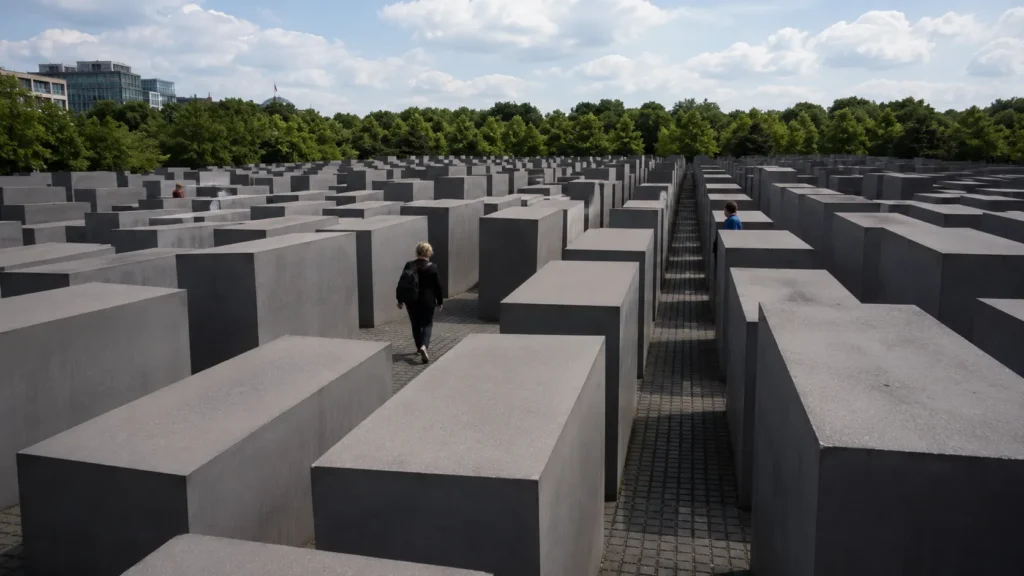
The Memorial to the Murdered Jews of Europe is one of the places in Berlin that should not be rushed.
From the outside, the field of 2,711 concrete blocks looks simple. Once you walk into it, the ground changes and the blocks begin rising around you.
The deeper paths can feel surprisingly enclosed.
This is not somewhere I would treat as a quick photo stop. The memorial is much more powerful when you give it time and think about what it represents.
Thirty to 60 minutes works for most visitors.
The underground information center is also worth adding because it connects the abstract design above ground with the lives of real people and families affected by the Holocaust.
4. Understand the Berlin Wall at Bernauer Strasse
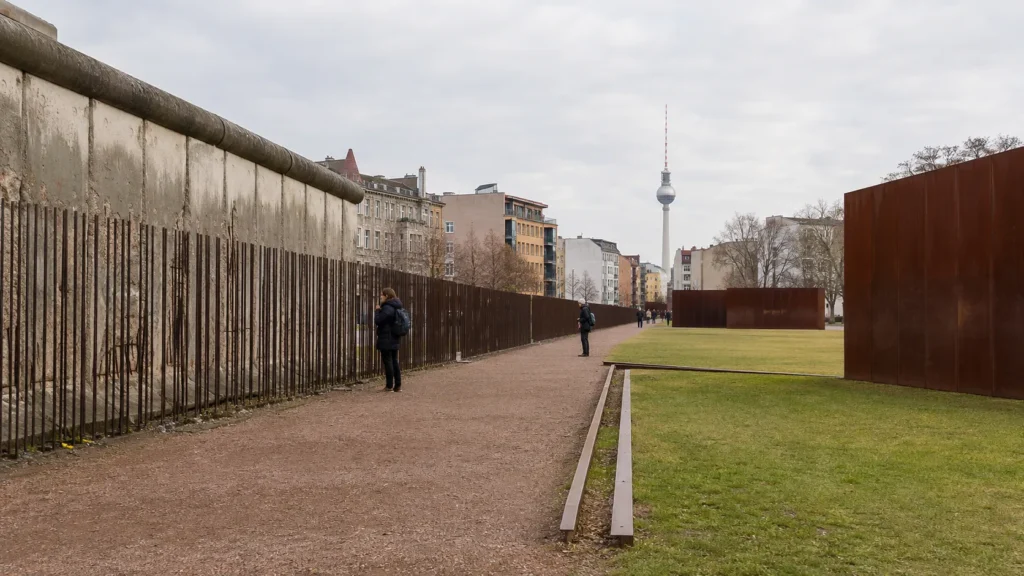
The Berlin Wall Memorial at Bernauer Strasse is my top place for understanding Berlin’s divided past.
Pieces of the Berlin Wall appear in several parts of the city, but simply seeing concrete does not explain how the border worked.
At Bernauer Strasse, the story becomes much clearer.
The memorial explains the division between East Berlin and West Berlin, the border system, escape attempts, demolished buildings, and the effect the wall had on ordinary lives.
Give it at least one to two hours.
If your time in Berlin is short, I would choose this over spending a long time at Checkpoint Charlie.
It also makes the East Side Gallery more meaningful. Once you understand what the wall really represented, seeing another surviving section covered in art feels completely different.
5. Walk the East Side Gallery
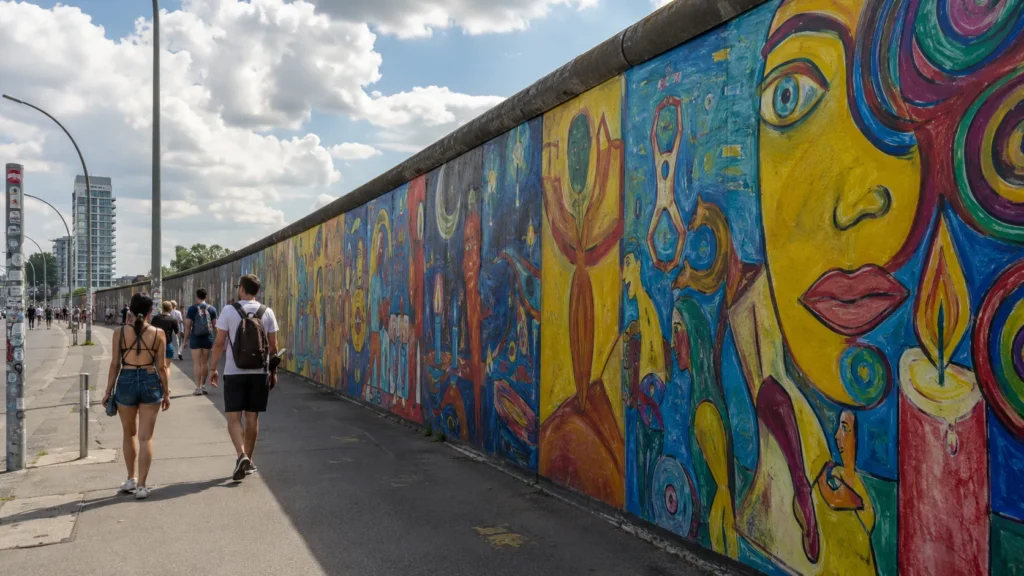
The East Side Gallery is where Berlin’s Cold War history meets its street-art culture.
The open-air gallery runs along one of the longest surviving parts of the Berlin Wall.
After the wall fell, artists turned the concrete into a huge public gallery filled with political, social, and hopeful images.
The most famous murals attract crowds, but walking the full stretch gives a better sense of the place.
Allow around 45 to 60 minutes.
What stands out here is the change in meaning. A structure built to divide people is now covered with art about freedom, peace, and political change.
Keep walking toward Oberbaum Bridge afterward. The red-brick bridge gives you one of the best views along the Spree and creates an easy route toward Kreuzberg.
6. Take Your Time at the Topography of Terror
The Topography of Terror is one of Berlin’s strongest free historical attractions.
The documentation center stands on land connected with institutions behind Nazi terror, including the Gestapo and SS.
This is a detailed museum.
There are photographs, documents, personal stories, and long explanations, so trying to move through it quickly does not work well.
Give yourself at least 90 minutes.
For me, this is also the better use of time if you are choosing between the Topography of Terror and a long visit to Checkpoint Charlie.
The two sites are close together, but the museum gives you far more historical depth.
7. Choose Your Museums Carefully on Museum Island
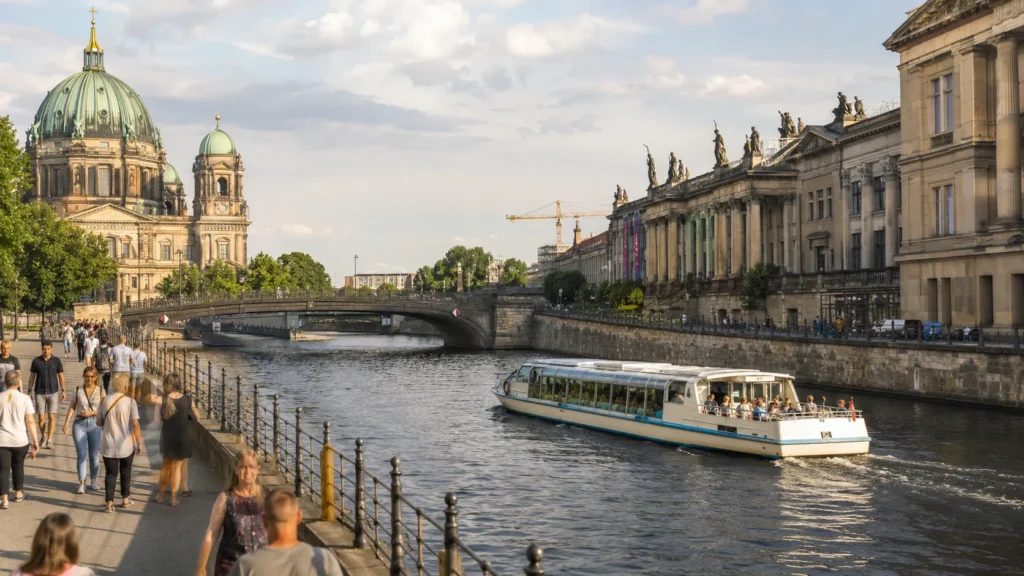
The best way to enjoy Museum Island is to choose one or two museums instead of trying to visit everything.
The UNESCO World Heritage Site sits beside the Spree and brings several important collections together in a small area.
The Neues Museum is my pick for travelers interested in ancient Egypt and archaeology. It is home to the famous Bust of Nefertiti.
The Alte Nationalgalerie is a better choice for visitors interested in 19th-century art.
Trying to visit museum after museum can quickly become tiring.
Leave time to walk around the island itself, see the architecture, cross the bridges, and spend a few minutes beside the river.
And remember: the Pergamonmuseum is closed throughout 2026. Its partial reopening is scheduled for June 4, 2027.
8. Step Inside Berlin Cathedral
The Berlin Cathedral is an easy addition to a Museum Island day.
Its huge dome rises beside the Spree and creates one of the most recognizable views in central Berlin.
If you enjoy architecture and historic churches, the interior is worth seeing.
Around an hour is enough for most people.
There is also an elevated view, although I would not feel pressure to climb every viewpoint in Berlin.
If the Reichstag Dome and TV Tower are already on your itinerary, another city view may start to feel repetitive.
The biggest advantage of Berlin Cathedral is how naturally it fits with Museum Island. There is no need to travel across the city to see it.
9. See Alexanderplatz and the Berlin TV Tower
The Berlin TV Tower is the main reason to spend extra time around Alexanderplatz.
Alexanderplatz is an important transport hub and carries traces of former East Berlin, but the square itself does not need several hours.
The Fernsehturm, however, is hard to ignore.
The tower dominates Berlin’s skyline and can be seen from many neighborhoods.
From the observation level, the size of Berlin becomes much easier to understand.
If city views are one of your favorite travel experiences, the TV Tower is worth considering.
If not, save the money. The Reichstag already gives you a strong free viewpoint.
10. Walk Through Gendarmenmarkt
The Gendarmenmarkt is one of the most elegant places to walk through in central Berlin.
The square is framed by the Konzerthaus Berlin, German Cathedral, and French Cathedral.
Berlin can feel rough, industrial, and modern in many areas, so this formal square creates an interesting contrast.
About 30 to 45 minutes is enough for a normal visit.
The square works best as part of a longer Mitte walk rather than as a separate trip.
Late afternoon is a good time to come. The softer light suits the architecture, and the area becomes more atmospheric as evening approaches.
11. Take a Break in Tiergarten
The Tiergarten is the place to go when Berlin’s history starts to feel heavy.
After hours of museums, memorials, and city streets, the huge park gives you space to slow down.
The park starts close to Brandenburg Gate but quickly feels removed from the government district.
There is no need to over-plan it.
Walk under the trees, rent a bike, sit on the grass, or stop somewhere for a drink.
On a warm day, this kind of break can be more enjoyable than squeezing in another attraction.
The Victory Column is also inside Tiergarten if you still want another city viewpoint.
12. Keep Checkpoint Charlie Short
The Checkpoint Charlie visit is worth keeping short.
Its history matters. The crossing became one of the best-known border points between East and West Berlin during the Cold War.
The modern setting is another story.
It is busy, commercial, and far less powerful than the Berlin Wall Memorial.
Fifteen to 30 minutes is enough.
See the location, understand why it became famous, take a photo if you want one, and then continue.
Because the Topography of Terror and Gendarmenmarkt are nearby, Checkpoint Charlie still fits easily into a central Berlin walk.
I just would not build the day around it.
13. Visit the Jewish Museum Berlin
The Jewish Museum Berlin is one of the best places to understand Jewish history in Germany beyond the Holocaust.
The museum covers centuries of religion, migration, culture, everyday life, persecution, and identity.
The building itself is part of the experience.
Architect Daniel Libeskind used sharp angles, empty spaces, and unusual paths to create a feeling that can sometimes be disorienting.
Give the museum two to three hours if it is one of your main stops.
What makes it valuable is the wider story. After visiting Berlin’s Holocaust sites, the Jewish Museum adds much more context about Jewish life before, during, and after that period.
14. See Another Side of Berlin at Charlottenburg Palace
The Charlottenburg Palace is the best break from Berlin’s heavy focus on 20th-century history.
The baroque palace takes you back to the world of the Prussian monarchy.
That shift makes it feel very different from the Berlin Wall, Holocaust sites, and Cold War attractions in the center.
Give yourself two to four hours if you want to see both the palace and gardens.
The gardens are the part I would not skip during good weather.
Even if palace interiors are not your thing, walking through the grounds gives you a quieter experience.
Charlottenburg makes most sense on a trip of three days or longer.
15. Wander Through Nikolaiviertel
The Nikolaiviertel is a good place to see a more traditional-looking side of central Berlin.
Berlin does not have a huge preserved old town like Prague, Kraków, or many other European cities.
That makes this small quarter beside the Spree feel unusual.
St. Nicholas Church sits at its center, surrounded by narrow streets, restaurants, and reconstructed historic buildings.
Around an hour is enough.
I see Nikolaiviertel as a pleasant stop between bigger attractions rather than one of Berlin’s absolute must-sees.
It pairs easily with Museum Island or Alexanderplatz.
16. Cycle Across Tempelhofer Feld
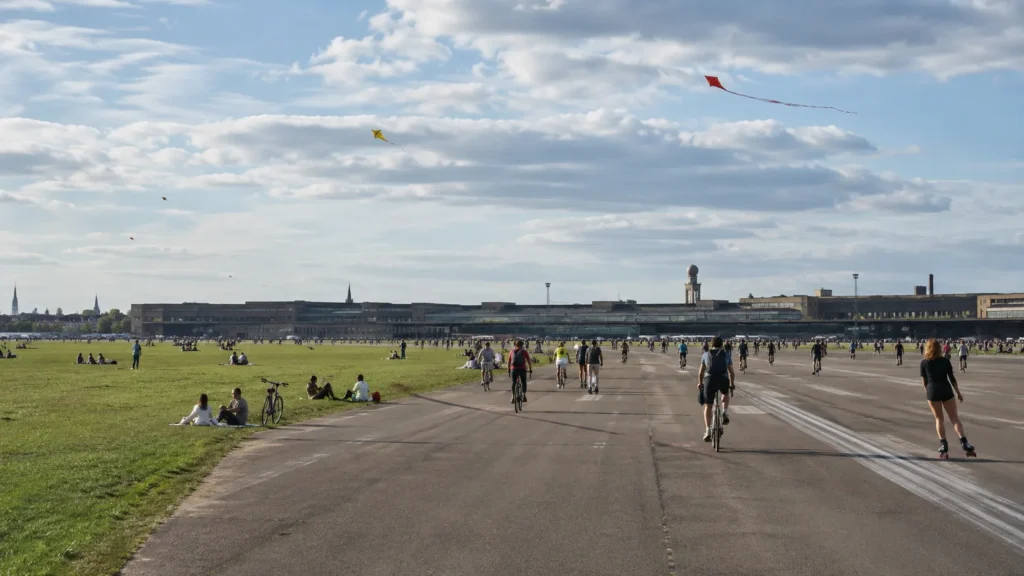
The Tempelhofer Feld is one of the Berlin experiences I would make time for again before adding another museum.
The huge park sits on the grounds of the former Tempelhof Airport.
The old airport runways are now used by cyclists, skaters, runners, and people flying kites.
The scale of the place is what makes it memorable.
Once you move out onto the open runway, it feels completely different from the dense streets of central Berlin.
A bike is the easiest way to explore.
Tempelhofer Feld also says a lot about modern Berlin. A historically important piece of infrastructure has become everyday public space.
17. Spend Sunday at Mauerpark
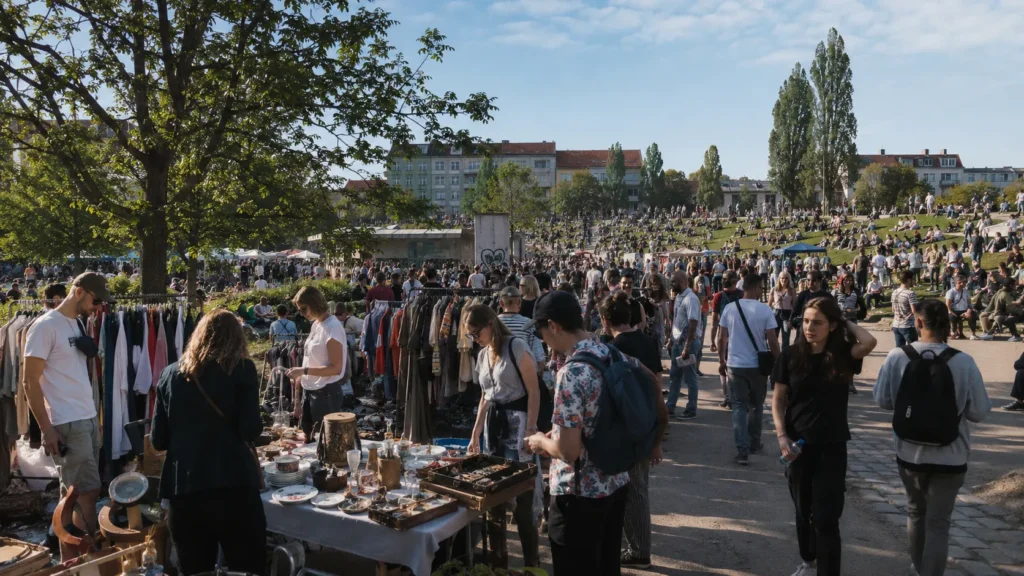
The Mauerpark is one of the best places to spend a Sunday in Berlin.
The flea market brings together secondhand clothes, records, food, art, antiques, and all kinds of random finds.
But the market is only part of the appeal.
The whole park becomes a social space, especially when the weather is good.
During the warmer months, the outdoor karaoke can draw a huge crowd around the amphitheater.
The official 2026 schedule lists Sunday karaoke through much of the warmer season, with some exception dates, so check the current calendar before going.
Two or three hours can disappear quickly here.
This is one place where I would avoid planning another major attraction immediately afterward. Browse slowly, eat something, sit in the park, and stay longer if the atmosphere is good.
18. Explore Kreuzberg Without a Checklist
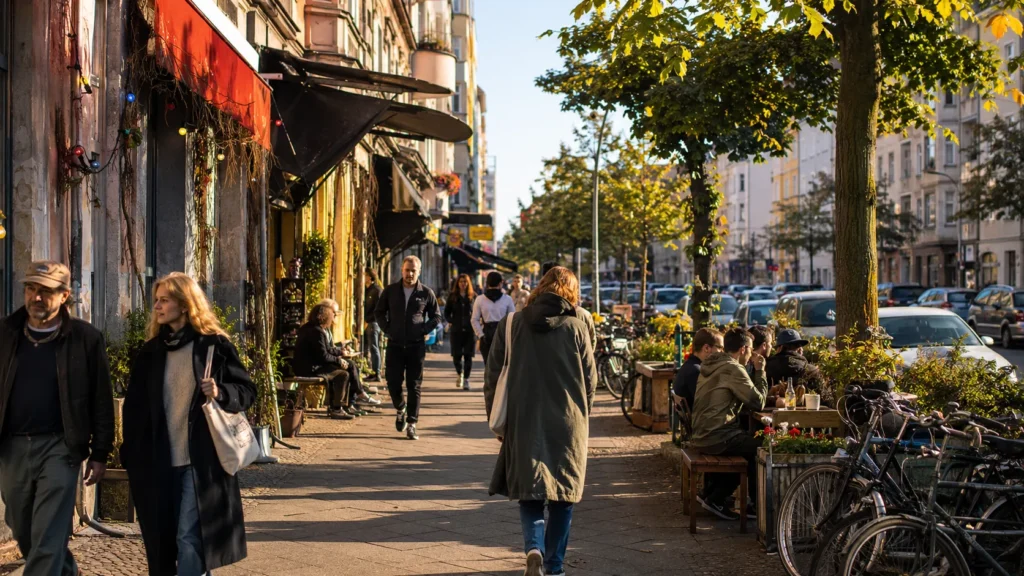
Kreuzberg is the neighborhood I would choose when I want to see modern Berlin rather than another historical monument.
The district brings together immigration, food, alternative culture, nightlife, bars, cafés, and busy street life.
There is no single attraction you need to race toward.
Start around Oranienstrasse or walk beside the Landwehr Canal, then follow whatever looks interesting.
This is one part of Berlin where a strict itinerary can actually make the experience worse.
Food is also a major reason to stay.
Turkish and Middle Eastern communities have shaped Kreuzberg for decades, and the neighborhood is one of the best places to see Berlin’s multicultural side.
After a day filled with history, this is where I would spend the evening.
19. Cross Oberbaum Bridge Into Friedrichshain
The Oberbaum Bridge creates one of the easiest and most enjoyable walks between Berlin neighborhoods.
The red-brick bridge crosses the Spree between Kreuzberg and Friedrichshain, close to the East Side Gallery.
Slow down in the middle for views along the river.
Once you reach Friedrichshain, Berlin starts to feel more industrial and alternative.
Bars, restaurants, clubs, street art, and converted spaces become more common.
The RAW-Gelände area is worth exploring if you like alternative culture and nightlife.
The route from the East Side Gallery across Oberbaum Bridge and into Friedrichshain works naturally as one afternoon or evening.
20. Take a Spree River Cruise
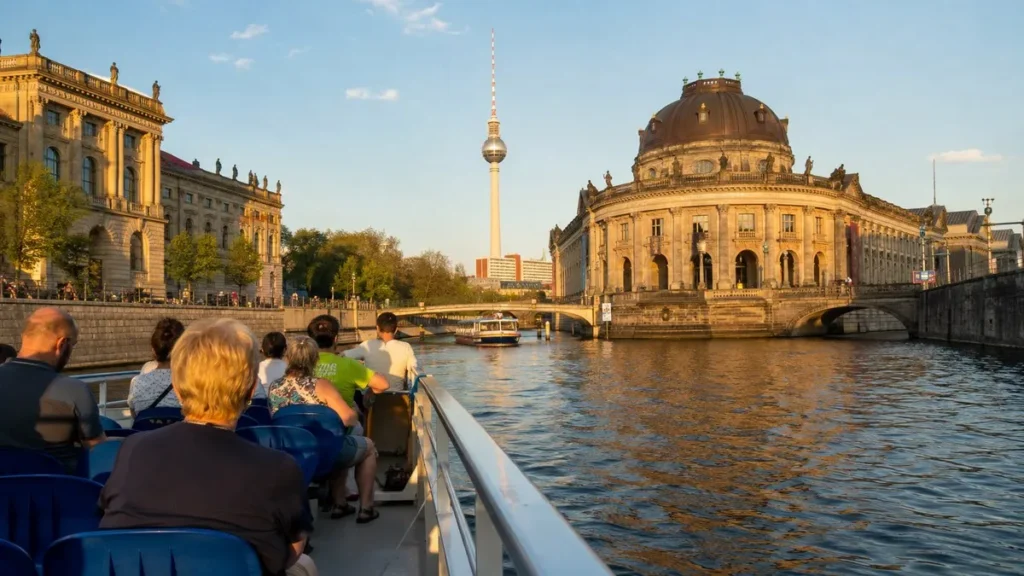
The Spree River cruise is one of the best things to do when your feet need a break.
Berlin involves a lot of walking, especially when you explore the neighborhoods properly.
A cruise lets the sightseeing continue while you sit down.
From the river, you can see parts of Museum Island, the government district, bridges, and central Berlin from a new angle.
The experience becomes more interesting after you already know some of the landmarks.
That is why I prefer it on the second or third day rather than the first morning.
During summer, an evening cruise is especially pleasant.
It is not essential on a very short trip, but it fits perfectly when the itinerary has a little more space.
21. Spend an Evening Around Holzmarkt
The Holzmarkt is worth visiting when you want something that does not feel like a normal tourist attraction.
This creative area beside the Spree mixes food, social spaces, events, and an alternative atmosphere.
There is no single masterpiece to see.
That is the point.
Come in the late afternoon or early evening, especially when the weather is warm.
The river, informal seating, and creative surroundings make it a good place to slow down.
Holzmarkt fits nicely with a day around Friedrichshain or Kreuzberg.
22. Try Currywurst, but Save Room for Döner

The Berlin food experience should include currywurst, but it should not end there.
Currywurst is one of the city’s most famous quick meals.
It is simple: sliced sausage, tomato-based sauce, and curry seasoning.
Try it once.
But Berlin’s döner culture is at least as important to the way the city eats today.
Turkish immigration has influenced Berlin for generations, and the food scene in neighborhoods such as Kreuzberg and Neukölln reflects that history.
This is one of the things I like most about Berlin as a food city.
Traditional German dishes, Turkish food, Vietnamese restaurants, bakeries, cafés, Middle Eastern food, and modern dining all sit side by side.
Do not eat every meal near the main tourist landmarks.
23. Experience Berlin’s Nightlife
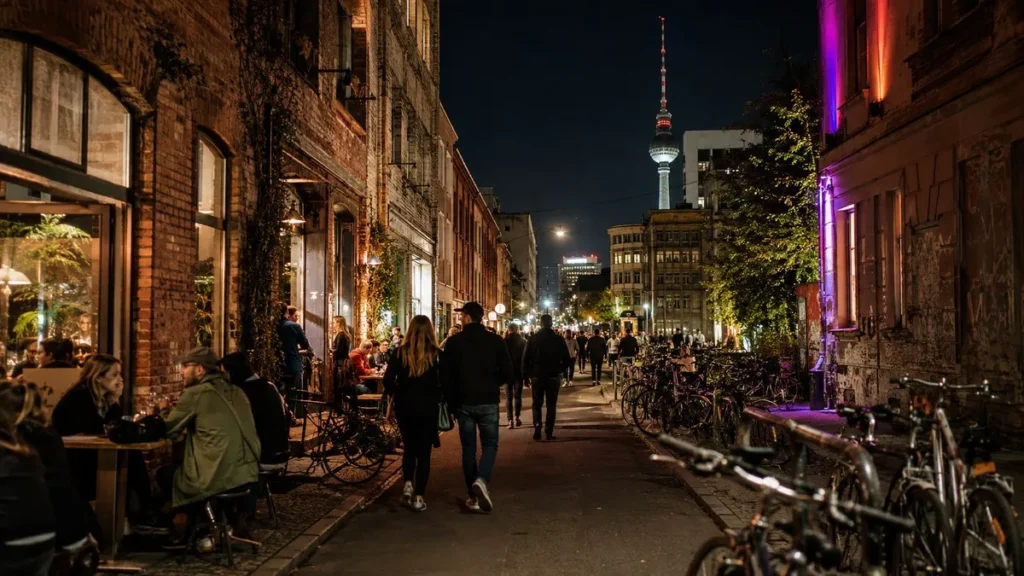
The Berlin nightlife experience is much bigger than trying to get into Berghain.
Techno has become part of the city’s modern identity, and clubs such as Berghain and Tresor are internationally famous.
But planning an entire night around one strict door policy is a mistake.
Choose clubs based on the music and atmosphere you actually like.
Berlin nights also start late.
What feels like a normal club time elsewhere can feel early here.
And if techno is not your thing, the city still has jazz bars, live music, cocktail bars, late-night restaurants, and neighborhood pubs.
You do not need to love clubs to enjoy Berlin after dark.
24. Stop at a Berlin Späti
A Späti is one of those small Berlin experiences that is better when it happens naturally.
These late-opening neighborhood shops sell drinks, snacks, and everyday items.
You will notice them around residential neighborhoods, especially in the evening.
Stop for a drink or snack when you pass one.
Do not turn it into a scheduled tourist attraction.
That casual nature is part of what makes a Späti feel like Berlin.
One useful detail for Sunday: most regular shops in Berlin are closed, although railway-station and airport shops, petrol stations, kiosks, and some other businesses can be exceptions.
25. Go Underground With Berliner Unterwelten
The Berliner Unterwelten tours are among Berlin’s best unusual experiences for history fans.
The tours explore underground structures and spaces connected with different periods of Berlin’s past.
That makes the experience very different from reading museum panels.
You are physically moving through part of the history.
Book ahead if a particular English-language tour is important to you.
The underground experience works best after you already understand the basics of Berlin’s World War II and Cold War history.
Once the larger story makes sense, the hidden spaces below the city become much more interesting.
26. Make the Trip to Teufelsberg
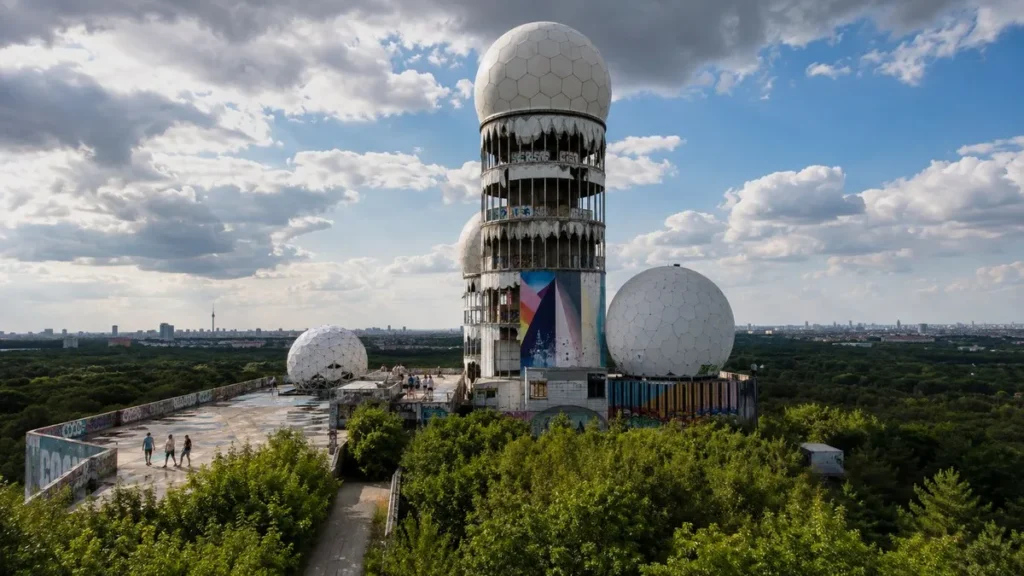
The Teufelsberg is worth the extra journey when you have four or more days in Berlin.
The artificial hill is home to a former U.S. listening station linked with the Cold War.
Today, the site combines abandoned structures, radar domes, street art, and wide views over western Berlin.
It takes more effort to reach than central attractions.
That is why I would not put it on a first two-day itinerary.
With more time, however, it gives you something very different from Mitte.
For anyone interested in Cold War history, abandoned places, or street art, Teufelsberg is one of Berlin’s more unusual choices.
27. See Old West Berlin Around Kurfürstendamm
The Kurfürstendamm area is worth visiting because it shows a side of Berlin that many first-time itineraries miss.
A large part of the main sightseeing route sits farther east, while Ku’damm was a major center of former West Berlin.
Start at the Kaiser Wilhelm Memorial Church.
Its damaged tower remains visible as a reminder of World War II destruction.
From there, walk along Kurfürstendamm, usually shortened to Ku’damm.
The shops, hotels, traffic, and restaurants give the area a completely different feel from Alexanderplatz.
Shopping fans can also add KaDeWe nearby.
28. Escape to Wannsee in Summer
Wannsee is one of the best places to escape central Berlin during hot weather.
Berlin’s lakes are a big part of local summer life.
Wannsee offers swimming, beaches, and a much slower day than another round of museums and monuments.
Do not squeeze it into a packed weekend.
The travel time makes far more sense when you have four or five days in Berlin.
A half-day beside the water can also improve a longer trip.
Travel does not always get better by adding another famous attraction.
Sometimes the best decision is to stop sightseeing for a few hours.
29. Browse a Berlin Flea Market
A Berlin flea market is as much about weekend atmosphere as shopping.
Mauerpark is the best-known option, but it is not the only one.
Markets around Boxhagener Platz and Arkonaplatz are also worth considering for vintage clothing, records, art, antiques, and smaller finds.
Sunday is the best day to build a flea market into your plans.
It also works well because most normal retail stores are closed on Sundays.
Carry some cash.
Berlin has become much more card-friendly, but small sellers can still prefer cash.
30. Slow Down in Prenzlauer Berg
Prenzlauer Berg is where I would go when I wanted a slower morning after several busy sightseeing days.
The neighborhood has leafy streets, cafés, restored buildings, and residential squares.
There is no major landmark you need to race toward.
That is exactly what makes it enjoyable.
Start around Kollwitzplatz or combine the neighborhood with Mauerpark on Sunday.
Find a café and walk without checking the map every few minutes.
Berlin’s famous history is important, but neighborhoods like Prenzlauer Berg help the city feel lived-in rather than staged for visitors.
31. Take a Day Trip to Potsdam
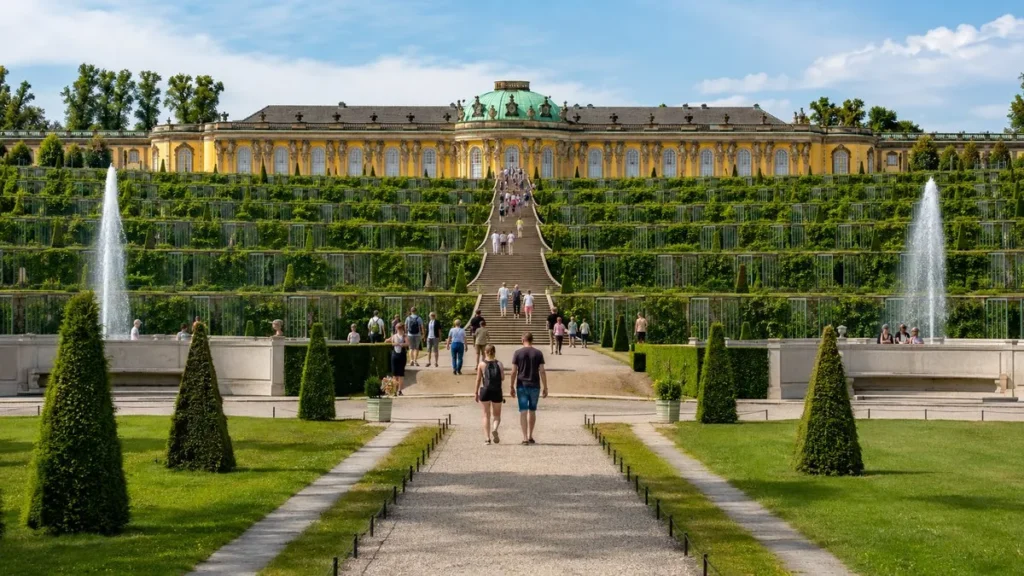
Potsdam and Sanssouci Palace are worth adding once you have given Berlin itself enough time.
Potsdam is close to the capital, but the palace grounds deserve a full day rather than a rushed few hours.
The main attraction is Sanssouci Palace, the former summer residence of Frederick the Great of Prussia.
The gardens and surrounding royal buildings cover a large area.
For a first trip, I would only add Potsdam with at least four days in Berlin.
With two or three days, stay in the capital.
There is already more than enough to see.
Best Free Things to Do in Berlin
Berlin is one of the best major European cities for meaningful free sightseeing.
Some of its most important attractions cost nothing.
My top free choices are:
- Brandenburg Gate
- Reichstag Dome
- Berlin Wall Memorial
- East Side Gallery
- Holocaust Memorial
- Topography of Terror
- Tiergarten
- Tempelhofer Feld
- Mauerpark
- Gendarmenmarkt
- Kreuzberg neighborhood walks
A low-cost day in Berlin does not feel like a cheaper version of the city.
In fact, several of the attractions I would prioritize most are completely free.
Things to Do in Berlin at Night Besides Clubbing
Berlin has plenty to do at night even if you never enter a techno club.
One of the easiest evenings is dinner in Kreuzberg followed by a walk beside the Spree.
Brandenburg Gate also deserves another look after dark when the monument is illuminated.
During summer, evening river cruises and outdoor cinemas are good alternatives.
Live music, neighborhood bars, jazz, rooftop drinks, and late-night food give you plenty of other options.
I would leave at least one evening fairly open.
Berlin is a city where an unplanned night can easily become one of the best parts of the trip.
What to Do in Berlin on Sunday
Sunday is best used for flea markets, museums, parks, cafés, and slower sightseeing.
Most normal shops in Berlin are closed on Sundays, with limited exceptions and selected official shopping Sundays.
Instead of fighting that rhythm, use it.
Mauerpark is my first choice in good weather.
Browse the flea market, get something to eat, and stay for the outdoor atmosphere.
Museums, river cruises, Tiergarten, and neighborhood cafés also fit naturally into a Sunday.
Once shopping is removed from the plan, Sunday can actually become one of the most relaxed days of a Berlin trip.
Things to Do in Berlin When It Rains
Rain is easy to work around in Berlin because many of the city’s strongest attractions are indoors.
Museum Island, the Jewish Museum, DDR Museum, Humboldt Forum, Futurium, and Berliner Unterwelten are all useful bad-weather options.
Keep the most weather-sensitive places flexible.
The East Side Gallery, Tempelhofer Feld, Tiergarten, and Mauerpark are much better when the weather cooperates.
This is one reason I do not like planning every hour of a Berlin itinerary in advance.
Book what needs booking.
Leave the rest flexible.
Things to Do in Berlin by Neighborhood
Planning Berlin by neighborhood can save hours of unnecessary travel.
| Area | Places to Combine |
| Mitte | Brandenburg Gate, Reichstag, Holocaust Memorial, Museum Island, Gendarmenmarkt |
| Friedrichshain | East Side Gallery, RAW-Gelände, nightlife |
| Kreuzberg | Topography of Terror, food, bars, Landwehr Canal |
| Prenzlauer Berg | Mauerpark, cafés, flea markets |
| Charlottenburg | Charlottenburg Palace, Kaiser Wilhelm Memorial Church, Ku’damm |
| Tempelhof | Tempelhofer Feld |
| Western Berlin | Teufelsberg, Wannsee |
Berlin looks manageable on a simple map, but crossing from one side of the city to another can quickly eat into a sightseeing day.
The easiest fix is to keep nearby attractions together.
For example, do not visit the East Side Gallery in the morning, Charlottenburg at lunch, and then return to Friedrichshain at night.
Use one part of the city at a time.
What Should You Book in Advance in Berlin?
The Reichstag Dome is the first Berlin attraction to book ahead.
Admission is free, but advance registration is required.
I would also book popular Berliner Unterwelten tours, Berlin TV Tower slots, major concerts, and busy-season Spree cruises when they matter to the itinerary.
Keep parks, neighborhoods, memorials, and most outdoor attractions flexible.
That balance works best.
Book the experiences that can sell out, but do not turn the whole trip into a schedule of appointments.
Berlin Attractions to Skip If Time Is Short
Checkpoint Charlie is the first famous Berlin attraction I would cut down on a short trip.
See it if you are nearby, but spend the serious Cold War time at the Berlin Wall Memorial.
Alexanderplatz is another place that only needs a short stop unless the TV Tower is part of your plan.
On Museum Island, one or two good museums are better than racing through all of them.
Berlin’s viewpoints can also become repetitive.
The Reichstag, TV Tower, Victory Column, and Berlin Cathedral all give you elevated city views.
Pick one or two.
And if you only have two days, skip Potsdam.
Berlin deserves those hours.
How Many Days Do You Need in Berlin?
Three full days is the amount of time I consider ideal for a first Berlin trip.
Two days works, but the trip becomes much faster.
Four or five days gives you room for the neighborhoods and local experiences that make Berlin more interesting.
Two Days in Berlin
Two days is enough for the major Berlin landmarks if you stay focused.
Spend one day around the Brandenburg Gate, Reichstag, Holocaust Memorial, and Museum Island.
Use the second day for the Berlin Wall Memorial, East Side Gallery, and Kreuzberg.
Leave the far-out attractions for another trip.
Three Days in Berlin
Three days gives Berlin much better balance.
The extra day creates room for Tempelhofer Feld, Tiergarten, Kreuzberg, a longer museum visit, or Berlin nightlife.
This is the point where the trip stops feeling like a race.
Four Days in Berlin
Four days gives you enough time to move beyond the classic attractions.
Add Mauerpark, Charlottenburg Palace, Berliner Unterwelten, Teufelsberg, or Wannsee depending on your interests.
The biggest benefit is not adding more attractions.
It is being able to spend longer in the places you already like.
Five Days or More in Berlin
Five days lets Berlin breathe.
There is room for slower breakfasts, cafés, markets, riverside time, neighborhoods, and a day trip to Potsdam.
This is when Berlin starts feeling less like something you are sightseeing and more like a city you are getting to know.
Is the Berlin WelcomeCard Worth It?
The Berlin WelcomeCard can be useful, but it is not automatically a good deal for everyone.
The official card combines public transport with discounts at more than 170 attractions and businesses.
The value depends entirely on your plans.
Many of Berlin’s best attractions are already free.
The Brandenburg Gate, Berlin Wall Memorial, Holocaust Memorial, East Side Gallery, Topography of Terror, Tiergarten, and Tempelhofer Feld do not require an attraction ticket.
Compare the card price with the transport and paid attractions you actually plan to use.
If you need travel to BER Airport or Potsdam, pay close attention to whether the AB or ABC version fits your trip.
Getting Around Berlin
Public transport is the easiest way to move between Berlin’s neighborhoods.
The system includes the U-Bahn, S-Bahn, trams, and buses.
My preferred approach for Berlin is simple: use public transport for the long distances, then walk once you reach the neighborhood.
That works especially well in Mitte, Kreuzberg, Friedrichshain, Prenzlauer Berg, and Charlottenburg.
Walking still matters here.
Street art, cafés, courtyards, architecture, food shops, and small neighborhood details are easy to miss if every journey happens underground.
Best Time to Visit Berlin
Late spring through early fall gives you the widest choice of Berlin experiences.
Warmer weather makes the parks, lakes, flea markets, outdoor nightlife, and Spree much easier to enjoy.
Berlin in Spring
Spring is one of the easiest times to explore Berlin on foot.
The days get longer, parks return to life, and temperatures are usually easier for long sightseeing days than midsummer heat.
This is a strong season for neighborhoods, historic sites, and outdoor attractions.
Berlin in Summer
Summer is the best season for Berlin’s outdoor side.
Tempelhofer Feld, Mauerpark, Wannsee, Tiergarten, open-air cinema, outdoor dining, and Spree cruises all become more appealing.
Use the hottest part of the afternoon for museums if needed.
Then head outside again when the temperature drops.
Berlin in Fall
Fall works well for museums, food, nightlife, and long neighborhood walks.
Cooler temperatures can make full sightseeing days more comfortable.
The trade-off is a greater chance of rain.
Carry layers and keep one or two indoor options ready.
Berlin in Winter
Winter Berlin works best for travelers who enjoy museums, cafés, nightlife, and seasonal events.
The days are short and temperatures can be cold.
But Berlin has enough indoor culture that winter never means running out of things to do.
Final Thoughts: What Is Really Worth Doing in Berlin?
The best Berlin trip combines the places you came to see with the places you did not expect to enjoy as much.
The Brandenburg Gate, Reichstag, Berlin Wall Memorial, East Side Gallery, Holocaust Memorial, and Museum Island all deserve a place on a first-time itinerary.
They help explain Berlin’s history and why the city looks the way it does today.
But the trip becomes much more interesting once you move beyond the headline attractions.
Spend time in Kreuzberg. Cycle across Tempelhofer Feld. Browse Mauerpark on Sunday. Walk beside the Spree. Stop for döner. Sit in a neighborhood café without worrying about the next attraction.
That contrast is what makes Berlin memorable.
It moves from Prussian architecture to Cold War concrete, from Holocaust memorials to street art, and from world-famous museums to an old airport runway now filled with cyclists.
With three days, focus on the main history and one or two neighborhoods.
With four or five days, slow down.
That extra time is when Berlin stops feeling like a list of things to do and starts feeling like a city you actually understand.