



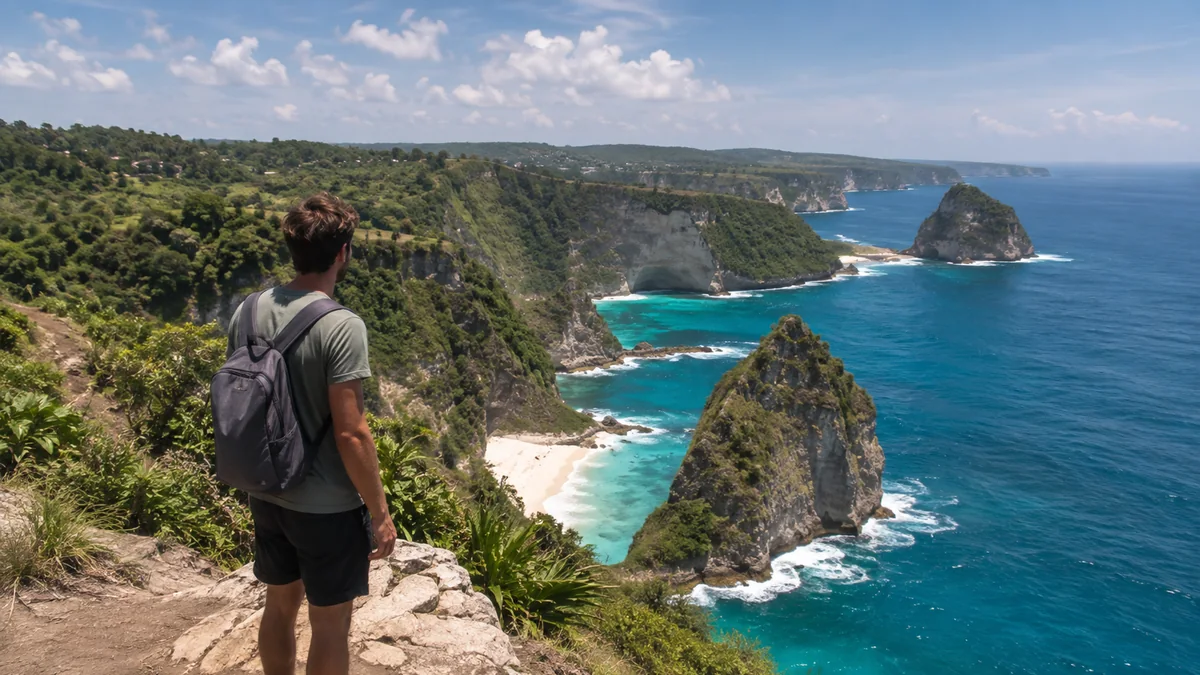
Nusa Penida looked small enough on the map that I originally treated it like an easy beach-hopping side trip from Bali. That was my first mistake. The island’s famous sights are spread across steep, hilly terrain, getting between them takes longer than expected, and several beaches require far more effort than their Instagram photos suggest.
If you’re researching the best things to do in Nusa Penida, the biggest lesson from my trip was simple: do fewer places properly instead of racing between every famous viewpoint.
Kelingking Beach, Diamond Beach, Broken Beach, manta-ray snorkeling and Crystal Bay all deserved attention, but they didn’t deserve equal amounts of time. Some worked well on a day trip; others became much more worthwhile once I stayed overnight.
For a first visit with only one day, I found west Nusa Penida the easiest route to manage. With two days, the east coast became much more practical, and the whole trip felt less like a race against the boat back to Bali.
Nusa Penida at a Glance
| Place or Experience | Best For | Time to Allow | Effort | My Take |
|---|---|---|---|---|
| Kelingking Beach viewpoint | Iconic scenery | 45–75 min | Easy–moderate | Don’t miss it |
| Kelingking Beach descent | Hiking and adventure | Several hours | Hard | Skip on a rushed day trip |
| Broken Beach | Coastal scenery | 30–45 min | Easy | Pair it with Angel’s Billabong |
| Angel’s Billabong | Rock formations | 20–30 min | Easy | See it, but don’t plan to swim |
| Manta snorkeling | Wildlife | Half day | Moderate | Worth prioritizing |
| Crystal Bay | Beach time and sunset | 1–2 hrs | Easy | Better when you aren’t rushing |
| Diamond Beach | Scenery and photography | 1–2 hrs | Moderate–hard | East-coast highlight |
| Atuh Beach | Beach time | 1–2 hrs | Moderate | Combine it with Diamond Beach |
| Thousand Islands Viewpoint | Coastal views | 30–45 min | Moderate | Strong east-coast stop |
| Tembeling | Nature and adventure | 1.5–2.5 hrs | Moderate–hard | Better with extra time |
| Goa Giri Putri | Culture | 45–60 min | Moderate | Worth seeing beyond the beaches |
| Peguyangan | Adventure and culture | 1.5–2 hrs | Hard | Spectacular but demanding |
These times are planning ranges rather than fixed visit times. Traffic, parking, heat, crowds and walking pace can change a Nusa Penida itinerary surprisingly quickly.
Best Things to Do in Nusa Penida
1. See Kelingking Beach From the Cliff
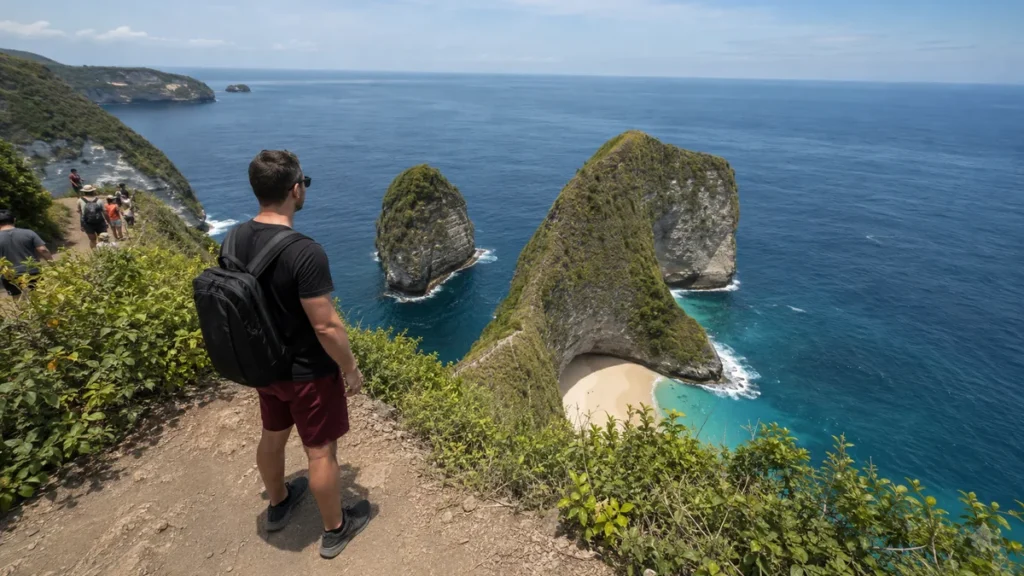
Kelingking Beach was the attraction I expected to find slightly overrated because I’d already seen the famous T-Rex-shaped headland hundreds of times online.
It wasn’t.
What photographs failed to show was the scale. The limestone ridge drops sharply toward a narrow strip of pale sand, with blue ocean wrapping around the cliffs below. Even with plenty of other visitors at the viewpoint, it remained one of the most impressive landscapes I saw in Nusa Penida.
The important distinction is between seeing Kelingking Beach from above and hiking down to the beach.
The viewpoint itself is manageable for most visitors. Reaching the sand is a completely different activity. The route drops steeply down the cliff, and the climb back becomes much harder once the heat builds.
I’d originally treated the descent as something I might do “if there was time.” Once I saw the slope and thought about climbing it again later, I dropped that idea.
That turned out to be the right decision for my schedule.
My take: the viewpoint is essential on a first trip. Only descend if reaching the beach itself is one of your main activities for the day.
2. Walk Around Broken Beach
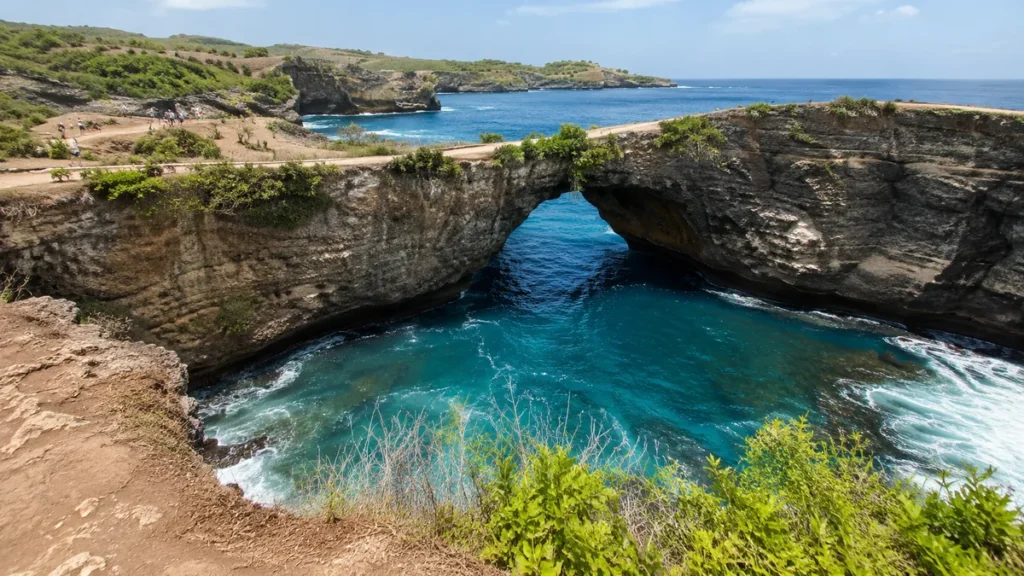
Broken Beach, also called Pasih Uug, made more sense once I saw it in person.
Despite the name, this isn’t a conventional beach where you spread out a towel and go swimming. The attraction is the almost circular coastal cove and the huge natural limestone arch opening directly to the ocean.
The walk around the cliffs didn’t take particularly long, which made Broken Beach one of the easier stops on my west Nusa Penida route.
I’d allowed more time than I needed. Once I’d walked around, seen the arch from several angles and watched waves moving through the opening, I was ready to continue.
The main advantage is its location close to Angel’s Billabong. Seeing the two together makes much more sense than treating either as a separate destination.
3. See Angel’s Billabong Without Planning to Swim
Angel’s Billabong is a natural tidal pool carved into the rocky coastline near Broken Beach.
Online photographs often make the water look like a calm natural infinity pool. Standing beside the exposed coast gave me a different impression.
The open ocean is right there, and conditions depend on tides, waves and swell. I treated Angel’s Billabong as a geological viewpoint rather than somewhere to get into the water.
That also meant I didn’t need very long here.
My take: it’s worth seeing when you’re already visiting Broken Beach, but I wouldn’t cross the island specifically for Angel’s Billabong.
4. Go Snorkeling With Manta Rays
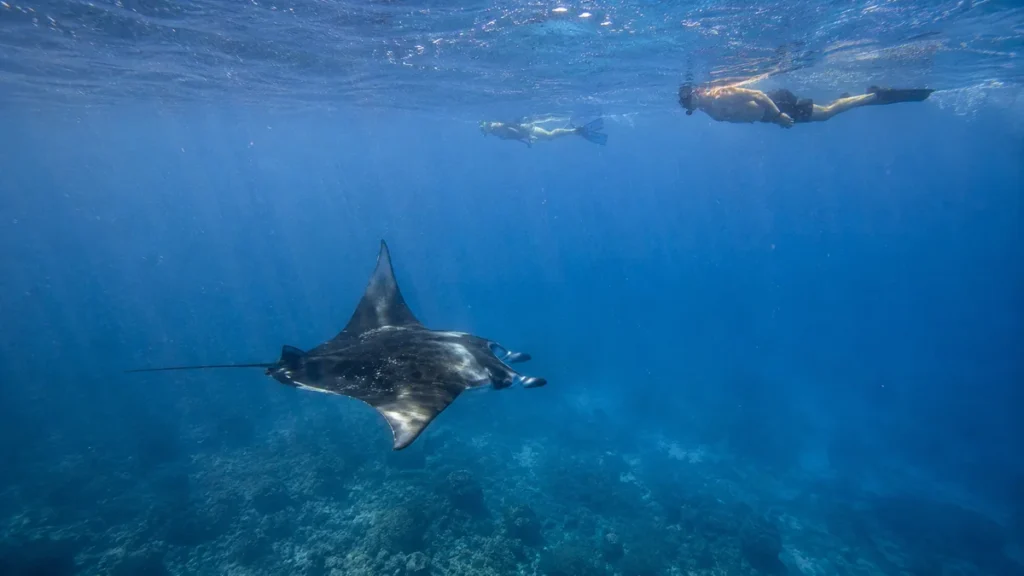
Manta-ray snorkeling was one of the Nusa Penida experiences where the actual encounter mattered far more to me than getting another photograph.
Trips commonly head toward Manta Point or Manta Bay, sometimes adding reef stops around Crystal Bay, Gamat Bay or Toyapakeh depending on sea conditions and the operator.
One thing is worth understanding before paying for a tour:
Manta sightings are never guaranteed.
They’re wild animals, not part of a scheduled attraction.
I also became much more selective about operators after reading the Manta Trust’s guidance on responsible manta encounters. Its research-backed advice highlights problems caused by behavior such as touching mantas, crowding cleaning stations and swimming directly in front of the animals.
That made a reputable operator more important to me than saving a small amount on the cheapest snorkeling trip.
If you’re uncomfortable in open water, ask about conditions, flotation equipment, group size and how much time is actually spent snorkeling before booking.
My take: manta snorkeling is one of the Nusa Penida experiences worth building part of your itinerary around instead of squeezing into an already overloaded sightseeing day.
5. Slow Down at Crystal Bay
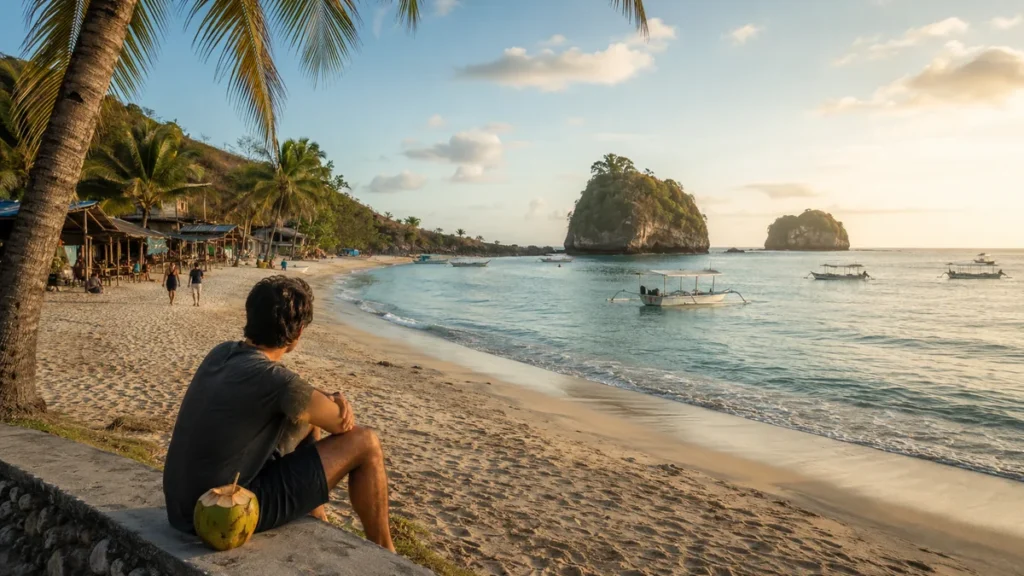
Crystal Bay became more enjoyable once I stopped treating every attraction as a photo stop.
The beach sits on western Nusa Penida and is known for snorkeling, diving and sunset views. The water and reef attract snorkelers, while the west-facing location makes the beach an obvious place to finish a long sightseeing day.
After hours of viewpoints, stairs and driving, having somewhere I could simply stop for a while changed the pace of the trip.
I wouldn’t squeeze Crystal Bay into a ten-minute visit just to mark it off a list.
It works better for:
- relaxing after exploring western Nusa Penida;
- snorkeling when conditions are suitable;
- watching sunset;
- or having a cold drink and doing very little for an hour.
A fresh coconut from a simple warung tasted better than anything elaborate would have at that point in the afternoon.
If you have additional time, Pandan Beach is another option around the Crystal Bay area, although the extra access effort makes more sense on an overnight trip than on a packed day tour.
6. Walk Down Toward Diamond Beach
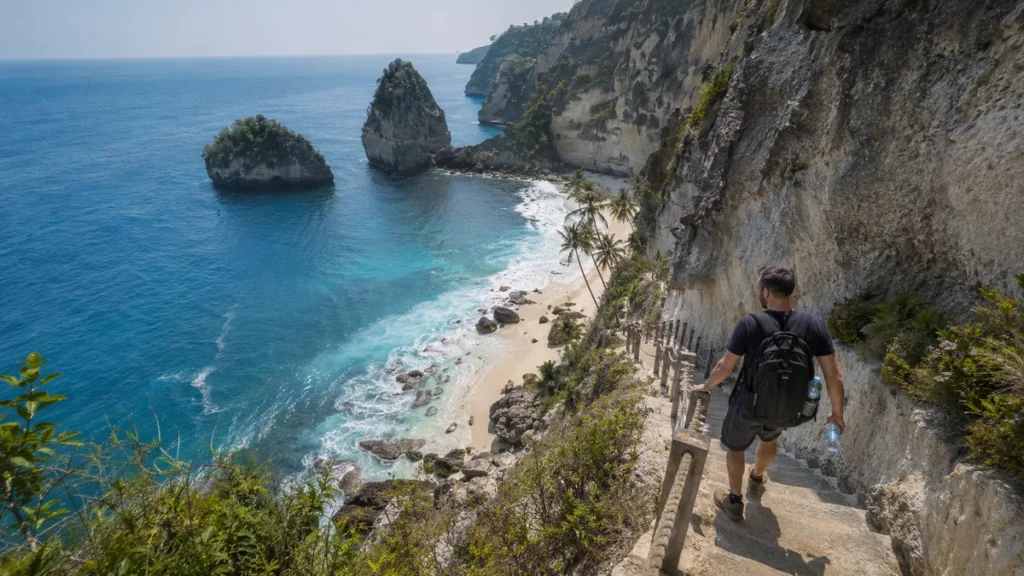
Diamond Beach was the east-coast attraction that most closely matched the photographs I’d seen before arriving.
White sand sits below towering limestone cliffs and offshore rock formations, with bright-blue water filling the bay.
What those photographs rarely communicate is the staircase.
Getting down turns the visit into physical activity rather than simple sightseeing. The climb back felt much longer once the temperature rose, and I went through more drinking water than expected.
The useful thing about this part of the island is that Diamond Beach and Atuh Beach are close enough to visit together.
You also don’t have to descend all the way to enjoy Diamond Beach. The upper views are still worthwhile for travelers short on time or uncomfortable with steep stairs.
My take: this was one of the best things I did on east Nusa Penida, but I wouldn’t rush it between several distant attractions.
7. Spend Time at Atuh Beach
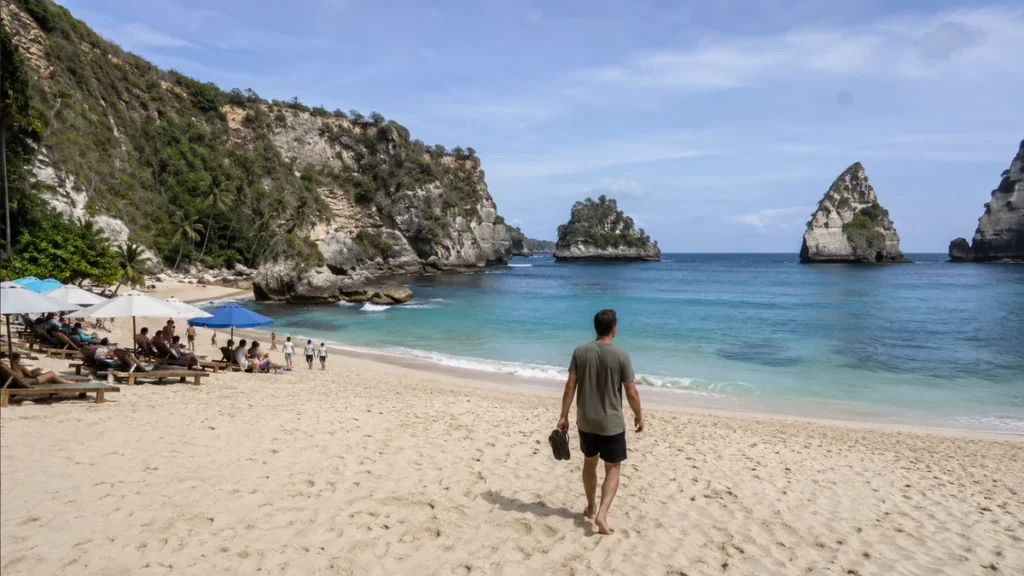
Atuh Beach didn’t have quite the same immediate visual impact as Diamond Beach from above, but I enjoyed actually spending time there more than expected.
After walking down, it felt like a beach visit rather than another viewpoint.
Rock formations frame the bay, small warungs make it easy to grab a drink or something simple to eat, and the pace felt slower than at some of the island’s headline photo locations.
Sea conditions still matter. Calm-looking water shouldn’t automatically be treated as safe water.
If you’re already visiting Diamond Beach, Atuh Beach is one of the easiest additions to justify.
8. Take in Thousand Islands Viewpoint
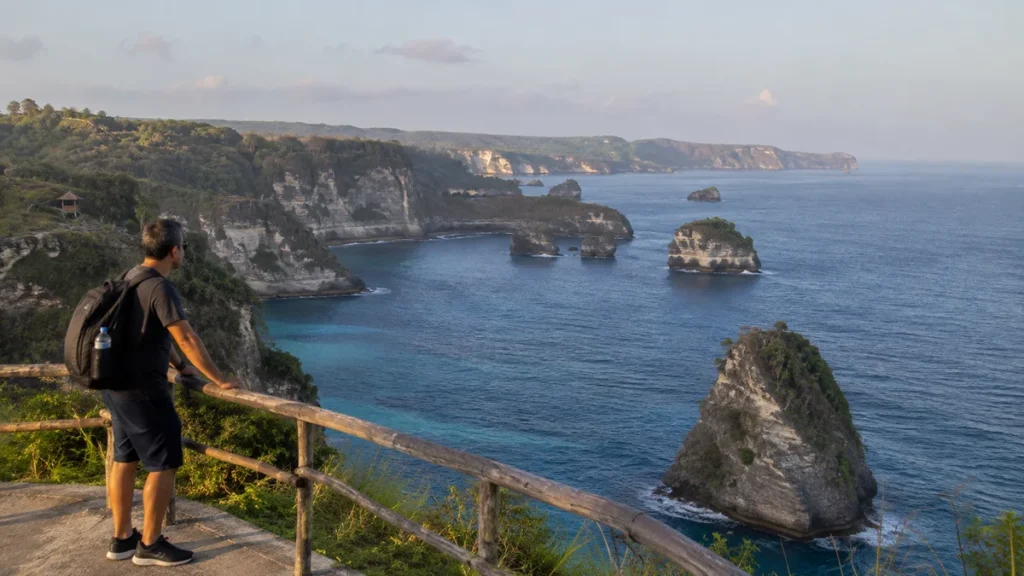
Thousand Islands Viewpoint was another reason I stopped trying to combine east and west Nusa Penida into one overloaded day.
The viewpoint looks across a rugged coastline of cliffs, small offshore islands and unusual rock formations.
The visit is less physically demanding than descending all the way to Diamond or Atuh Beach, although stairs and exposed sections still make sensible footwear useful.
Nearby Rumah Pohon Tree House has become particularly popular for photographs.
I found the wider coastal scenery more interesting than waiting around for one specific social-media shot.
If you’re short on time, enjoy the landscape first and treat the tree house as optional.
9. Explore Tembeling Forest and Natural Pools
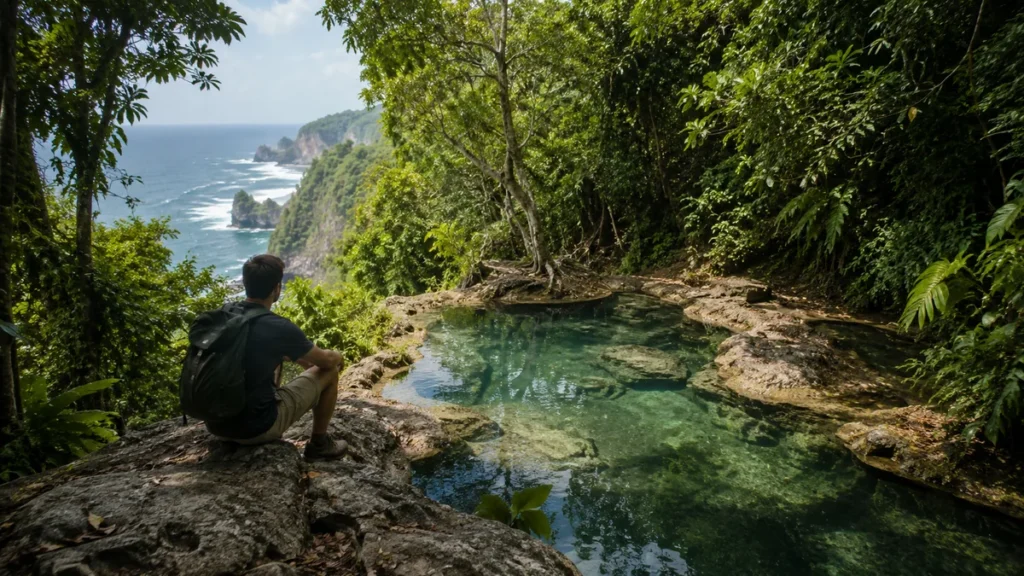
Tembeling gave me a welcome break from Nusa Penida’s repeated pattern of cliff viewpoint, photograph, drive, repeat.
The route passes through greener surroundings before eventually reaching natural pools and the coast.
Access is more involved than the major west-coast attractions, which is why I wouldn’t add it to a first-time one-day trip.
Once I had extra time, though, Tembeling made much more sense.
The natural pools were the part I enjoyed most. The open coast beyond them looked powerful enough that I had no interest in treating the beach as a casual swimming stop.
Best for: travelers spending at least two days on Nusa Penida who want something beyond the classic viewpoints.
10. Visit Goa Giri Putri Cave Temple
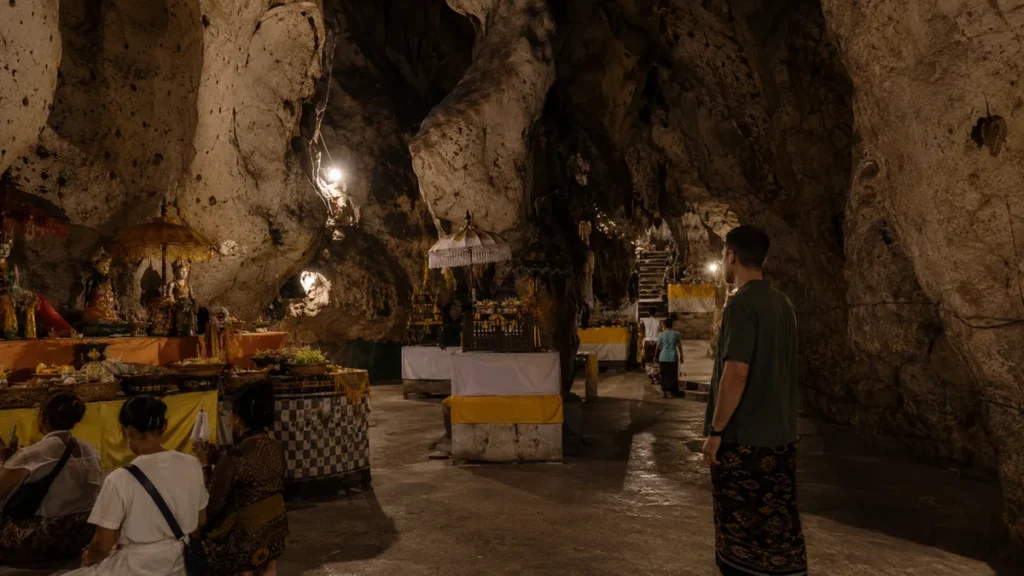
After several beaches and cliffs, Goa Giri Putri changed the tone of the trip completely.
This is an active Hindu religious site inside a limestone cave rather than another attraction built around scenery and photography.
The entrance is surprisingly narrow before the interior opens into a much larger cave.
What I liked most was that the visit corrected the impression I’d picked up online that Nusa Penida was simply a collection of beaches connected by tour vans.
People come here to worship, not to perform for visitors.
Dress respectfully, follow local instructions about temple clothing or sarongs, keep your voice down around worshippers and avoid treating offerings or ceremonies as photo props.
It was one of the stops that made Nusa Penida feel like a lived-in Balinese island rather than just a sightseeing circuit.
11. Take the Blue Stairs at Peguyangan
Peguyangan, sometimes written as Guyangan, is one of the more physically demanding attractions on Nusa Penida.
The distinctive blue staircase runs dramatically down the cliff toward a sacred temple area near the ocean.
Going down wasn’t the problem.
Coming back up in the heat was.
The exposure and number of stairs make this a poor stop to casually add near the end of an already tiring day.
I wouldn’t include Peguyangan in a packed first-time day trip. With two or three days, it becomes much easier to justify—especially for travelers who enjoy unusual walks and don’t mind heights.
12. Drive Through Teletubbies Hill
Teletubbies Hill was pleasant rather than spectacular, and I think that’s worth saying.
The rolling landscape looks completely different from Nusa Penida’s limestone coastline, particularly when the vegetation is green.
If you’re already passing through the area, it’s an easy stop.
I wouldn’t sacrifice Kelingking Beach, Diamond Beach, snorkeling or Atuh Beach to make room for it.
Not every attraction needs to be the highlight of the trip to be enjoyable.
13. Notice Nusa Penida Beyond Its Famous Attractions
Some of the details I remembered most clearly weren’t famous attractions at all.
Away from the busiest viewpoints, Nusa Penida shifted into villages, small temples, roadside warungs, fields and stretches of working coastline.
Those quieter parts corrected the impression I’d picked up before the trip that the island was simply a collection of Instagram cliffs.
Stopping for a basic plate of nasi goreng or grilled fish also felt better than rushing through lunch to squeeze in one more attraction.
By the second day, shade and a cold drink mattered more to me than finding the most photogenic café.
14. Watch Sunset Instead of Adding Another Attraction
One of my better planning decisions was dropping a late-afternoon stop rather than forcing another attraction into the schedule.
Crystal Bay faces west and works naturally for sunset. Once some of the daytime visitors began leaving, the beach felt noticeably calmer.
This was one of the biggest advantages of staying overnight on Nusa Penida.
I wasn’t constantly calculating how much traffic stood between me and a return boat.
The same logic applies to starting early on the east coast. Staying on the island allows you to experience major sights before much of the day-trip traffic arrives.
15. Leave Something for the Next Day
This was probably the most useful lesson from my trip.
Don’t build an itinerary simply because attractions look close together on Google Maps.
My first plan tried to combine western Nusa Penida, Diamond Beach and snorkeling into one ambitious day.
On paper, it looked efficient.
On the island, every drive, staircase, parking area and crowd slowed the schedule down.
The trip became much better once I stopped trying to “complete” Nusa Penida.
West vs East Nusa Penida: Which Should You Choose?
For most first-time visitors with only one day, west Nusa Penida is the simpler choice.
| West Nusa Penida | East Nusa Penida |
|---|---|
| Kelingking Beach | Diamond Beach |
| Broken Beach | Atuh Beach |
| Angel’s Billabong | Thousand Islands Viewpoint |
| Crystal Bay | Rumah Pohon |
| Better for a classic first-time day trip | Better when you have more time |
| Iconic cliff viewpoints | Dramatic beaches and east-coast scenery |
| Easier to combine into one route | Best when started early |
I didn’t find east Nusa Penida less impressive. In some ways, I preferred it.
The problem is trying to see both east and west in one rushed day.
The island is hilly, some access roads are slower than they look on a map, and the physical effort at places such as Diamond Beach adds more time than a simple driving estimate suggests.
If you have one day, pick one side.
If you have two, the decision becomes much easier.
Is One Day Enough in Nusa Penida?
One day is enough to see part of Nusa Penida. It isn’t enough to explore the island comfortably.
If You Have One Day
Pick one main route.
West: Kelingking Beach → Broken Beach → Angel’s Billabong → Crystal Bay
East: Diamond Beach → Atuh Beach → Thousand Islands Viewpoint
Adding a substantial snorkeling trip to an already full sightseeing route makes the schedule much tighter.
If You Have One Night
One night was the best compromise for me.
It gave me time for:
- one west-coast route;
- one east-coast route;
- sunset or an early start;
- and less pressure around the return boat.
If You Have Two Nights
Two nights make more sense if snorkeling, scuba diving, Tembeling, Peguyangan or slower beach time are priorities.
Where Can You Actually Swim in Nusa Penida?
This is one area where social media creates the wrong expectations.
Several places have “beach” in the name but work better as scenic or adventure stops than easy swimming beaches.
| Place | Swimming Plan | What to Know |
|---|---|---|
| Crystal Bay | Possible when conditions suit | Accessible beach, but currents still matter |
| Atuh Beach | Conditions dependent | Check the sea before entering |
| Diamond Beach | Not my main reason to visit | Surf and currents can be strong |
| Kelingking Beach | Don’t plan the day around swimming | Difficult access and exposed ocean |
| Broken Beach | No | It’s a cliff-top coastal formation |
| Angel’s Billabong | Don’t treat it as a swimming pool | Exposed to tides and ocean swell |
| Tembeling | Focus on the natural pools | Open coast can be rough |
Conditions in front of you matter more than anything written in a travel guide.
If the sea looks rough, don’t let an Instagram photo convince you otherwise.
Manta Point vs Manta Bay, Crystal Bay and Gamat Bay
If snorkeling is one of your priorities, understanding these names makes it easier to compare tours.
Manta Point is one of the best-known sites associated with manta rays around Nusa Penida.
Manta Bay is another area commonly included on manta-focused snorkeling trips.
Crystal Bay combines beach access with snorkeling and diving.
Gamat Bay is better known for reef scenery and coral.
Toyapakeh is another important snorkeling and diving area around the northwestern side of Nusa Penida.
Divers may also hear a lot about mola mola, or ocean sunfish. Like mantas, wildlife sightings should never be treated as guaranteed.
How to Get to Nusa Penida
Fast boats connect mainland Bali with Nusa Penida from ports including Sanur, Kusamba and Padang Bai, with Toyapakeh and Sampalan among the island’s arrival points.
The official Indonesia Travel guide to Nusa Penida lists these main access points and notes that fast-boat journeys typically take around 30–45 minutes, depending on the departure point, weather and sea conditions.
Sanur is one of the most practical departure points for travelers already staying around southern Bali.
Whatever port you use, check your individual boat operator’s departure point and check-in instructions. Don’t assume every “Sanur to Nusa Penida” ticket uses exactly the same counter or schedule.
Getting Around Nusa Penida: Driver or Scooter?
This was one place where paying more for convenience felt worthwhile.
A car with a local driver removed the stress of navigation, parking and unfamiliar roads while also making return-boat timing easier to manage.
Scooters provide more freedom, but Nusa Penida is not somewhere I’d choose to learn.
The terrain is hilly, traffic builds around popular attractions, and some smaller access roads can be rough.
For an experienced scooter rider, renting one may make sense.
For a first-time visitor without solid riding experience, the driver was money I didn’t regret spending.
Nusa Penida Entrance Fees in 2026
This is one section where older Nusa Penida guides can now be misleading.
On September 1, 2026, Klungkung Regency introduced an updated tourism-retribution collection system under Regional Regulation No. 4 of 2026.
Importantly, the local government said the tourism tariff itself did not increase. What changed was the collection mechanism, with integrated collection through tourism areas and designated tourist attractions, or Daya Tarik Wisata (DTW).
For international visitors to the Nusa Penida tourism area, the published rates are:
- IDR 25,000 per adult
- IDR 15,000 per child
Because the system has only recently changed, I wouldn’t rely on older blog posts listing individual charges. The official Klungkung Regency September 2026 tourism-fee announcement is the source I’d check for the latest local-government information.
Check what your driver or tour already includes and confirm locally if you’re asked for an additional payment.
This Nusa Penida charge is separate from Bali’s provincial levy for international tourists.
The official Love Bali system currently lists the Bali levy at IDR 150,000 per foreign tourist, with exemptions applying to certain eligible travelers. The official Love Bali tourist-levy FAQ explains the current amount, payment process and exemption categories.
Best Time to Visit Nusa Penida
I preferred planning outdoor-heavy days around the drier part of Bali’s year, broadly April through October.
That doesn’t guarantee blue skies or calm water every day.
Sea conditions matter much more here than a simple dry-season label suggests, especially if you’re taking a fast boat, snorkeling or spending time around exposed beaches.
I checked local conditions before boat and snorkeling days rather than relying only on a generic app showing weather for Bali as a whole.
For anything weather-sensitive, especially snorkeling or a boat crossing, I also checked Indonesia’s official BMKG forecast close to the day of travel.
Mistakes I Made in Nusa Penida
Trying to Cover East and West Too Quickly
Places that looked close on a map took much longer to combine once traffic, hills and attraction stops were involved.
My first itinerary looked efficient. It wasn’t.
Underestimating the Stairs
Diamond Beach and Peguyangan turned ordinary sightseeing into actual physical activity.
Drinking water, sun protection and shoes with decent grip mattered far more than I’d expected.
Treating Every Beach as a Swimming Beach
Some of Nusa Penida’s most spectacular beaches are much better for scenery than casual swimming.
The words “turquoise water” aren’t a safety assessment.
Thinking Kelingking’s Descent Was a Quick Extra
It isn’t.
Either make the hike a major part of the day or enjoy the viewpoint and move on.
Packing Too Much Into Late Afternoon
A relaxed sunset was worth more to me than squeezing in another two rushed photo stops.
Expecting Wildlife to Follow the Schedule
Manta rays don’t appear because a tour advertises them.
I treated a sighting as a wildlife encounter rather than a guaranteed product, and that made the experience much more enjoyable.
Frequently Asked Questions
Is Nusa Penida worth visiting?
Yes. I found Nusa Penida worth the trip for its dramatic coastal scenery, manta snorkeling and unusual limestone landscapes.
It becomes much less enjoyable when squeezed into an overloaded Bali itinerary simply to reproduce famous photographs.
What is Nusa Penida famous for?
Nusa Penida is best known for Kelingking Beach, Diamond Beach, Broken Beach, Angel’s Billabong, Crystal Bay, manta rays, snorkeling, diving and dramatic limestone cliffs.
How many days do you need in Nusa Penida?
For most first-time visitors, two days and one night gives a much better balance than a rushed day trip.
One day works if you choose either east or west. Two or three nights are better if snorkeling, diving or less accessible attractions matter to you.
Which is better: east or west Nusa Penida?
West Nusa Penida is easier for a first-time one-day trip because Kelingking, Broken Beach, Angel’s Billabong and Crystal Bay fit naturally together.
East Nusa Penida is equally worthwhile and includes Diamond Beach, Atuh Beach and Thousand Islands Viewpoint, but it works better when you have more time.
Can you visit Nusa Penida without a scooter?
Yes.
Hiring a car with a local driver is one of the easiest ways to explore Nusa Penida, and it was the option that made the most sense for my first visit.
Can you swim at Kelingking Beach?
Reaching the beach requires a steep descent, and the ocean is exposed and can be powerful.
I treated Kelingking primarily as a viewpoint rather than building my visit around swimming.
Is Nusa Penida suitable for families or older travelers?
Parts of it can be.
The upper Kelingking viewpoint and car-based sightseeing are considerably easier than steep descents such as Diamond Beach, Kelingking Beach or Peguyangan.
For anyone with limited mobility, I’d build the itinerary around easy viewpoints rather than copying a standard tour route.
Final Thoughts
Nusa Penida was worth visiting, but the trip improved once I stopped trying to see everything.
Kelingking deserved its reputation. Manta snorkeling was worth prioritizing. Diamond Beach justified spending time on the east side, while Crystal Bay became better when I stopped watching the clock.
The parts I enjoyed least weren’t bad attractions. They were the moments when I’d planned too much and started treating the island like a checklist.
For a first visit, choose east or west, leave room for one experience that takes time, and don’t turn Nusa Penida into a race against the return boat.
A shorter itinerary made the island much better.