



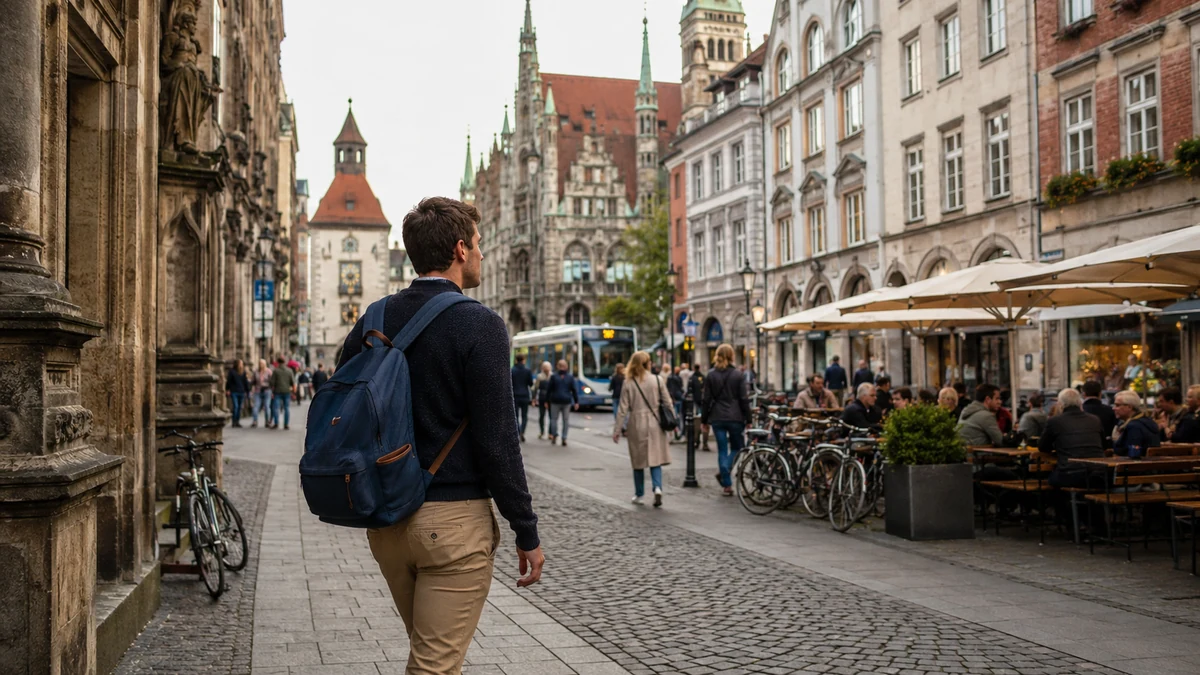
Yes, Germany is worth visiting, especially if you want a European trip that mixes major cities, difficult history, small towns, castles, mountains, regional food, and straightforward independent travel.
What surprised me most was how quickly Germany changed from one region to another. Berlin felt nothing like Bavaria. Munich had a completely different rhythm from Hamburg. Along the Rhine, vineyards and small riverside towns slowed the trip down after several busy city days. Once I reached southern Germany, lakes and the Bavarian Alps replaced the urban landscape almost completely.
My biggest planning mistake was trying to fit too much into one trip. Germany has excellent transport connections, which makes an overpacked itinerary look reasonable on a map. It felt very different once I was checking out of hotels, carrying luggage through stations, making connections, and trying to reach timed attractions.
I visited Germany in September 2025, when the warm-to-mild weather worked especially well for combining city sightseeing with the Rhine, Moselle, and Bavaria. The timing also gave me comfortable conditions for long walking days, outdoor beer gardens, and exploring Germany’s wine regions.
This guide covers the decisions that mattered most during my trip: where to go, how many days to allow, how German trains work, when a rental car actually helps, what Germany costs, what I ate, what surprised me, and the mistakes that are easy to make on a first visit.
Is Germany Worth Visiting for a First Trip to Europe?
Germany worked particularly well as an independent destination because I rarely needed a car in the major cities, public transport covered most places I wanted to reach, and each region offered something noticeably different.
Before arriving, my picture of Germany was fairly predictable: Berlin, Oktoberfest, beer halls, Neuschwanstein Castle, and perhaps a few medieval towns.
That was only one version of the country.
Germany has 16 federal states, and traveling between them made the regional differences much clearer than I had expected. Bavaria gave me mountains, lakes, beer gardens, and traditional architecture. Berlin felt more international and historically layered. The Rhine and Moselle were shaped by vineyards, castles, and river towns. Hamburg had a maritime identity that felt far removed from southern Germany.
For an official overview of the country’s regions and practical destination information, I used Germany’s national tourism website while planning. Germany Travel – Official Tourism Website
Germany became much more interesting once I stopped thinking of it as a single destination.
Where Should You Go in Germany?
The hardest part of planning was not finding places worth visiting. It was deciding what to leave out.
Searching for the “best places to visit in Germany” gave me an endless list. What helped more was choosing destinations according to the type of trip I wanted.
| Place or Region | Best For | Realistic Time | My Take |
|---|---|---|---|
| Berlin | History, museums, nightlife, neighborhoods | 3–4 days | Worth giving proper time |
| Munich | Bavaria, food, beer gardens, day trips | 2–3 days | Excellent southern base |
| Rhine Valley | Castles, vineyards, river scenery | 2 days | One of my favorite contrasts to the cities |
| Moselle Valley | Wine, smaller towns, slower travel | 2–3 days | Best when you have breathing room |
| Hamburg | Waterfront, architecture, nightlife | 2–3 days | Strong alternative to Munich |
| Dresden & Saxony | Architecture, history, hiking | 2–3 days | Easy to underestimate |
| Black Forest | Hiking, villages, scenic driving | 2–4 days | Too large for a token stop |
| Bavarian Alps | Mountains, lakes, outdoor time | 2–4 days | Worth protecting time for |
| Cologne | Cathedral, Rhine, short city break | 1–2 days | Easy to combine with western Germany |
| Nuremberg | History, old town, Christmas season | 1–2 days | Better when not rushed |
Berlin Needed More Time Than I Expected
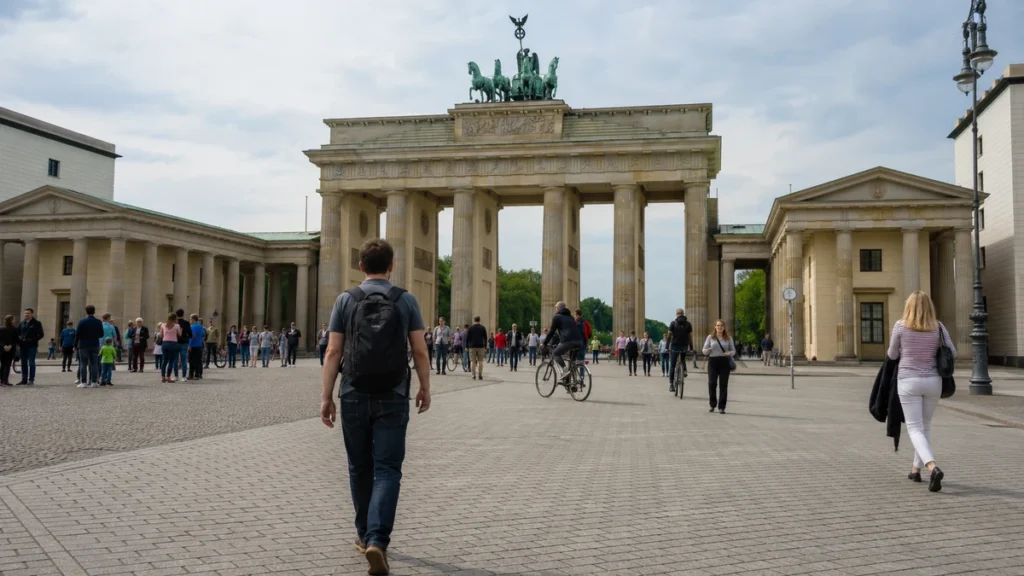
Berlin was the city where my original schedule failed fastest.
Several major sights appeared close together on a map. In reality, museum visits, public transport, walking, security checks, coffee stops, and the amount of reading I wanted to do at historical sites filled the days quickly.
The Brandenburg Gate itself did not take long.
The history around it did.
Sites connected with the Berlin Wall and twentieth-century Germany were much more meaningful when I stopped treating them as quick photo stops. Berlin is one of those cities where seeing fewer places properly worked better than collecting landmarks.
Mitte was convenient for major attractions, but I enjoyed the city more once I moved away from the most sightseeing-heavy streets. Walking through Kreuzberg and Prenzlauer Berg gave me a better sense of ordinary Berlin.
Three days felt like the minimum for my interests. Four made more sense if museums, modern history, and neighborhoods are priorities.
Munich Was an Easy Base for Bavaria
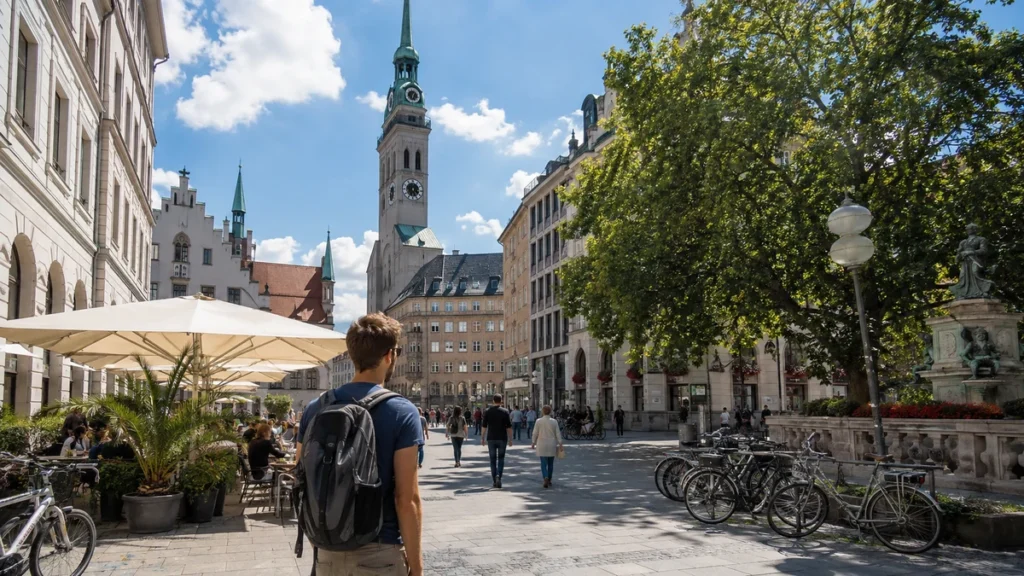
Munich felt easier to understand quickly.
The historic center, markets, museums, beer halls, and the English Garden could fill several days, but the city’s biggest advantage was location.
It gave me an easy base for southern Bavaria and trips toward Füssen, Neuschwanstein Castle, lakes, and the Bavarian Alps.
The English Garden also reminded me that not every afternoon needed another paid attraction. After several packed sightseeing days, sitting outside with food and a beer was one of the easiest parts of the trip to enjoy.
Bavaria itself was much broader than the image I had before visiting. The combination of lakes, Alpine landscapes, medieval towns, rural villages, and larger cities made it possible to spend an entire trip in the region without running out of variety.
The Rhine Valley Was Better Than I Expected
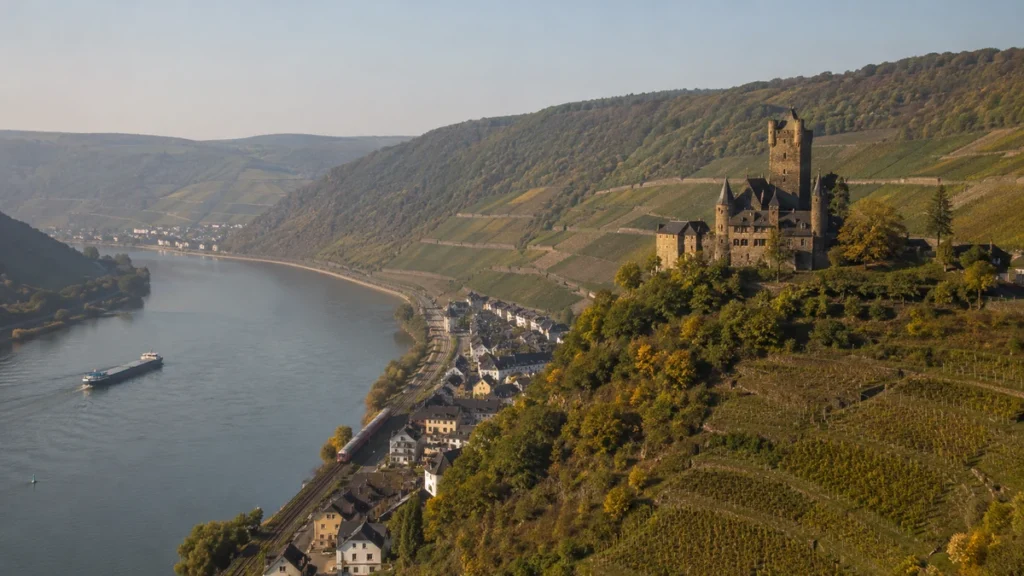
The Rhine was one part of my itinerary I nearly shortened.
I was glad I did not.
After several city days, vineyards climbing above the river and castles appearing along the hills changed the pace immediately.
Some towns were small enough that I could walk their main streets relatively quickly. Initially, I wondered whether I had allocated too much time.
Then I stopped trying to find extra attractions.
Walking beside the river, watching boats pass, taking a slower lunch, and staying after the busiest part of the day were exactly what I had been missing.
The Rhine worked best for me as a contrast to Germany’s cities rather than another place to attack with a checklist.
The Moselle Was Even Slower
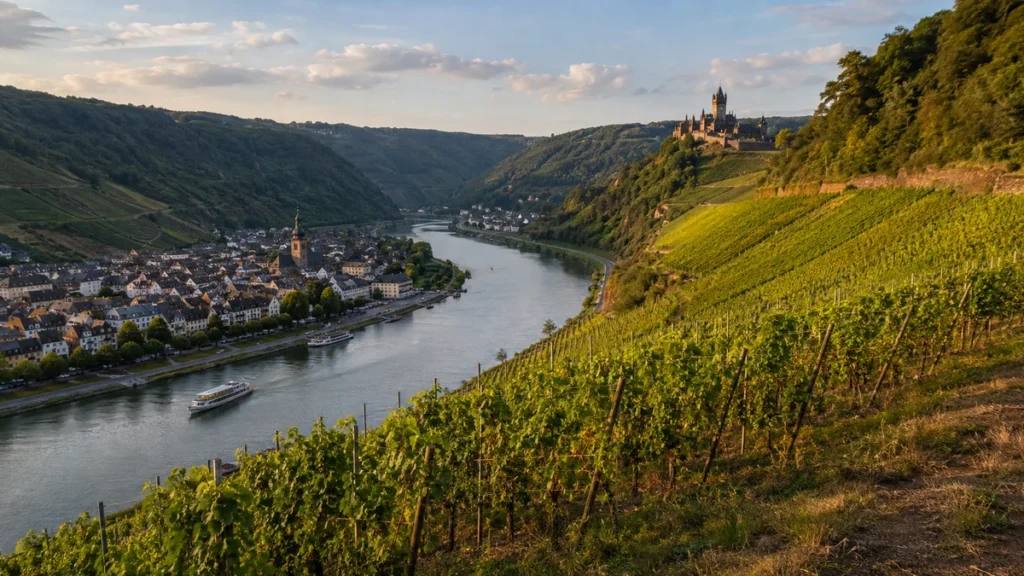
The Moselle Valley felt quieter again.
Around places such as Cochem, vineyards rise sharply above bends in the river, and wine becomes a much more visible part of the trip.
That was one of my bigger surprises.
Before traveling, I associated Germany far more strongly with beer than wine. Along the Rhine and Moselle, Riesling, vineyards, wine taverns, and small wine towns were part of the landscape.
With limited time, I would not force both the Rhine and Moselle into the same itinerary. Picking one and traveling it properly made more sense than rushing through both.
Hamburg Showed Me a Different Germany
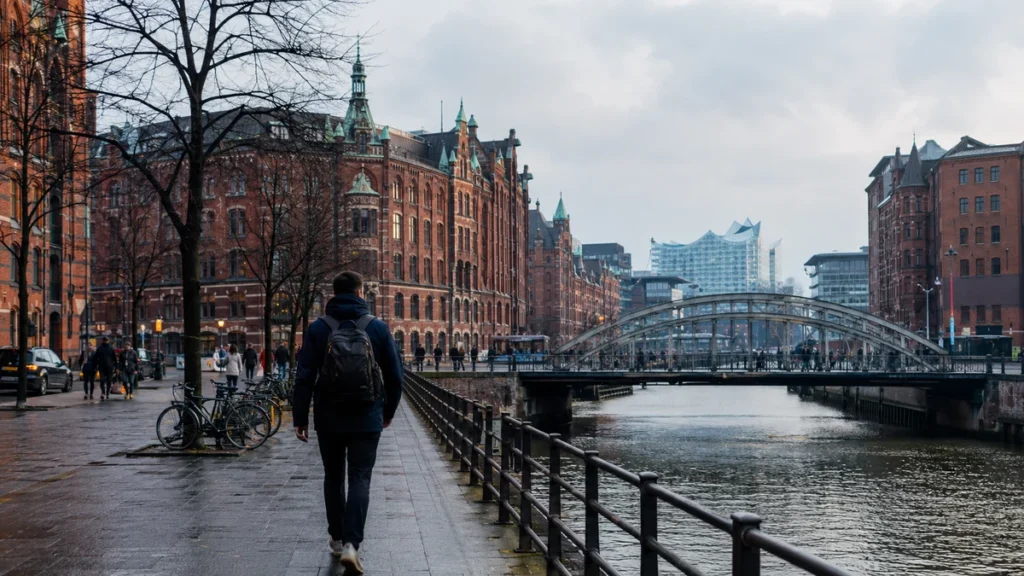
Hamburg rarely receives the same first-trip attention as Berlin or Munich, but it offered one of the clearest regional contrasts.
The Elbe, Speicherstadt, HafenCity, harbor areas, and Elbphilharmonie gave the city a strong maritime identity.
Travelers who care more about waterfront cities, architecture, nightlife, and northern Europe than Alpine scenery could easily enjoy Berlin and Hamburg more than the standard Berlin-and-Munich combination.
The farther north I looked, the more my original idea of Germany changed. Lübeck, the Baltic coast, Rügen, and the North Sea showed how incomplete the Bavaria-heavy image of Germany can be.
Germany Was More Outdoorsy Than I Expected
I had initially treated Germany’s natural areas as extras between city stays.
That was a mistake.
The Black Forest deserved more than a rushed drive. The Bavarian Alps needed weather flexibility. Berchtesgaden, Saxon Switzerland, the Harz Mountains, Lake Constance, and Germany’s northern coast all added outdoor options that rarely appear in the stereotypical first image of the country.
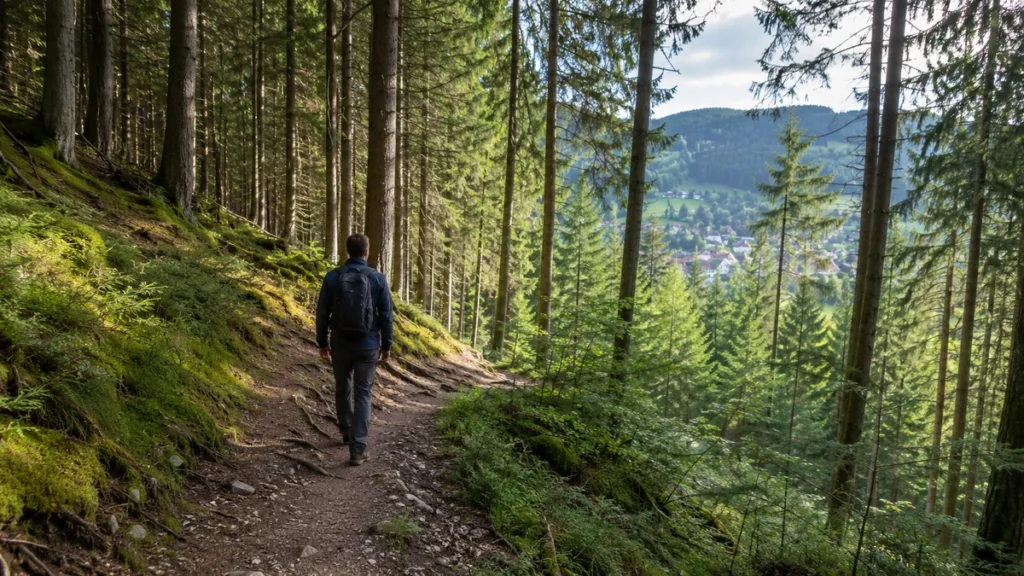
Nature days also required different planning.
A museum can still work when rain arrives. A mountain hike cannot always be moved so easily.
When outdoor experiences mattered, I found it better to cut another city rather than reduce the countryside to one rushed day.
How Many Days Do You Need in Germany?
One of the easiest Germany travel mistakes is confusing train time with total travel time.
A two-hour train does not remove only two hours from the day.
There is checking out, reaching the station, finding the correct platform, waiting, traveling, getting from the arrival station to the next accommodation, checking in, and settling down again.
The number of hotel changes mattered more than I expected.
| Trip Length | What Made Sense to Me |
|---|---|
| 5 days | One city/region plus nearby trips |
| 7 days | Two bases |
| 10 days | Two major cities plus one scenic region |
| 14 days | Three or four bases |
| 3 weeks | Several regions without constant rushing |
Five Days
For five days, keeping the trip focused on one part of Germany made far more sense than crossing the country.
Berlin plus Potsdam works for history and culture.
Munich plus one or two Bavarian trips works for southern Germany.
Cologne with part of the Rhine Valley is another easy combination.
Trying to cover Berlin, Munich, and another region in five days may work technically, but very little margin remains when plans change.
Seven Days
Seven days suited two bases.
For example:
Berlin + Munich
Berlin + Dresden/Saxony
Frankfurt/Rhine + Munich
This was where restraint mattered most. Every extra overnight stop looked harmless while I planned at home. It felt much less harmless once I had luggage with me.
Ten Days
Ten days gave me enough room to experience contrasting parts of Germany.
A first-time route could look like:
Days 1–3: Berlin
Days 4–5: Rhine region
Days 6–10: Munich and Bavaria
The exact destinations matter less than the structure: two cities or major bases plus one slower region.
Two Weeks
Two weeks made Germany noticeably easier.
Hamburg, Dresden, the Black Forest, Moselle Valley, Nuremberg, or a longer stay in Bavaria could be added without turning every other day into a transfer day.
If I returned for another long trip, this is the pace I would try to preserve.
Getting Around Germany: What I Learned About the Trains
For most of my trip, the easiest rule was:
Train between major cities. Use a car only when the countryside makes it useful.
German train terminology initially looked more complicated than the actual system.
The main categories I needed to understand were:
ICE, IC and EC: mainly long-distance trains.
RE and RB: regional trains.
S-Bahn: suburban and local rail.
U-Bahn: metro transport in cities where it operates.
Once that distinction clicked, route planning became much easier.
I kept DB Navigator on my phone and checked journeys again before leaving the hotel rather than relying entirely on what I had planned several days earlier.
Which German Train Ticket Makes Sense?
| Fare or Ticket | Useful For | Main Catch |
|---|---|---|
| Super Sparpreis | Lower-cost advance long-distance journeys | More restrictions |
| Sparpreis | Advance long-distance journeys | Less flexible than Flexpreis |
| Flexpreis | Plans that may change | Usually costs more |
| Deutschlandticket | Frequent local and regional transport | Not normal long-distance ICE/IC/EC travel |
| German Rail Pass | Certain multi-city visitor itineraries | Compare carefully with individual fares |
The Deutschlandticket was one of the easiest products to misunderstand.
As of August 2026, Deutsche Bahn lists it at €63 per month. It covers participating local and regional transport such as buses, U-Bahn, S-Bahn, RB, and RE services. Ordinary ICE, IC, and EC long-distance trains are not included. It is also a subscription rather than a conventional tourist rail pass.
Because prices and conditions can change, I would check Deutsche Bahn directly before buying it. Deutsche Bahn – Deutschlandticket
The important lesson was not to assume that a ticket described as Germany-wide automatically covered every German train.
Train Delays Changed How I Planned My Days
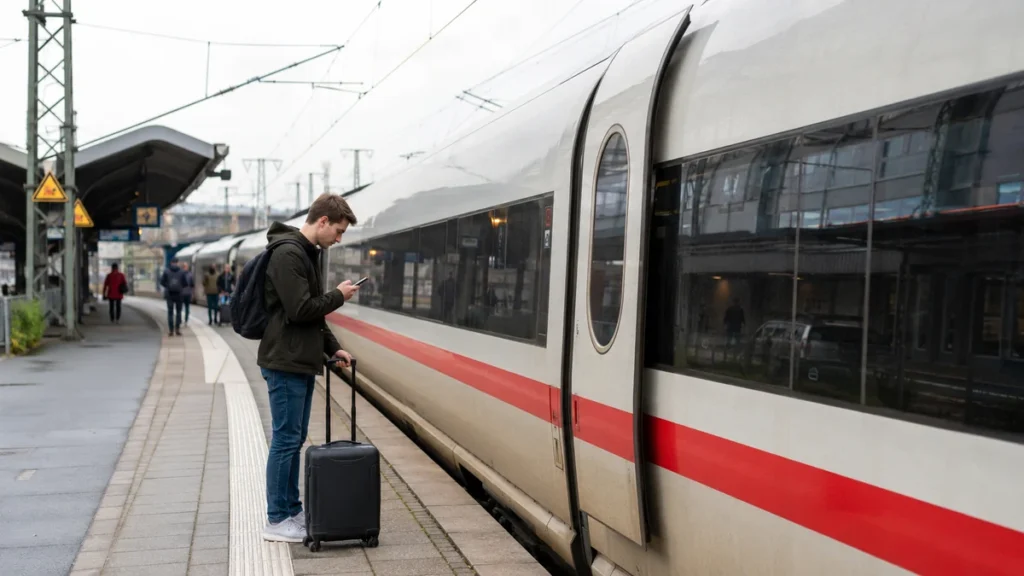
My early itinerary placed timed attractions too close to long-distance rail journeys.
That looked efficient until travel became slightly unpredictable.
Later, I stopped treating scheduled arrival times as guarantees. On longer travel days, I left the first part of the afternoon flexible rather than booking something expensive immediately after reaching the city.
That one change made travel days much less stressful.
When Renting a Car Actually Helped
A car made much more sense once the trip moved away from large cities.
Parts of the Black Forest, rural Bavaria, smaller Alpine areas, and scenic countryside routes became easier when I was not building the day around several regional connections.
Inside Berlin or Munich, the opposite was true.
Parking, traffic, and accommodation parking charges removed much of the convenience. Public transport took me where I needed to go without worrying about the vehicle.
For a mixed itinerary, trains between cities and a short rental-car period for rural Germany was the combination that made the most sense.
Where I Spent and Saved Money in Germany
Germany did not feel uniformly expensive.
Accommodation varied more than anything else. Prices depended heavily on the city, season, weekend, and major events.
Munich during Oktoberfest, for example, is a completely different accommodation market from an ordinary week.
Instead of relying on a single “Germany costs this much per day” figure, I paid more attention to which expenses improved the trip.
| Expense | Where I Saved | Where Spending More Helped |
|---|---|---|
| Trains | Advance tickets when plans were fixed | Flexible fares when plans were uncertain |
| Food | Bakeries, markets, casual lunches | Regional meals I genuinely wanted to try |
| Hotels | Staying outside the busiest tourist blocks | Easy station access on travel days |
| Attractions | Parks, neighborhoods, churches, public areas | Museums and historical sites that mattered to me |
| Car rental | Skipping it in cities | Rural days with awkward transport |
German bakeries became one of my easiest ways to keep everyday costs down.
Breakfast did not need to be a hotel buffet or café meal every morning. A bakery stop for bread, pastries, and coffee was faster and often more enjoyable.
I also became more willing to spend money when convenience protected valuable travel time. A slightly better hotel location before an early train was sometimes worth more than saving a small amount and adding another public transport journey.
What I Actually Ate in Germany
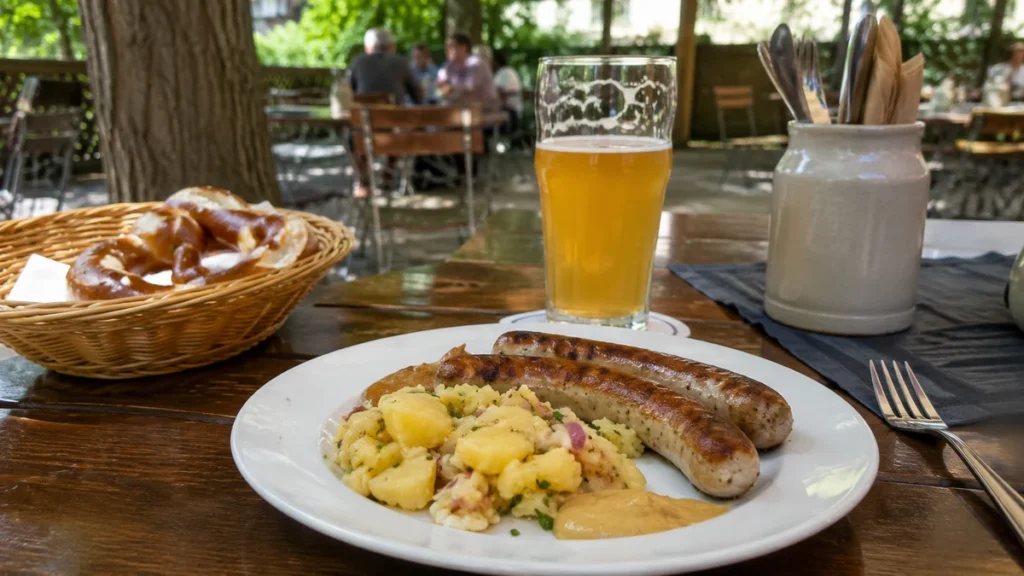
German food was much more regional than I had expected.
Bavaria was the easiest place to encounter the familiar stereotypes: pretzels, sausages, dumplings, beer halls, and beer gardens.
Weißwurst made more sense once I understood it as part of Bavarian food culture rather than simply “German sausage.”
Berlin’s food scene felt completely different. Currywurst was an obvious local snack, but the city’s Turkish influence was just as visible. Döner was cheap, quick, and far more connected to everyday Berlin eating than many formal lists of traditional German dishes suggest.
Franconia brought its own sausages and beer traditions.
Frankfurt is associated with Apfelwein.
Northern Germany brought more fish into the picture.
Then the Rhine and Moselle introduced the part of German food and drink culture I had underestimated most: wine.
Seeing vineyards while drinking local Riesling made much more sense than simply ordering “German wine” somewhere else.
One of my favorite food habits was also the simplest. I stopped researching breakfast and walked into whatever bakery looked busy.
Those ordinary meals often felt more connected to the trip than anything I had bookmarked in advance.
Best Time to Visit Germany
There was no single season that looked best for every type of trip.
The right time depends on what you actually want to do.
| Season | Best For | Main Drawback |
|---|---|---|
| Spring | Cities, walking, lighter crowds | Unpredictable weather |
| Summer | Hiking, lakes, long evenings, beer gardens | Higher demand and crowds |
| Autumn | Wine regions, hiking, festivals | Busy event periods |
| Winter | Christmas markets, museums | Cold weather and short daylight |
Spring
Spring works particularly well for city-heavy itineraries.
The trade-off is weather. Outdoor plans need some flexibility rather than assuming every planned hiking or sightseeing day will stay dry.
Summer
Summer gives Germany long days and makes outdoor regions much easier to enjoy.
It is also when famous attractions can feel busiest.
At heavily visited places, arriving earlier changed the experience enough that it was worth giving up a slow morning.
Autumn
Autumn interested me more after seeing Germany’s wine regions.
The Rhine and Moselle fit naturally into a fall itinerary, while hiking can also be excellent when conditions cooperate.
Munich requires additional planning around Oktoberfest. Even travelers who do not plan to attend need to know the dates because accommodation demand can affect the wider city.
Winter
Germany’s Christmas markets are strong enough to build an entire winter trip around.
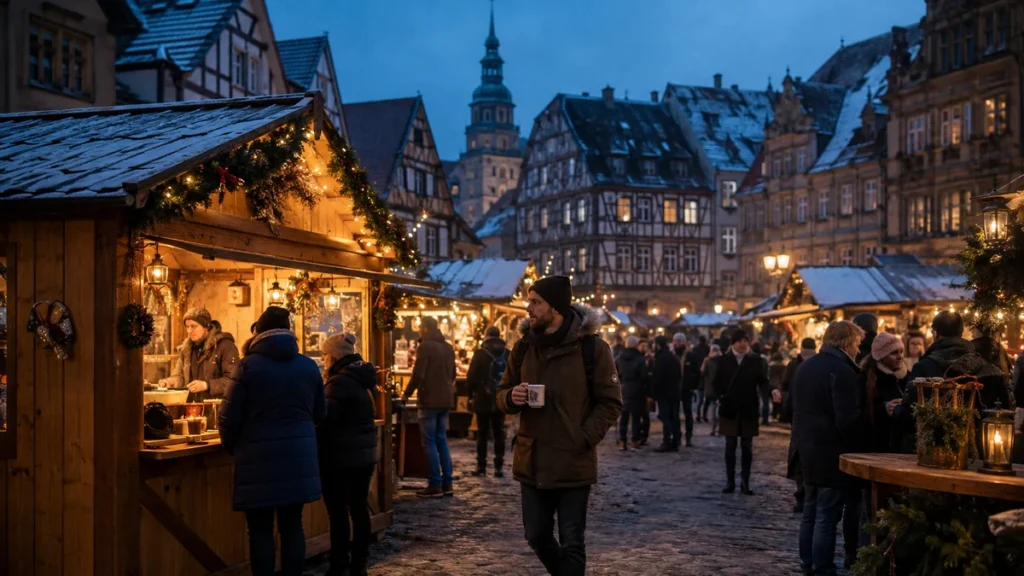
Nuremberg, Dresden, Cologne, Munich, and many smaller towns become major seasonal destinations.
The compromise is daylight.
Winter worked better in my planning once I stopped assuming I could fit the same amount of outdoor sightseeing into a December day as a summer one.
Sunday Closures Caught Me Off Guard
This was one of the most practical differences I underestimated.
Many ordinary shops and supermarkets close on Sundays, although restaurants, attractions, station businesses, and other exceptions operate under different rules.
The first time it mattered, I had left a few basic purchases until Sunday morning.
That was poor planning rather than a serious travel problem.
Afterward, I dealt with groceries, toiletries, and other routine shopping on Saturday.
The useful lesson is not that Germany “closes on Sunday.”
It is that ordinary retail becomes much less convenient, so anything essential is better handled beforehand.
Cash, Cards, and Small Cultural Differences
I kept some euros with me throughout the trip.
Cards worked in many places, but going completely cashless still felt unnecessarily limiting.
The other differences were small individually but noticeable together.
Restaurant service often felt less rushed than what I was used to in the U.S. Bills did not necessarily appear the moment I finished eating. Some public toilets required payment. Bike lanes deserved far more attention than I initially gave them.
Then there was Pfand, Germany’s bottle-deposit system.
At first, I simply noticed people taking bottles back into supermarkets. Once I understood the deposit system, it became another small part of everyday German life that made sense after seeing it in practice.
None of these differences made travel difficult.
They just made the trip smoother once I stopped expecting daily routines to work exactly as they did at home.
What Was Worth My Time and What Felt Overrated
Germany became easier to enjoy once I stopped assuming every famous attraction deserved the same amount of time.
Berlin’s Historical Sites Were Worth Slowing Down For
Berlin was one place where rushing actively made the experience worse.
The memorials, museums, and sites connected with German history required context. Treating them as quick sightseeing stops removed much of what made them important.
I saw fewer places and got more from them.
The Rhine Valley Exceeded My Expectations
The Rhine was not one of the parts of Germany I had been most excited about before the trip.
It became one of my favorite changes of pace.
There was less pressure to keep moving, and the combination of river scenery, vineyards, trains, and castles felt completely different from the city portions of the itinerary.
Neuschwanstein Was Beautiful, but the Expectation Matters
Neuschwanstein Castle looks impressive in person.
It is also one of Germany’s most recognizable attractions, so expecting a quiet fairy-tale castle experience is unrealistic.
The visit worked better once I thought of it as part of a wider Bavarian day rather than the sole purpose of traveling south.
For travelers who dislike famous, heavily photographed attractions, Germany has plenty of smaller castles and historic towns that may be more satisfying.
Frankfurt Was Useful, but I Did Not Need to Stay Just Because I Landed There
Frankfurt is a major international arrival point, which makes it easy to automatically give the city several nights.
That is not always the best use of a short trip.
There are museums, food, architecture, and plenty to explore in Frankfurt itself. For my wider route, however, its transport connections and access to western Germany were particularly valuable.
The lesson was simple: an arrival airport does not have to determine the itinerary.
Rothenburg Was Attractive but Not Compulsory
Rothenburg ob der Tauber looked much like the Germany I had imagined before traveling.
Its medieval streets are undeniably photogenic.
But I stopped thinking of it as essential.
Bamberg, Regensburg, Quedlinburg, Lübeck, and other historic towns can provide old architecture and strong local character without forcing every traveler onto exactly the same Germany itinerary.
Germany Travel Mistakes I Would Avoid Next Time
Trying to Visit Too Many Places
This was my biggest mistake.
Germany looked compact enough that another overnight stop always seemed possible.
The itinerary improved every time I removed one.
Two or three nights in one place generally gave me more than dividing the same time between two destinations.
Treating Train Connections as Exact
Germany’s rail network made independent travel straightforward, but planning transfers too tightly added stress I did not need.
Giving myself more connection time sometimes looked inefficient on paper and felt much better in practice.
Thinking Bavaria Represented the Whole Country
Bavaria contains many of Germany’s most familiar images.
It is still only one region.
Berlin, Hamburg, Saxony, the Rhine, and northern Germany felt different enough that seeing more than one part of the country changed my impression completely.
Forgetting Sunday Closures
This mistake had a very easy solution.
I did ordinary shopping on Saturday.
Booking Timed Attractions Immediately After Long Journeys
This looked smart when I built the itinerary.
In reality, it turned small delays into unnecessary pressure.
Travel days became easier when I stopped trying to extract a full sightseeing day from every transfer.
Underestimating Germany’s Natural Areas
The Black Forest, Alps, Saxon Switzerland, lakes, and other outdoor areas deserved proper time.
They were not simply extras attached to city trips.
What Americans Need to Know Before Traveling to Germany
Germany is part of Europe’s Schengen travel area, so entry requirements are one subject where current official information matters more than an old travel-blog post.
One particularly important issue is ETIAS.
As of August 2026, the European Union states that ETIAS is not yet operating and applications are not being collected. The EU says it will announce the specific start date before implementation.
Because entry systems can change, I would check again shortly before flying rather than relying on something saved months earlier. European Union – Official ETIAS and Entry Information
I also check passport validity, insurance, and current government travel information before any international trip.
Those details are less exciting than choosing castles and train routes, but they are exactly the type of information I prefer to verify from official sources.
Where to Stay on a First Germany Trip
I initially cared too much about staying beside the main attraction.
Transport connections usually mattered more.
Berlin
Mitte was convenient for major sights and worked well for a short visit.
Kreuzberg suited evenings, food, and a busier neighborhood feel.
Prenzlauer Berg felt calmer.
Rather than checking only the distance to the Brandenburg Gate or Museum Island, I paid attention to the nearest useful U-Bahn or S-Bahn connection.
That made a bigger difference to the day.
Munich
Central Munich was particularly convenient on a short visit.
Altstadt-Lehel keeps the historic center close, while Maxvorstadt works well for museums and easy access to central areas.
Before early train departures, simple access to München Hauptbahnhof mattered more to me than having the prettiest hotel location.
Rhine and Moselle
Here, I cared more about atmosphere.
Staying in a smaller riverside town meant evenings became part of the experience rather than something spent returning to a larger city.
Koblenz is useful when transport connections matter most.
Smaller places such as Bacharach or Cochem make more sense when the priority is river-town atmosphere after some day visitors have left.
Neither approach is universally better.
The choice is really convenience versus atmosphere.
The Decisions That Made My Germany Trip Better
The choices that improved the trip most were not individual attractions.
They were structural.
I stopped changing hotels constantly.
I used trains where they made sense and kept driving for places where a car genuinely solved a transport problem.
I stopped booking expensive timed attractions immediately after intercity journeys.
I mixed major landmarks with neighborhoods, parks, bakeries, markets, and ordinary streets.
Most importantly, I gave part of the itinerary to rural Germany.
That was when the country started to feel much broader than Berlin, Munich, and a collection of castles.
Final Thoughts
The thing I remembered most about Germany was not one castle, museum, or famous square.
It was how quickly the country changed.
Berlin felt restless and layered with history. Bavaria gave me lakes, beer gardens, and mountains. The Rhine slowed everything down with vineyards and riverside towns. Regional food changed along the way, and northern Germany looked increasingly different from the version of the country I had imagined before arriving.
My trip became better once I stopped measuring it by the number of destinations I could fit into the itinerary.
For a first visit, the lesson I brought home was simple: choose fewer bases, understand the train ticket you are buying, leave some breathing room around travel days, and spend at least part of the trip outside Germany’s biggest cities.
That was when Germany became much more interesting than the itinerary I had originally planned.