



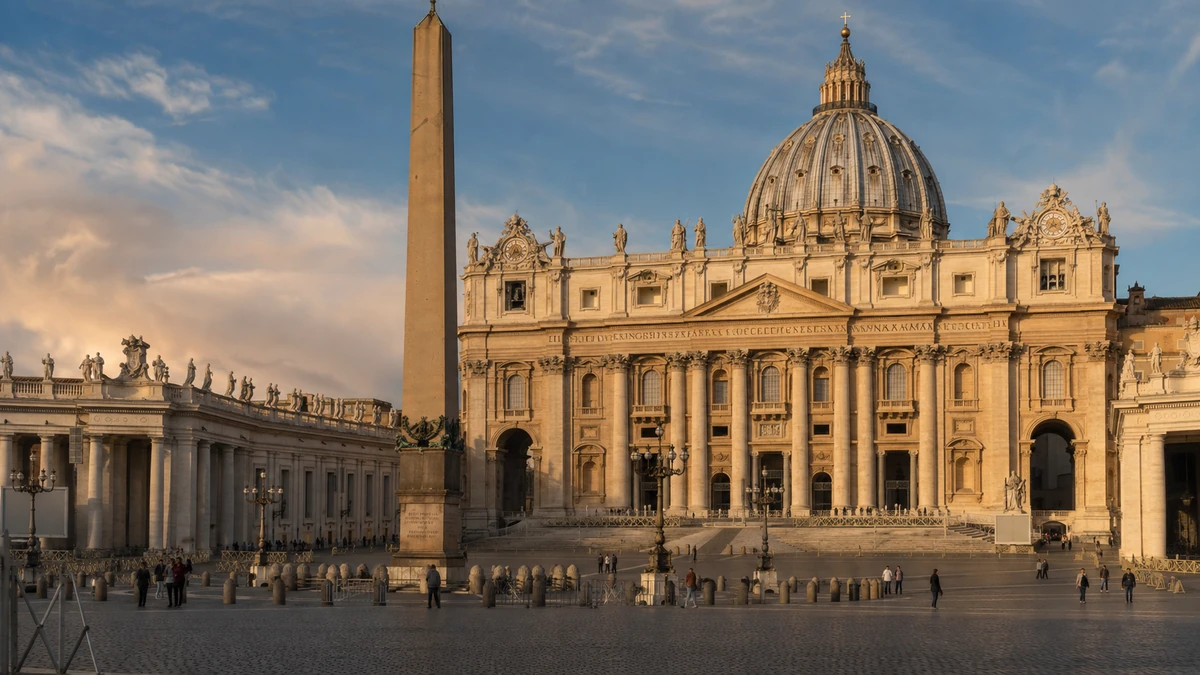
Some of the most famous churches in the world are recognizable long before you learn much about their history: the enormous dome of St. Peter’s Basilica, the extraordinary towers of Sagrada Família, the Gothic façade of Notre-Dame de Paris, and the colorful onion domes of St. Basil’s Cathedral.
After spending time around famous churches and cathedrals on my travels, I learned that reputation and visitor experience are not always the same thing. Some buildings impressed me far more inside than they had in photographs. Others were absolutely worth seeing, but crowds, queues, ticket choices, and poor timing could change the experience quickly.
If someone asked me to name the most famous church in the world, St. Peter’s Basilica would be my first answer because of its global recognition, connection to the papacy and St. Peter, extraordinary art, and importance within Catholicism. Sagrada Família and Notre-Dame de Paris would be close behind.
For this list, I considered worldwide recognition, religious importance, architectural influence, historical significance, and how distinctive each place felt from a traveler’s perspective. I have also accounted for major recent changes, including Notre-Dame’s reopening and Sagrada Família reaching its planned central-tower height in 2026.
Most Famous Churches in the World at a Glance
| Rank | Church | Location | Best Known For | My Take |
|---|---|---|---|---|
| 1 | St. Peter’s Basilica | Vatican City | Catholic history, Michelangelo, monumental scale | The size only registered once I was inside |
| 2 | Sagrada Família | Barcelona, Spain | Antoni Gaudí, Modernism, stained glass | Far more impressive inside than I expected |
| 3 | Notre-Dame de Paris | Paris, France | French Gothic architecture and restoration | Worth seeing again after its reopening |
| 4 | Cologne Cathedral | Cologne, Germany | Gothic architecture and twin spires | One of the most dramatic arrivals on this list |
| 5 | St. Basil’s Cathedral | Moscow, Russia | Colorful onion domes | The exterior made the stronger impression |
| 6 | Milan Cathedral | Milan, Italy | Marble Gothic façade and rooftop terraces | The rooftop justified the extra time |
| 7 | Westminster Abbey | London, England | Coronations and royal history | History mattered more than visual spectacle |
| 8 | Florence Cathedral | Florence, Italy | Brunelleschi’s dome | Better appreciated from several viewpoints |
| 9 | St. Mark’s Basilica | Venice, Italy | Byzantine mosaics | Magnificent, but timing matters |
| 10 | Church of the Holy Sepulchre | Jerusalem | Christian pilgrimage | Context matters more than architectural unity |
| 11 | St. Vitus Cathedral | Prague, Czech Republic | Gothic architecture and royal history | I underestimated how much time it deserved |
| 12 | Hallgrímskirkja | Reykjavík, Iceland | Modern architecture and city views | The exterior and tower were the highlights |
| 13 | Basilica of Our Lady of Aparecida | Aparecida, Brazil | Catholic pilgrimage | Living devotion defines the experience |
| 14 | Church of St. George | Lalibela, Ethiopia | Rock-hewn architecture | Unlike a conventional church visit |
| 15 | Las Lajas Sanctuary | Colombia | Gothic Revival church in a canyon | The setting is as memorable as the building |
How I Ranked the World’s Most Famous Churches
There is no official international ranking of famous churches, so I do not think it is useful to pretend that number seven is objectively more famous than number eight.
I used five factors instead:
- worldwide recognition
- historical significance
- importance within Christianity
- architectural and cultural influence
- how distinctive the experience felt compared with other major churches
I also use church as an umbrella term because that matches how most travelers search for these places. Technically, this list includes cathedrals, basilicas, an abbey church, pilgrimage churches, and other Christian places of worship.
Those terms are not interchangeable, and understanding the difference makes some of these landmarks more interesting.
1. St. Peter’s Basilica, Vatican City
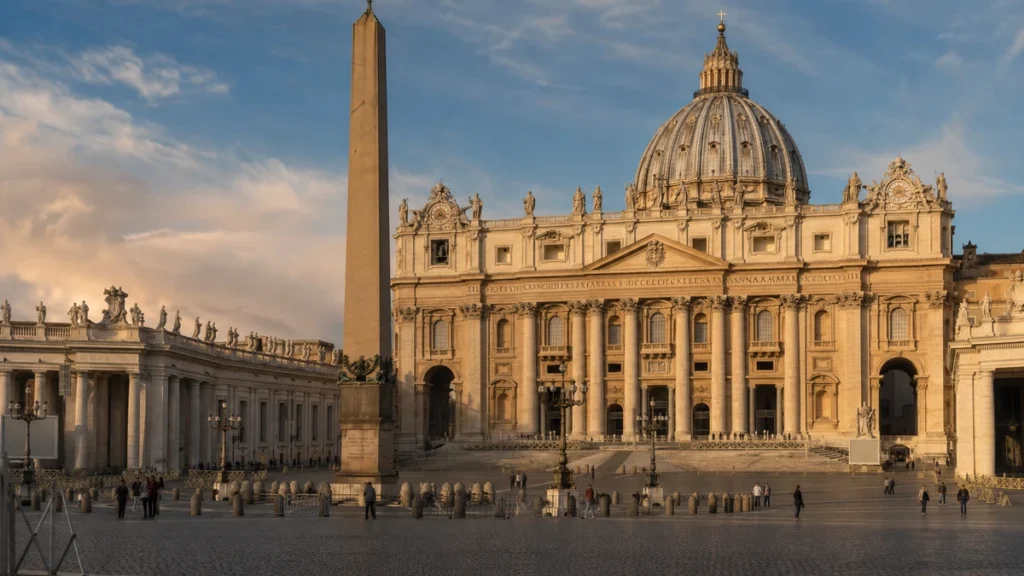
St. Peter’s Basilica was one of the places where photographs had not prepared me for the scale.
Walking across St. Peter’s Square gave me some idea of its size, but the proportions changed completely once I entered the nave. Michelangelo’s Pietà, Bernini’s baldachin, the chapels, monuments, mosaics, marble surfaces, and enormous dome all compete for attention.
The official basilica website describes St. Peter’s as the largest church in the world and explains its connection to the traditional burial place of the Apostle Peter. Its importance, though, goes well beyond dimensions. It remains one of Christianity’s most significant pilgrimage sites and is closely connected with the papacy and the history of the Roman Catholic Church.
One mistake I made was underestimating the entrance process. Security screening can create substantial queues, particularly during busy periods and major events. The basilica also currently has no cloakroom, so arriving with a small bag makes things easier.
If the dome is part of your plan and stairs do not bother you, the climb gives a completely different perspective. Looking back across St. Peter’s Square was more memorable to me than simply photographing the dome from ground level.
Because opening arrangements and religious events can change, I would check the official visitor information shortly before arriving. St. Peter’s Basilica official website
2. Sagrada Família, Barcelona, Spain
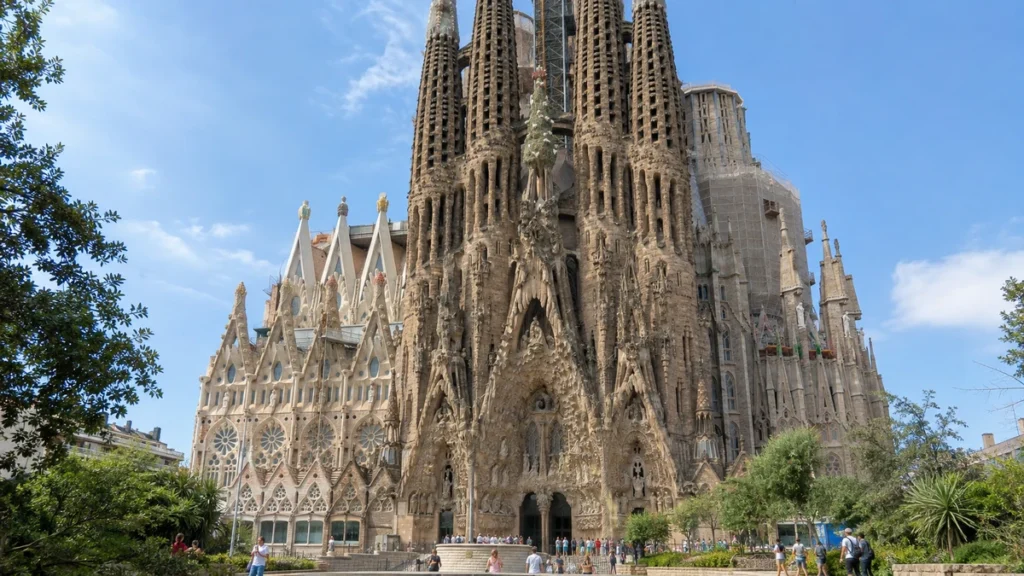
Sagrada Família surprised me more than almost any other famous church.
Before visiting Barcelona, I was mainly interested in Antoni Gaudí’s strange façades and towers. In photographs, the exterior had always looked almost excessively detailed to me.
The interior changed my opinion.
The branching columns rise like a stone forest, while sunlight passing through the stained-glass windows throws different colors across the floor and columns. It felt much lighter and less severe than the medieval Gothic cathedrals I had seen elsewhere in Europe.
There is also an important 2026 update that makes many older articles inaccurate. On February 20, 2026, installation of the upper arm of the cross completed the exterior of the Tower of Jesus Christ. The tower reaches 172.5 meters, making it higher than the church towers that previously held the world height record. Interior work within the structure is continuing.
So describing Sagrada Família simply as an “unfinished church” no longer tells the full story. Major construction continues, particularly elsewhere in the complex, but the central Tower of Jesus Christ has reached its full exterior height.
I found booking ahead much less stressful than relying on last-minute availability. Tickets and access arrangements can change, especially for tower visits, so this is one attraction where checking the official site before your trip makes sense.
Official Sagrada Família website
3. Notre-Dame de Paris, France
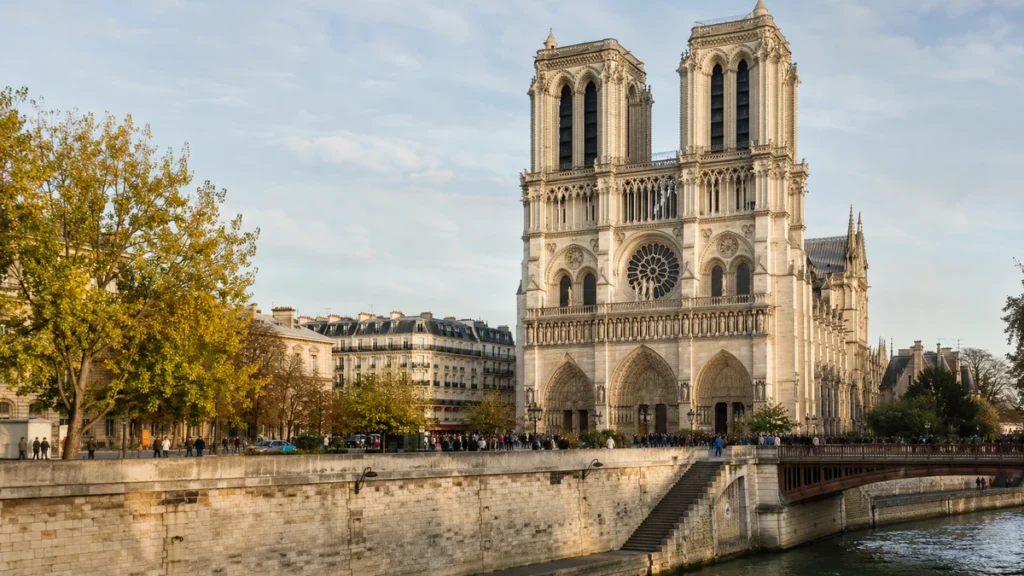
Notre-Dame is one place where the publication date on a travel article really matters.
The cathedral reopened in December 2024 after five years of restoration following the 2019 fire. Some older guides still describe it as closed or imply that visitors can only see the exterior, which is no longer correct.
Approaching it across Île de la Cité still gives the familiar view of the twin towers, sculpted portals, and western façade, but the restored interior feels noticeably brighter than the images many travelers remember from before the fire.
One practical detail is particularly important: general entry to Notre-Dame Cathedral is free. Optional free reservations are available to reduce waiting, but visitors can still enter without one and queue. The cathedral specifically warns against third parties selling supposed paid admission tickets.
That makes Notre-Dame unusually good value for such a globally famous landmark.
The cathedral remains an active place of worship, so services and special religious events can affect access. I would check current visitor information shortly before going rather than planning around hours copied from an old guide.
Official Notre-Dame de Paris visitor information
4. Cologne Cathedral, Germany
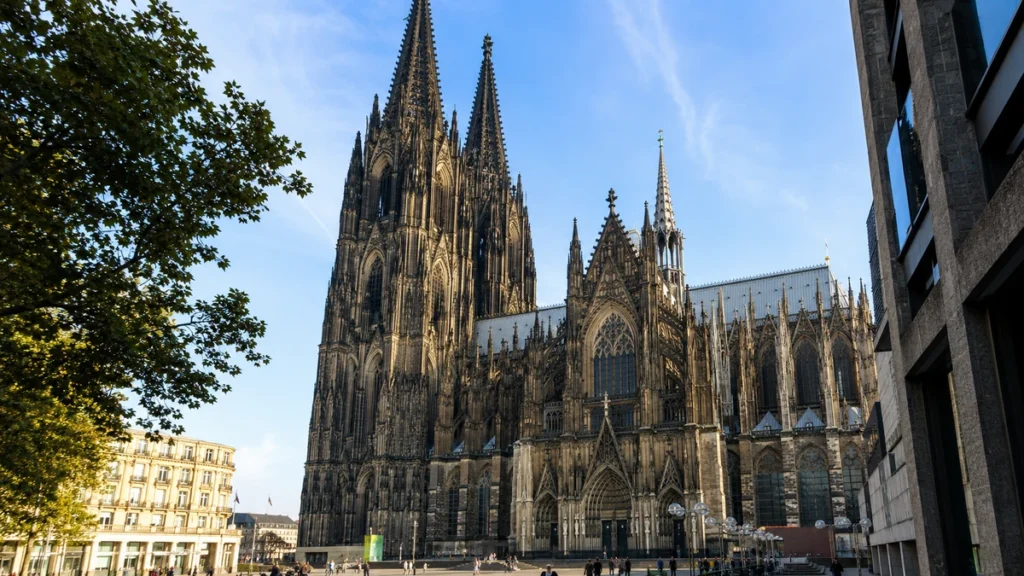
Few church visits started as dramatically for me as Cologne Cathedral.
Coming out near Köln Hauptbahnhof, I expected at least a short walk before getting a proper view. Instead, the cathedral suddenly dominated the space beside the station.
There was almost no gradual reveal.
Construction began in 1248 and was eventually completed in the 19th century. UNESCO recognizes Cologne Cathedral as an outstanding work of Gothic architecture, and that description made much more sense once I saw the scale of the twin spires in person.
The interior deserves more attention than the famous exterior receives. Stained glass, towering vaults, chapels, religious art, and the Shrine of the Three Kings kept me inside longer than expected.
The tower climb was another matter.
Halfway up, I briefly questioned why I had chosen more stairs after spending most of the day walking around Cologne. The view made sense of the effort at the top, but travelers with limited mobility or little interest in city viewpoints can skip it without missing the essence of the cathedral.
For deeper historical context, UNESCO’s documentation is far more useful than the recycled “cathedral facts” found on many travel pages.
UNESCO World Heritage information for Cologne Cathedral
5. St. Basil’s Cathedral, Moscow, Russia
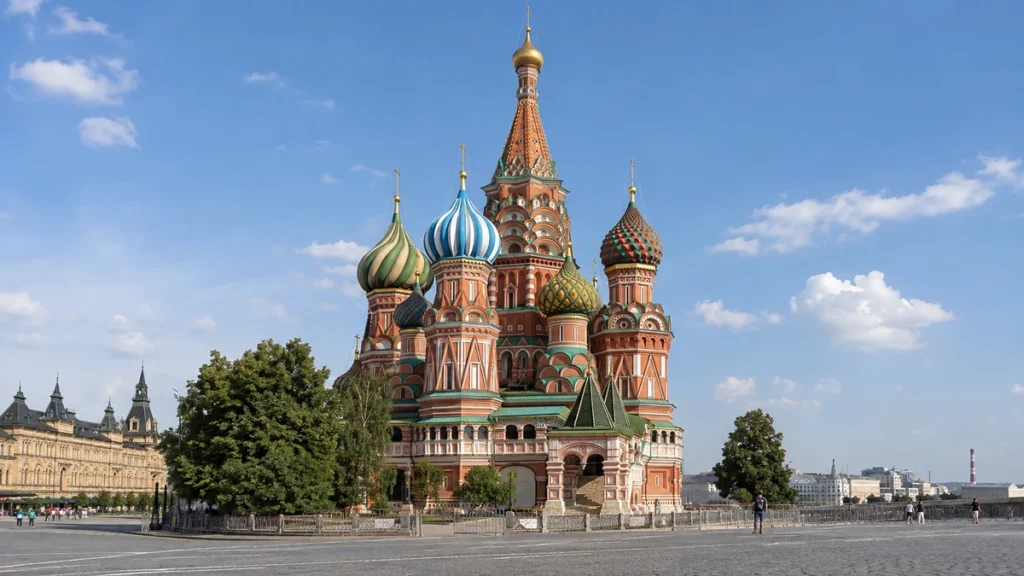
St. Basil’s Cathedral may be the easiest church on this list to identify from a photograph.
The colorful onion domes overlooking Red Square are so familiar that I expected the interior to continue the same sense of visual spectacle.
It did not.
Instead of one enormous open worship space, the interior feels like a collection of smaller chapels, corridors, stairways, icons, and painted rooms.
That contrast caught me off guard.
For me, the exterior remained the stronger part of the experience. Standing farther back in Red Square gave me a better sense of the overall composition than moving quickly between the compact spaces inside.
Current entry conditions and international travel advice for Russia can change significantly. Anyone considering a visit should check the latest guidance issued by their own government before making plans.
6. Milan Cathedral, Italy
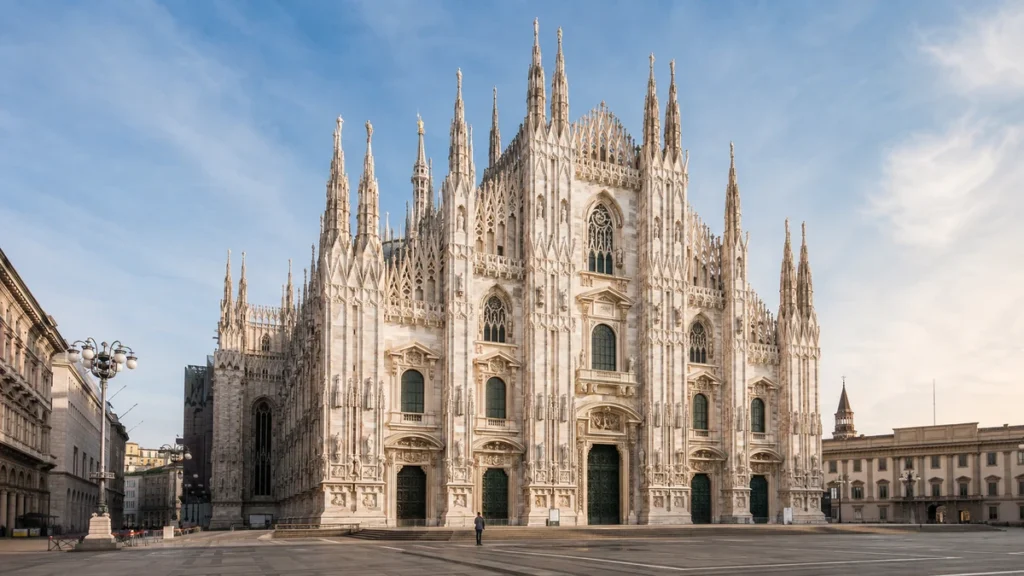
Milan Cathedral, or Duomo di Milano, gave me two quite different experiences: the enormous Gothic interior and the rooftop terraces.
The exterior is almost absurdly detailed. Pale marble, pinnacles, statues, arches, and spires cover so much of the building that it was difficult to focus on one feature.
Inside, the atmosphere felt darker and more restrained than the façade had led me to expect.
The rooftop was the part I nearly skipped.
That would have been a mistake.
Instead of looking at Gothic architecture from below, the terraces let me walk among the pinnacles and upper stonework. It changed the scale of the building completely.
Piazza del Duomo was less enjoyable during the busiest part of the day. Tour groups, photographers, shoppers, pigeons, and people selling things all converge in the same space.
Going earlier made the square much easier to enjoy.
If I had limited time in Milan and had to choose between another indoor museum and the cathedral rooftop, I would keep the rooftop.
7. Westminster Abbey, London, England
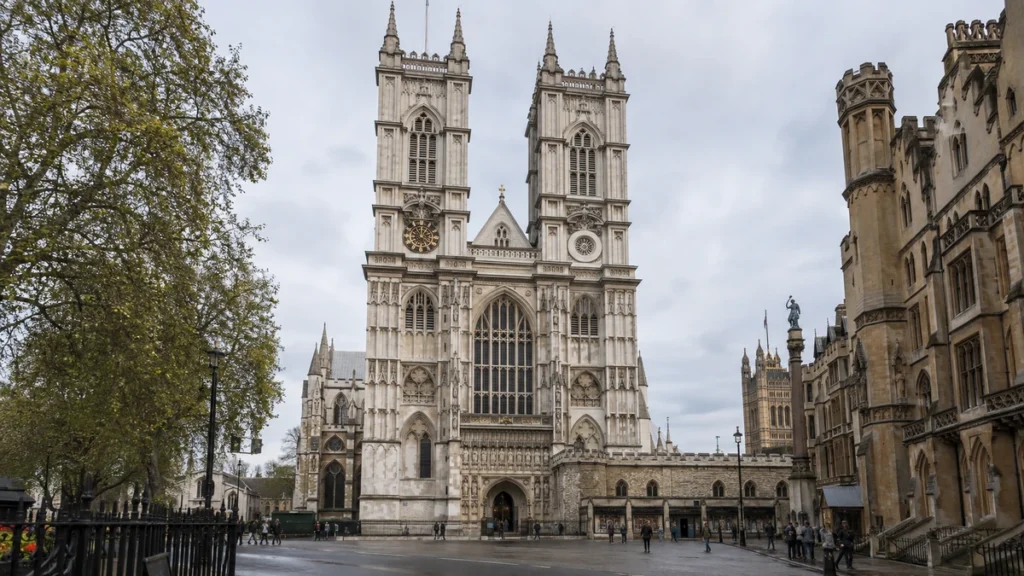
Westminster Abbey taught me how often famous religious buildings are labeled incorrectly in travel content.
Despite its appearance and importance, Westminster Abbey is not a cathedral.
Its formal name is the Collegiate Church of St Peter at Westminster, and it is a Royal Peculiar rather than the seat of a diocesan bishop.
The Abbey has been Britain’s coronation church since the Norman period, while royal tombs, Poets’ Corner, memorials, and the Coronation Chair give it a density of history that few churches can match.
What kept me inside longer than expected was not one dramatic architectural feature.
It was the names.
Writers, scientists, monarchs, politicians, military figures, and other people woven into British history appear throughout the building. I spent more time reading inscriptions than looking at the ceiling.
That is why Westminster Abbey worked better for me as a historical experience than as a simple architecture stop.
8. Florence Cathedral, Italy
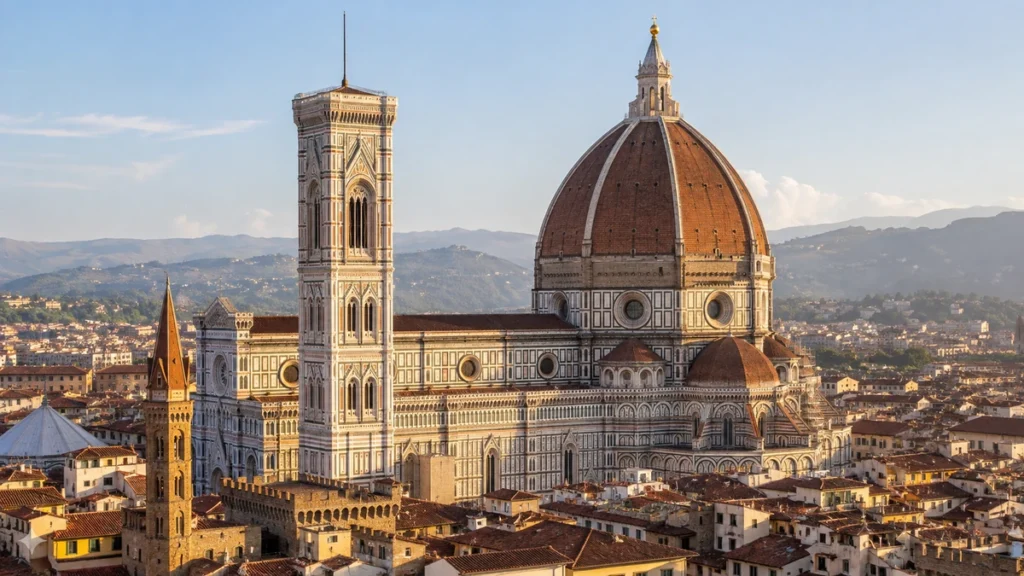
Florence Cathedral was unusual because I appreciated it more from around the city than from one single position.
The Cathedral of Santa Maria del Fiore and Brunelleschi’s dome kept appearing as I walked through Florence—between buildings, above rooftops, from terraces, and from viewpoints across the Arno.
Standing directly beside it almost made the building harder to understand.
The green, pink, and white marble exterior is far more decorative than the relatively restrained interior, which surprised me on my first look inside.
Climbing the dome is not a casual extra. Confined passages, stairs, heat, and other visitors can make it tiring.
I had planned too much walking on the same day, and the climb felt harder than it needed to.
For a less strenuous overview, Piazzale Michelangelo gave me a better sense of how the cathedral complex fits into Florence.
9. St. Mark’s Basilica, Venice, Italy

St. Mark’s Basilica gave me one of the clearest lessons in how much timing can change a famous attraction.
Piazza San Marco becomes extremely crowded during busy periods. Arriving away from the peak made the basilica noticeably easier to appreciate.
Inside, the gold mosaics were the detail that stayed with me.
Photographs make them look decorative. In person, changing light gives the walls and ceilings a deeper, richer appearance.
The building’s strong Byzantine influence also makes St. Mark’s feel completely different from Gothic cathedrals such as Cologne or Milan.
The basilica is still an active place of worship, so appropriate clothing and respectful behavior matter.
I found the church worth dealing with the crowds. Lingering in the busiest part of Piazza San Marco afterward was less rewarding. Venice felt calmer again only a few streets away.
10. Church of the Holy Sepulchre, Jerusalem
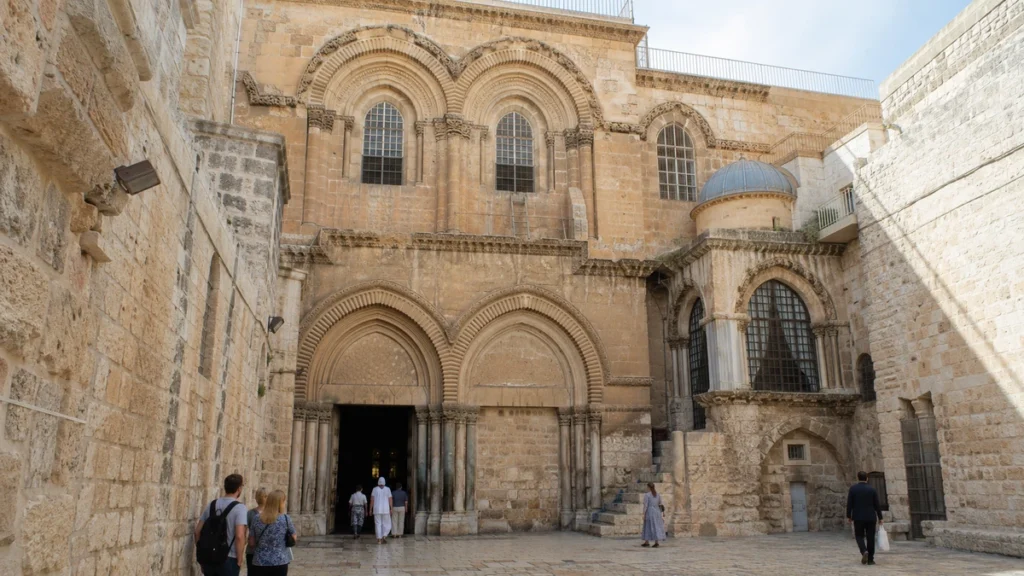
The Church of the Holy Sepulchre is not famous because it has the tallest spire, largest dome, or most visually unified architecture.
Its importance comes primarily from Christian tradition associating the site with the crucifixion, burial, and resurrection of Jesus.
That made the experience completely different from walking into a European cathedral.
Incense, candles, pilgrims, clergy, bells, chanting, chapels, stone passageways, and several Christian traditions overlap within the same building.
At first, I found the layout confusing.
Reading about the site’s history beforehand made a major difference. Without context, it is easy to watch people gathering around specific places without understanding why those spaces matter.
This was one church where I got less value from looking for architectural perfection and more from understanding how people have worshipped there across centuries.
11. St. Vitus Cathedral, Prague, Czech Republic
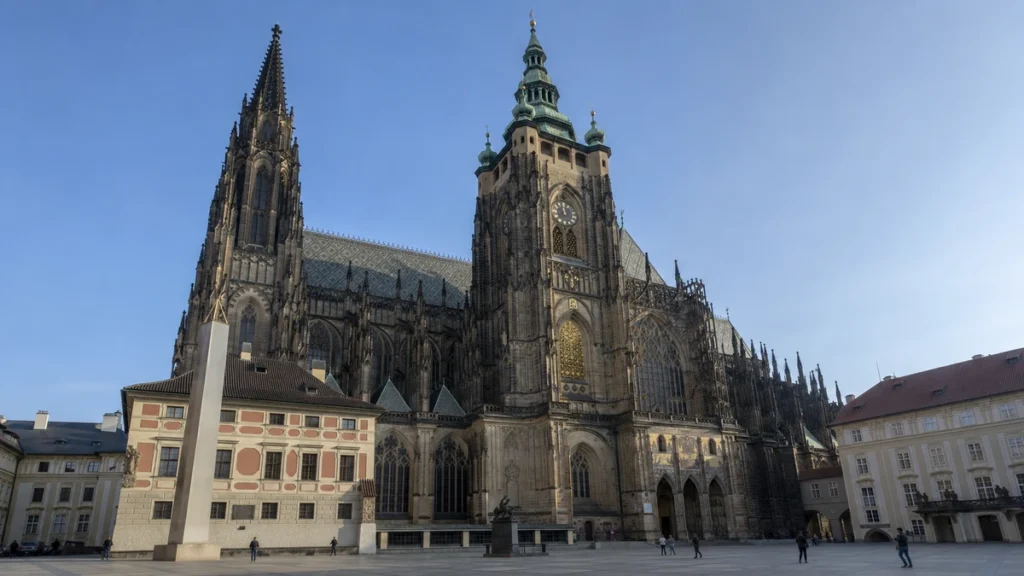
St. Vitus Cathedral was the part of Prague Castle where I stayed longer than planned.
From the courtyard, the Gothic exterior looks enormous, but the surrounding buildings leave surprisingly little room to step back and take in the whole structure.
Inside, its height becomes much easier to understand.
Tall columns, Gothic vaulting, stained glass, chapels, tombs, and Czech royal history make it much more than an architectural backdrop to the castle complex.
My main mistake here was timing.
By the time I arrived, large tour groups were already moving through Prague Castle. The cathedral remained impressive, but an earlier start would have made the experience considerably calmer.
If Prague Castle is already part of your itinerary, St. Vitus deserves more than a quick exterior photograph.
12. Hallgrímskirkja, Reykjavík, Iceland
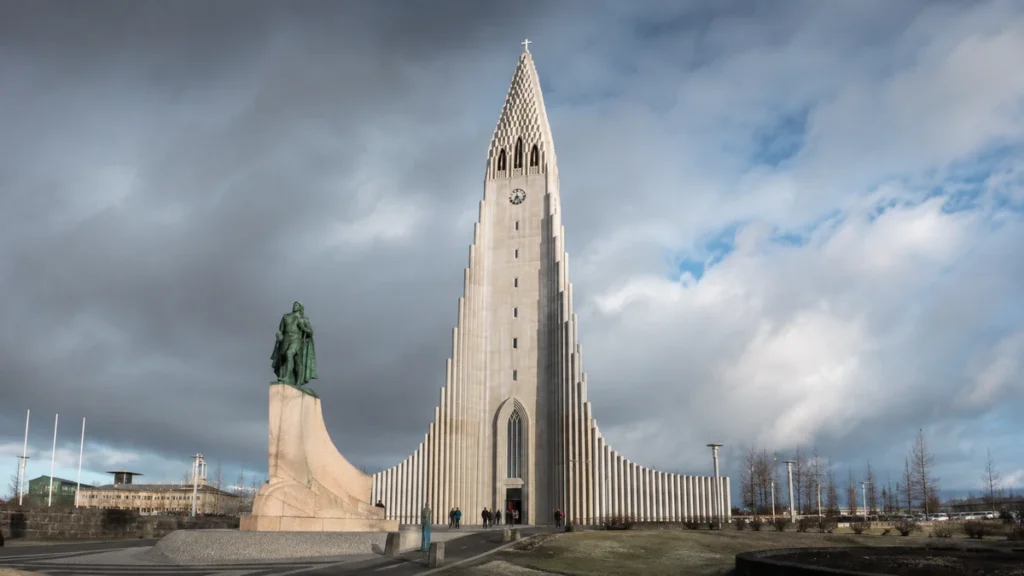
Hallgrímskirkja proves that a globally recognizable church does not need medieval stonework, Gothic tracery, or gilded interiors.
Its stepped concrete façade is often compared with Iceland’s basalt formations and volcanic landscapes.
From different parts of Reykjavík, the tower also works almost like a navigation point.
The interior surprised me because it is considerably plainer than Sagrada Família, St. Peter’s Basilica, or St. Mark’s Basilica.
I actually liked the restraint.
The tower view gave me more reason to stay. Looking across Reykjavík’s colorful roofs, water, low-rise streets, and surrounding landscape helped me understand the city’s scale better than walking around at street level.
Travelers mainly interested in richly decorated church interiors may find Hallgrímskirkja underwhelming. For modern architecture and views, it makes much more sense.
13. Basilica of the National Shrine of Our Lady of Aparecida, Brazil
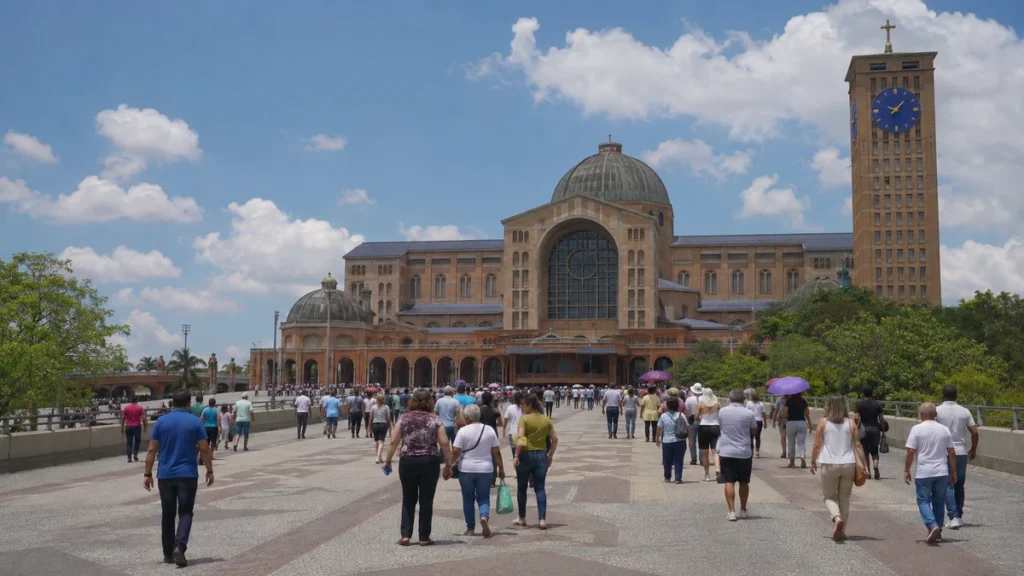
Aparecida challenged one of my assumptions about what makes a church internationally important.
After seeing so many European churches, I had started associating “famous church” with Gothic façades, Renaissance domes, or medieval art.
Aparecida felt different.
The experience centered on pilgrimage, scale, and active religious life.
The basilica is dedicated to Our Lady of Aparecida, the patroness of Brazil, and is one of the country’s major Catholic pilgrimage destinations.
Instead of moving through it as though I were visiting a museum, I spent more time noticing how worshippers used the complex—families arriving together, people attending Mass, pilgrims carrying devotional items, and groups moving between different parts of the sanctuary.
Someone interested only in ornate European architecture may get less from Aparecida.
For travelers interested in living Catholic pilgrimage culture, that difference is exactly what makes it valuable.
14. Church of St. George, Lalibela, Ethiopia
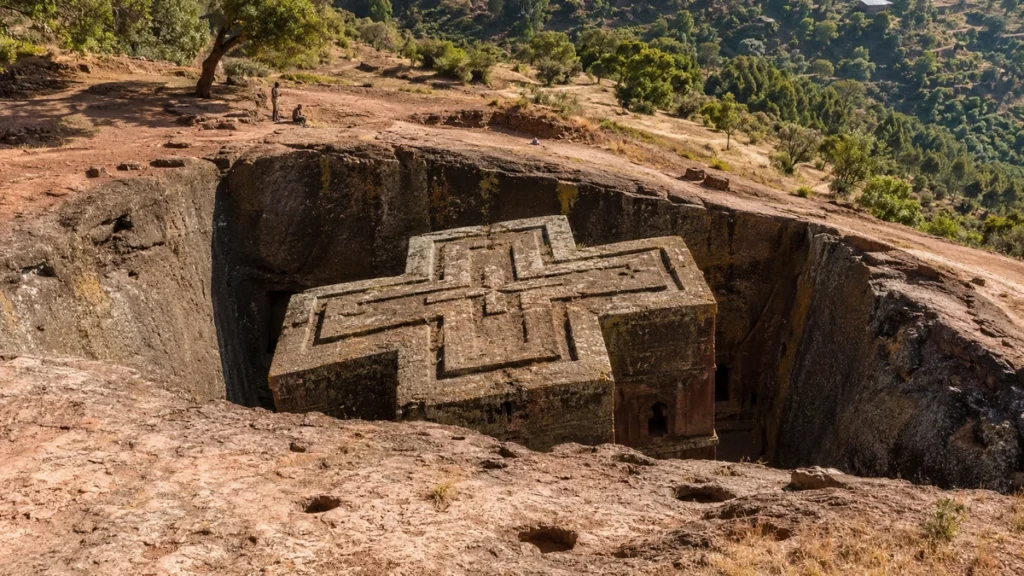
The Church of St. George, often called Biete Ghiorgis, changed my idea of what building a church could mean.
It was not constructed upward in the conventional way.
Instead, the structure was carved down into the rock, leaving the church below the surrounding ground level.
From above, its cross-shaped roof is immediately recognizable.
It belongs to Lalibela’s extraordinary group of medieval rock-hewn churches, which remain closely connected with Ethiopian Orthodox Christian worship and pilgrimage.
The surrounding trenches, passages, exposed rock, and uneven terrain make Lalibela feel completely different from visiting a cathedral in a European city center.
Practical preparation matters too. Walking can be tiring, surfaces are uneven, and visitors share the site with active religious life.
That combination of faith, architecture, and landscape was what made Lalibela stand out for me.
15. Las Lajas Sanctuary, Colombia
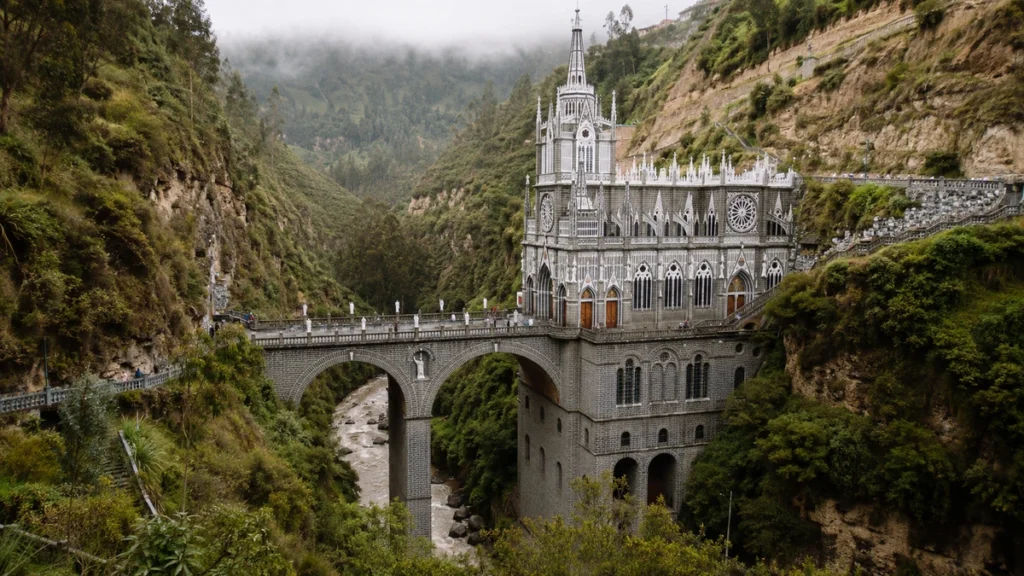
Las Lajas Sanctuary looked almost too dramatic in photographs.
I expected the real place to feel smaller.
It did not.
The Gothic Revival sanctuary rises from a steep gorge above the Guáitara River near Ipiales in southern Colombia, with a bridge connecting the church to the opposite side of the canyon.
The setting changes the experience completely.
Unlike Cologne Cathedral or Notre-Dame, Las Lajas is not important because it represents the development of medieval Gothic architecture. It is a much later Gothic Revival building whose fame is closely tied to its landscape and pilgrimage history.
The approach involved more elevation than I had expected.
Mist, damp stone, running water, and the steep sides of the gorge also made the area feel cooler than photographs suggested.
This was one church where rushing straight inside would have missed half the point. The surrounding landscape deserved almost as much time as the sanctuary itself.
Church vs. Cathedral vs. Basilica: What Is the Difference?
One weakness I noticed in many articles about famous churches around the world is that church, cathedral, basilica, abbey, and shrine are treated as though they mean the same thing.
They do not.
A church is the broad term for a Christian place of worship.
A cathedral is a church containing the official seat, or cathedra, of a bishop. A building does not become a cathedral simply because it is large or impressive.
A basilica is a title granted within the Catholic Church to certain churches because of their religious, historical, or ceremonial importance.
An abbey church is historically or institutionally associated with a monastic community.
That explains several common misconceptions:
- St. Peter’s Basilica is not the cathedral of Rome. Rome’s cathedral is the Archbasilica of St. John Lateran.
- Sagrada Família is not Barcelona Cathedral. It is a basilica.
- Westminster Abbey is not a cathedral.
For ordinary travel planning, using “church” as an umbrella term is understandable. For historical accuracy, the distinctions matter.
Which Famous Churches Are Actually Worth Prioritizing?
After enough cathedral visits, I stopped assuming that the most famous building automatically deserved the most time.
This is how I would prioritize them based on what you actually want from the visit:
| If You Care Most About… | Prioritize |
|---|---|
| Catholic history and monumental scale | St. Peter’s Basilica |
| Unusual architecture and colored light | Sagrada Família |
| Classic Gothic architecture | Cologne Cathedral |
| Medieval Paris and restoration | Notre-Dame |
| Rooftop experience | Milan Cathedral |
| British royal history | Westminster Abbey |
| Byzantine mosaics | St. Mark’s Basilica |
| Christian pilgrimage history | Church of the Holy Sepulchre |
| Modern church architecture | Hallgrímskirkja |
| Landscape and architecture together | Las Lajas Sanctuary |
| Rock-hewn architecture | Lalibela |
Church fatigue is real, especially during longer European trips.
I noticed it in Italy.
After several richly decorated religious buildings within a few days, individual details began blending together. One slower visit to Milan’s rooftop or Florence’s cathedral complex stayed with me more clearly than rushing through several extra churches simply because they appeared on a sightseeing list.
Practical Lessons I Learned Visiting Famous Churches
Arrive before the biggest tour groups
This made the greatest difference in places such as Venice, Prague, Barcelona, Vatican City, and central Paris.
At major landmarks, one hour can completely change the atmosphere.
Check worship schedules as well as sightseeing hours
A church is not simply a museum with a permanently fixed tourist timetable.
Masses, feast days, papal events, weddings, funerals, restoration work, and special ceremonies can all affect access.
I now check official visitor information shortly before going rather than relying completely on the schedule I saved when first planning the trip.
Dress for a religious building
Modest clothing avoids unnecessary problems.
Expect stricter standards at some Catholic and Orthodox sites, particularly when shoulders or knees are exposed.
A lightweight layer in my day bag solved this more easily than reorganizing an outfit around every church visit.
Do not buy every upgrade automatically
Tower access, museums, crypts, treasuries, rooftops, guided tours, and audio guides can turn a straightforward visit into an expensive one.
The extras I valued most were those that changed my perspective on the building.
Milan’s terraces did that.
Another small treasury room usually did not.
Check accessibility before booking towers
This matters more than many attraction roundups acknowledge.
Historic staircases can be narrow, steep, or enclosed, and some tower experiences require substantial walking even when part of the ascent uses a lift.
Checking accessibility before paying saved me from treating every rooftop as an automatic add-on.
Give the surrounding area some time
Some of my strongest memories happened immediately after leaving the church: walking beside the Seine after Notre-Dame, having an espresso near Milan’s Duomo, escaping the busiest part of Piazza San Marco, or watching the light change across Cologne Cathedral.
The landmark may be the reason you arrive, but it does not have to consume the whole day.
Frequently Asked Questions
What is the most famous church in the world?
There is no official ranking, but I consider St. Peter’s Basilica in Vatican City the strongest answer because of its worldwide recognition, relationship with the papacy and St. Peter, major Renaissance and Baroque artworks, and importance within the Catholic Church.
What are the top 10 most famous churches in the world?
My top 10 are St. Peter’s Basilica, Sagrada Família, Notre-Dame de Paris, Cologne Cathedral, St. Basil’s Cathedral, Milan Cathedral, Westminster Abbey, Florence Cathedral, St. Mark’s Basilica, and the Church of the Holy Sepulchre.
The order is subjective, which is why I based it on religious, historical, architectural, and cultural importance rather than presenting it as an official global ranking.
What is the largest church in the world?
St. Peter’s Basilica’s official website describes it as the largest church in the world. Rankings can vary when different measurements—such as interior area, exterior area, volume, or capacity—are used, so the definition of “largest” matters.
What is the tallest church in the world?
Sagrada Família reached 172.5 meters when the exterior of its central Tower of Jesus Christ was completed in February 2026. That height puts it above the church structures that previously held the world height record.
What is the oldest church in the world?
There is no universally simple answer.
The result changes depending on whether you mean the oldest known archaeological church, oldest surviving purpose-built church, oldest continuously used church, or oldest cathedral.
I would be cautious with any article that names one building as unquestionably “the oldest church in the world” without explaining its criteria.
Is St. Peter’s Basilica a cathedral?
No. St. Peter’s Basilica is one of Catholicism’s most important basilicas, but Rome’s cathedral is the Archbasilica of St. John Lateran.
Is Sagrada Família a cathedral?
No. Sagrada Família is a minor basilica. Barcelona’s cathedral is the Cathedral of the Holy Cross and Saint Eulalia in the Gothic Quarter.
Is Westminster Abbey a cathedral?
No. Westminster Abbey is formally the Collegiate Church of St Peter at Westminster and is a Royal Peculiar rather than a cathedral.
Final Thoughts
The most famous churches in the world stayed in my memory for very different reasons.
St. Peter’s Basilica overwhelmed me with scale. Sagrada Família became much more interesting after I stepped inside. Cologne Cathedral delivered the most dramatic arrival, while Westminster Abbey held my attention through history rather than decoration.
Lalibela and Las Lajas also reminded me that memorable religious architecture extends far beyond the familiar European cathedral circuit.
If I were planning a first church-focused trip, I would rather visit five genuinely different places than work through a checklist of similar cathedrals simply because they are famous.
That was probably the most useful lesson I took from these visits: slow down and understand what makes each church important before moving to the next one. One landmark given enough time usually stayed with me longer than three I rushed through.