



Travel South Korea for the first time and the biggest challenge is not finding things to see. It is deciding how much to fit into one trip without spending too much of it packing, changing hotels, and crossing enormous cities.
After traveling through Seoul, Gyeongju, Busan, and Jeju Island, my biggest lesson was to slow the itinerary down. South Korea’s public transport was excellent, korean food was easy to find, and the major destinations were well connected. Still, distances often took longer than they appeared on a map.
Seoul alone needed several days. Gyeongju was worth an overnight stay instead of a rushed day trip. Busan had much more to offer than Haeundae Beach. Jeju made sense only after I gave the island enough time to justify another flight and hotel change.
For a first South Korea trip, 10 to 14 days felt like the best balance. Seven days still worked, but the route needed to stay simple.
This guide covers what mattered once I was actually there: arrival logistics, how many days to spend, transportation, T-money, Naver Map, accommodation, Korean food, costs, seasons, common mistakes, and which places genuinely earned their time in my itinerary.
What I Wish I Had Known Before Traveling South Korea
South Korea looked straightforward while I was planning from home. A few things only made sense after I arrived.
Navigation was the first.
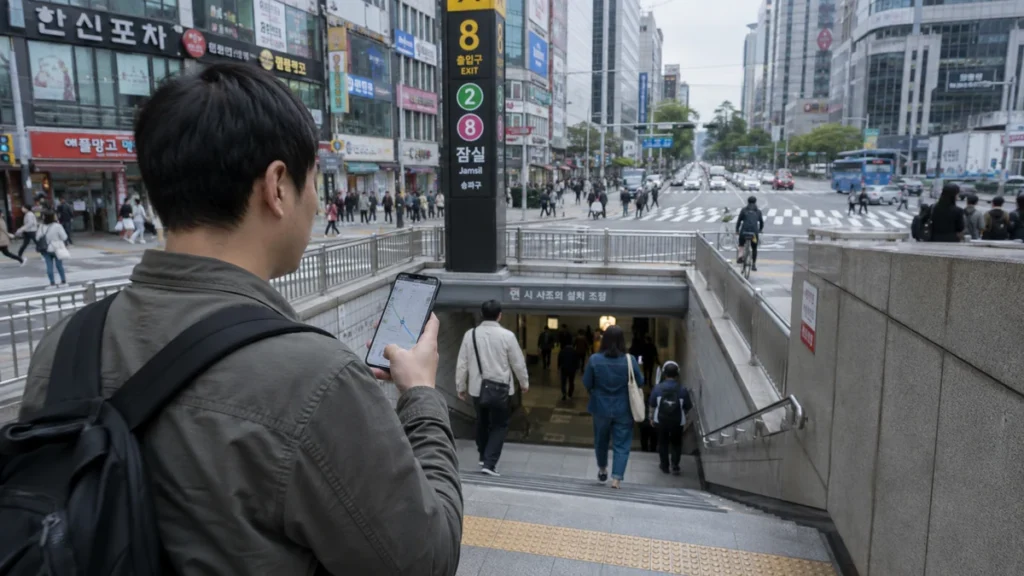
I had saved plenty of places in Google Maps, but Naver Map quickly became the app I opened when I actually needed to get somewhere. Subway routes, station exits, walking directions, bus information, and Korean addresses were easier for me to handle there.
Station exits mattered much more than expected.
During one of my first days in Seoul-things to do in seoul, I left through the wrong exit and turned a short walk into an unnecessary loop around a major road. It was a small mistake, but I stopped ignoring exit numbers after that.
The second surprise was Seoul’s scale.
A route that looked simple could involve a walk to the station, several underground corridors, a line transfer, another long station exit, and more walking above ground.
My early sightseeing plans were too ambitious. Once I stopped trying to fit six or seven attractions into a day, Seoul became much more enjoyable.
The things that made the biggest practical difference were simple:
- Naver Map for navigation
- Papago for menus and translation
- a T-money card for everyday transportation
- some Korean won in cash
- reliable mobile data
- comfortable walking shoes
- accommodation close to a useful subway station
That last point saved more time than staying beside a famous attraction.
Before You Travel South Korea in 2026
Entry requirements are one part of a Korea trip where old blog posts can cause unnecessary confusion.
South Korea has extended its temporary K-ETA exemption for currently eligible countries and regions through December 31, 2026. Eligibility depends on the traveler’s passport, so checking the official K-ETA website before departure is safer than relying on a general country list.
South Korea also operates an electronic arrival declaration. Travelers who are required to complete one can submit the e-Arrival Card within three days before arrival, and the official service does not charge a fee. Travelers with a valid K-ETA are among those excluded from the declaration requirement. The government also warns about imitation websites asking for payment, so I used only the official Korea e-Arrival Card website.
Before flying, I kept digital copies of:
- my accommodation address
- flight details
- passport information
- travel insurance
- hotel bookings
- onward transport reservations
I also installed the Korean travel apps I needed before leaving home.
Setting everything up on reliable Wi-Fi was much easier than trying to solve it after a long flight at Incheon International Airport.
My First 24 Hours in South Korea
Incheon International Airport itself was less confusing than expected.
The harder part was making several small decisions while tired.
After immigration and baggage collection, I dealt with mobile data, cash, transportation, and directions before heading into Seoul.
The order that worked best was:
immigration → luggage → mobile data → cash/transport card → airport transfer → hotel
I deliberately left the first evening mostly empty.
After checking in, I walked around the neighborhood, found dinner, bought water and snacks at a convenience store, and located the subway entrances I needed the next morning.
That turned out to be a better introduction to Seoul than chasing a major attraction straight after the flight.
AREX, airport bus, or taxi?
There is no single best way to get from Incheon Airport into Seoul.
AREX makes sense when its rail connections suit the accommodation location. An airport limousine bus can be more convenient when it stops close to the hotel, especially with larger luggage.
A taxi costs more but solves a different problem: arriving late, exhausted, or with bags that are becoming difficult to manage.
This became a recurring lesson during the trip. The cheapest transportation option was not always the best use of time and energy.
How Many Days Do You Need in South Korea?
Trip length affected the experience more than many itineraries suggested.
During planning, I focused too much on scheduled journey times and ignored everything around them: packing, checking out, reaching the station, waiting, traveling, finding the next hotel, leaving luggage, and starting again.
This pacing made the most sense after the trip:
| Trip Length | Realistic First-Trip Route | My Take |
|---|---|---|
| 5–7 days | Seoul + Busan | Simple and manageable |
| 8–10 days | Seoul + Gyeongju + Busan | Best mainland balance |
| 10–12 days | Seoul + Gyeongju + Busan + Jeju | Possible, but busy |
| 13–14 days | Seoul + Gyeongju + Busan + Jeju | Much more comfortable |
With only seven days, Jeju is better saved for another trip than squeezed into an already busy itinerary.
For a first visit, Seoul, Gyeongju, and Busan formed the cleanest route. KTX made the mainland journey straightforward, and each destination added something different.
Seoul, Busan, Gyeongju, or Jeju?
These four places are often grouped together in South Korea itineraries, but they did not feel interchangeable once I visited them.
| Place | Best For | Time to Allow | Main Drawback | My Take |
|---|---|---|---|---|
| Seoul | Palaces, food, neighborhoods, shopping | 4–5 days | Huge and tiring if overplanned | Essential first stop |
| Busan | Coast, seafood, markets | 2–3 days | Attractions are spread out | Worth more than a day |
| Gyeongju | History, temples, hanok streets | 1–2 days | Quieter than the big cities | Overnight was worthwhile |
| Jeju Island | Nature, coast, road trips | 3–4 days | Extra flight and local transport | Excellent when not rushed |
Seoul took more time than expected
Seoul was where I made the most planning mistakes.
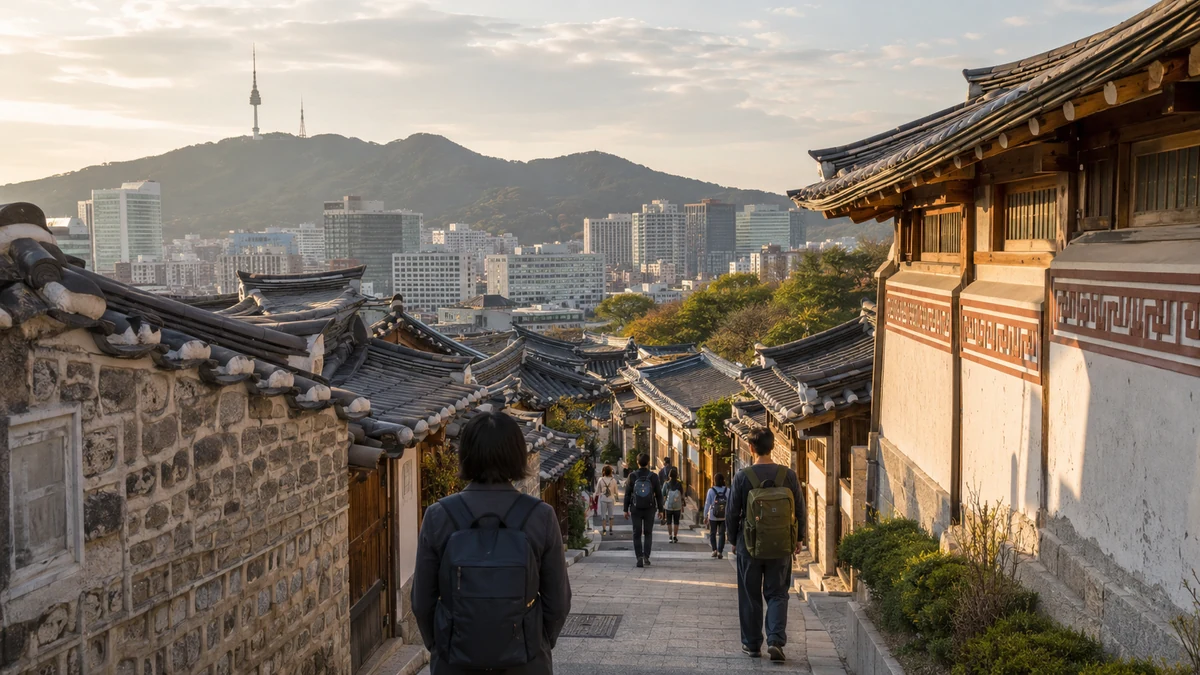
Gyeongbokgung Palace, Bukchon Hanok Village, Jongno, Myeongdong, Hongdae, Itaewon, Namsan, and the Han River looked manageable when I grouped them on a screen.
They felt much farther apart once subway transfers and walking were involved.
Myeongdong was useful for shopping and Korean skincare, particularly stores such as Olive Young, but I did not feel the need to keep returning after exploring it properly.
The older streets around Jongno and quieter pockets of central Seoul stayed with me longer.
N Seoul Tower was another place I enjoyed without considering it essential. Namsan and the broader city views were pleasant, but travelers with limited time do not need to build half a day around the tower itself.
Gyeongju deserved an overnight stay
Gyeongju was one of the easiest places to underestimate.
The pace changed quickly after Seoul.
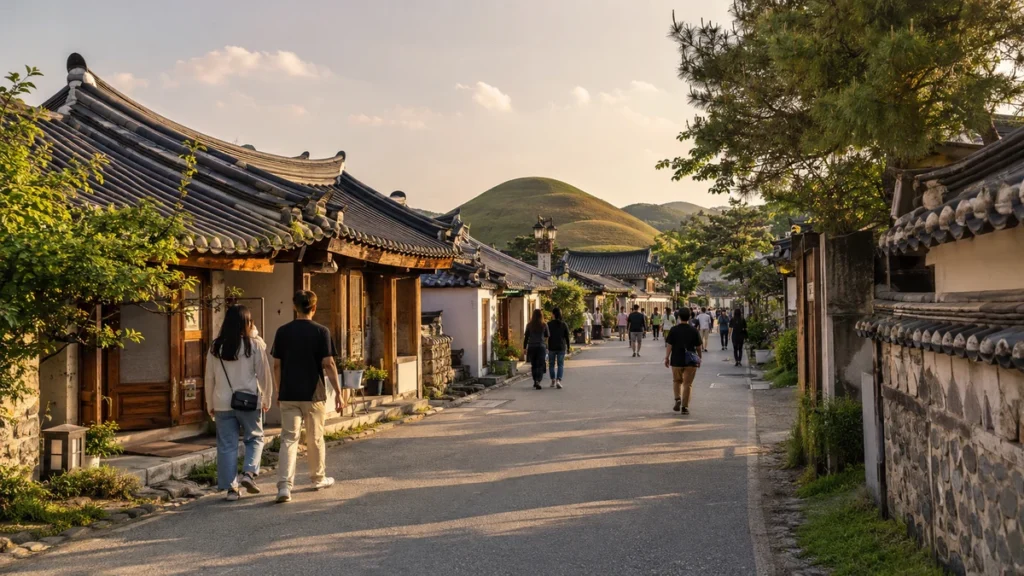
Hanok-style buildings, ancient burial mounds, Hwangnidan Street, and the city’s connection with the Silla period gave the trip historical context that modern Seoul could not.
Staying overnight changed the atmosphere too.
The streets became calmer after some day visitors left, and I had time to wander without constantly checking the train schedule.
For travelers interested in Korean history and traditional architecture, Gyeongju earned its place in the route.
Busan was better beyond the beach

I expected Busan to feel like Seoul beside the sea.
It did not.
The city was still large and busy, but the coast changed its character. Haeundae and Gwangalli were enjoyable, although Busan became much more interesting once I stopped treating beaches as the only reason to be there.
Markets, seafood, hillside neighborhoods, coastal views, and evenings around Gwangalli gave the city more personality.
The main mistake was underestimating the distances.
Grouping attractions geographically saved far more time than crossing Busan several times in one day.
Jeju needed enough time
Jeju Island was the easiest destination to squeeze onto the itinerary and the hardest to enjoy when rushed.
On a map, the island looked manageable.
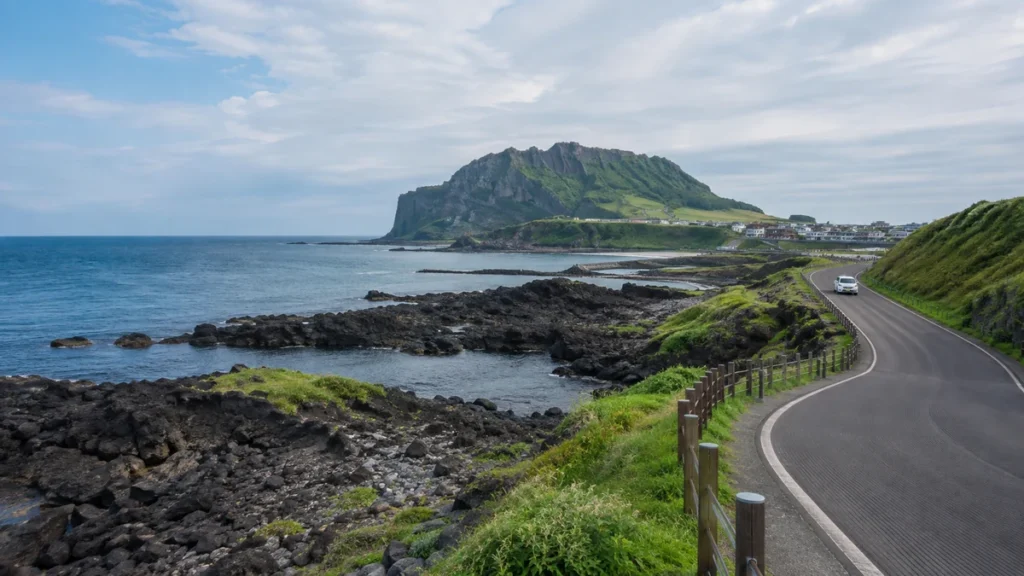
Once airport transfers, accommodation, waterfalls, coastal roads, walking trails, and attractions spread around the island were added, a very short visit stopped making sense.
Three to four days felt much more comfortable.
A rental car can add flexibility for travelers who are comfortable driving. Without one, the route needs more planning because public transport does not connect every natural attraction as conveniently as Seoul’s subway connects city neighborhoods.
How I Got Around South Korea
Public transportation became one of the easiest parts of traveling South Korea once I understood the system.
Subway and buses
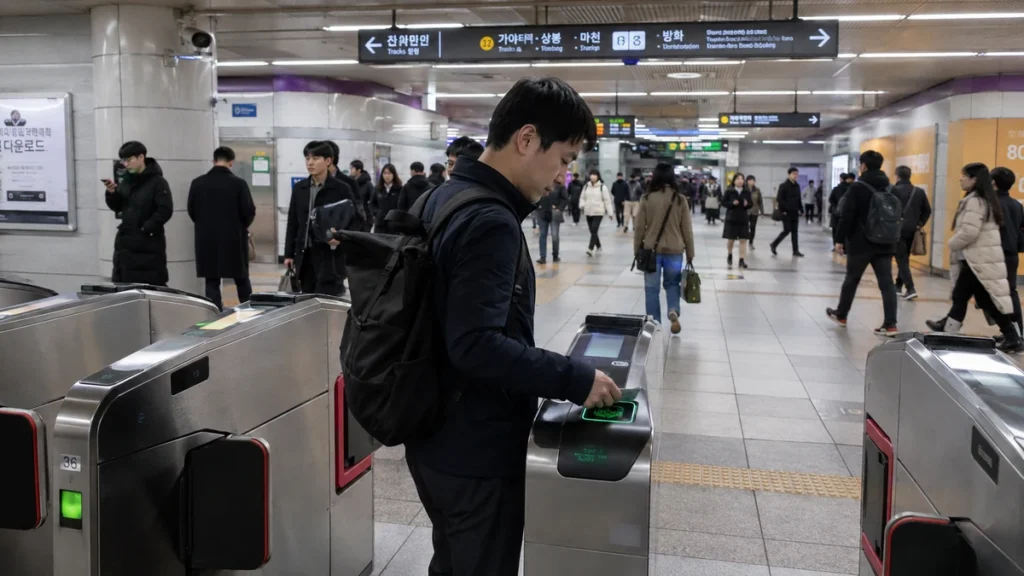
The subway was my default transportation in Seoul and Busan.
It was predictable and generally easier than dealing with road traffic.
What surprised me was how much walking happened inside some stations. A line transfer could involve long corridors and several sets of stairs before I even reached street level.
That became especially noticeable with luggage.
For ordinary sightseeing, taxis were rarely necessary.
On hotel-transfer days, spending more on a taxi occasionally saved enough effort to make sense.
KTX made the mainland route easy
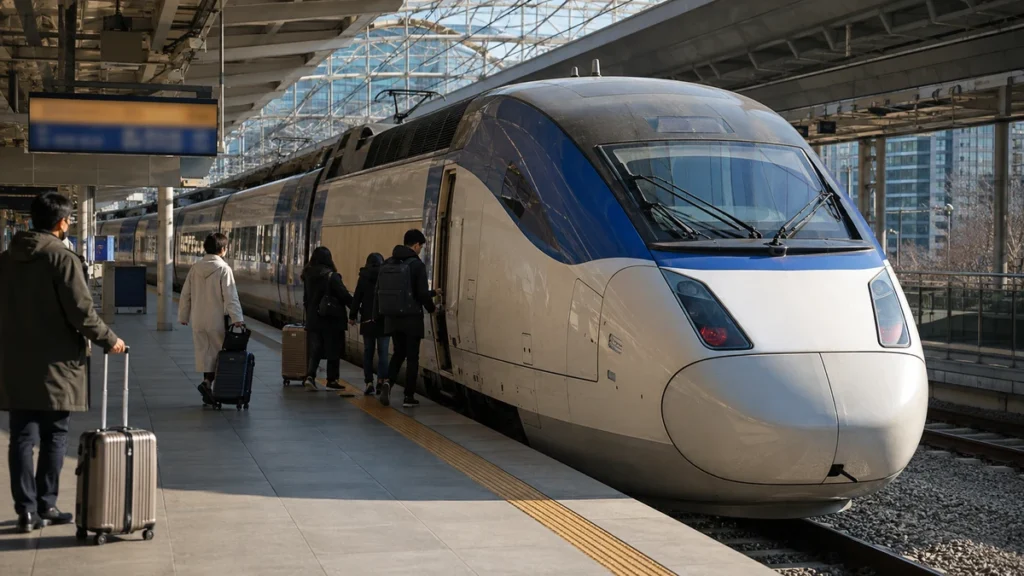
KTX was one travel expense I did not regret.
Instead of adding airport procedures between mainland destinations, I could travel from a railway station and arrive much closer to the next city center.
The Seoul–Gyeongju–Busan route worked particularly well.
Schedules, fares, and seat availability vary by date, so I checked KORAIL directly rather than relying on old timetable screenshots.
Busy national holidays such as Seollal and Chuseok deserve extra planning because intercity transport can become much harder to secure.
Luggage changed my transfer days
This was one of the practical issues I saw discussed far less often than it deserved.
South Korea’s trains and subways were easy.
South Korea’s trains and subways with a suitcase required more patience.
Large stations meant corridors, lifts that were not always nearby, stairs, crowds, and longer transfers.
Eventually I stopped trying to combine luggage and sightseeing.
I traveled to the next city, left the bag at the hotel or another appropriate storage point, and started exploring afterward.
It looked less efficient on paper but worked far better in practice.
T-Money, Climate Card, or WOWPASS?
Transport cards sounded more complicated during my research than they felt after arrival.
| Option | Main Advantage | Best Fit |
|---|---|---|
| T-money | Straightforward everyday public transport | Most multi-city travelers |
| EZL | Similar general transport use | Alternative to T-money |
| WOWPASS | Combines transport with tourist payment features | Travelers wanting a multipurpose card |
| Climate Card | Short-term unlimited eligible Seoul transport | Heavy Seoul public-transport users |
For my multi-city trip, T-money kept things simple.
I cared more about having one familiar transport card than calculating whether another pass could save a small amount during a particular sightseeing day.
The Korea Tourism Organization currently lists T-money, EZL, WOWPASS, and the Climate Card among the main transportation-card options for international visitors. Climate Card coverage and products are also changing during 2026, so checking the official VISITKOREA transportation-card guidance shortly before traveling is sensible.
The Korea Travel Apps I Actually Used
I downloaded more Korean travel apps than I needed.
Only a few survived beyond the first couple of days.
Naver Map
Naver Map became my main navigation tool.
I used it for subway routes, walking directions, station exits, restaurant locations, and Korean addresses.
The biggest improvement came when I started checking the entire journey before leaving rather than following directions one instruction at a time.
Papago
Papago was most useful with menus, signs, and short sections of Korean text.
English worked in many tourism-related situations, but not everywhere.
Having a translation tool ready removed a lot of unnecessary hesitation.
KakaoMap
KakaoMap provided another useful navigation option, although Naver Map remained the app I opened most often.
Google Maps stayed useful for saving places and basic orientation, but I did not depend on it for day-to-day navigation in the same way I often do elsewhere.
Where I Stayed in South Korea
Hotel quality mattered, but location affected my trip more.
Where to stay in Seoul
For a first visit, the choice became easier once I focused on what each neighborhood solved.
Myeongdong worked well for central sightseeing and shopping.
Hongdae offered cafés, nightlife, younger energy, and convenient airport connections.
Jongno made more sense when palaces, traditional streets, and older Seoul were the priority.
Being a few minutes from a useful subway station mattered more to me than having a stylish hotel on an inconvenient street.
That decision saved time every morning and evening.
Where to stay in Busan
Haeundae suited travelers who wanted the beach nearby.
Gwangalli had an especially good evening atmosphere.
Seomyeon was less scenic but made more sense for transportation connections and reaching different parts of the city.
Busan was too spread out for accommodation location to be an afterthought.
Where to stay in Gyeongju
Staying around Hwangnidan Street worked well because I could keep exploring on foot after the main daytime sightseeing ended.
Gyeongju was also one of the places where a hanok-style stay fitted naturally with the experience rather than feeling like accommodation chosen only for photographs.
What South Korea Cost Me
South Korea did not feel extremely cheap, but the cost varied dramatically depending on how I traveled.
Local transportation was rarely what pushed up my spending.
Accommodation, KTX tickets, cafés, shopping, and changing destinations too often made a bigger difference.
| Expense | How It Felt |
|---|---|
| Accommodation | Biggest variable |
| Subway and buses | Easy to control |
| KTX | Noticeable expense but valuable for time |
| Local meals | Often reasonable |
| Cafés | Added up surprisingly quickly |
| Attractions | Usually not my largest expense |
| Shopping | Very easy to underestimate |
| Jeju | Flights and local transport increased the total |
Korean skincare shopping was one area where my planned budget and actual spending stopped agreeing.
Cafés did something similar.
Instead of obsessing over saving small amounts on subway fares, I saved more by choosing accommodation carefully and avoiding unnecessary hotel changes.
What I Ate in South Korea
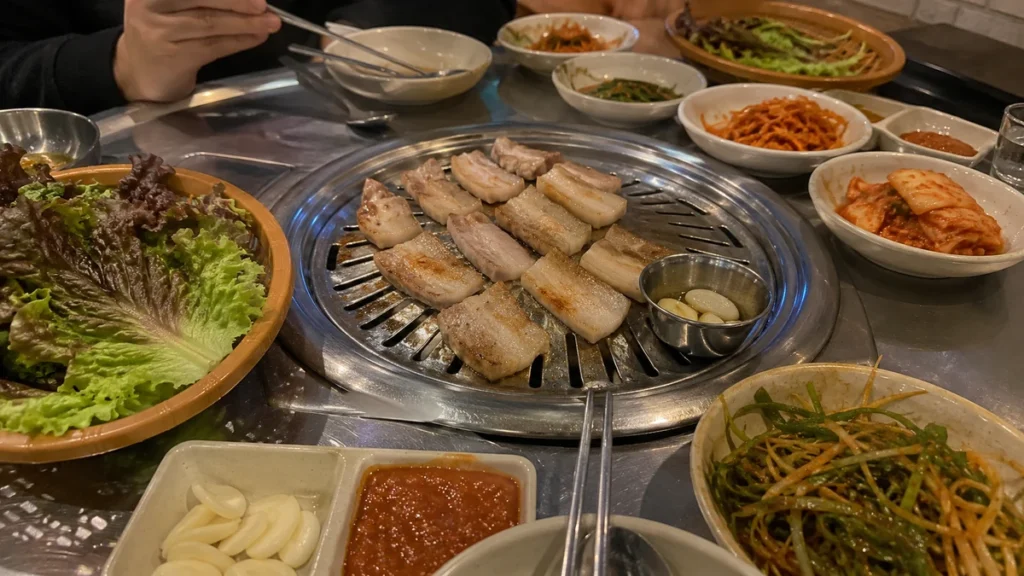
Food became part of the trip rather than a separate checklist.
Kimchi appeared so regularly that it stopped feeling like something I had ordered and started feeling like part of the table.
Bibimbap was familiar before the trip, but eating it alongside proper banchan made the meal feel much more complete.
Korean barbecue was one of the meals I enjoyed most with company. Samgyeopsal wrapped in lettuce with garlic, ssamjang, and side dishes was simple but memorable.
Tteokbokki surprised me more.
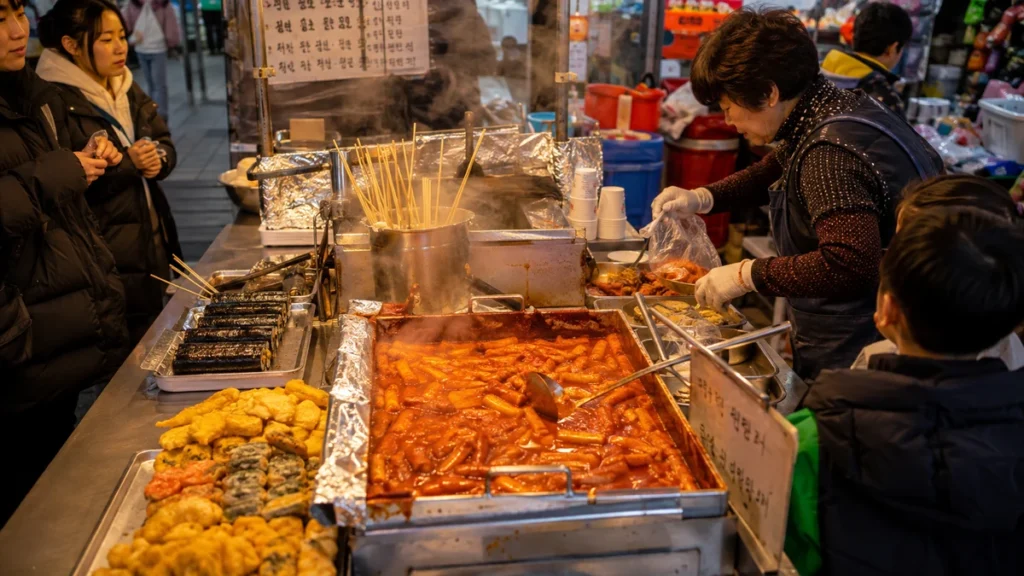
The sauce was sweeter than expected before the heat arrived, and eating it near a busy market stall made more sense than treating it as another famous dish to tick off a list.
On warmer days, naengmyeon was a welcome break from heavier meals.
Convenience-store food also earned more respect than expected. On evenings when my feet were finished before my appetite was, a quick meal nearby was far more appealing than crossing Seoul for another famous restaurant.
What I Learned About Eating in Korea
Eating in South Korea was rarely difficult, but a few habits differed from what I was used to.
Some restaurants did not have English menus.
Some used ordering kiosks.
Certain Korean barbecue restaurants were easier with a group because portions or minimum orders were designed around more than one diner.
Banchan confused me briefly during the first few meals. Several small dishes appeared across the table before I fully understood what was included.
Once I stopped comparing every restaurant interaction with home, meals became easier.
Papago helped, but so did pointing, photographs, basic Korean words, and watching what nearby diners were doing.
For solo travelers, markets, food courts, noodle shops, rice dishes, and casual restaurants can be more straightforward than places built around shared barbecue portions.
The Best Time to Travel South Korea
The season changes the character of a South Korea trip.
| Season | Main Character | Planning Take |
|---|---|---|
| Spring | Mild weather and blossoms | Great for walking; peak blossom areas get busy |
| Summer | Hot, humid, and wetter | Better with a slower pace and rain preparation |
| Autumn | Comfortable temperatures and fall color | Excellent for multi-city sightseeing |
| Winter | Cold and generally drier | Good for winter scenery with proper clothing |
Spring and autumn suited sightseeing-heavy travel particularly well because so much of Seoul, Gyeongju, and Busan involved walking.
Summer required a different pace. Heat, humidity, and periods of heavy rain can make an overpacked outdoor itinerary uncomfortable.
Winter brings the opposite trade-off: colder days but a very different atmosphere and seasonal scenery.
Rather than relying entirely on historical averages, I checked the short-term forecast again before major travel days.
Mistakes I Made on My South Korea Trip
Planning too many Seoul attractions
This was the biggest mistake.
Seoul punished checklist-style sightseeing. Once I reduced the number of scheduled stops, I spent less time looking at train directions and more time noticing where I actually was.
Ignoring subway exits
The wrong exit rarely caused a serious problem.
It caused something more irritating: unnecessary walking.
Checking the correct exit eventually became automatic.
Underestimating transfer days
Train travel itself could be fast.
Changing hotels was not.
Packing, checking out, reaching the station, traveling, finding another hotel, and leaving bags consumed a meaningful part of the day.
Nearly squeezing Jeju into too little time
Jeju did not become more worthwhile simply because I could fit it onto the itinerary.
The island needed enough time for the additional flight and local travel to make sense.
Spending too much time chasing famous restaurants
Some of the meals I remembered most came from places I entered because I was hungry, not because they had appeared in ten social-media videos.
Traveling across Seoul for every viral restaurant quickly stopped feeling worthwhile.
Treating Myeongdong like an essential daily stop
Myeongdong was convenient.
It was not the whole of Seoul.
After shopping and exploring it properly, I preferred spending later evenings elsewhere.
What Was Actually Worth My Time
Gyeongju earned more time than I originally gave it.
The Han River required very little planning and still became one of the most pleasant parts of Seoul.
Busan became better once I stopped treating it as a one-beach destination.
Korean markets were more enjoyable when I arrived hungry instead of carrying a rigid list of dishes to find.
KTX was also one place where paying for convenience clearly improved the trip.
The experiences I remembered most clearly were not always famous attractions.
A quiet evening in Gyeongju, walking past small restaurants after the daytime crowds had thinned, stayed with me longer than several places I had carefully pinned months before traveling.
That became one of the most useful lessons from the trip: leave enough space in the itinerary for South Korea to interrupt the plan.
Practical South Korea Travel Tips That Helped Me
These were the habits I kept using until the end of the trip:
- Keep some Korean won rather than relying entirely on cards.
- Save the hotel address in Korean.
- Check subway exit numbers before arriving.
- Use Naver Map for everyday navigation.
- Keep Papago ready for menus and signs.
- Stay close to useful public transportation.
- Group Busan attractions by area.
- Treat city-transfer days as partial travel days.
- Give Jeju enough time or leave it out.
- Check intercity train availability early during busy periods.
- Verify current attraction information before making a special journey.
- Leave unscheduled time for meals, cafés, markets, and neighborhoods.
The longer I traveled through Korea, the less interested I became in creating a theoretically perfect itinerary.
A practical one worked better.
South Korea Travel FAQ
Is South Korea easy for first-time travelers?
Yes. Public transportation was efficient, major destinations were well connected, and tourist infrastructure was strong. The biggest adjustment for me was navigation, which became much easier once I started using Naver Map and kept mobile data available.
How many days are enough for South Korea?
Seven days works for Seoul plus another destination. Around 10 days gives Seoul, Gyeongju, and Busan enough breathing room. For those three plus Jeju, 12–14 days is much more comfortable.
Can I travel South Korea without speaking Korean?
Yes. English worked in many tourist situations, while Papago, signs, photographs, and a few basic Korean expressions covered many of the gaps. Fluent Korean was not necessary for my independent trip.
Do I need cash in South Korea?
Cards covered most of my spending, but I still kept Korean won. Cash was useful for certain transport-card situations, markets, and smaller purchases.
Can I visit Seoul and Busan in one week?
Yes. Four days in Seoul followed by two or three in Busan creates a straightforward first trip. Adding several more cities to the same week makes the journey noticeably more rushed.
Is Jeju Island worth visiting on a first South Korea trip?
Yes, when there is enough time. On a shorter itinerary, Seoul, Gyeongju, and Busan create a stronger trip than adding another flight simply to say Jeju was included.
Final Thoughts on Traveling South Korea
The trip improved when I stopped trying to see more.
Seoul needed time. Gyeongju benefited from an overnight stay. Busan rewarded better geographic planning. Jeju needed enough days to justify getting there.
The practical side became easy once I had mobile data, Naver Map, Papago, a transport card, and accommodation near useful public transportation.
What mattered after that was leaving room for Korea beyond the itinerary.
Some of my best memories came from meals I had not researched, streets I had not saved, and evenings when I stopped checking which attraction was supposed to come next.
For a first trip, fewer hotel changes, fewer rushed landmarks, and more time in each place made South Korea considerably better.