



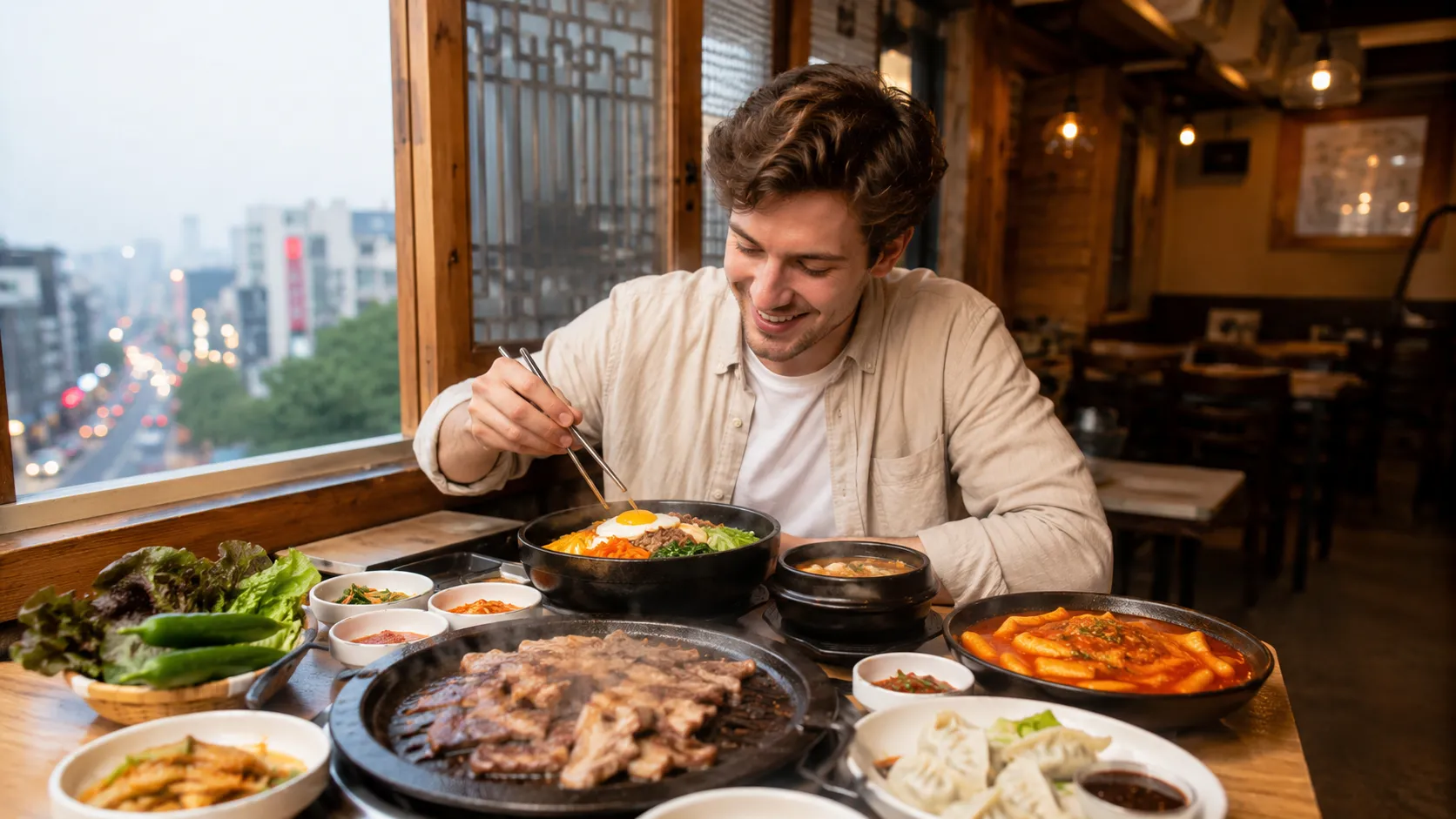
Seoul gave me one of the best food experiences of my trip to South Korea.
Before I arrived, I mainly knew Korean barbecue, kimchi, and bibimbap. I soon learned that South Korean food is much more varied than those famous dishes.
I ate smoky grilled meat, handmade noodles, bubbling stews, crispy pancakes, cold soups, and sweet street snacks. Some Korean dishes were very spicy. Others were mild, fresh, and comforting.
I tried food at traditional markets, neighborhood restaurants, barbecue houses, cafés, and street stalls. I also learned that eating in Seoul is about more than flavor. It is about sharing food, cooking together, and trying dishes linked to different parts of Korea.
After trying 30 Korean dishes in Seoul, I ranked the foods that stood out most. This Seoul food guide explains what each dish tastes like, how spicy it is, and where travelers can usually find it.
It also covers food markets, prices, solo dining, dietary needs, and Korean dining customs. It should help anyone wondering what to eat in Seoul for the first time.
My Favorite Korean Dishes at a Glance
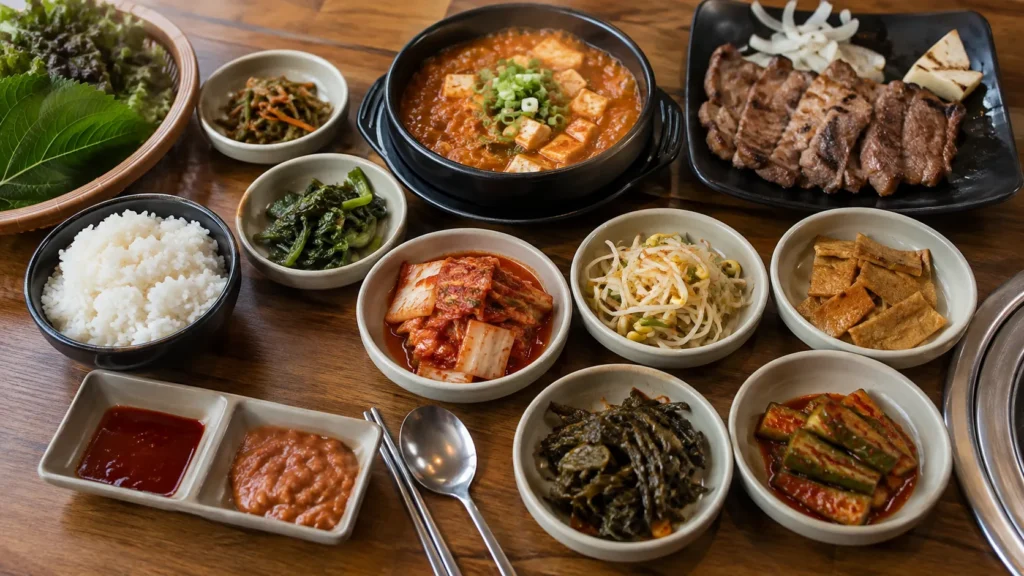
These were the biggest highlights of my Seoul food journey.
| Category | My Choice |
|---|---|
| Best Korean dish overall | Bibimbap |
| Best Korean barbecue | Samgyeopsal |
| Best Seoul street food | Tteokbokki |
| Best Korean comfort food | Kimchi jjigae |
| Best mild Korean dish | Bulgogi |
| Best noodle dish | Kalguksu |
| Best summer dish | Naengmyeon |
| Best market snack | Bindaetteok |
| Best late-night meal | Korean fried chicken |
| Best Korean dessert | Bingsu |
| Most unusual dish | Ganjang gejang |
| Best food for solo travelers | Gimbap |
My biggest lesson was simple: Korean barbecue is only one part of Korean cuisine.
I loved the barbecue meals, but some of my favorite foods were simple soups, noodles, rice dishes, and market snacks.
How I Ranked These Korean Dishes
I ranked these dishes by taste, value, uniqueness, cultural importance, and ease of ordering.
I also considered whether each dish would suit a first-time visitor. Some Korean foods are easy to enjoy right away. Others have strong flavors or unusual textures that may take time to appreciate.
My ranking is personal. Another traveler may choose a different favorite, and that is part of the fun of exploring food in Seoul.
Restaurant menus, prices, and opening hours can change. I recommend checking current information on Naver Map or Kakao Map before visiting.
What Is South Korean Food Like?
South Korean food is bold, balanced, and often made for sharing.
A traditional Korean meal usually includes rice, soup or stew, and several small side dishes called banchan. These side dishes may include kimchi, vegetables, tofu, seaweed, eggs, or fish.
Fermentation is also a major part of Korean food culture. Kimchi, gochujang, doenjang, and ganjang get much of their deep flavor from fermentation.
Gochujang is a fermented red chili paste. It adds heat, sweetness, and depth to dishes such as tteokbokki and bibimbap.
Doenjang is fermented soybean paste. It tastes salty and earthy and often appears in soups and stews.
Ganjang is Korean soy sauce. It is used in marinades, dipping sauces, soups, and braised dishes.
I also learned that Korean food is not always spicy. Bulgogi, japchae, gimbap, mandu, seolleongtang, samgyetang, and kalguksu are usually mild.
Here are the 30 best Korean dishes I tried in Seoul, starting with my favorites.
The 30 Best Korean Dishes I Tried in Seoul
1. Bibimbap
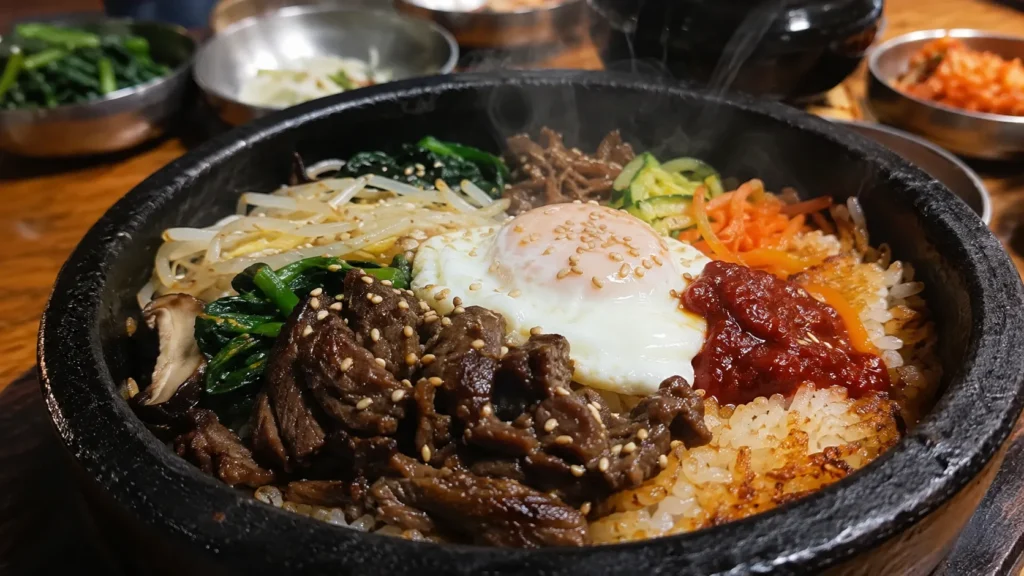
Bibimbap was my favorite Korean dish because every bite had a different mix of flavors and textures.
The dish starts with warm rice topped with vegetables, egg, meat, sesame oil, and gochujang. I mixed everything before eating.
The vegetables added freshness and crunch. The egg made the rice richer. The gochujang added sweetness and gentle heat.
I also tried dolsot bibimbap in a hot stone bowl. The bowl created a crispy layer of rice at the bottom, which became my favorite part.
Taste: Savory, fresh, and slightly spicy
Spice level: Mild to medium
Best for: First-time visitors and solo travelers
Where to try it: Jongno, Insadong, and central Seoul
2. Samgyeopsal
Samgyeopsal gave me the classic Korean barbecue experience I wanted.
The dish uses thick slices of pork belly cooked on a tabletop grill. The meat is often cut into smaller pieces with kitchen scissors.
I wrapped the pork in lettuce with garlic, kimchi, and ssamjang. The meat was smoky and rich, while the lettuce helped balance the fat.
The meal also came with banchan, so I could make every wrap taste different.
Taste: Smoky, rich, and savory
Spice level: Not spicy unless sauce is added
Best for: Couples and groups
Where to try it: Mapo, Hongdae, and Gangnam
3. Tteokbokki
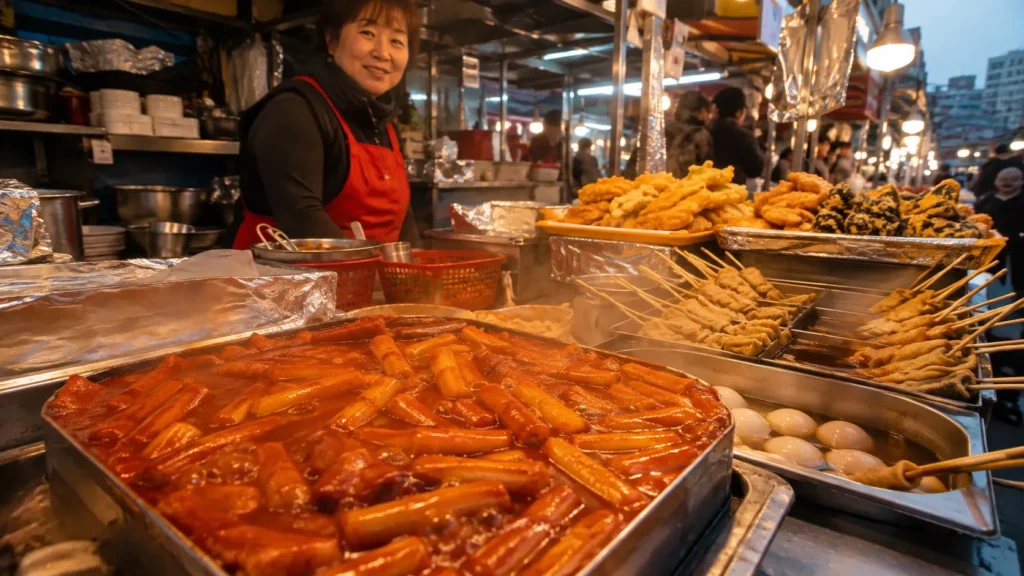
Tteokbokki was the most addictive Seoul street food I tried.
This famous snack is made with thick rice cakes cooked in a red gochujang sauce. The rice cakes were soft, chewy, and surprisingly filling.
The sauce tasted sweet at first, but the chili heat arrived a few seconds later. My serving was much hotter than I expected.
Many stalls serve it with eomuk, boiled eggs, mandu, and fried snacks.
Taste: Sweet, spicy, and savory
Spice level: Medium to hot
Best for: Street-food lovers
Where to try it: Gwangjang Market, Myeongdong, and Namdaemun
4. Korean Fried Chicken
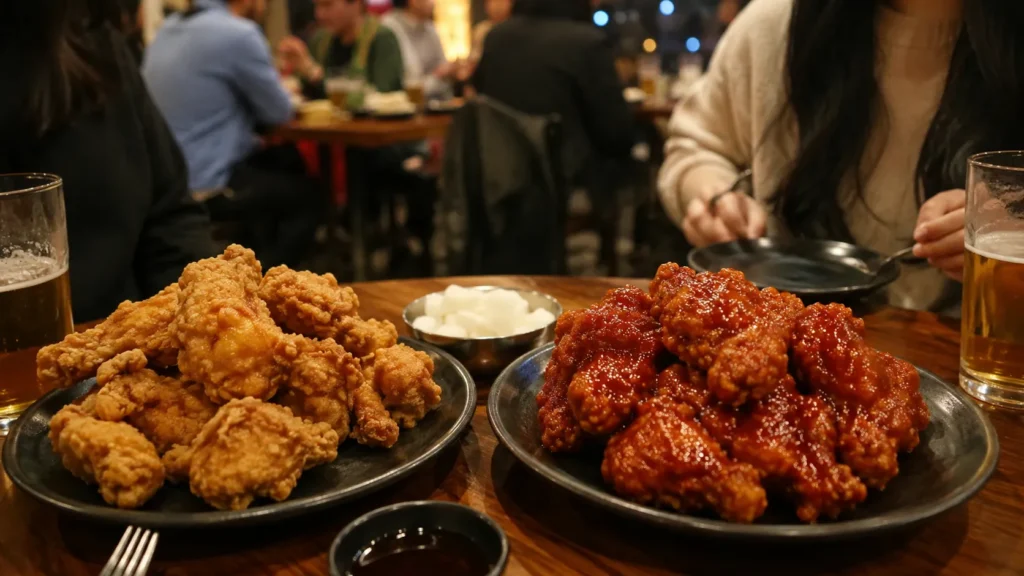
Korean fried chicken was my favorite late-night food in Seoul.
The chicken had a thin, crisp coating that stayed crunchy even after sauce was added.
I tried a plain version and yangnyeom chicken, which comes with a sweet and spicy sauce. The plain chicken was salty and crisp. The sauced version was sticky, garlicky, sweet, and hot.
Korean fried chicken is often served with beer. This pairing is called chimaek.
Taste: Crispy, salty, sweet, and spicy
Spice level: Depends on the sauce
Best for: Groups and late-night dining
Where to try it: Hongdae, Mapo, and Gangnam
5. Kimchi Jjigae
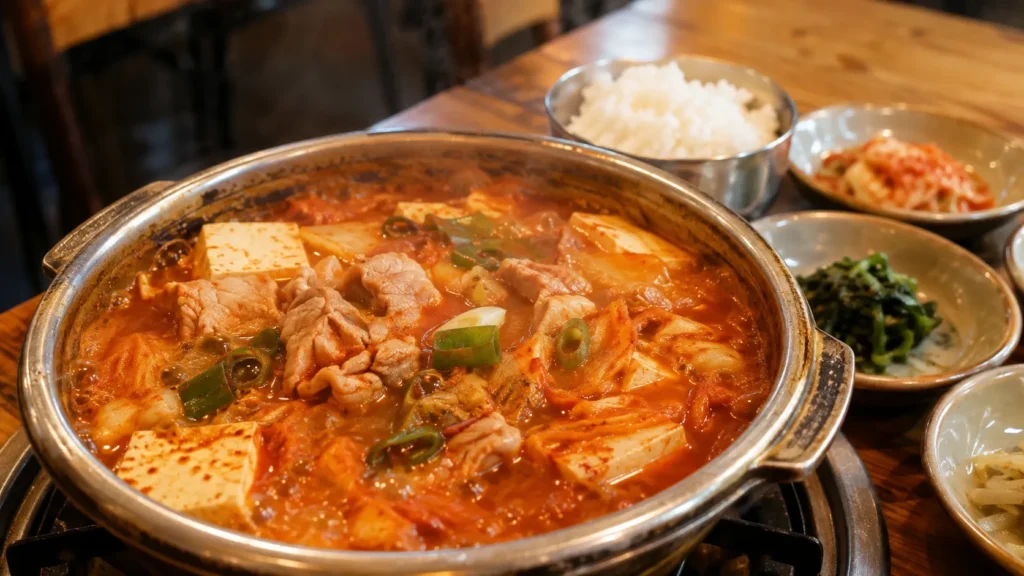
Kimchi jjigae was the comfort food I wanted after a long day of walking.
This hot stew is made with aged kimchi, tofu, onions, and often pork. My serving arrived bubbling in a metal pot.
The fermented kimchi gave the broth a deep, sour, and spicy flavor. The tofu softened the heat, while the pork made the stew richer.
I ate it with steamed rice and banchan.
Taste: Sour, spicy, and deeply savory
Spice level: Medium
Best for: Cold days and comfort-food lovers
Dietary note: It may contain pork, fish sauce, or seafood stock
6. Bulgogi
Bulgogi was the best mild Korean meat dish I tried.
Thin slices of beef are marinated in soy sauce, sugar, garlic, sesame oil, and sometimes Korean pear. The marinade makes the meat tender and slightly sweet.
The flavor was familiar and easy to enjoy. It was not spicy, which made it a welcome break after several chili-heavy meals.
I ate it with rice, vegetables, and banchan.
Taste: Sweet, savory, and smoky
Spice level: Not spicy
Best for: First-time visitors
Where to try it: Korean barbecue and traditional restaurants
7. Kalguksu
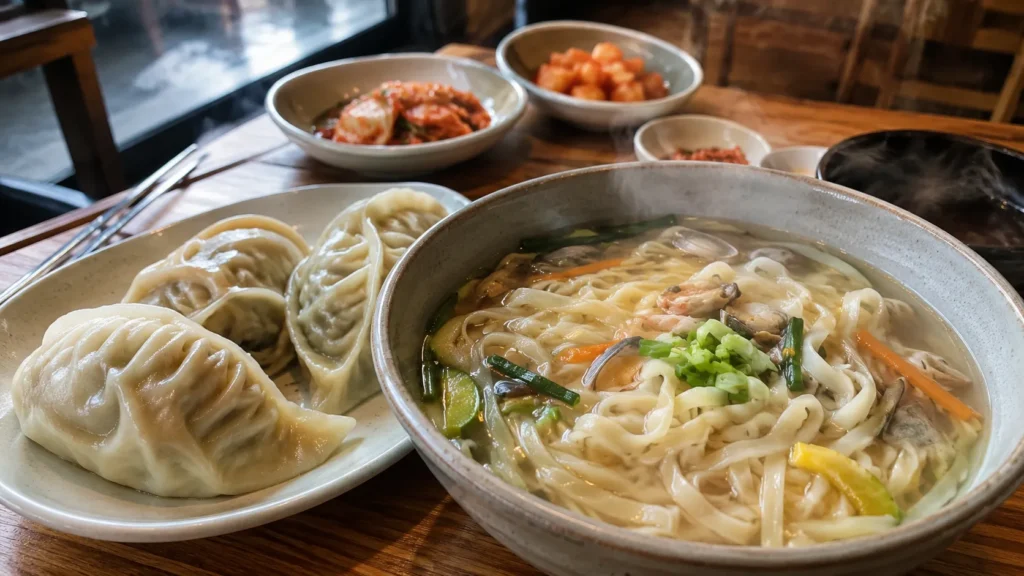
Kalguksu was the most comforting noodle dish I ate in Seoul.
The name means knife-cut noodles. The soft wheat noodles are cut by hand and served in a warm broth.
My bowl had a mild but savory flavor. It was filling and much less spicy than many other Korean dishes.
Kalguksu is often served with strong, fresh kimchi. The sharp kimchi created a good contrast with the gentle broth.
Taste: Mild, warm, and savory
Spice level: Not spicy
Best for: Lunch and cold weather
Where to try it: Namdaemun Market and Gwangjang Market
8. Mandu
Mandu were some of the easiest Korean snacks to enjoy.
These dumplings can be steamed, boiled, pan-fried, or deep-fried. Common fillings include pork, tofu, vegetables, glass noodles, and kimchi.
I preferred steamed mandu because the wrapper stayed soft and the filling remained juicy. Fried mandu had a crisp shell and worked well as a market snack.
Kimchi mandu had more heat than the meat and vegetable versions.
Taste: Savory and juicy
Spice level: Usually mild
Best for: Snacks and solo dining
Dietary note: Vegetable mandu may still contain meat or seafood seasoning
9. Naengmyeon
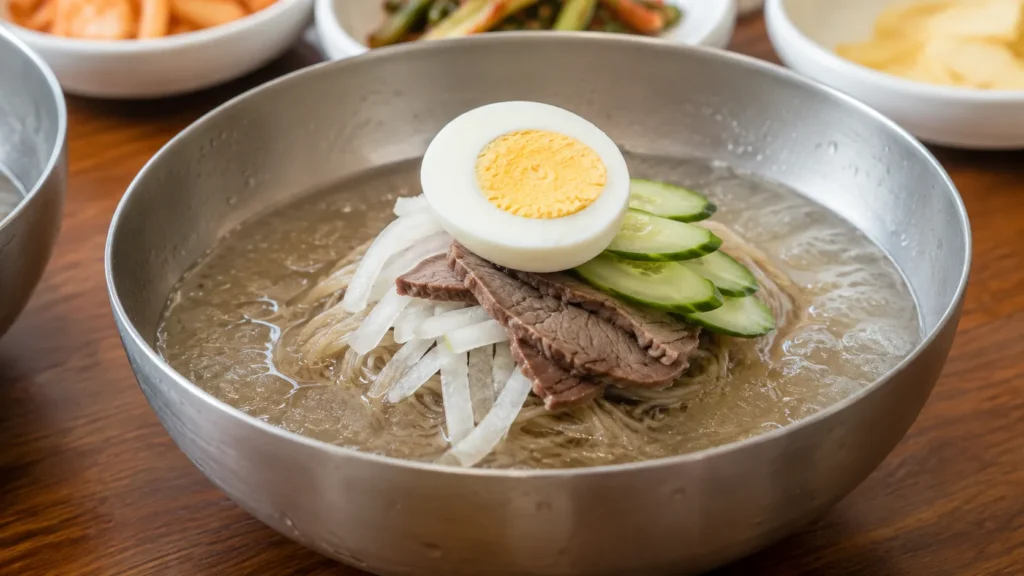
Naengmyeon was the most refreshing meal I tried in Seoul.
This cold noodle dish is made with thin, chewy noodles. It may be served in an icy broth or mixed with a spicy red sauce.
I found the cold broth surprising at first. After a few bites, the dish made sense. It was light, sharp, and perfect for hot weather.
Two common versions are mul naengmyeon and bibim naengmyeon.
Taste: Cold, tangy, and refreshing
Spice level: Mild or spicy
Best for: Summer
Where to try it: Specialist noodle and barbecue restaurants
10. Bindaetteok
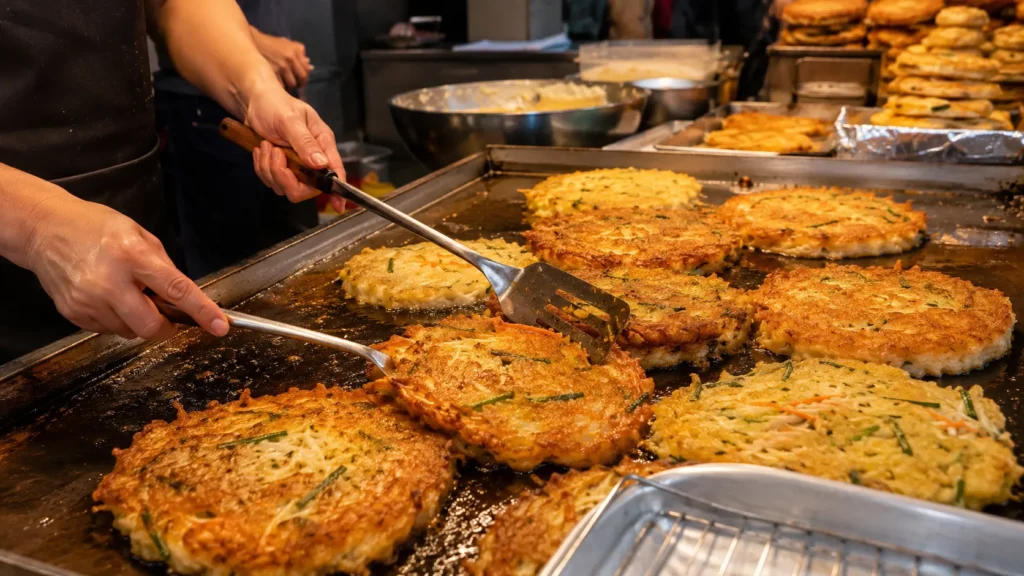
Bindaetteok was my favorite traditional market snack.
This thick Korean pancake is made from ground mung beans. It may also contain vegetables, kimchi, or pork.
The outside was golden and crispy. The middle was soft, rich, and slightly nutty.
I watched the pancakes frying on large metal pans before ordering. The smell made it difficult to walk past the stall.
Taste: Savory, nutty, and rich
Spice level: Usually mild
Best for: Traditional market visits
Where to try it: Gwangjang Market
11. Japchae
Japchae was lighter and sweeter than I expected.
This dish is made with glass noodles, vegetables, sesame oil, soy sauce, and sometimes beef. The noodles are usually made from sweet potato starch.
The noodles had a springy texture. The sauce was sweet, savory, and slightly nutty.
Japchae often appears as banchan or as part of a larger meal.
Taste: Sweet, savory, and nutty
Spice level: Not spicy
Best for: Travelers who enjoy mild noodles
Dietary note: Some versions contain beef
12. Gimbap
Gimbap was the most convenient food I ate while exploring Seoul.
It is made by rolling rice and fillings inside dried seaweed. Common fillings include egg, carrot, spinach, pickled radish, fish cake, tuna, and beef.
Gimbap looks similar to sushi, but it tastes different. The rice is usually seasoned with sesame oil, and most fillings are cooked.
It was portable, affordable, and easy to eat alone.
Taste: Mild, savory, and slightly nutty
Spice level: Usually not spicy
Best for: Solo travelers and quick meals
Where to find it: Markets, casual restaurants, and convenience stores
13. Seolleongtang
Seolleongtang was the mildest Korean soup I tried.
This traditional soup is made by simmering ox bones for many hours. The long cooking process gives the broth a cloudy, milky appearance.
The soup arrived with very little seasoning. I added salt, pepper, and chopped green onions at the table.
After seasoning it, I understood why many people consider it comfort food.
Taste: Mild, beefy, and comforting
Spice level: Not spicy
Best for: Breakfast and cold weather
Where to try it: Traditional soup restaurants
14. Soondubu Jjigae
Soondubu jjigae was one of the hottest dishes served to me.
This soft-tofu stew arrives boiling in a stone bowl. It usually contains silky tofu, vegetables, egg, and seafood or meat.
The tofu had a smooth texture that balanced the spicy broth. My egg continued cooking after the bowl reached the table.
The flavor was rich, spicy, and comforting.
Taste: Spicy, rich, and savory
Spice level: Medium to hot
Best for: Tofu and stew lovers
Dietary note: It may contain shellfish, pork, or seafood broth
15. Galbi
Galbi was the richest Korean barbecue meat I tried.
Galbi usually means beef short ribs. The meat may be marinated with soy sauce, garlic, sugar, sesame oil, and fruit.
The marinade created a sweet and smoky crust on the grill. The meat was tender, juicy, and full of flavor.
It cost more than pork belly, but it felt like a special meal.
Taste: Sweet, smoky, and rich
Spice level: Not spicy
Best for: A special barbecue dinner
Where to try it: Mapo and Gangnam
16. Dakgalbi
Dakgalbi was one of the most filling shared meals I had.
The dish combines chicken, cabbage, sweet potato, rice cakes, and spicy gochujang sauce. Everything cooks together on a large pan.
The chicken absorbed the sauce, the cabbage became soft, and the rice cakes stayed chewy.
After eating most of the chicken, I added fried rice to the same pan.
Taste: Sweet, spicy, and savory
Spice level: Medium
Best for: Two or more people
Regional connection: Chuncheon
17. Bossam
Bossam was lighter than I expected from a pork dish.
It is made with slices of boiled pork served with cabbage leaves, garlic, kimchi, and dipping sauces.
I wrapped the tender pork in cabbage and added spicy radish kimchi. The cabbage made each bite feel fresh and crisp.
The meat was rich but did not taste greasy.
Taste: Mild, rich, and fresh
Spice level: Mild unless kimchi is added
Best for: Sharing
Where to try it: Bossam and traditional Korean restaurants
18. Ganjang Gejang
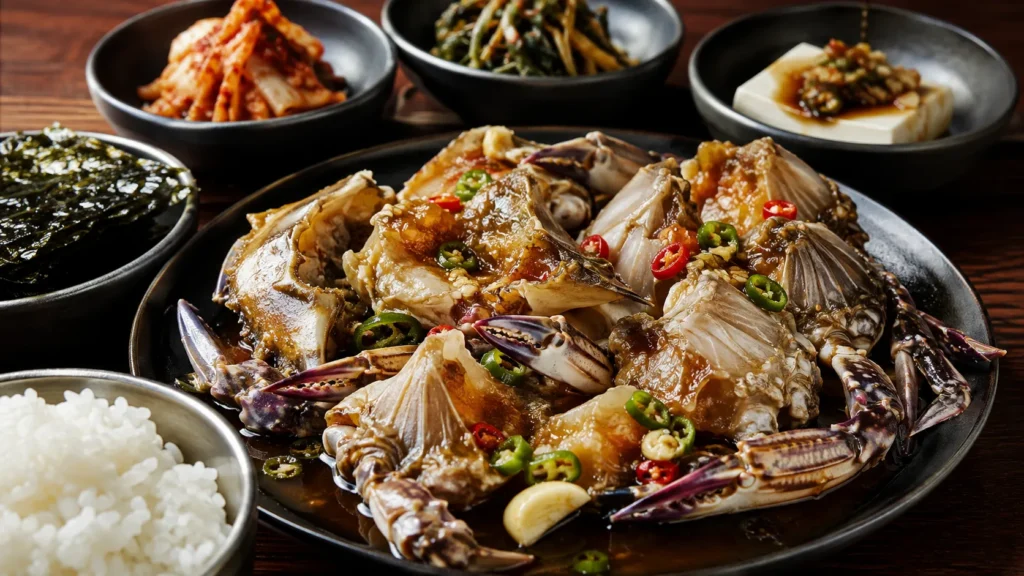
Ganjang gejang was the most unusual seafood dish I tried.
The dish is made with raw crab marinated in soy sauce. It is often called a “rice thief” because its strong sauce goes well with rice.
The crab meat was cold, soft, salty, and slightly sweet. Eating it took effort because I had to remove the meat from the shell.
The soft texture may not suit everyone.
Taste: Salty, sweet, and rich
Spice level: Not spicy
Best for: Adventurous seafood lovers
Dietary warning: Contains raw shellfish
19. Hotteok
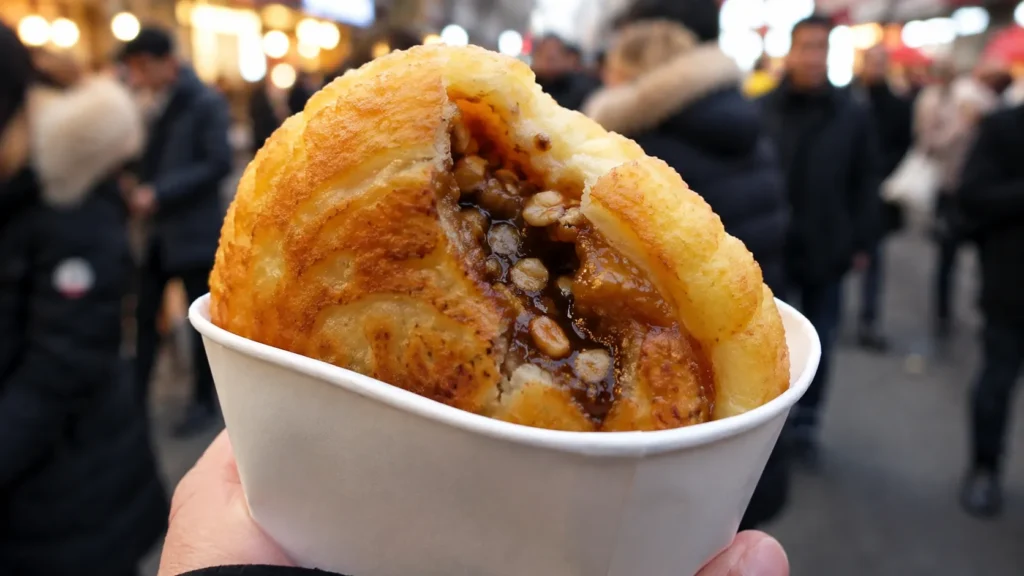
Hotteok was my favorite sweet Seoul street food.
This small pancake is filled with brown sugar, cinnamon, and sometimes nuts or seeds.
The outside was crisp and slightly oily. The filling was hot, sticky, and sweet.
I waited before taking my first bite because the melted sugar inside was extremely hot.
Taste: Sweet, warm, and nutty
Spice level: Not spicy
Best for: Dessert and cold weather
Where to try it: Namdaemun Market and Myeongdong
20. Samgyetang
Samgyetang was one of the most interesting seasonal Korean dishes I tried.
This soup contains a whole small chicken filled with sticky rice, garlic, jujube, and ginseng.
The broth was mild and clean. The chicken was tender and easy to pull apart.
I expected it to be a winter food, but Koreans also eat it during hot summer days.
Taste: Mild, herbal, and comforting
Spice level: Not spicy
Best for: A filling meal
Where to try it: Restaurants near Seoul’s palaces
21. Jjajangmyeon
Jjajangmyeon was sweeter and heavier than many other noodle dishes.
The noodles are covered in a thick black-bean sauce that often contains pork, onions, and vegetables.
The sauce tasted rich, salty, and slightly sweet. It coated every noodle and made the dish very filling.
Jjajangmyeon has Korean-Chinese roots and is also a popular delivery meal.
Taste: Rich, salty, and slightly sweet
Spice level: Not spicy
Best for: A filling casual meal
Dietary note: The sauce often contains pork
22. Eomuk
Eomuk was one of the easiest foods to eat while walking through a market.
Eomuk is Korean fish cake. It is often folded onto a wooden stick and kept warm in a light broth.
The fish cake was soft, springy, and mildly salty. The warm broth made it more comforting on a cool day.
It is also sometimes called odeng.
Taste: Mild and savory
Spice level: Not spicy
Best for: A quick market snack
Dietary warning: Contains fish and may contain wheat
23. Sundae
Sundae was very different from the ice cream dessert with the same English spelling.
Korean sundae, also written as soondae, is a blood sausage made with intestine, glass noodles, blood, and seasoning.
The texture was soft, dense, and slightly chewy. The flavor was milder than I expected.
Many stalls serve it with tteokbokki and eomuk.
Taste: Mild and earthy
Spice level: Not spicy
Best for: Adventurous eaters
Where to try it: Traditional food markets
24. Pajeon
Pajeon was the Korean pancake I enjoyed most with a group.
It is a savory pancake made with green onions. Some versions also include seafood, kimchi, or other vegetables.
The outside was crispy, while the middle remained soft. I dipped each piece into a light soy-based sauce.
Pajeon is often paired with makgeolli, especially on rainy days.
Taste: Savory and crisp
Spice level: Usually mild
Best for: Sharing
Dietary note: Seafood pajeon may contain shellfish
25. Gyeran-Ppang
Gyeran-ppang was one of the simplest street snacks I tried.
The name means egg bread. It is a small, soft loaf with a whole egg baked on top.
The bread tasted slightly sweet, while the egg added a salty and savory flavor.
It was warm, easy to hold, and not spicy.
Taste: Sweet, salty, and soft
Spice level: Not spicy
Best for: Breakfast or a quick snack
Where to try it: Myeongdong
26. Jjimdak
Jjimdak was a rich chicken dish made for sharing.
The chicken is braised with potatoes, carrots, onions, glass noodles, and a dark soy-based sauce.
The sauce tasted sweet, salty, and garlicky. The glass noodles absorbed much of the flavor.
The serving was large, so I would not order it alone.
Taste: Sweet, salty, and savory
Spice level: Mild to medium
Best for: Groups
Regional connection: Andong
27. Budae Jjigae
Budae jjigae was one of the most unusual Korean stews I tried.
The dish developed after the Korean War and combines Korean ingredients with foods linked to American military bases.
It may contain kimchi, sausage, luncheon meat, instant noodles, tofu, and baked beans.
The broth was spicy, salty, and heavy. It was not delicate, but it was satisfying.
Taste: Spicy, salty, and rich
Spice level: Medium
Best for: Groups and cold weather
Dietary note: Usually contains processed meat and wheat
28. Jeonbokjuk
Jeonbokjuk was the mildest seafood dish I tried.
This rice porridge is made with abalone. It has a soft, thick texture and a gentle seafood flavor.
The dish felt simple and calming. It was very different from the spicy stews and grilled meats I ate during the trip.
Jeonbokjuk is closely linked to Jeju Island.
Taste: Mild, creamy, and slightly salty
Spice level: Not spicy
Best for: Breakfast or a light meal
Regional connection: Jeju Island
29. Bingsu
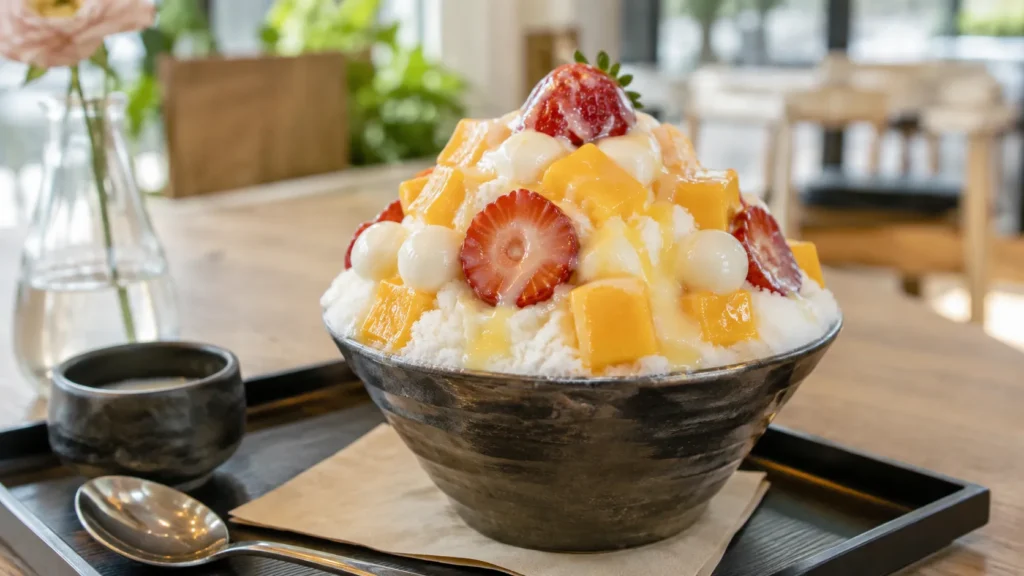
Bingsu was the most refreshing Korean dessert I tried.
The dessert starts with finely shaved ice. It may be topped with red beans, condensed milk, fruit, rice cakes, ice cream, or cereal.
I tried a fruit version. The ice was light and melted quickly in my mouth.
Traditional patbingsu includes sweet red beans, while modern cafés offer many fruit and chocolate versions.
Taste: Sweet, cold, and refreshing
Best for: Summer and café breaks
Where to try it: Hongdae, Seongsu, Ikseon-dong, and Gangnam
30. Sannakji
Sannakji was the most challenging Korean dish I tried.
The dish is made with pieces of very fresh octopus and is usually served with sesame oil and sesame seeds.
The flavor was mild, while the texture was very chewy.
Sannakji can present a choking risk because the suction cups may remain active. It should only be eaten at a reputable restaurant and chewed very carefully.
Taste: Mild and slightly salty
Spice level: Not spicy
Best for: Experienced and adventurous seafood eaters
The Best Seoul Food Markets I Visited
Seoul’s traditional markets were the easiest places for me to try several Korean dishes in one visit.
Gwangjang Market
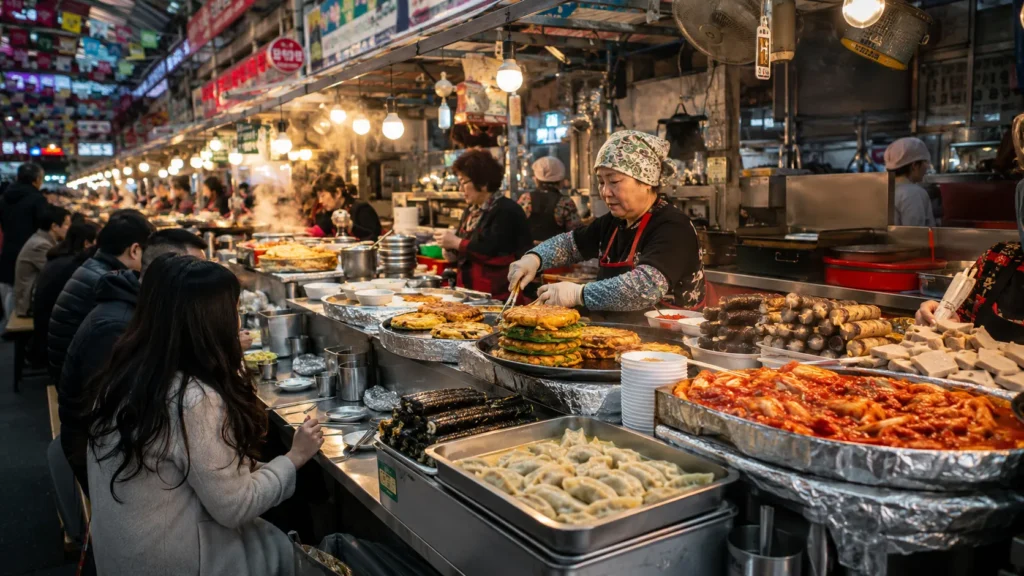
Gwangjang Market was best for famous traditional Korean street food.
I found bindaetteok, tteokbokki, mandu, mayak gimbap, kalguksu, sundae, and many other market dishes.
The atmosphere was busy and exciting, but it could feel crowded during peak meal times. I would visit in the morning or between lunch and dinner.
Namdaemun Market
Namdaemun Market was best for affordable local meals.
The market is known for kalguksu, dumplings, hotteok, and traditional food alleys. It was a good place to combine sightseeing with a simple lunch.
It also felt less focused on viral food trends than some other areas.
Mangwon Market
Mangwon Market was best for a neighborhood food experience.
I found takeaway snacks, fried food, gimbap, fruit, and modern market dishes. It was also useful for buying picnic food before visiting the Han River.
The atmosphere felt calmer than the busiest tourist markets.
Myeongdong
Myeongdong was the easiest place to find tourist-friendly street food.
The area offered many sweet and savory snacks. It was also easy to visit while shopping or sightseeing.
Some prices were higher than those at traditional markets, so I checked the cost before ordering.
Noryangjin Fish Market
Noryangjin Fish Market was the most interesting place for a fresh seafood experience.
Visitors can choose seafood in the market and have it prepared at a nearby restaurant.
The process can be confusing for first-time visitors. I confirmed the seafood price, preparation fee, and table charges before ordering.
Where I Found the Best Food in Seoul

Each Seoul neighborhood offered a different food experience.
| Seoul Neighborhood | Best Food Experience |
| Jongno | Traditional restaurants and historic markets |
| Gwangjang | Bindaetteok, noodles, and street food |
| Namdaemun | Kalguksu, dumplings, and affordable meals |
| Mapo | Korean barbecue |
| Myeongdong | Street snacks and easy dining |
| Hongdae | Fried chicken and late-night food |
| Euljiro | Old restaurants and Korean pubs |
| Ikseon-dong | Hanok cafés and desserts |
| Mangwon | Local market food and picnic snacks |
| Seongsu | Trendy cafés and bakeries |
| Gangnam | Premium barbecue and modern dining |
How Much Does Food Cost in Seoul?
Food in Seoul can suit both low and high travel budgets.
Street food, gimbap, noodles, and simple soups were among my cheapest choices. Korean barbecue, premium beef, raw crab, and seafood meals cost more.
Prices also changed depending on the neighborhood, serving size, and restaurant style.
| Price Level | Common Choices |
| Budget | Gimbap, street snacks, convenience-store food, and noodles |
| Moderate | Bibimbap, stews, fried chicken, and casual restaurants |
| Higher | Korean barbecue, seafood, hanwoo beef, and tasting menus |
I checked menus before ordering because prices and minimum-order rules can change. I also avoided relying on old blog posts for exact Seoul food prices.
Eating Alone in Seoul
Eating alone in Seoul was easiest when I ordered rice dishes, soups, noodles, and street food.
Bibimbap, gimbap, kalguksu, seolleongtang, jjajangmyeon, and mandu worked well as solo meals.
Korean barbecue was more difficult. Some restaurants required at least two portions of meat, even for one person.
Large dishes such as dakgalbi, jjimdak, pajeon, and fried chicken were also better for two or more people.
Markets were useful because I could order small portions from several stalls.
Vegetarian, Vegan, Halal, and Gluten-Free Food in Seoul
Dietary restrictions required more care than I expected.
A dish that looked vegetarian could still contain fish sauce, anchovy stock, fermented shrimp, or meat broth. Some types of kimchi also contain seafood ingredients.
Tofu stews often contained seafood stock. Mandu could contain pork. Gimbap could include fish cake, egg, tuna, or meat.
Halal travelers should remember that pork-free does not always mean halal. Shared grills, cooking alcohol, sauces, and cross-contact may still be concerns.
Gluten-free travelers should check soy sauce, noodles, dumpling wrappers, fried foods, and gochujang. Wheat can appear in sauces and processed ingredients.
Specialist restaurants and translated dietary cards can make ordering easier.
Korean Dishes That Are Not Spicy
Many popular Korean dishes are mild.
My favorite non-spicy Korean foods included:
- Bulgogi
- Japchae
- Gimbap
- Mandu
- Seolleongtang
- Samgyetang
- Kalguksu
- Bossam
- Gyeran-ppang
- Jeonbokjuk
I still checked sauces and side dishes because spice levels can vary between restaurants.
Korean Dining Tips I Learned in Seoul
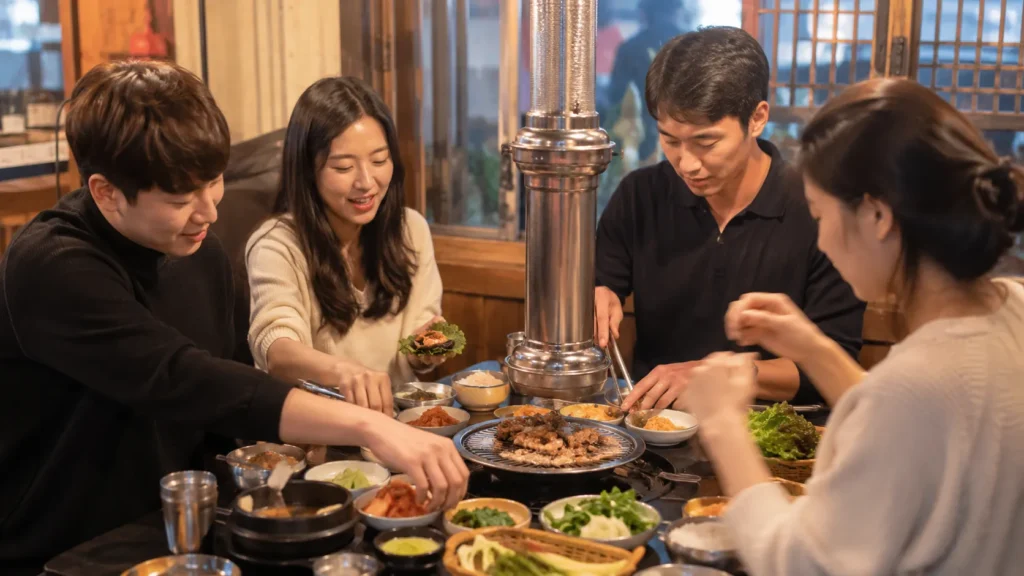
A few simple habits made eating in Seoul easier.
I waited to be seated unless the restaurant clearly used open seating.
I often found chopsticks and spoons inside a drawer under the table. Water and extra banchan were sometimes self-service.
I used kitchen scissors to cut long noodles and barbecue meat. This was normal in many Korean restaurants.
Small restaurants did not always allow major changes to a dish. Many prepared one recipe in one standard way.
Naver Map and Kakao Map were useful for finding restaurants. I saved each restaurant’s Korean name and address before leaving my accommodation.
At some restaurants, I paid at the front counter instead of at the table. I watched what local customers did when I was unsure.
My One-Day Seoul Food Itinerary
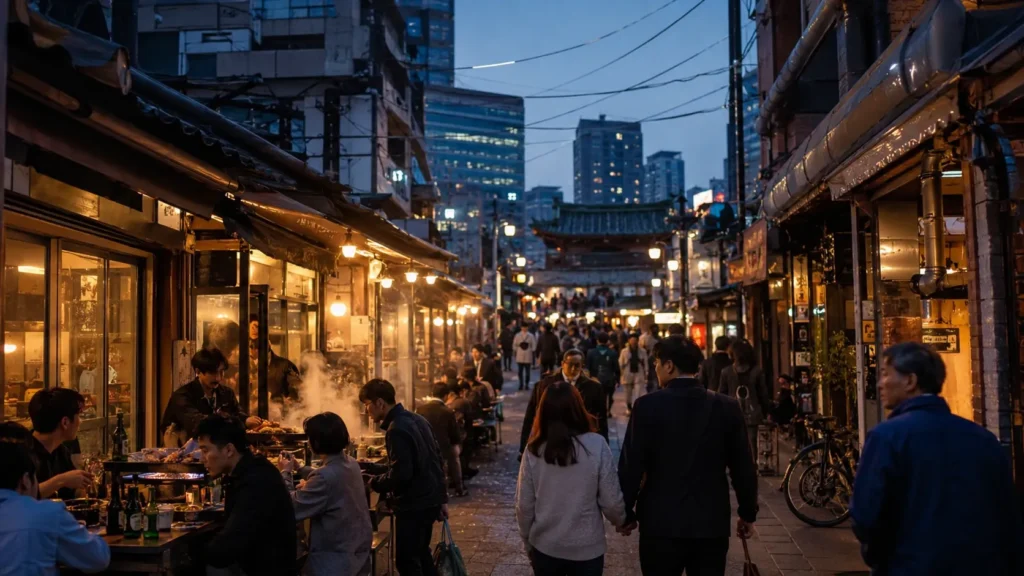
A food-focused day helped me try several dishes without rushing.
For breakfast, I chose seolleongtang, gimbap, or a simple convenience-store meal. These options were mild and filling.
For lunch, I visited a traditional market for kalguksu, mandu, or bindaetteok. Markets made it easy to try more than one food in a small area.
In the afternoon, I stopped at a café for bingsu, traditional tea, or a Korean dessert.
For dinner, I chose Korean barbecue in Mapo or another area known for grilled meat. Samgyeopsal was my first choice for a classic experience.
Late in the evening, I finished with Korean fried chicken, tteokbokki, or a light convenience-store snack.
I would not try all 30 foods during one short visit. Many Korean dishes are large and designed for sharing.
Common Seoul Food Mistakes I Avoided
The biggest mistake is ordering too much food at once.
Korean barbecue, fried chicken, stews, pancakes, and braised dishes can be larger than expected.
Another mistake is assuming every red dish has the same spice level. Some tteokbokki sauces and stews were much hotter than others.
I also avoided eating only in famous tourist areas. Smaller markets and neighborhood restaurants often gave me a calmer experience.
Finally, I checked current hours before crossing the city. Small restaurants can close early, sell out, or take a break between lunch and dinner.
Frequently Asked Questions About Korean Food in Seoul
What food is Seoul known for?
Seoul is known for seolleongtang, gomtang, dakhanmari, kalguksu, bindaetteok, Korean barbecue, fried chicken, and traditional market food.
The city is also one of the best places to try regional Korean dishes from across South Korea.
What Korean dish should I try first?
Bibimbap is the Korean dish I recommend trying first.
It is colorful, filling, easy to understand, and widely available in Seoul.
What is the best street food in Seoul?
Tteokbokki was my favorite Seoul street food.
Hotteok, mandu, eomuk, bindaetteok, and gyeran-ppang were also worth trying.
Is all Korean food spicy?
No, many Korean dishes are mild.
Bulgogi, japchae, gimbap, seolleongtang, samgyetang, kalguksu, and many types of mandu are not usually spicy.
What is the best food market in Seoul?
Gwangjang Market is the best-known Seoul food market for first-time visitors.
Mangwon Market is better for a calmer neighborhood experience, while Namdaemun is a good choice for affordable meals.
Can I eat alone in Seoul?
Yes, solo dining is possible in many restaurants and markets.
Rice dishes, soups, noodles, gimbap, mandu, and street food are the easiest choices.
Is food expensive in Seoul?
Food in Seoul can fit many travel budgets.
Street snacks, gimbap, noodles, and soups are often affordable. Korean barbecue, seafood, and premium beef usually cost more.
What should I order at Korean barbecue?
Samgyeopsal and bulgogi are good choices for a first Korean barbecue meal.
Samgyeopsal gives you the classic tabletop-grill experience, while bulgogi is milder and sweeter.
What is a typical Korean meal?
A typical Korean meal often includes rice, soup or stew, and several banchan.
It may also include grilled meat, vegetables, kimchi, sauces, and shared dishes.
My Final Thoughts on Seoul Food
The best part of eating in Seoul was discovering how varied Korean cuisine really is.
I arrived thinking mainly about kimchi and Korean barbecue. I left thinking about handmade noodles, bubbling stews, crispy mung-bean pancakes, cold noodle soup, and warm street snacks.
Bibimbap was my favorite Korean dish overall. Samgyeopsal gave me my favorite shared dining experience. Tteokbokki was my favorite Seoul street food.
I would also return for kalguksu, kimchi jjigae, Korean fried chicken, and bingsu.
My advice is to try both famous Korean dishes and simple everyday meals. Visit at least one traditional market. Eat in more than one Seoul neighborhood. Order something unfamiliar when you feel comfortable doing so.
Seoul is not only one of the best places to try South Korean food. It is also one of the best cities for understanding how Korean cuisine connects people, places, seasons, and traditions.