



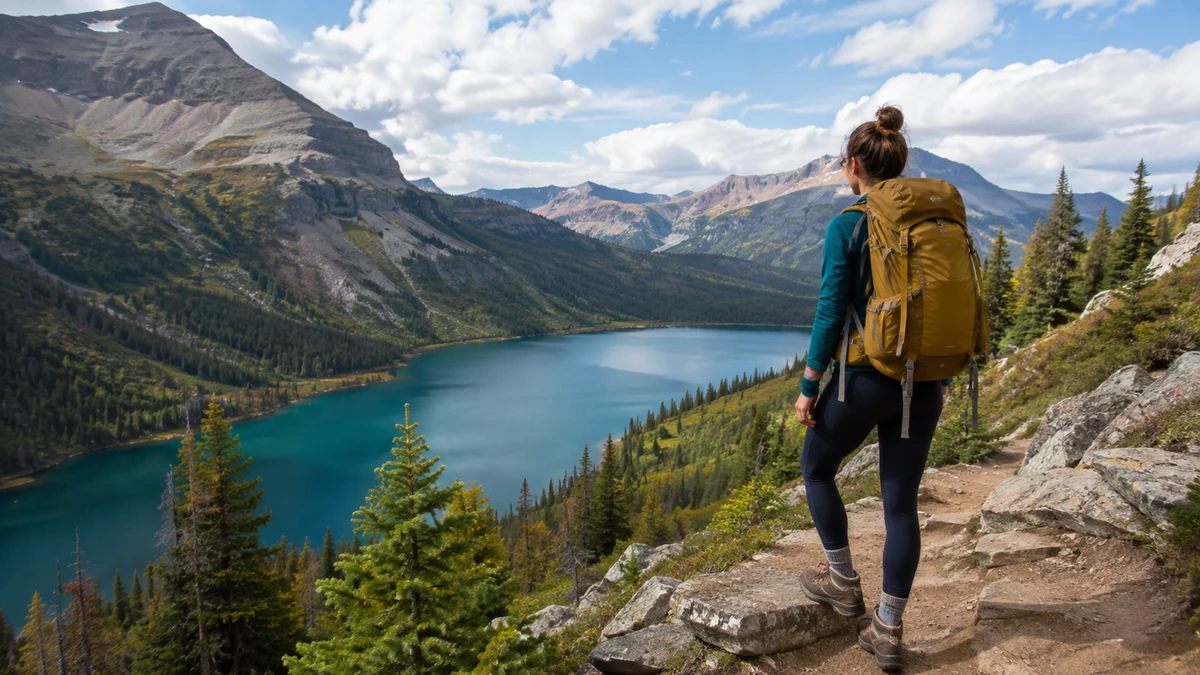
The best outdoor adventures in the US are not always the hardest ones. Some involve steep canyon trails, whitewater, or full days in the wilderness. Others can be as simple as kayaking across a calm lake, walking a wild stretch of coastline, snorkeling above a reef, or turning a scenic road trip into several days of hiking and exploring.
What mattered most to me was choosing an adventure that actually suited the trip rather than choosing whatever looked most dramatic in photographs.
I learned to pay much more attention to difficulty, weather, season, driving time, crowds, and reservations. A relatively short trail could feel surprisingly demanding in desert heat. A famous viewpoint could lose much of its appeal when I arrived at the busiest time of day. On the other hand, an expensive guided activity could turn out to be money well spent when it included specialist equipment, transport, and local expertise.
For me, the best outdoor adventure trips combined memorable scenery, realistic difficulty, enough time to enjoy the place, and flexibility when conditions changed.
This guide covers four types of outdoor travel that worked especially well for me: hiking, beaches and islands, diving and water activities, and road trips. I have also included the practical details that made the biggest difference once I started planning these trips properly.
Outdoor Adventures at a Glance
| Adventure | Where | Type | Difficulty | Best Time | Time Needed | My Take |
|---|---|---|---|---|---|---|
| Zion | Utah | Hiking | Moderate–hard | Spring/fall | 1–2 days | Worth starting early |
| Grand Canyon | Arizona | Hiking | Moderate–hard | Spring/fall | 1–3 days | Harder than it looks |
| Yosemite | California | Hiking | Easy–hard | Late spring–fall | 2–3 days | Famous for good reason |
| White Mountains | New Hampshire | Hiking | Moderate–hard | Summer/fall | 1–3 days | Strong East Coast option |
| Great Smoky Mountains | TN/NC | Hiking | Easy–hard | Spring/fall | 1–3 days | Good range of trails |
| Sedona | Arizona | Hiking | Easy–hard | Spring/fall | 1–3 days | Excellent short trip |
| Olympic Coast | Washington | Beach/coast | Moderate | Summer | 1–3 days | Wild and memorable |
| Channel Islands | California | Island adventure | Moderate | Much of year | 1–2 days | Worth the logistics |
| Mount Desert Island | Maine | Coast/island | Easy–moderate | Late spring–fall | 2–3 days | Great all-rounder |
| San Juan Islands | Washington | Island adventure | Easy–moderate | Summer | 2–4 days | Better at a slower pace |
| New River Gorge | West Virginia | Rafting | Moderate | Spring–fall | Full day | Guide worth paying for |
| Alaska | Alaska | Sea kayaking | Moderate | Summer | 1–3 days | Expensive but memorable |
| Everglades | Florida | Paddling | Easy–moderate | Winter–spring | Half/full day | Wildlife over adrenaline |
| Boundary Waters | Minnesota | Canoeing | Moderate | Late spring–early fall | 3–5 days | Best for wilderness |
| Florida Keys | Florida | Diving/snorkeling | Easy–advanced | Much of year | Half/full day | Conditions matter |
| Lake Tahoe | CA/NV | Kayaking | Easy–moderate | Summer | Half/full day | Good beginner option |
| Blue Ridge Parkway | VA/NC | Road trip | Easy–moderate | Spring–fall | 3–7 days | Stop often |
| Glacier | Montana | Road trip/hiking | Easy–moderate | Summer | 2–4 days | Don’t rush it |
| Utah national parks | Utah | Road trip/hiking | Moderate | Spring/fall | 7–10 days | Fewer parks, more time |
| Pacific Coast | California | Road trip/coast | Easy–moderate | Varies | 5–10 days | Driving less improves it |
Hiking
Hiking gave me the widest choice of outdoor adventures in the US, but it was also where numbers on a map could be misleading.
Early on, I focused too heavily on mileage. After spending more time outdoors, elevation gain, temperature, altitude, exposure, trail surface, water availability, and shade became much better measures of how difficult a hike would actually feel.
A six-mile desert hike could be more tiring than a considerably longer walk through cool forest.
The National Park Service covers a wide range of outdoor recreation, from hiking and camping to climbing, paddling, cycling, swimming, fishing, and winter activities. I normally check the National Park Service outdoor recreation guide before a park trip, then move on to the individual park’s current conditions and regulations.
1. Hiking Zion National Park, Utah
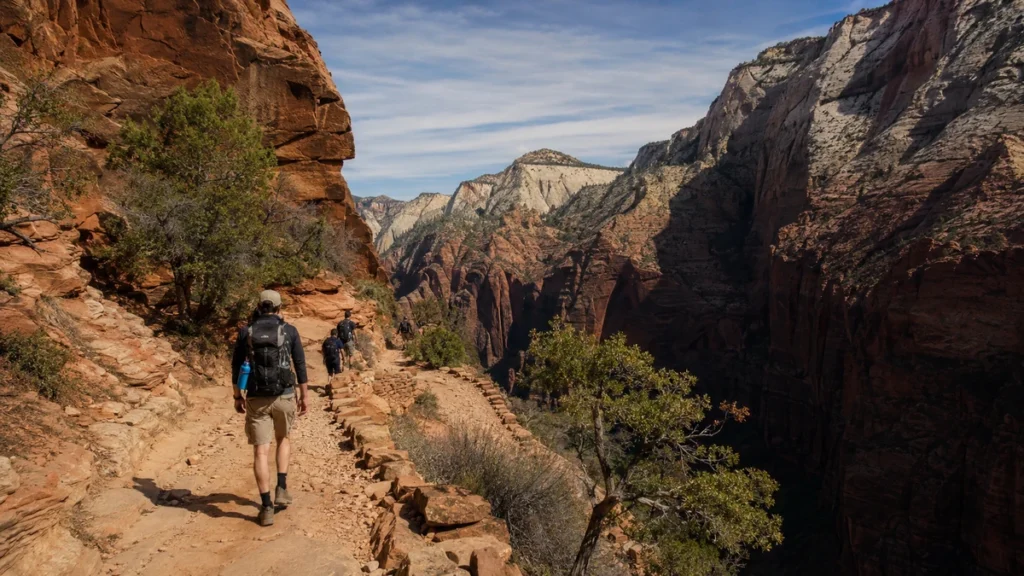
Best for: Canyon scenery and dramatic day hikes
Difficulty: Moderate to hard
Best time: Spring and fall
Zion looked impressive almost immediately, but timing affected my experience more than I expected.
The difference between an early start and arriving later was not subtle. More people, stronger heat, busier trailheads, and less flexibility could turn the same outing into a completely different day.
I also gave Angels Landing too much importance when planning. Zion did not become a lesser destination because I explored other trails instead.
In fact, quieter stretches of the canyon often gave me more time to stop, look around, and enjoy the surroundings without feeling that I needed to keep moving for the people behind me.
Dry heat was another lesson. I stopped calculating water needs from mileage alone and started thinking about exposure, temperature, and how long I expected to be outside.
My take: Zion justified the trip, but it became more enjoyable when I stopped treating one famous trail as the measure of the entire park.
2. Hiking Below the Grand Canyon Rim, Arizona
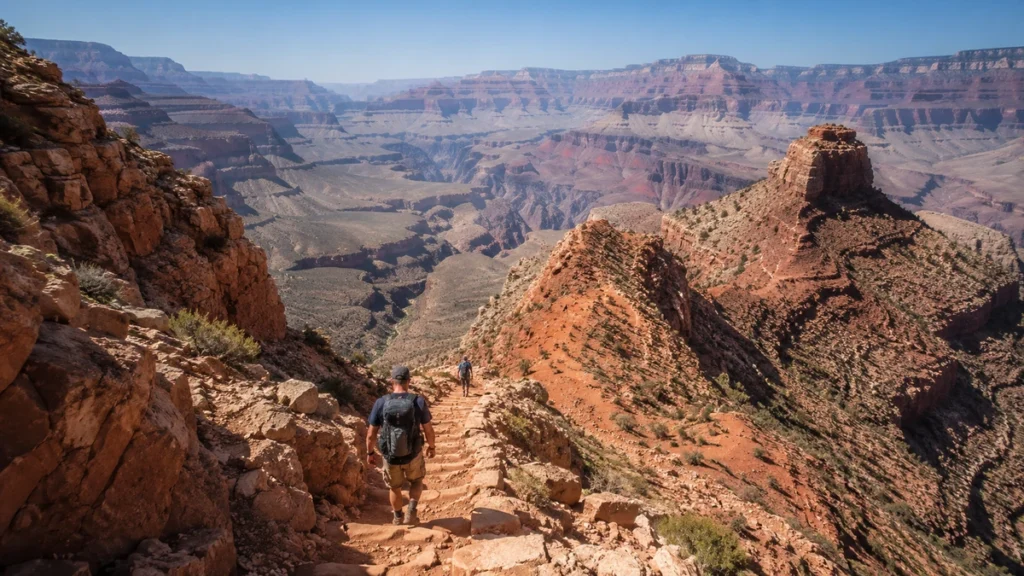
Best for: Big landscapes and challenging hiking
Difficulty: Moderate to very hard
The Grand Canyon was one place where photographs did a poor job of communicating scale.
From the rim, it was spectacular.
Once I started walking down, the landscape felt completely different.
The descent could feel deceptively comfortable. The problem was that every easy step downhill eventually had to be regained.
That changed how I planned the day.
Instead of focusing on how far I could descend, I paid much more attention to elevation, temperature, water, turnaround time, and how much energy I still had for the climb.
A relatively short walk below the rim gave me a much better sense of the canyon than rushing between several viewpoints by car.
What mattered most: Conserving energy for the return was more important than chasing mileage.
3. Hiking Yosemite National Park, California
Best for: Waterfalls, granite landscapes, and trail variety
Difficulty: Easy to hard
Yosemite was one of the famous places I half expected to find overrated.
I didn’t.
The granite cliffs, waterfalls, forests, and scale of Yosemite Valley justified the attention. The busiest areas, however, felt less peaceful than many photographs suggested.
Starting earlier changed the atmosphere considerably.
Parking was easier. Temperatures were better. And even heavily visited trails felt more enjoyable before the main daytime crowds arrived.
My bigger mistake was trying to pack too much into one day.
One substantial hike followed by several famous viewpoints looked efficient on an itinerary. In reality, the park was better when I picked one main activity and left space for unplanned stops.
My take: Yosemite was worth the hype. Rushing it was not.
4. Hiking the White Mountains, New Hampshire
Best for: Challenging East Coast hiking
Difficulty: Moderate to hard
Best time: Summer and fall
The White Mountains changed my assumption that serious mountain hiking in America was mostly a western experience.
Trails here could be steep, rocky, root-covered, and surprisingly slow.
Mileage alone did not tell me much.
A route that looked modest on the map could take longer than expected because of constant elevation changes and rough footing.
Fall brought beautiful foliage but also more visitors, while mountain weather always deserved attention regardless of season.
The experience also made me take the Northeast more seriously when planning future outdoor trips.
My take: If you live on the East Coast, you do not need to fly across the country for a demanding mountain adventure.
5. Hiking Great Smoky Mountains National Park
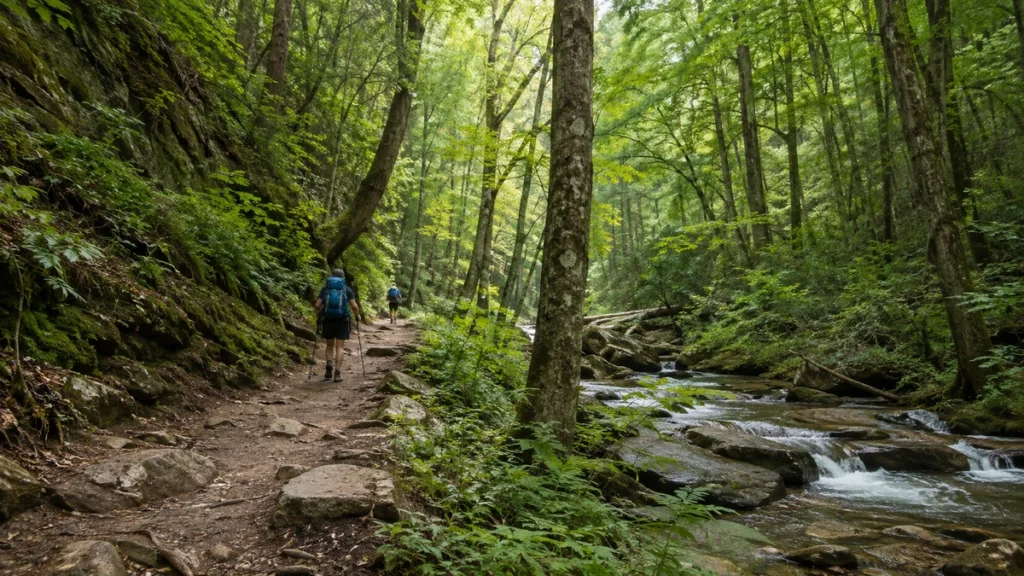
Best for: Forests, waterfalls, families, and road trips
Difficulty: Easy to hard
The Smokies felt completely different from Arizona and Utah.
Instead of exposed red rock and huge dry views, there were forests, streams, mist, moss, waterfalls, and damp earth.
The sounds were part of the experience too. Moving water, insects, birds, and wind through thick trees created an atmosphere that felt more enclosed than western hiking.
Crowds were the main disadvantage around the most famous areas.
I spent too much time initially looking for a magical uncrowded alternative. Starting earlier usually solved more problems than searching endlessly for a secret trail.
The broad range of trail difficulty also made the Smokies useful for groups where not everyone wanted the same level of physical challenge.
6. Hiking Sedona, Arizona
Best for: Couples and short outdoor getaways
Difficulty: Easy to hard
Sedona worked especially well for a short active trip.
Good hiking was relatively close to town, so I could spend much of the day outside without turning every morning into a long drive.
The red-rock scenery looked especially striking when the light softened later in the day.
Parking around popular trailheads was less attractive.
An early start became one of the easiest ways to improve the experience.
The climate also changed how I packed. I initially judged my water requirements according to trail distance and quickly realized that heat and exposure mattered just as much.
My take: Sedona was one of my favorite options when I wanted good hiking without committing to a remote multi-day expedition.
Beaches and Islands
Some of the most memorable outdoor adventures I found happened around beaches and islands.
They also changed my idea of what a beach trip could look like.
A good coastal adventure might include hiking, kayaking, tide pools, wildlife, snorkeling, camping, forests, cliffs, sea caves, and ferry crossings rather than spending all day on the sand.
The planning was different too.
Tides could matter more than elevation. Wind could matter more than distance. Ferries replaced parking lots as the logistical problem.
7. Exploring the Olympic Wilderness Coast, Washington
Best for: Wild beaches and coastal hiking
Difficulty: Moderate
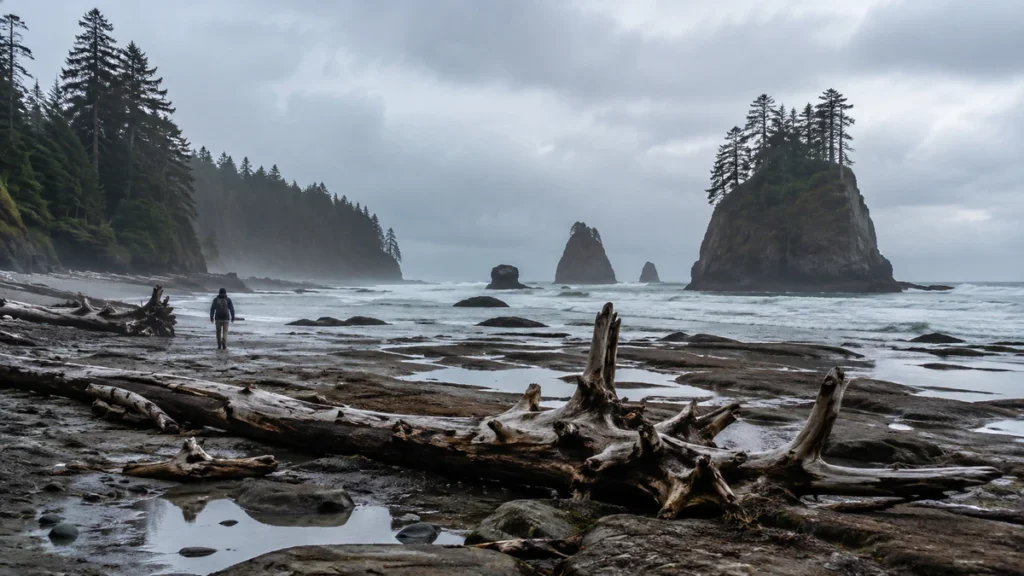
Washington’s Olympic coast felt much less like a conventional beach than I expected.
There was sand, but also rocks, driftwood, tide pools, forest, sea stacks, and sections where moving quickly was difficult.
I covered less ground than planned.
Part of that was the terrain. Mostly, I simply kept finding reasons to stop.
Tide pools took longer to explore than expected, and the coast looked different every time the light or mist changed.
This was also where checking tides stopped feeling like an optional detail. Coastal hiking has its own set of conditions, and planning it exactly like an inland trail did not make sense.
My take: One of the most atmospheric outdoor adventures on this list, but also one where preparation mattered more than the word “beach” suggested.
8. Channel Islands, California
Best for: Island hiking, kayaking, and wildlife
Difficulty: Moderate
The Channel Islands required more planning than a mainland day out.
At first, that felt inconvenient.
Once I arrived, the additional effort became part of why the islands felt special.
Boat schedules, weather, and the island itself controlled the day rather than traffic and a long list of roadside attractions.
Combining hiking with time on the water worked particularly well. Cliffs, sea caves, open ocean, and wildlife created a very different atmosphere from nearby mainland California.
I also liked not having endless options. With fewer distractions, the trip became more about being outside than deciding where to go next.
My take: Worth the extra logistics if you want to be active rather than simply take a sightseeing cruise.
9. Mount Desert Island and Acadia, Maine
Best for: Couples, families, hiking, and cycling
Difficulty: Easy to moderate
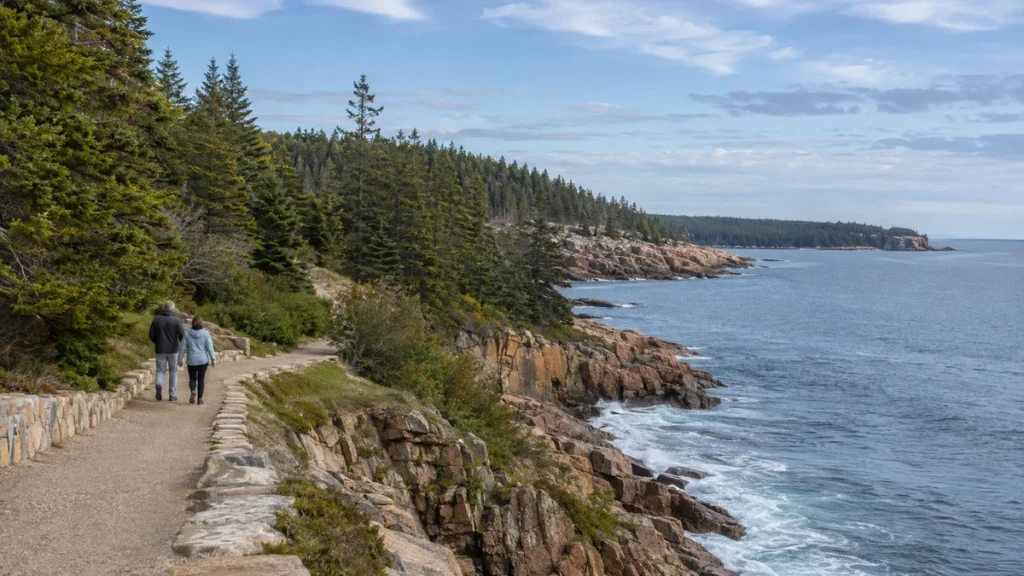
Acadia was one of the most balanced outdoor destinations I visited.
Hiking, cycling, lakes, forest, and coastline were close enough together that I initially made the predictable mistake of trying to do everything in one day.
That made the itinerary look excellent and the actual day unnecessarily rushed.
Cycling deserved longer than I had allowed because I kept stopping, and the coastline was better when it was not being squeezed between two other activities.
The cooler air also made active days more comfortable than some of my warmer-weather trips.
Food afterward became part of the rhythm of the day rather than another attraction to schedule.
My take: Acadia suited travelers who want genuinely active days without giving up comfortable evenings.
10. San Juan Islands, Washington
Best for: Kayaking, wildlife, and slow outdoor travel
Difficulty: Easy to moderate
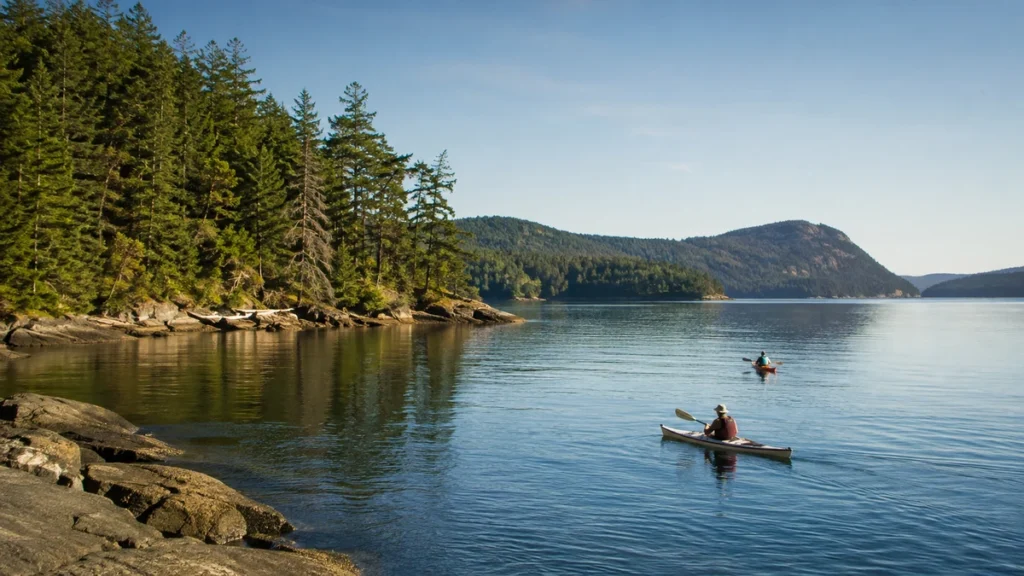
The San Juan Islands rewarded a slower pace.
My original instinct was to keep moving and see as much as possible. Ferries, weather, wildlife, and water conditions made that approach less useful than it usually was on a road trip.
Once the schedule became looser, the experience improved.
Kayaking, walking along the coast, watching the water, and waiting for wildlife became the trip rather than things fitted between attractions.
I also found that staying for a couple of nights made more sense than treating an island as a rushed day trip.
My take: This is a better choice for travelers comfortable slowing down than for anyone trying to collect as many sights as possible.
Diving and Water Activities
Some of my strongest travel memories came from water rather than trails.
Being on or under the water changed the perspective completely.
These activities also made conditions more important. Wind, currents, tides, water temperature, swimming ability, equipment, and local knowledge could matter as much as physical fitness.
11. Whitewater Rafting in New River Gorge, West Virginia
Best for: First-time rafting and adrenaline
Difficulty: Moderate
Guide: Worth paying for
West Virginia surprised me.
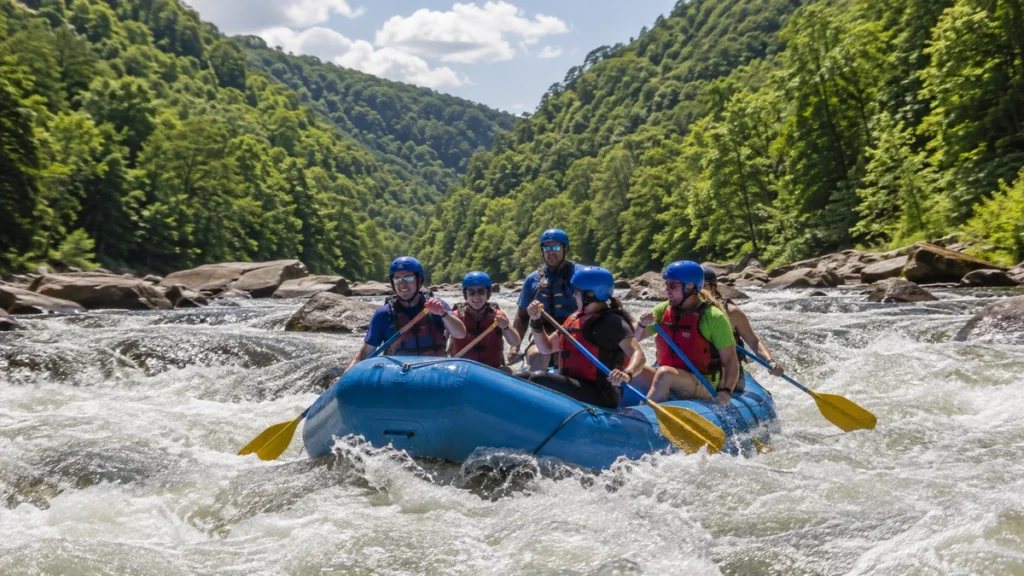
I had associated major adventure trips more strongly with western states, but New River Gorge combined river scenery, forest, cliffs, hiking, climbing, and rafting in one area.
Rafting was exciting without being nonstop chaos.
Calmer stretches between rapids gave me time to actually look at the gorge, which made the experience feel more complete than I had expected.
This was also one activity where paying for professional support made sense.
Equipment, logistics, local river knowledge, and experienced guides added something tangible. It did not feel like paying extra simply for convenience.
My take: One of the best examples of spending more because expertise genuinely improved the experience.
12. Sea Kayaking in Alaska
Best for: Wildlife and a bigger-trip splurge
Difficulty: Moderate
Cost: High
Alaska was one of the places where I accepted that the experience I wanted was not going to be particularly cheap.
Instead of filling the itinerary with several average excursions, I preferred spending more on one activity I cared about.
Sea kayaking stood out because of the quiet.
Once the noise of larger boats disappeared, the paddle entering the water became one of the loudest sounds around me.
Cold water, distance, changing weather, and an unfamiliar environment also made local guidance feel worthwhile.
My take: Expensive, but the cost felt connected to access, safety, and the quality of the experience.
13. Paddling the Everglades, Florida
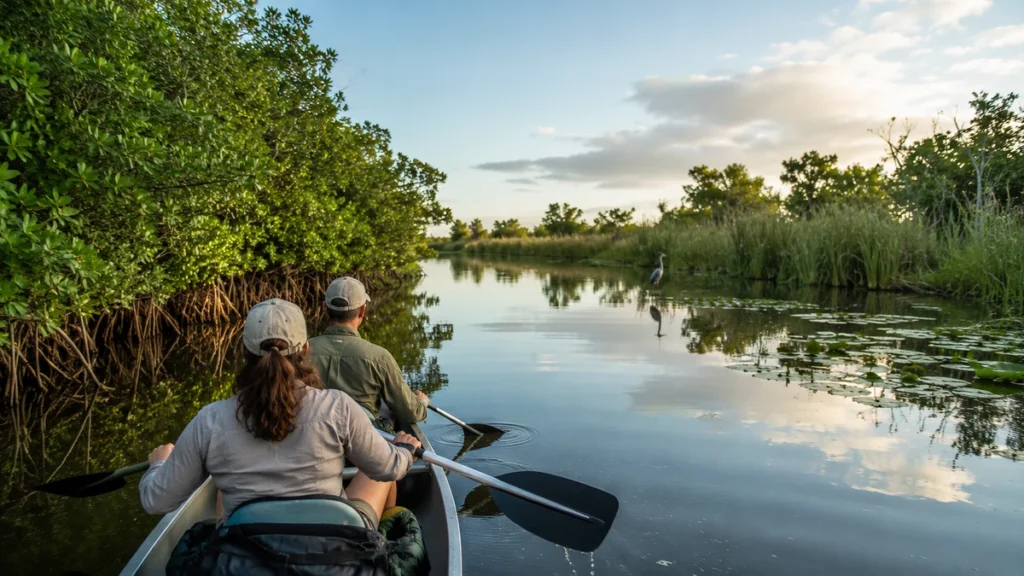
Best for: Wildlife and gentler adventure
Difficulty: Easy to moderate
The Everglades proved that outdoor adventure did not need mountains or dramatic elevation.
Moving slowly through wetlands and mangroves felt adventurous because the landscape was so different.
Wildlife watching forced me to slow down too.
There was no point racing from one spot to another. Much of the experience came from listening, scanning the water, and waiting.
Not every stretch produced a dramatic sighting, and I preferred that. It felt more natural than an experience designed around guaranteed photo opportunities.
Flat water also did not mean there was nothing to plan. Heat, insects, storms, navigation, and wind could all affect the day.
14. Canoeing the Boundary Waters, Minnesota
Best for: Multi-day wilderness
Difficulty: Moderate
Time needed: Three days or more
The Boundary Waters turned the journey itself into the itinerary.
Paddle.
Portage.
Find camp.
Cook.
Wake up and start again.
The portages were what I underestimated.
Beforehand, I had thought mostly about paddling fitness. Carrying equipment between lakes made every unnecessary item suddenly seem much heavier.
The experience also changed my relationship with trip planning.
There was no pressure to collect attractions. The lake, route, campsite, weather, and next stretch of water provided enough structure.
My take: A strong choice for travelers who want immersion rather than a checklist.
15. Snorkeling and Diving in the Florida Keys
Best for: Marine life and underwater scenery
Difficulty: Easy to advanced
Snorkeling was one of the easiest ways I found to add an underwater adventure to an ordinary vacation.
Scuba diving required far more planning, training, equipment, and expense, but it opened a very different world below the surface.
Weather was the lesson that mattered most.
Wind and water conditions had more influence over the day than the itinerary I had made at home.
Keeping a land-based backup prevented a changed boat schedule from feeling like a wasted day.
I also became more selective about tours. Water conditions and the actual site mattered much more to me than extras added to make a package look premium.
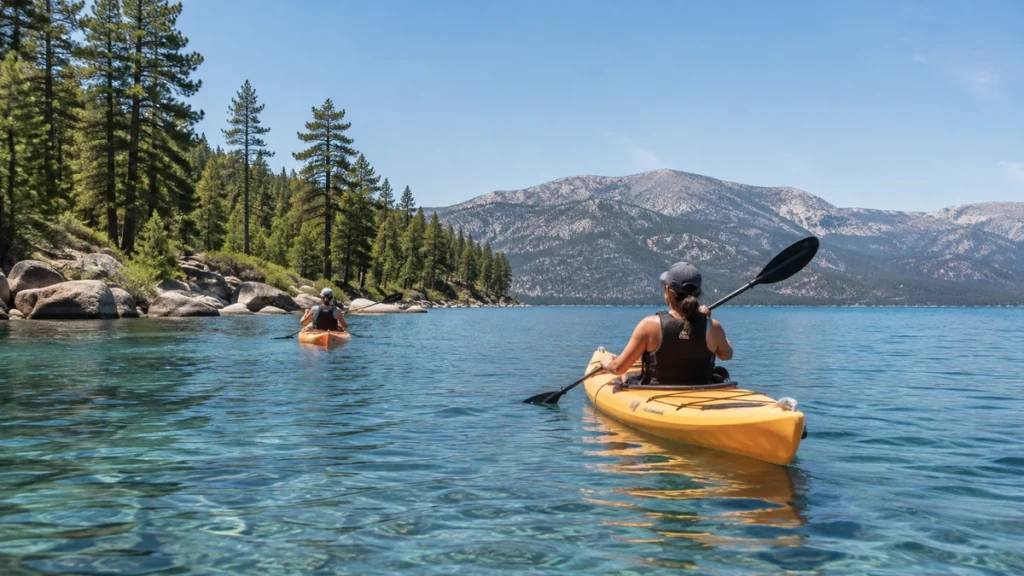
16. Kayaking Lake Tahoe, California and Nevada
Best for: Beginners and couples
Difficulty: Easy to moderate
Lake Tahoe was one of the easiest outdoor activities to add to a broader vacation.
A half-day on the water felt substantial without requiring several days of planning.
Open water distorted my sense of distance, though.
Shoreline features that looked close could take much longer to reach than expected, and wind could increase the effort surprisingly quickly.
For a relaxed day, staying closer to shore made far more sense than turning an easy paddle into an endurance test.
My take: A good entry point for someone who wants to try paddling before committing to river or coastal conditions.
Road Trips
Some of my best outdoor vacations were built around a car, but the driving itself was rarely the part I remembered.
The road connected trails, beaches, forests, waterfalls, mountain passes, lakes, campgrounds, viewpoints, and small towns.
Eventually, I started judging outdoor road trips by how much time I spent outside the car, not how many miles I completed.
Driving less usually improved the trip.
17. Blue Ridge Parkway, Virginia and North Carolina
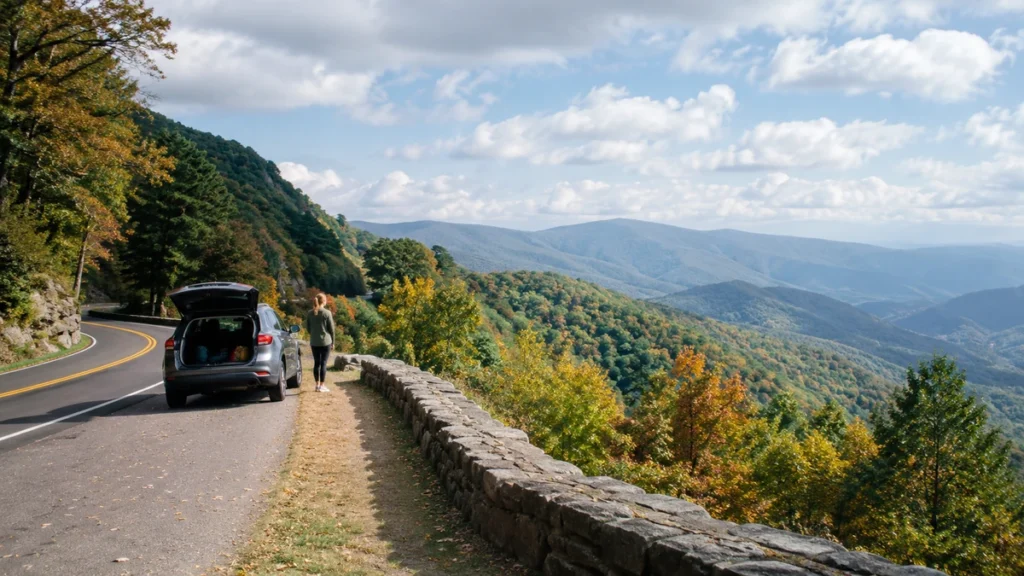
Best for: Hiking, waterfalls, viewpoints, and fall color
Time needed: Three days to a week
The Blue Ridge Parkway encouraged slower travel.
My first instinct was to cover a large section of the route. That became less important once I realized how often I wanted to stop.
A walk, overlook, waterfall, or unplanned lunch could easily take longer than expected.
That was not wasted time.
It was the point of the trip.
Fog occasionally removed the long-distance views almost completely. Rather than fighting the weather by driving farther, I eventually treated those atmospheric conditions as part of being in the mountains.
My take: The road worked best when I stopped measuring progress by mileage.
18. Glacier National Park, Montana
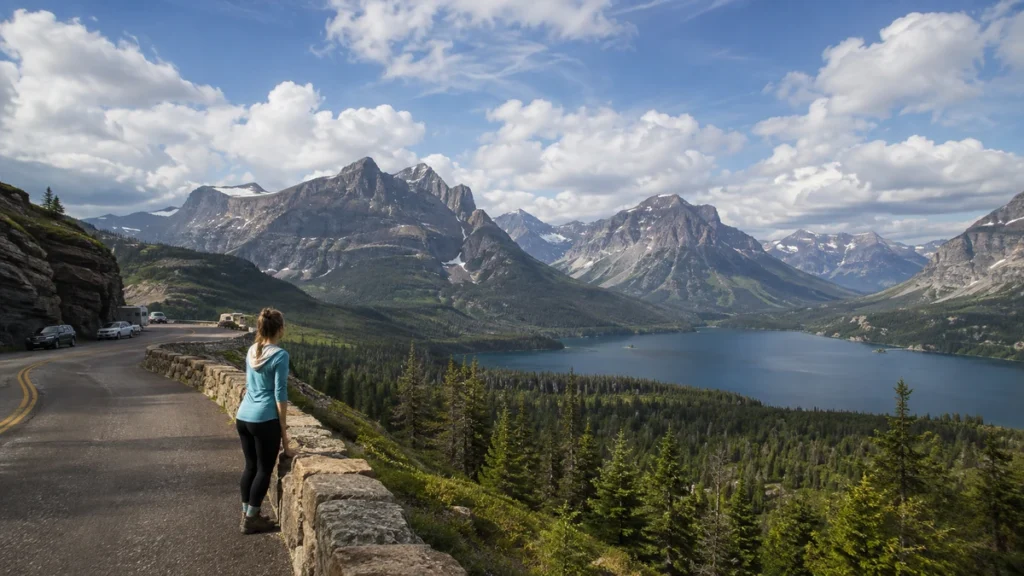
Best for: Mountain driving and hiking
Difficulty: Easy to moderate
Glacier was another place where I initially treated the scenic road too much like transportation.
The mountains kept ruining that plan.
There were too many places where stopping made more sense than continuing.
Once I allowed most of the day for the drive and nearby walks, the trip became much more enjoyable.
Seasonal mountain access can change with snow, weather, construction, and road conditions, so I treated current park information as essential rather than assuming that an itinerary from a previous year would still work.
My take: Glacier rewarded patience. Trying to rush through the park missed the point.
19. Utah National Parks Road Trip
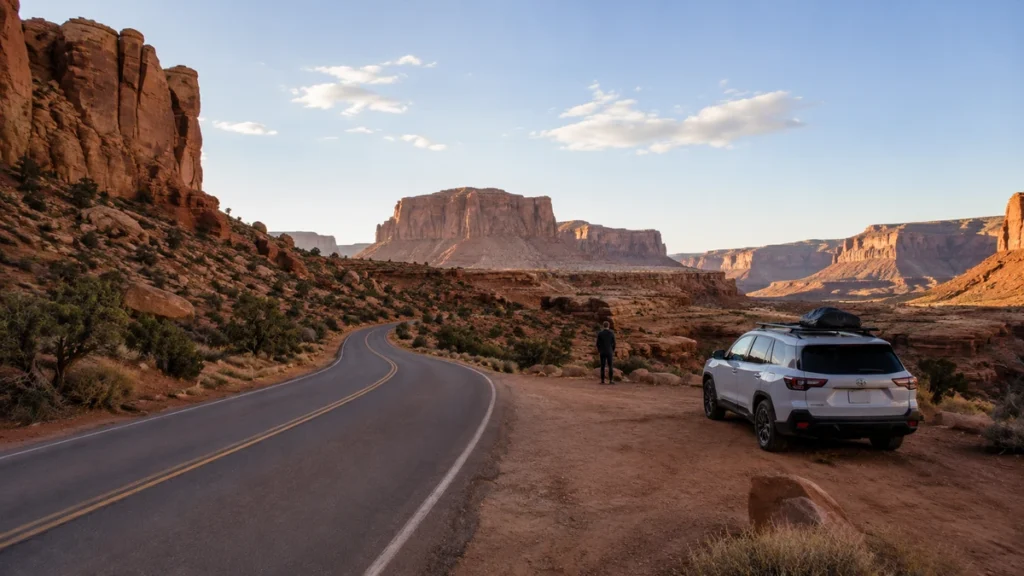
Best for: Desert hiking and varied landscapes
Difficulty: Moderate
Time needed: At least a week
Utah created one of my biggest itinerary problems because everything looked close enough to add.
Zion, Bryce Canyon, Capitol Reef, Canyonlands, and Arches made it easy to convince myself that another park would fit.
The driving distances were possible.
Enjoying every park properly was another matter.
The trip improved when I started removing stops rather than adding them.
Two nights somewhere gave me time for an early hike, an unhurried meal, and enough flexibility when weather or crowds changed the plan.
A one-night stay often felt as though I had spent more time understanding the parking layout than the landscape.
My take: Fewer parks and longer stays made the road trip much better.
20. Pacific Coast Road Trip, California
Best for: Beaches, coastal hiking, forests, and flexible travel
Difficulty: Easy to moderate
The California coast became more enjoyable when I stopped measuring the trip by distance.
My first plan involved too many driving hours and too many famous stops.
The experiences that stayed with me were smaller.
A long walk beside the ocean.
Cold wind at a viewpoint.
Spending longer than expected beneath tall trees.
Stopping for the evening instead of driving another hour simply because the itinerary said I should.
The coast worked best as a sequence of outdoor experiences connected by road rather than one long drive to complete.
My take: Cutting daily mileage improved the trip more than adding another famous viewpoint.
Which Outdoor Adventure Is Right for You?
The mistake I made most often was comparing adventures by how impressive they looked.
Better questions eventually replaced that:
How fit do I need to be?
How much time do I really have?
Is the activity highly seasonal?
Do I need previous experience?
Would a guide add real value?
Does anything need to be reserved?
Am I comfortable with heights, deep water, heat, cold, or isolation?
| If You Want… | Start With |
|---|---|
| Beginner hiking | Great Smoky Mountains |
| Dramatic landscapes | Zion or Grand Canyon |
| East Coast mountains | White Mountains |
| Couples’ outdoor weekend | Sedona or Acadia |
| Wild coastline | Olympic coast |
| Island adventure | Channel Islands |
| Wildlife and water | Everglades |
| Adrenaline | New River Gorge |
| Multi-day wilderness | Boundary Waters |
| Beginner paddling | Lake Tahoe |
| Underwater adventure | Florida Keys |
| Mountain road trip | Glacier |
| Fall road trip | Blue Ridge Parkway |
| Desert road trip | Utah |
| Coast and beaches | California coast |
Best Outdoor Adventures for Beginners
Outdoor adventure does not have to begin with technical climbing, difficult whitewater, or an exhausting hike.
Some of the easiest experiences to fit into a normal vacation included:
- shorter national park hikes
- calm-water kayaking
- snorkeling
- wildlife watching
- cycling established routes
- scenic road trips with short walks
- beginner-friendly guided rafting
- coastal hiking
- easy snowshoeing
- cave tours
I eventually stopped thinking only in terms of easy versus hard.
Comfort mattered too.
A strong walker might still dislike exposed heights. Someone who swims well may have no interest in whitewater. A traveler who hates camping can still put together a very active trip using day hikes and comfortable accommodation.
The right beginner adventure is the one that builds confidence rather than simply testing endurance.
When Paying for a Guide Was Worth It
One of the easiest ways to control the cost of outdoor adventure trips was learning when professional help genuinely added value.
Straightforward hiking and scenic driving rarely needed a guide for me.
Technical or unfamiliar environments were different.
A guide made more sense for:
- whitewater rafting
- technical canyoneering
- unfamiliar sea kayaking
- scuba diving
- technical climbing
- glacier activities
- advanced caving
Going independently often worked for:
- established hiking trails
- scenic road trips
- wildlife watching
- easy cycling
- coastal walks
- stargazing
- calm-water kayaking in suitable conditions
The cheapest option was not automatically the best value.
Neither was the most expensive.
I spent more happily when the money paid for expertise, equipment, safety, access, or complicated logistics.
Permits and Reservations Were Easy to Underestimate
One of my early assumptions was that outdoor travel was naturally spontaneous.
Popular places proved otherwise.
Depending on the trip, access can involve:
- hiking permits
- camping reservations
- backcountry permits
- lotteries
- ferries
- parking restrictions
- equipment reservations
- rafting bookings
- campground availability
- seasonal road access
I eventually changed the order in which I planned.
If one experience was the main reason for the trip, I checked its access requirements before committing money to the surrounding itinerary.
For federal recreation areas, I use Recreation.gov for relevant federal reservations, permits, passes, campsites, and lotteries, then confirm the latest conditions with the specific park or land-management agency.
That simple habit prevented more problems than most packing tricks.
Best Time for Outdoor Adventures in the US
There is no useful nationwide answer to the question, “What is the best time for outdoor adventures in the US?”
The country is too varied.
Summer can be an excellent time for Alaska or high mountain country while being uncomfortable for an exposed desert hike.
Winter can restrict mountain access while improving conditions for outdoor travel in southern Florida or the desert Southwest.
| Season | Strong Choices | Main Trade-Off |
|---|---|---|
| Spring | Utah, Arizona, waterfalls, rafting | Snow can remain at elevation |
| Summer | Alaska, Tahoe, islands, Boundary Waters | Crowds, heat, wildfire conditions |
| Fall | New England, Blue Ridge, Utah, Smokies | Shorter daylight |
| Winter | Florida, desert Southwest, snow activities | Mountain road and trail closures |
I stopped choosing a destination first and checking the weather afterward.
For outdoor trips, the season became part of choosing the destination.
Conditions should also be checked close to departure. Wildfire restrictions, storms, snow, tides, heat, water levels, and temporary closures can matter more than average seasonal weather.
Where Spending More Was Worth It
Extra spending made sense when the money clearly bought one of three things:
expertise, access, or better equipment.
That included:
- qualified guides
- specialist rental equipment
- rafting logistics
- dive trips
- boat transfers
- ferries
- good rental bicycles
- convenient accommodation before a very early start
I became less interested in expensive packages that simply added convenience to an activity I could comfortably do independently.
A free hike could become the best day of a trip.
An expensive guided river trip could also be completely worth the money.
Cost alone did not tell me much about value.
Things I Learned to Stop Doing
Several mistakes kept repeating until I changed the way I planned outdoor trips.
Starting too late
This caused hotter trails, fuller parking lots, more crowds, and less flexibility.
Starting earlier often improved the day more than changing destinations.
Planning around mileage alone
Five miles meant completely different things in Arizona, New Hampshire, and on the Olympic coast.
Terrain and conditions mattered.
Trying to visit too many places
This was particularly damaging on road trips.
Removing one destination often made every other stop better.
Underestimating water and sun
Dry heat was easy to underestimate because I did not always notice how quickly I was getting dehydrated.
Assuming famous meant best
Some famous experiences deserved their reputations.
Others mainly deserved an early start.
Treating weather as a last-minute detail
Mountain storms, heat, wind, tides, wildfire conditions, snow, and water levels could change an entire day.
Paying for convenience I didn’t need
Straightforward outdoor activities were often more enjoyable independently.
Refusing to pay when expertise mattered
Trying to save money made much less sense when local knowledge, technical skills, specialist equipment, or safety were involved.
Outdoor Adventures Beyond National Parks
National parks accounted for many memorable experiences, but concentrating only on famous parks would make outdoor travel in the US unnecessarily narrow.
Some excellent adventures can also be found in:
- national forests
- state parks
- wilderness areas
- public lands
- rivers
- lakes
- islands
- coastal areas
- recreation areas
- scenic roads and byways
Looking beyond the biggest national park names also opened up more of the Midwest, Appalachians, Southeast, and Northeast rather than concentrating almost every trip in Utah, California, Colorado, Wyoming, and Alaska.
Famous parks earned their reputations.
They just do not own the idea of outdoor adventure.
A Few Outdoor Safety Lessons That Actually Matter
I did not want outdoor planning to become a long list of warnings, but a few habits consistently made trips easier.
I matched routes to the weakest member of the group rather than the strongest.
Weather forecasts were checked again close to departure.
Water conditions mattered before paddling.
Tides mattered before coastal hikes.
I kept offline navigation when phone coverage was uncertain.
Turning around stopped feeling like failure when conditions changed.
And I learned not to treat a popular activity as automatically safe simply because thousands of people had done it before.
Outdoor adventure becomes much more enjoyable when basic planning is handled before the day begins.
Responsible Outdoor Travel
The busiest trails and viewpoints also made the impact of visitors much easier to see.
Staying on appropriate surfaces, carrying waste out, respecting wildlife, following fire restrictions, and obeying temporary closures became normal parts of my trip planning.
This mattered particularly around fragile desert environments, coastlines, alpine areas, and popular campsites.
The goal was simple: enjoy the place without making the experience worse for the people arriving next.
FAQ About Outdoor Adventures in the US
What are the best outdoor adventures in the US?
Some of the strongest options include hiking in Zion, Yosemite, and the Grand Canyon; rafting in New River Gorge; sea kayaking in Alaska; paddling the Everglades; canoeing the Boundary Waters; exploring the Olympic coast; snorkeling or diving in Florida; and building road trips around Utah, Glacier, or the Blue Ridge Mountains.
The best choice depends on fitness, available time, budget, season, and the type of landscape you enjoy.
What are the best outdoor adventures for beginners?
Good starting points include easy hiking, calm-water kayaking, snorkeling, cycling, wildlife watching, cave tours, coastal walks, scenic road trips, and beginner-appropriate guided rafting.
What are the best beaches and islands for outdoor adventures?
The Olympic coast, Channel Islands, Mount Desert Island, San Juan Islands, and Florida Keys combine coastal scenery with activities such as hiking, kayaking, cycling, wildlife watching, snorkeling, and diving.
Where are the best diving and water adventures in the US?
Florida is particularly strong for snorkeling and diving. Alaska is excellent for sea kayaking, West Virginia for whitewater rafting, Minnesota for wilderness canoeing, and the Everglades for wildlife-focused paddling.
What are the best outdoor road trips in the US?
The Blue Ridge Parkway, Glacier National Park, Utah’s national parks, and the California coast all work particularly well when driving is treated as the connection between outdoor experiences rather than the entire purpose of the trip.
Which US state is best for outdoor adventures?
Utah is one of the strongest all-round choices because hiking, desert scenery, mountain biking, rafting, climbing, canyoneering, and road-trip opportunities can be combined relatively easily.
For specific activities, Alaska is stronger for remote wilderness, Florida for water activities, Colorado and Montana for mountain adventures, Washington for forests and coastlines, and West Virginia for whitewater.
Final Thoughts
The outdoor adventures I remembered most clearly were not always the hardest, most famous, or most expensive.
A quiet paddle could stay with me as strongly as a difficult canyon hike. A wild beach could feel more adventurous than an activity marketed around adrenaline. And road trips became considerably better once I stopped trying to cover so much road.
The biggest improvement in my planning was simple.
I started choosing the experience first, then checking the real difficulty, season, weather, permits, travel time, and cost.
That helped me stop building trips around photographs and start planning around what the days would actually feel like.
The US has enough mountains, forests, beaches, islands, reefs, rivers, lakes, caves, deserts, coastlines, and wilderness areas to keep an outdoor adventure list growing for years.
I just became much more selective about which ones were genuinely worth giving up vacation days for.