



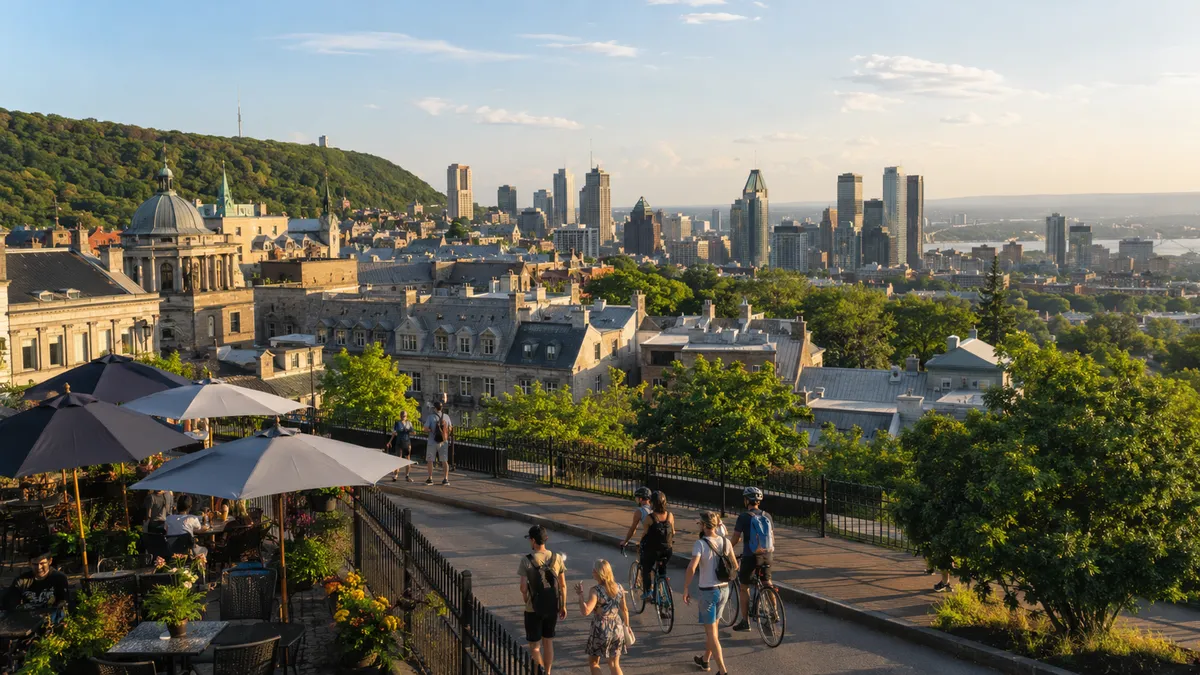
The best time to visit Montreal is from late May through June, especially for a first trip. The city was green again, terraces had filled up, bikes were back on the streets, and the long daylight made it much easier to explore without watching the clock.
September came surprisingly close. It was a little calmer, walking felt more comfortable, and Montreal still had plenty of outdoor life. For fall colors, though, October made much more sense.
That was the part I wish had been clearer when I first looked into the trip.
Most guides gave some version of the same answer: Montreal is beautiful in every season. That may be true, but it is not very useful when you are comparing hotel prices and trying to decide between June, September, or October.
Montreal changes a lot through the year. Summer is social and loud. Fall feels slower and more atmospheric. Winter changes the way you move around the city entirely.
So instead of asking which season is best, it helps to ask what kind of Montreal trip you actually want.
Best Time to Visit Montreal at a Glance
| What matters most | Best time to visit |
|---|---|
| Best overall | Late May to June |
| First-time visit | June or September |
| Comfortable weather | June and September |
| Fall colors | Early to mid-October |
| Festivals and nightlife | Late June through August |
| Fewer crowds | Late May and September |
| Lower prices | Winter and early spring |
| Outdoor sightseeing | May through October |
| Snow and winter atmosphere | January and February |
| Photography | October or snowy winter days |
For most first-time visitors, June and September are the easiest months to get right.
Weather can still surprise you. That became obvious quickly. Looking at the daytime temperature alone was not enough. Humidity, rain, wind, and cooler evenings could change how a day actually felt.
Montreal worked better when the itinerary had a little room to adjust.
Why June Is the Best Month to Visit Montreal
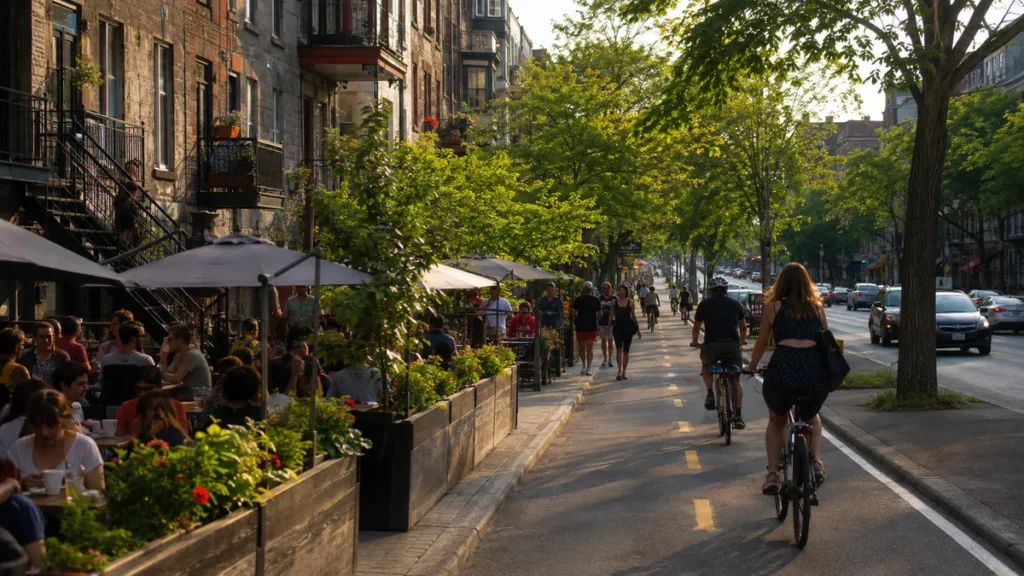
June had the best balance of everything I wanted from the city.
Montreal had properly moved outdoors by then.
Terraces were busy, parks were green, cyclists filled the bike lanes, and pedestrian streets had the kind of energy that made me want to slow down instead of moving straight to the next attraction.
The long days helped more than expected.
There was enough daylight to spend the morning around Old Montreal, wander toward the Old Port, stop for food, take a proper break, and still have time left for another part of the city.
That changed the pace of the trip.
I stopped feeling that every coffee break was stealing time from sightseeing.
What surprised me about June
The biggest surprise was how social Montreal felt.
People lingered outside.
Parks were not just places to walk through. Terraces were not simply restaurant seating. Streets and public spaces seemed to become part of everyday life once the warmer weather arrived.
That atmosphere did more for the trip than squeezing another attraction into the afternoon.
June also sits near the beginning of Montreal’s major summer festival period. Events such as the Montreal International Jazz Festival and MURAL add even more energy to the city.
There is a trade-off.
Good weather and major events naturally bring more visitors, and hotel prices can change noticeably around busy weekends.
One practical lesson stood out: check the event calendar before booking accommodation.
It is much easier to understand an expensive hotel weekend when you already know a major festival is happening.
September Was the Sweet Spot for Slower Travel
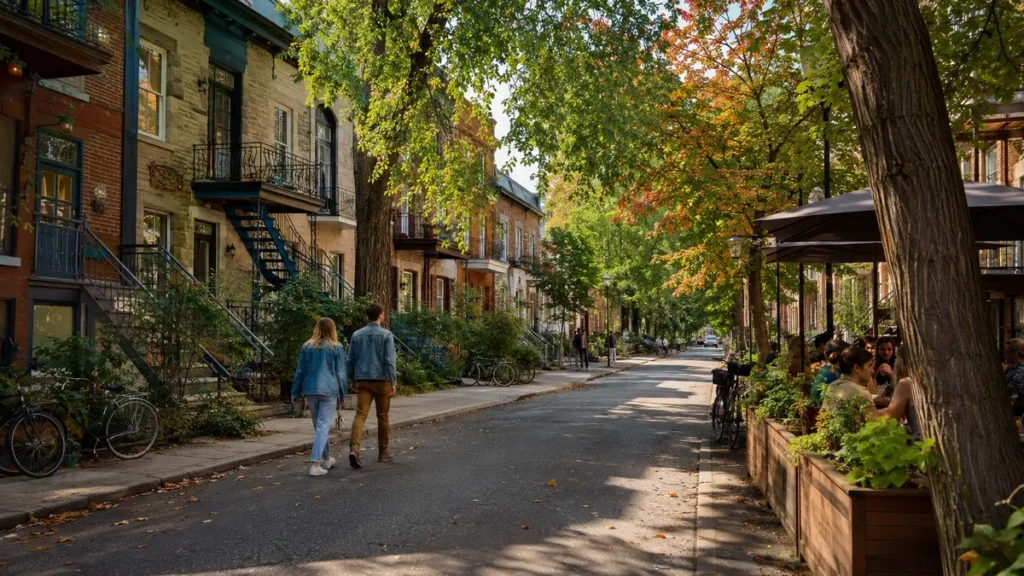
September had a different strength.
It felt easier.
The heavier part of summer was fading, but Montreal had not gone quiet. Outdoor tables were still busy, parks were pleasant, and walking through neighborhoods such as Plateau-Mont-Royal and Mile End felt comfortable for hours.
That mattered because Montreal became much more enjoyable once walking stopped being something I did only between attractions.
The Plateau was a good example.
The famous exterior staircases and colorful homes were interesting, but the smaller details gave the neighborhood its character: bikes locked along the street, leafy blocks, cafés with a few tables outside, people carrying groceries, and side streets that kept pulling me away from the route I had planned.
September suited that kind of wandering.
There was no strong midday heat pushing me indoors, but the city still felt active.
I also stopped planning every hour by this point.
That helped.
A coffee took longer than expected. A bakery looked too good to pass. Lunch drifted later.
Nothing really went wrong because of it.
Montreal felt better once the schedule became less rigid.
Is September crowded in Montreal?
September is usually easier than the height of summer, but it should not automatically be treated as a quiet month.
Festivals, conferences, sporting events, and busy weekends can still affect hotel demand.
That is why the exact travel dates matter almost as much as the month.
October Is Better for Fall Colors
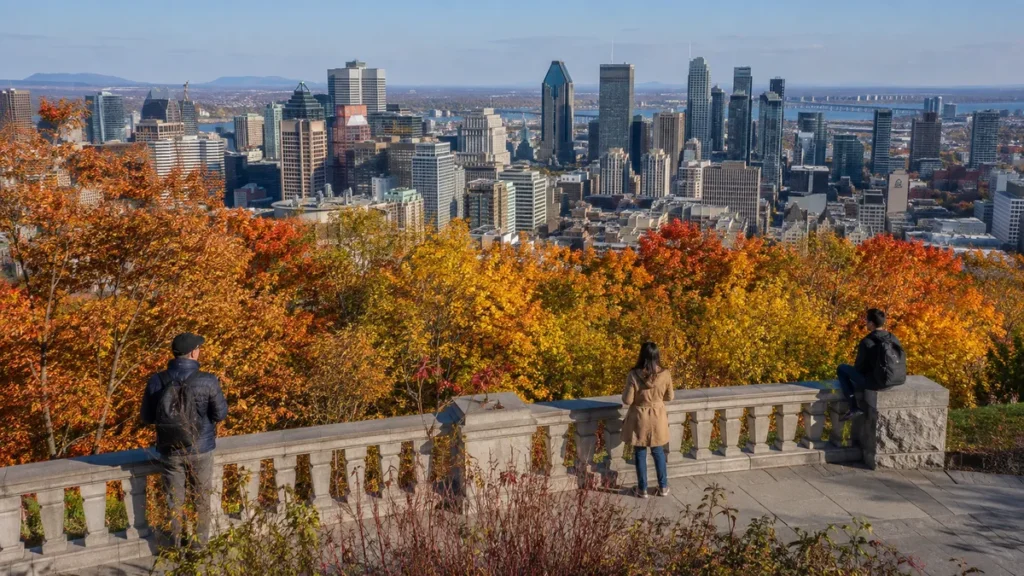
September had the easier weather.
October had the stronger atmosphere.
Anyone visiting mainly for autumn scenery should look at early to mid-October rather than treating all of fall as one long foliage season.
That distinction matters.
Early September can still be very green. By late October, some trees may already be past their brightest stage.
Peak fall color changes from year to year, so no single date can be guaranteed.
Still, October is the month that gives you a much better chance of seeing the red, orange, and yellow Montreal people picture when planning an autumn trip.
Mount Royal is the obvious place to start.
It appears on nearly every Montreal itinerary, which made me wonder whether the experience would feel overhyped.
It wasn’t.
The forest, cooler air, changing leaves, and city views worked together well enough that the popularity made sense.
The quieter streets were just as memorable, though.
Plateau-Mont-Royal, Mile End, Outremont, Westmount, and other leafy neighborhoods looked completely different once the trees started changing.
Those ordinary residential walks were some of the moments that made fall feel special.
There was no attraction to tick off.
Just cooler air, leaves collecting along the pavement, and the excuse to stop for something warm.
Montreal Weather by Month
Thinking in individual months helped much more than thinking only in four seasons.
March and May are both technically spring, but they can produce completely different trips. September and November are both fall, yet the experience is hardly comparable.
Here is the practical breakdown:
| Month | What it generally feels like | Best suited for |
| January | Very cold and snowy | Winter activities |
| February | Cold, snowy, lively | Winter festivals and skating |
| March | Cold and transitional | Lower prices |
| April | Cool and thawing | Budget-focused trips |
| May | Mild and increasingly green | Shoulder season |
| June | Warm with long days | Best overall |
| July | Warm to hot and busy | Festivals |
| August | Warm, lively, sometimes humid | Summer atmosphere |
| September | Mild and comfortable | Weather + lighter crowds |
| October | Cool and colorful | Fall foliage |
| November | Cold transition period | Lower demand |
| December | Cold and festive | Holiday atmosphere |
These are general patterns rather than promises.
Montreal weather can shift quickly, especially during spring and fall.
Visiting Montreal in Spring
Spring was the season that was easiest to misunderstand.
On a calendar, March sounds like the beginning of mild weather.
In Montreal, it can still feel like winter.
Early spring may bring lingering snow, wet streets, slush, cold rain, and bare trees. It is not necessarily the version of Montreal people imagine when they hear “spring city break.”
April improves gradually, but it can still be unpredictable.
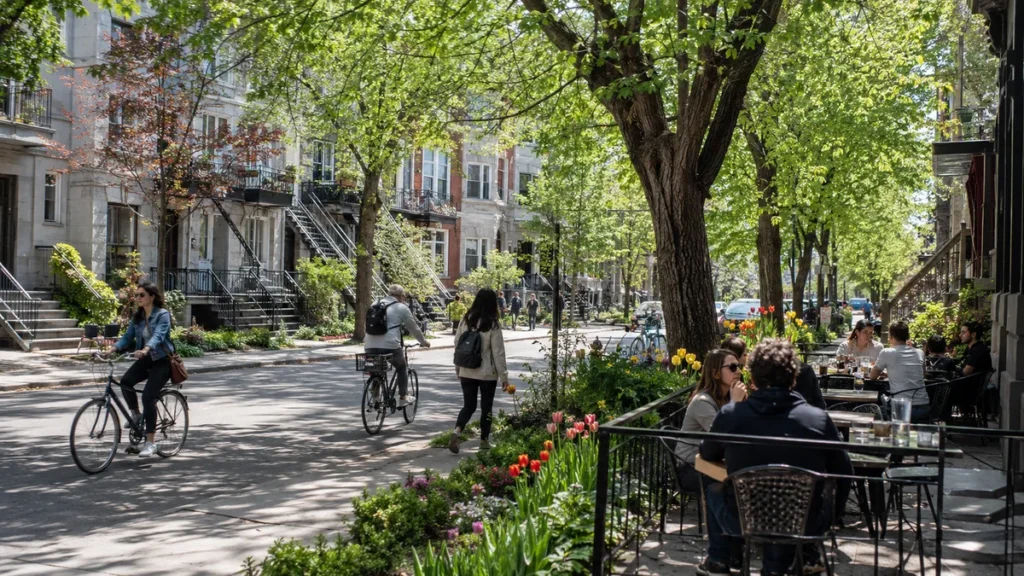
May is the spring month worth targeting
May changes the picture.
Parks become greener. Flowers start adding color. Cycling feels practical again. Terraces return, and longer walks become much more pleasant.
Late May was especially appealing because it delivered much of the outdoor atmosphere people want from Montreal without the full intensity of peak summer.
One packing mistake became obvious here.
A warm afternoon can make an extra layer seem unnecessary.
Then the sun disappears.
Evenings can cool quickly, particularly during shoulder season. Keeping a light layer in the bag turned out to be far more useful than carrying extra things I never touched.
Is May a good time to visit Montreal?
Yes. Late May is one of the most underrated times to visit Montreal.
It works especially well for travelers who want mild weather, parks, walking, and outdoor dining without committing to the busiest part of summer.
Visiting Montreal in Summer
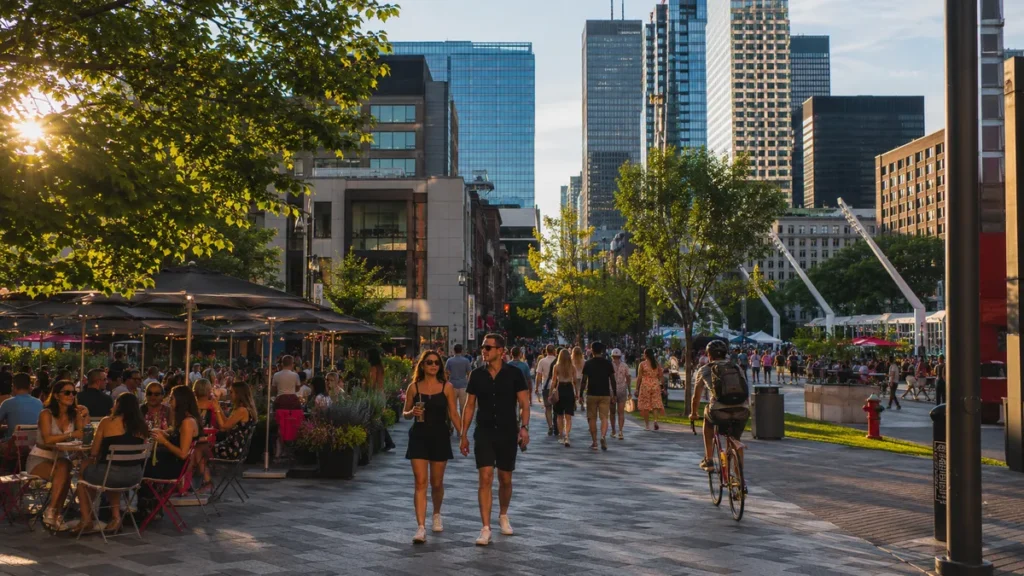
Summer is when Montreal feels most energetic.
The city seems determined to use every warm day.
Terraces spill outside. BIXI bikes are everywhere. Parks fill with people. Pedestrian streets become social spaces rather than simply ways to get from one block to another.
Festival season adds another layer.
The Montreal International Jazz Festival, MURAL, Osheaga, Montreal Pride, Piknic Électronik, and other events help explain why summer remains such a popular time to visit.
July and August bring the biggest crowds
July and August have plenty going for them.
They also have more people.
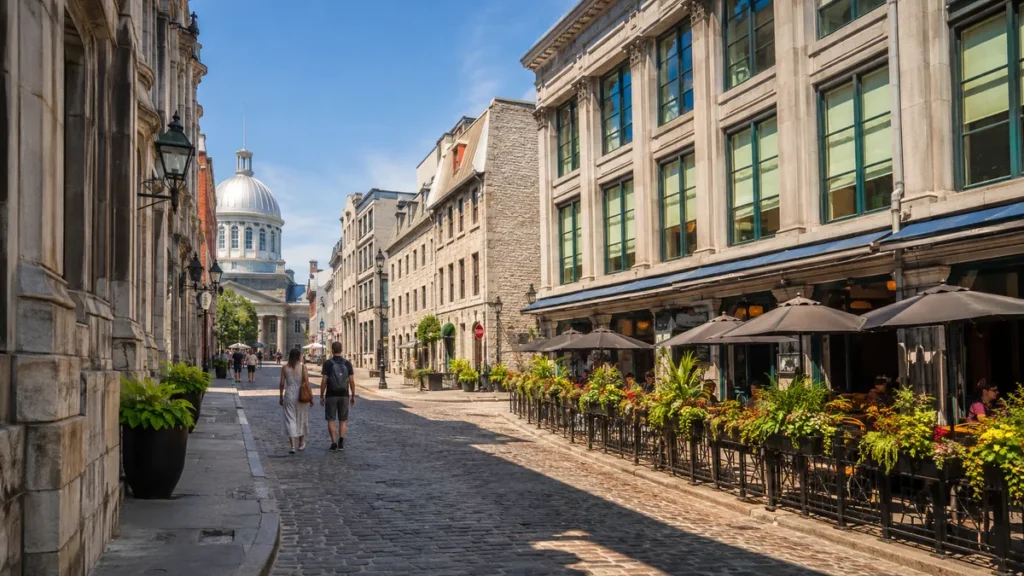
Old Montreal and the Old Port can become particularly busy in the middle of a sunny summer day.
Starting early made a noticeable difference.
The same streets that felt crowded in the afternoon were far easier to enjoy in the morning.
That simple change worked better than avoiding famous areas altogether.
Montreal can get hotter than expected
This caught me off guard during the planning.
“Canada” had created the wrong picture in my head.
Montreal summers can be warm and humid, and a full day of walking feels very different when the air is heavy.
Trying to power through the hottest part of the afternoon was not especially enjoyable.
An earlier start, a slower lunch, and more walking toward the evening made the day feel much easier.
Summer is still the strongest season for travelers who care about:
- festivals
- nightlife
- outdoor dining
- cycling
- parks
- long evenings
- pedestrian streets
- live music
It simply comes with a busier city.
Visiting Montreal in Fall
Fall was probably the easiest season for walking.
September brought comfortable weather.
October brought color.
November felt like a transition into something else entirely.
That is why “visit Montreal in fall” is too broad to be genuinely useful.
September: better balance
September works well when sightseeing matters more than foliage.
The city is still active, outdoor dining has not disappeared, and spending most of the day on foot feels much easier than during a humid summer afternoon.
For travelers who prefer slower trips, this may actually be the strongest month.
October: better scenery
October trades some warmth for atmosphere.
Mount Royal, the Montreal Botanical Garden, Parc Jean-Drapeau, and residential neighborhoods all become more visually interesting once autumn color develops.
I found myself paying more attention to ordinary streets than major landmarks.
That was probably the best sign that the season was doing its job.
Visiting Montreal in Winter
Winter changes the trip completely.
Montreal does not simply become a colder version of itself.
Snow and ice affect walking. Clothing starts shaping the day. Indoor stops become more important. Food feels different after an hour outside.
The rhythm slows.
And that is not necessarily a bad thing.
The footwear lesson
Winter shoes mattered more than I first expected.
A warm coat gets most of the attention, but wet or slippery footwear can ruin a day much faster.
Waterproof shoes with decent grip are one of the least glamorous but most useful things to get right.
Winter has its own personality
Cold weather does not leave Montreal without things to do.
Igloofest, Montréal en Lumière, skating, hockey culture, Mount Royal, snowshoeing, cross-country skiing, and other winter activities give the city a completely different identity.
The Underground City also makes far more sense once you experience serious winter weather.
On a map, it looks practical.
When it is freezing outside, practical becomes very appealing.
Food also became more satisfying in winter.
Hot coffee, poutine, smoked meat, bagels, soup, and pastries all seem to work better after time outside in the cold.
A warm café stops being a break from the trip.
It becomes part of it.
Cheapest Time to Visit Montreal
Winter and early spring generally offer the best chance of finding lower hotel rates, especially outside major holidays and events.
January through March usually stand out more than the summer months for travelers focused on price.
But cheapest and best value are not always the same thing.
That became an important distinction.
A lower hotel rate means very little if the trip you want revolves around terraces, parks, cycling, long walks, and warm evenings.
A February visit and a June visit are almost two different types of holiday.
Winter can offer excellent value when snow is part of the appeal.
Warm-weather travelers may get much more from spending extra for May, June, or September.
Best Time to Visit Montreal Without Big Crowds
Late May and September offer one of the strongest balances between weather and crowd levels.
Winter can be quieter, but the cold becomes a much bigger compromise.
Shoulder season gives you a better chance of enjoying parks, neighborhoods, and outdoor sightseeing without the strongest summer crowds.
The month is only part of the equation, though.
Time of day matters.
Weekends matter.
Festivals matter.
Old Montreal on a sunny Saturday afternoon can feel busy even outside July and August.
The same area on a weekday morning feels different.
Arriving early became one of the easiest ways to make popular areas more enjoyable.
Best Time to Visit Montreal for Festivals
Late June through August is the strongest period for festival-focused travel.
Summer is when Montreal becomes loudest.
Music, street art, food, public spaces, nightlife, and outdoor events start overlapping.
Quartier des Spectacles is one of the clearest places to feel that energy.
Festival dates can also affect the practical side of the trip.
Hotels may cost more.
Busy neighborhoods stay active later.
Public spaces become more crowded.
That is not necessarily a reason to avoid those dates.
Sometimes the festival is exactly what makes the trip memorable.
The important part is knowing what is happening before booking.
Best Time to Visit Montreal for Fall Colors
Early to mid-October is the strongest period to target for fall foliage, although the exact peak changes with weather each year.
Mount Royal is the classic choice, but it should not become the whole autumn plan.
The Plateau, Mile End, Outremont, Westmount, and other tree-lined neighborhoods can be just as enjoyable.
Québec’s fall-color conditions are worth checking close to the trip rather than relying on an exact date published months earlier.
Trees do not follow travel calendars.
When Is the Worst Time to Visit Montreal?
There is no truly bad month.
Some periods simply make less sense for a first trip.
March and early April
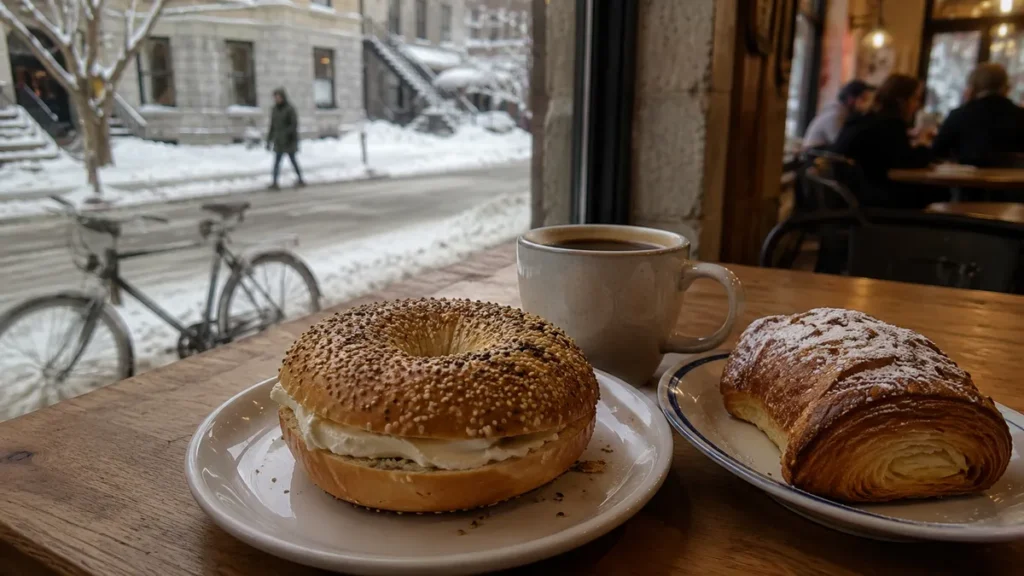
This can be an awkward stretch.
Winter has started to loosen its grip, but spring has not necessarily arrived properly.
Cold rain, snowmelt, slush, bare trees, and unstable weather can make the city less visually appealing.
Lower hotel prices help, but May gives you a much easier spring experience.
November
November also sits between two stronger seasons.
Most of the best fall color has gone, while the proper winter atmosphere may not have arrived yet.
Days become shorter and temperatures drop.
It can still work for a lower-cost city break, but October and December each offer a more distinct experience.
Small Mistakes That Made the Biggest Difference
The most useful lessons were not dramatic.
They were little things.
I looked at temperature instead of conditions.
Wind, humidity, rain, and evening temperatures mattered just as much as the number on the weather app.
I packed for midday.
Shoulder-season evenings were cooler than expected, so a light layer ended up being one of the most-used items.
I underestimated how much walking Montreal encourages.
Old Montreal, Plateau-Mont-Royal, Mile End, and the areas around Mount Royal all made comfortable footwear far more important than expected.
I checked major events too late.
Festival weekends can affect both crowds and hotel rates.
I planned too tightly.
This was probably the biggest one.
Montreal became much more enjoyable once every hour stopped having a job.
Some of the better moments came from things that never appeared on the itinerary: a bakery, an extra coffee, a quiet side street, or sitting in a park longer than planned.
The city rewarded leaving gaps.
Best Time to Visit Montreal for First-Time Visitors
For a first visit, June and September are the strongest choices.
June gives you more energy.
September gives you more comfort.
June works particularly well for terraces, parks, festivals, cycling, long daylight, and seeing the city in full summer mode.
September feels slightly calmer and is easier for travelers who expect to spend much of the trip walking.
October belongs to people chasing fall color.
January and February suit travelers who genuinely want winter.
May is the underrated shoulder-season option.
Which Month Should You Choose?
Here is the simplest version:
June — best overall.
September — best balance of weather and crowds.
October — best for fall foliage.
July and August — best for festivals and nightlife.
May — best underrated shoulder-season option.
January and February — best for snow and winter atmosphere.
That is more useful than saying every season is wonderful.
Montreal does work year-round.
It just does not feel the same year-round.
Final Thoughts on the Best Time to Visit Montreal
After comparing weather, crowds, festivals, prices, and the actual pace of the city, late May through June came out as the best time to visit Montreal overall.
June felt the easiest.
Days were long. Parks were green. Terraces were lively. Cycling made sense. Walking did not require much planning around the weather, and there was enough going on without every day needing to revolve around a major event.
September was almost as good and had a calmer edge.
October won for scenery.
Winter had far more personality than I expected, but it demanded better preparation.
The biggest lesson was that choosing a month does more than choose the weather.
It changes how much you walk, how long you stay outside, where people gather, what activities make sense, and even how the city feels after dinner.
For a first trip, June or September gives Montreal the best chance to show its easy side.
Choose October when fall colors are the priority.
And choose winter when snow is part of the reason you are going—not something you are simply hoping to tolerate.