



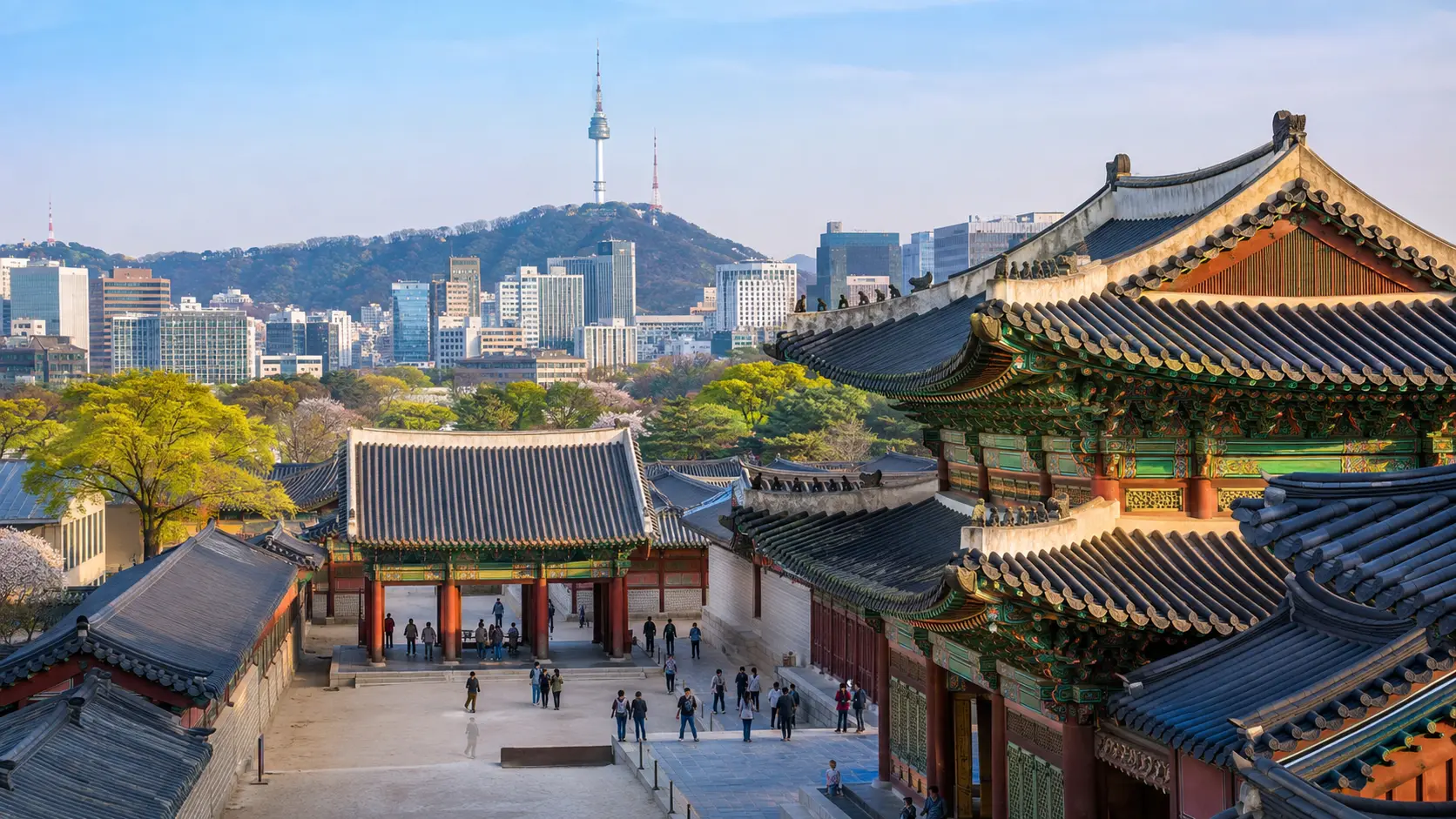
When I started researching Seoul, I found many guides filled with long lists of attractions. However, few explained how to plan each day without wasting hours on the subway.
I created this Seoul travel guide to make the planning process easier. It covers where to stay, how to travel from the airport, which apps to download, what to eat, and how to build a realistic itinerary.
I have grouped nearby attractions. This gives you more time to enjoy Seoul and less time rushing across the city.
Seoul Travel Guide at a Glance
Five days is a good amount of time for a first trip to Seoul. It gives you enough time to explore royal palaces, traditional neighborhoods, food markets, shopping areas, and modern districts.
| Travel question | Quick answer |
|---|---|
| Ideal trip length | 5 days |
| Best time to visit | April to May or September to October |
| Main airport | Incheon International Airport |
| Best way to get around | Subway and city buses |
| Best transport card | T-money |
| Best areas for first-time visitors | Myeongdong, Jongno, or Insadong |
| Best area for nightlife | Hongdae |
| Best area for modern Seoul | Gangnam |
| Best navigation app | Naver Map |
| Best translation app | Papago |
| Suggested mid-range budget | ₩180,000–₩320,000 per day |
Is Seoul Worth Visiting?
Yes, Seoul is worth visiting for its mix of history, food, shopping, and modern culture. You can explore a Joseon Dynasty palace in the morning and visit a K-pop, fashion, or beauty district at night.
Seoul is also easy to explore without a car. Its public transport system connects the airport, central neighborhoods, museums, markets, and major attractions.
The main challenge is the city’s size. A poor itinerary can leave you spending too much time on trains. The best approach is to explore one part of Seoul each day.
How Many Days Do You Need in Seoul?
Five days is ideal for most first-time visitors. It gives you enough time to see the main attractions without making every day feel rushed.
Three days is enough for a short visit. Focus on Gyeongbokgung Palace, Bukchon Hanok Village, Myeongdong, N Seoul Tower, Gwangjang Market, and Hongdae.
Seven days is better for slow travel. You can add museums, Seongsu-dong, Seoul Forest, Jamsil, beauty treatments, or a day trip to the DMZ.
| Trip length | Best for |
| 3 days | Seoul’s main highlights |
| 5 days | A balanced first visit |
| 7 days | Slow travel and day trips |
Best Time to Visit Seoul
Spring and autumn are the best seasons for most travelers. The weather is usually mild, which makes walking and outdoor sightseeing more comfortable.
| Season | What to expect |
| Spring | Mild weather, flowers, and larger crowds |
| Summer | Heat, humidity, and periods of heavy rain |
| Autumn | Cooler weather and colorful fall leaves |
| Winter | Cold, dry weather and fewer visitors |
April and May are popular months for spring travel. Cherry blossoms may appear during this period, but the exact dates change each year.
September and October are good for autumn travel. The weather is often cooler, and outdoor attractions are more comfortable.
Summer requires an indoor backup plan. Museums, shopping malls, cafés, covered markets, and COEX are useful during hot or rainy afternoons.
Winter requires warm clothing and flexible routes. Snow and ice can make the hills around Bukchon and Namsan more difficult to walk.
What to Prepare Before Visiting Seoul
Check the latest entry rules before booking your flight. Visa and travel authorization requirements can change. Use an official South Korean government or embassy website for the latest information.
Buy an eSIM or SIM card for your trip. Mobile data is useful for Naver Map, Papago, taxi apps, and restaurant searches.
Bring a suitable plug adapter. South Korea uses 220-volt electricity and Type C or Type F plugs.
Keep your first day simple. Jet lag can be strong for travelers arriving from the United States.
A relaxed first day may include:
- Checking into your hotel
- Buying a T-money card
- Eating near your accommodation
- Taking a short walk
- Sleeping early
Getting From Incheon Airport to Seoul
AREX is usually the easiest airport transfer for first-time visitors. The railway connects Incheon International Airport with Seoul Station and other useful stops.
Airport Transport Options
| Option | Best for | Main drawback |
| AREX Express | Fast travel to Seoul Station | You may need another train or taxi |
| AREX All-Stop Train | Hongdae and budget travel | Slower than the Express Train |
| Airport limousine bus | Hotels near a bus stop | Traffic can cause delays |
| Taxi | Families, groups, and large luggage | More expensive |
| Late-night bus | Arrivals after the trains stop | Limited routes and schedules |
Choose the AREX All-Stop Train when staying in Hongdae. It connects the airport with Hongik University Station.
Choose the AREX Express when staying near Seoul Station. It is faster and makes fewer stops.
Choose a limousine bus when it stops close to your hotel. This option can be easier when you have large suitcases.
Choose a taxi after a late-night arrival. It is also useful for families, older travelers, and groups sharing the cost.
What to Do After an Early Arrival
Store your luggage if your room is not ready. Many hotels allow guests to leave their bags before check-in.
Avoid booking a major activity after an overnight flight. A palace, long tour, or expensive experience may feel tiring after immigration and airport travel.
Book the previous hotel night only when immediate rest is important. Tell the hotel about your arrival time so it does not mark your booking as a no-show.
What to Do After a Late-Night Arrival
Use an official airport taxi or late-night bus after the trains stop. Check the latest operating times before your flight.
Save your hotel address in Korean. A screenshot can help a taxi driver find the correct building or entrance.
Avoid unofficial drivers inside the terminal. Use the marked taxi stand, airport bus desk, or railway station.
Essential Apps for Seoul
Naver Map is the most useful app for getting around Seoul. It offers detailed subway, bus, and walking directions.
| App | Main use |
| Naver Map | Navigation and public transport |
| Papago | Translation |
| KakaoMap | Alternative local navigation |
| k.ride or Uber | Taxi booking |
| KorailTalk | Intercity train information |
| KakaoTalk | Messages and communication |
Papago is useful for signs, menus, and short conversations. Save important translations before leaving your hotel.
Google Maps should not be your only navigation app. It helps save locations, but local route information is often more detailed in Naver Map.
Save important places before your trip. Add your hotel, airport terminal, main attractions, and restaurants to a map list.
Cash, Cards, and T-Money
Carry both a bank card and some Korean won. Cards are widely accepted, but cash is still useful at markets, small shops, and transport-card machines.
T-money is the easiest transport card for most visitors. It can be used on subways, buses, and many taxis.
Buy a T-money card at a convenience store or subway station. CU, GS25, and 7-Eleven commonly sell the card.
Keep cash available for reloading your card. Some top-up machines may not accept foreign bank cards.
Consider the Climate Card only when you expect many daily journeys. T-money is simpler when your plans include areas outside the pass coverage.
How to Use the Seoul Subway
The subway is usually the fastest way to travel across Seoul. It is clean, frequent, and more predictable than road transport during busy hours.
Check the exit number before leaving a station. Large stations may have many exits, and choosing the wrong one can add a long walk.
Allow extra time for transfers. Some station connections include long corridors, stairs, and crowded platforms.
Tap your card when entering and leaving the subway. On buses, tap again before getting off.
Avoid rush hour when carrying luggage. Morning and evening trains can become very crowded.
Where to Stay in Seoul
Myeongdong, Jongno, and Insadong are the best areas for many first-time visitors. They are close to major attractions and have useful transport links.
| Area | Best for | Main drawback |
| Myeongdong | Shopping and convenience | Busy and touristy |
| Jongno | Palaces and history | Quieter at night |
| Insadong | Traditional culture | Limited nightlife |
| Hongdae | Nightlife and airport access | Farther from eastern Seoul |
| Gangnam | Shopping, beauty, and modern Seoul | Far from the palaces |
| Itaewon | International food | Some streets are steep |
| Jamsil | Families and Lotte World | Far from historic areas |
| Seongsu | Cafés, fashion, and pop-ups | Less convenient as a first base |
Myeongdong
Choose Myeongdong when convenience is your main goal. The area has hotels, Korean skincare stores, fashion shops, street food, and central transport links.
Myeongdong works well for short trips. Namsan Park, N Seoul Tower, and Namdaemun Market are nearby.
Jongno and Insadong
Choose Jongno or Insadong when history is your main interest. Gyeongbokgung Palace, Changdeokgung Palace, Bukchon Hanok Village, and Ikseon-dong are close.
These areas reduce daily travel time. Several major attractions can be reached on foot.
Hongdae
Choose Hongdae for nightlife, cafés, music, and easy airport access. The area stays active later than the palace districts.
Hongdae is less convenient for Jamsil and eastern Seoul. Check journey times before booking your hotel.
Gangnam

Choose Gangnam for K-beauty, restaurants, shopping, and modern city life. COEX, Starfield Library, and Bongeunsa Temple are nearby.
Gangnam is not ideal for a palace-focused trip. You may spend more time crossing the Han River.
How to Choose a Hotel
Choose your hotel by transport access, not only by neighborhood name. A hotel close to two subway lines can save time every day.
Look for:
- Less than a ten-minute walk to a subway station
- An elevator near the correct station exit
- A simple route from the airport
- Restaurants near the hotel
- A convenience store nearby
- Good reviews about cleanliness and noise
A Practical Five-Day Seoul Itinerary
This itinerary groups nearby attractions together. It reduces long subway rides and leaves time for meals, shopping, and rest.
Day 1: Gyeongbokgung, Bukchon, and Insadong
Start your trip in Seoul’s historic center. These attractions are close enough to visit in one day.
Morning: Gyeongbokgung Palace
Visit Gyeongbokgung Palace early. It is Seoul’s best-known royal palace and an important site from the Joseon Dynasty.
Allow two to three hours for the palace area. The grounds are large, and museums are located nearby.
Check the opening hours and weekly closing day before visiting. Schedules may change during public holidays and special events.
Afternoon: Bukchon Hanok Village
Visit Bukchon for traditional hanok houses and old streets. The neighborhood is located between major royal palaces.
Respect the people who live there. Keep your voice low and do not block homes, doors, or private lanes.
Skip the steepest streets if walking is difficult. Insadong is a better option for a lower-walking cultural visit.
Evening: Insadong and Ikseon-dong
Visit Insadong for tea houses, crafts, and traditional souvenirs. Then walk to Ikseon-dong for cafés and dinner.
Expect crowds during evenings and weekends. Small restaurants may have long waiting times.
Day 2: Myeongdong, Namsan, and N Seoul Tower

Use the second day for shopping and city views. These places are close enough to combine without long travel.
Morning: Myeongdong
Visit Myeongdong for Korean skincare, cosmetics, fashion, and street food. Compare prices before buying large amounts.
Keep receipts for major purchases. Some stores offer tax-refund services to eligible visitors.
Afternoon: Namsan Park
Walk through Namsan Park when the weather is comfortable. Use the cable car or a bus if you want to reduce climbing.
Evening: N Seoul Tower
Visit N Seoul Tower near sunset for city views. Check the weather before paying for the observation deck.
Skip the observation deck during fog or heavy rain. Poor visibility may not justify the ticket price.
Day 3: Gwangjang Market, Dongdaemun, and Hongdae
Use the third day for food, design, and nightlife.
Morning: Gwangjang Market
Visit Gwangjang Market when you are ready to try several Korean foods. Popular choices include bindaetteok, mandu, gimbap, and yukhoe.
Order small portions when possible. This lets you taste more dishes without wasting food.
Ask about ingredients if you have dietary restrictions. Meat, seafood, or broth may not be easy to see.
Afternoon: Dongdaemun Design Plaza
Visit Dongdaemun Design Plaza for architecture, exhibitions, and photography. Check the exhibition schedule before going.
Evening: Hongdae

Spend the evening in Hongdae for food, cafés, street performances, and nightlife. Stay near the main streets during your first visit.
Day 4: Bongeunsa, COEX, and Gangnam
Use the fourth day to explore modern Seoul.
Morning: Bongeunsa Temple
Start at Bongeunsa Temple for a quieter side of Gangnam. The temple sits close to modern towers and shopping centers.
Dress and behave respectfully. It is an active religious site.
Afternoon: COEX and Starfield Library

Visit Starfield Library as part of a wider COEX trip. Combine it with shopping, food, or Bongeunsa Temple.
Do not cross the city only for a quick library photo. The stop is better as part of a full Gangnam route.
Evening: Gangnam
Spend the evening near Gangnam Station. The area has restaurants, shops, nightlife, beauty clinics, and hair services.
Research beauty treatments carefully before booking. Check professional qualifications, risks, recovery time, aftercare, and the full price.
Day 5: Choose Jamsil, Seongsu, or the Han River
Choose your final day based on your interests and energy level.
Option 1: Jamsil
Choose Jamsil for Lotte World, Seoul Sky, and Seokchon Lake. It is a strong choice for families and theme-park fans.
Option 2: Seongsu-dong
Choose Seongsu for cafés, Korean fashion, and pop-up stores. Add Seoul Forest for a quiet outdoor break.
Option 3: Han River

Choose the Han River for a slower final day. Walk, cycle, or enjoy a simple picnic when the weather is pleasant.
Three-Day Seoul Itinerary
A three-day trip should focus only on the main highlights.
Day 1: Gyeongbokgung Palace → Bukchon Hanok Village → Insadong → Ikseon-dong
Day 2: Myeongdong → Namsan Park → N Seoul Tower
Day 3: Gwangjang Market → Dongdaemun Design Plaza → Hongdae
Replace Day 3 with Gangnam if modern Seoul interests you more.
Seven-Day Seoul Itinerary
A seven-day trip gives you time to travel more slowly.
Follow the five-day itinerary, then add:
- A DMZ tour
- The National Museum of Korea
- Seoul Forest and Seongsu
- A K-beauty experience
- A rest or shopping day
Keep your final day flexible. Avoid a distant day trip just before an international flight.
Which Seoul Attractions Are Worth Visiting?
The best attractions depend on your interests, available time, and energy level.
| Attraction | Visit when… | Consider skipping when… |
| Gyeongbokgung Palace | You enjoy history and architecture | Large outdoor sites tire you |
| Bukchon Hanok Village | You enjoy traditional streets | Steep hills are difficult |
| N Seoul Tower | The sky is clear | Visibility is poor |
| Starfield Library | You are already visiting COEX | You would cross the city only for it |
| Gwangjang Market | You enjoy busy food markets | You need a calm dining experience |
| Hongdae | You enjoy nightlife and youth culture | You prefer quiet evenings |
| Gangnam | You enjoy shopping and modern Seoul | Your trip mainly focuses on history |
| Lotte World | You enjoy theme parks | You have only a short visit |
What to Eat in Seoul
Korean barbecue, kimchi, tteokbokki, mandu, and Korean fried chicken are good starting points.
| Food | What it is |
| Kimchi | Fermented vegetables |
| Korean barbecue | Meat grilled at the table |
| Tteokbokki | Rice cakes in a spicy sauce |
| Mandu | Korean dumplings |
| Bindaetteok | Mung-bean pancake |
| Hotteok | Sweet-filled pancake |
| Korean fried chicken | Crispy chicken served with sauces |
| Bingsu | Shaved-ice dessert |
| Gimbap | Rice and fillings wrapped in seaweed |
Do not assume every vegetable dish is vegetarian. Broth, fish sauce, meat, or seafood may be included.
Temple food can be a useful option for plant-focused meals. Still confirm the ingredients if you follow a strict vegetarian or vegan diet.
Use trusted Muslim-friendly restaurant information when halal food is important. Preparation methods and kitchen standards may differ between restaurants.
Carry a translated allergy card for serious food allergies. List the exact ingredients you must avoid.
Solo Dining in Seoul
Solo dining is easy at cafés, markets, noodle shops, food courts, and casual restaurants.
Korean barbecue can be more difficult for one person. Some restaurants require customers to order at least two portions.
Visit outside busy meal times for easier seating. Counter seats and individual meal sets are good choices.
How Much Does a Seoul Trip Cost?
A mid-range traveler may spend about ₩180,000–₩320,000 per day. This estimate does not include international flights or major shopping.
| Travel style | Estimated daily cost |
| Budget | ₩90,000–₩150,000 |
| Mid-range | ₩180,000–₩320,000 |
| Premium | ₩450,000 or more |
Common Daily Costs
| Expense | Typical range |
| Hostel or basic room | ₩40,000–₩100,000 |
| Mid-range hotel | ₩130,000–₩250,000 |
| Simple breakfast | ₩5,000–₩12,000 |
| Casual lunch | ₩10,000–₩20,000 |
| Restaurant dinner | ₩15,000–₩40,000 |
| Coffee | ₩4,000–₩8,000 |
| Public transport | ₩5,000–₩12,000 |
Treat these figures as planning estimates. Hotel rates, exchange rates, attraction fees, and transport costs can change.
Rainy-Day Seoul Plan

Use indoor attractions when heavy rain changes your plans.
A simple rainy-day route is:
COEX → Starfield Library → lunch → shopping → Gangnam dinner
Another option is:
National Museum of Korea → Myeongdong shopping → café → dinner
Move observation decks to a clearer day.
Hot-Weather Seoul Plan
Visit outdoor attractions early in the morning.
A useful route is:
Gyeongbokgung at opening time → lunch → museum or mall → hotel rest → evening market
Carry water and take regular indoor breaks.
Seoul With Children
Jamsil is one of the easiest areas for families. Lotte World, Lotte World Mall, Seoul Sky, and Seokchon Lake are close together.
Plan one major attraction at a time. Add cafés, parks, aquariums, or indoor breaks between longer activities.
Seoul With Older Travelers
Choose a central hotel near an elevator-equipped station.
Limit each day to one or two main areas. Long station transfers, steep streets, and large palace grounds can cause fatigue.
Use taxis for short and difficult sections. They can save energy without replacing your full public transport plan.
A Low-Walking Seoul Plan

Choose Insadong instead of the steepest parts of Bukchon.
A simple low-walking route is:
Gyeongbokgung Palace → taxi to Insadong → lunch → café → taxi to Myeongdong
Check elevator locations before using the subway. The closest elevator may not be at the nearest station exit.
Common Seoul Travel Mistakes
Planning Distant Areas Together
Do not place Gyeongbokgung, Gangnam, Hongdae, and Jamsil on the same day.
Using Only Google Maps
Install Naver Map before your flight.
Ignoring Subway Exit Numbers
Check the correct exit before leaving the station.
Carrying No Cash
Keep some Korean won for markets, small shops, and transport machines.
Overloading the First Day
Leave room for jet lag, immigration delays, and a late hotel check-in.
Booking a Hotel Far From a Station
Check the real walking route before paying for your room.
Visiting Observation Decks in Poor Weather
Check visibility before buying a ticket.
Treating Bukchon Like a Theme Park
Remember that local people live there.
Useful Korean Phrases
| English | Korean pronunciation |
| Hello | Annyeonghaseyo |
| Thank you | Gamsahamnida |
| Please | Juseyo |
| How much is it? | Eolmayeyo? |
| Where is the subway? | Jihacheol eodiyeyo? |
| Please take me here | Yeogiro gajuseyo |
| Not spicy, please | An maepge haejuseyo |
| I have an allergy | Allergy-ga isseoyo |
Showing written Korean is often easier than speaking from memory. Save important phrases in Papago before leaving your hotel.
Seoul Travel Guide FAQs
Is Seoul Safe for Tourists?
Seoul is generally considered safe for visitors. Use normal precautions in crowded areas, markets, and nightlife districts.
Can I Use Credit Cards in Seoul?
Cards are accepted in many hotels, restaurants, stores, and cafés. Carry some cash because foreign cards may occasionally fail.
Do I Need a T-Money Card?
A T-money card is strongly recommended. It makes subway and bus travel much easier.
Is English Widely Spoken?
English support is common at airports, major hotels, and popular attractions. Papago is useful in smaller restaurants, markets, and local shops.
Is Five Days Enough for Seoul?
Five days is enough for the main traditional and modern areas. Add more time for museums, day trips, shopping, or a slower pace.
What Is the Best Area for a First Visit?
Myeongdong is best for convenience. Jongno and Insadong are better for history and traditional culture.
Is Seoul Expensive?
Seoul can suit several budgets. Public transport and casual meals can be affordable, while hotels, shopping, cafés, and beauty treatments can increase the total cost.
Can I Visit Seoul Without Speaking Korean?
Yes, you can visit Seoul without speaking Korean. Local map apps, translation tools, tourist information centers, and English transport signs make travel easier.
Final Thoughts
After comparing Seoul’s neighborhoods, transport routes, attractions, and common planning problems, I believe five days is the best starting point for a first visit.
I would begin with Gyeongbokgung Palace, Bukchon Hanok Village, and Insadong. I would then add Myeongdong, Namsan, Gwangjang Market, Hongdae, Gangnam, and one flexible final day.
The most useful lesson from my research is simple: explore one part of Seoul at a time. This gives you more time for Korean food, local cafés, traditional hanok streets, markets, and unexpected discoveries.
I would also keep the itinerary flexible. Weather, jet lag, queues, and temporary closures can change your plans.
Before traveling, check entry rules, transport schedules, attraction opening hours, and ticket prices through official South Korean tourism and attraction websites. Good preparation will make your first Seoul trip easier, calmer, and more enjoyable.