



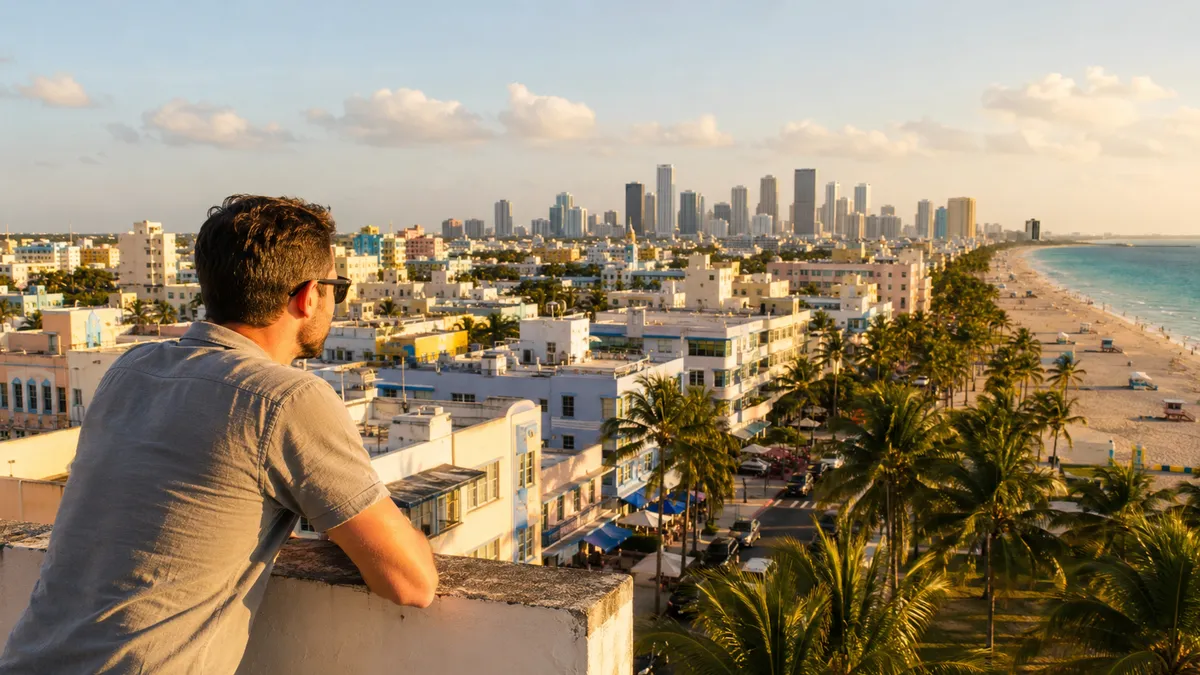
Miami looked exactly like the postcards on my first morning—bright blue water, white sand, tall palms, and pastel buildings glowing in the Florida sun.
But that picture changed quickly once I left South Beach.
Across Biscayne Bay, Miami felt like a completely different city. Little Havana smelled of strong Cuban coffee and warm pastries. Domino pieces hit the tables inside Máximo Gómez Park. Huge murals covered old warehouses in Wynwood. Downtown was all glass towers and waterfront views. Then, less than an hour away, the city disappeared into the wetlands of the Everglades.
That contrast became my favorite thing about Miami.
I also learned something important very quickly: Miami is much more spread out than it looks on a map. Trying to visit South Beach, Little Havana, Wynwood, Key Biscayne, and Downtown in random order wastes a lot of time.
The best way to explore Miami is to group nearby places together.
After spending time around the city, my top experiences for a first trip were South Beach, Little Havana, Wynwood, Biscayne Bay, and at least one nature escape.
July 2025 fits this Miami article best. The article repeatedly describes strong heat, humidity, swimming, intense midday sun, afternoon rain, long beach days, and planning outdoor activities for mornings, which strongly supports a summer visit.
This guide covers the 31 best things to do in Miami, including what each place felt like, how much time it deserved, what surprised me, and which attractions were easiest to combine.
Best Things to Do in Miami at a Glance
The best Miami trip mixes beaches, Cuban culture, art, food, waterfront views, and nature.
| Place | Best For | Time Needed | Cost Level | Area |
|---|---|---|---|---|
| South Beach | First-time visitors | 2–4 hours | Free | Miami Beach |
| Ocean Drive | Architecture | 1–2 hours | Free | South Beach |
| Art Deco Historic District | History | 1–2 hours | Free–$ | South Beach |
| South Pointe Park | Sunset | 1–2 hours | Free | Miami Beach |
| Little Havana | Food and culture | 2–4 hours | $–$$ | Miami |
| Wynwood | Street art | 2–3 hours | Free–$$ | Miami |
| Vizcaya | Architecture and gardens | 2–3 hours | $$ | Miami |
| Biscayne Bay Cruise | Skyline views | 1–2 hours | $$ | Downtown |
| Frost Science | Families | 3–4 hours | $$ | Downtown |
| Key Biscayne | Beach and nature | Half day | Free–$ | Key Biscayne |
| Everglades | Wildlife | Half day/full day | $$ | Outside Miami |
Miami and Miami Beach Are Not the Same Place
Miami Beach and Miami are separate cities, and understanding that made my trip much easier to plan.
Miami Beach sits on a barrier island across Biscayne Bay. South Beach, Ocean Drive, Lummus Park, Lincoln Road, and the Art Deco Historic District are all here.
Mainland Miami includes Downtown, Brickell, Wynwood, Little Havana, Coconut Grove, and several other neighborhoods.
I stopped treating everything as one large sightseeing area after the first day.
That simple change saved a lot of time.
1. Start Early at South Beach
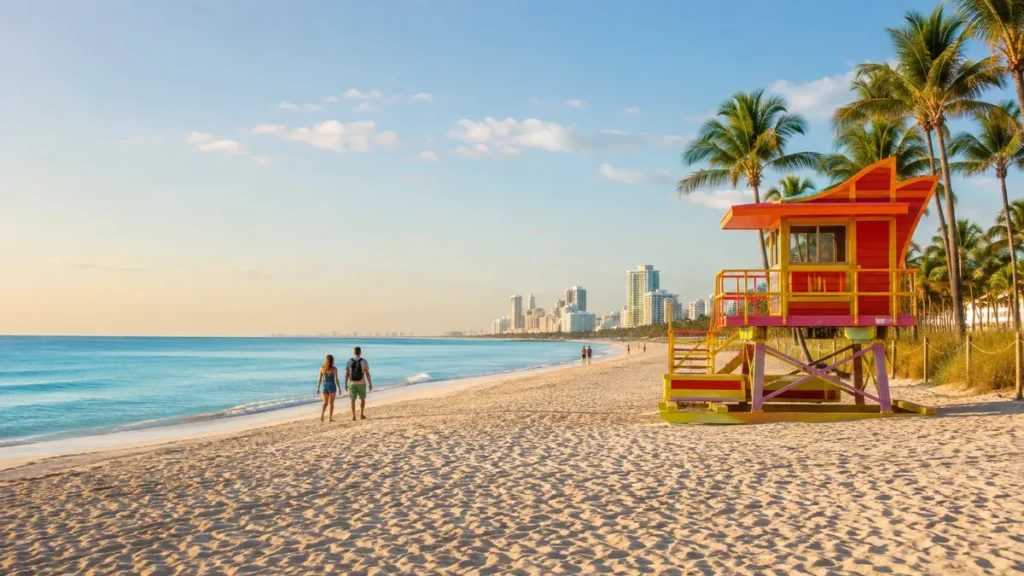
South Beach was the place that made Miami finally feel real to me.
I arrived early enough that the beach was still fairly quiet. The sand stretched out almost empty in places, while joggers moved along the edge of the water.
The famous lifeguard towers stood out immediately.
Some were bright red. Others had yellow, blue, or pink details. With the Atlantic Ocean behind them, they looked exactly like the Miami images I had seen for years.
By late morning, the mood changed.
More umbrellas appeared. Music became louder. The sand filled up, and the Florida sun became much stronger.
That made me glad I had started early.
One thing I liked about South Beach was how easy it was to continue sightseeing without getting into a car. I walked from the beach through Lummus Park and reached Ocean Drive within minutes.
Time I spent: About 3 hours
Best time: Early morning
Cost: Free
My Take
South Beach deserves the attention it gets, but it did not need my whole day.
A morning here was enough to swim, walk along the sand, see the lifeguard towers, and move into the Art Deco area.
2. Walk Ocean Drive Instead of Driving It
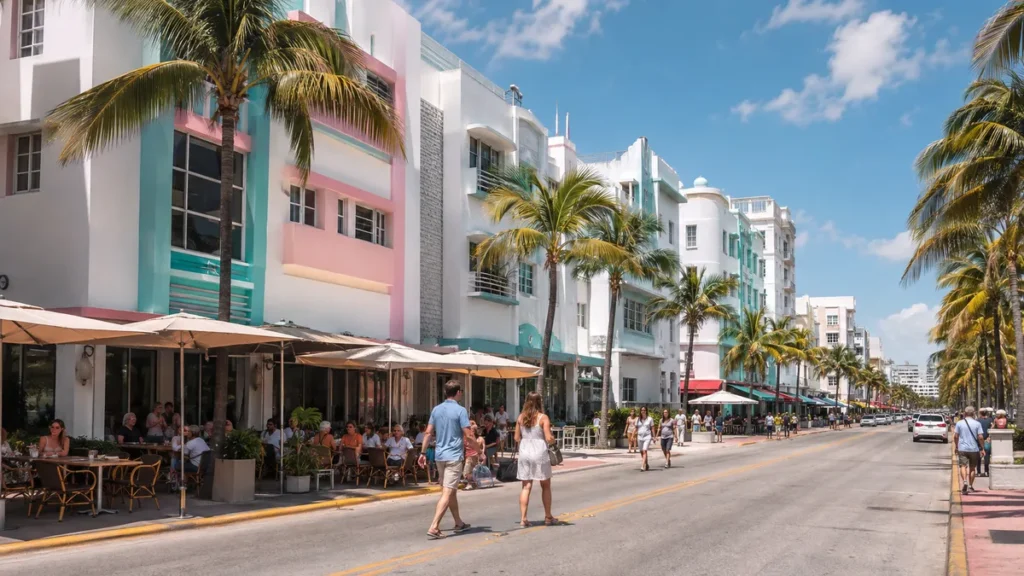
Ocean Drive was much more interesting on foot than it looked from the road.
At first, my eyes went straight to the restaurants, cars, music, and people.
Then I started looking up.
That was where the street became interesting.
The buildings were covered in pale pinks, mint greens, creams, blues, and yellows. Rounded corners and long horizontal lines appeared again and again. Neon signs gave some hotels a style that felt frozen in another decade.
The Colony Hotel was one of the easiest buildings to recognize.
I also stopped outside Villa Casa Casuarina, the former Versace Mansion.
Ocean Drive became louder as the day went on.
I preferred seeing it in daylight because the Art Deco details were much easier to notice. At night, the neon lights looked better, but the whole street felt more focused on nightlife.
Time I spent: About 1½ hours
Cost: Free
My Take
Do not rush this street.
Walk slowly and look above the restaurant signs.
The upper parts of the buildings were much more interesting than I expected.
3. Explore the Art Deco Historic District
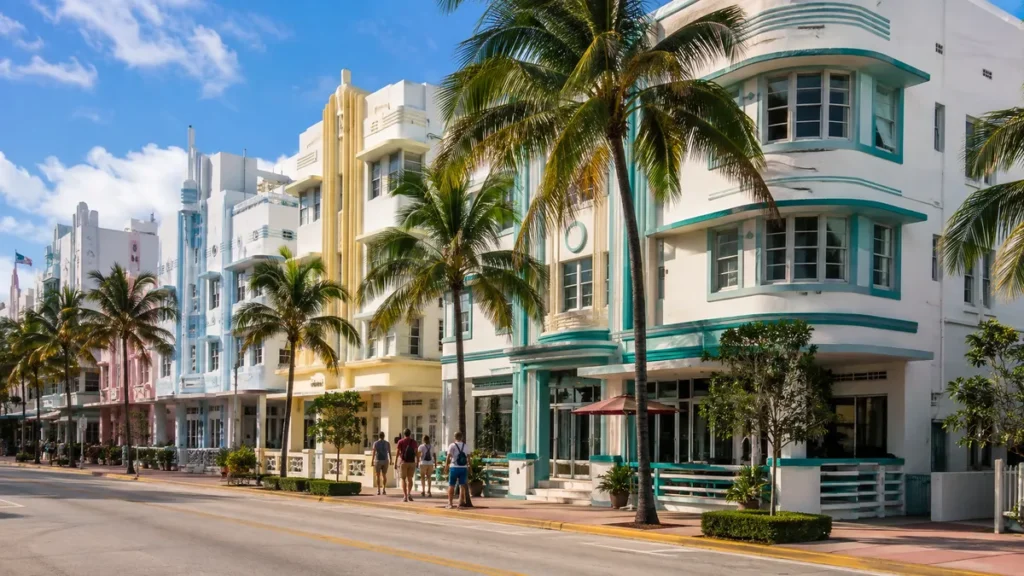
The Art Deco Historic District became more interesting once I knew what details to look for.
At first, I just saw colorful old buildings.
After a few blocks, patterns started appearing.
Rounded corners. Glass blocks. Pastel walls. Geometric lines. Small neon signs.
The same design ideas appeared across hotels and apartment buildings around South Beach.
I explored most of the district while walking around Ocean Drive and the nearby streets.
That was another useful lesson: Ocean Drive and the Art Deco Historic District should not be treated as two completely separate trips.
They blend into each other.
Anyone who wants more history can also join an Art Deco walking tour or stop at the Art Deco Museum and Visitor Center.
Time needed: 1–2 hours
My Take
Learning a little about Art Deco before walking around made the area much more enjoyable.
Without that context, it is easy to see only colorful buildings and move on.
4. Walk or Bike the Miami Beach Boardwalk
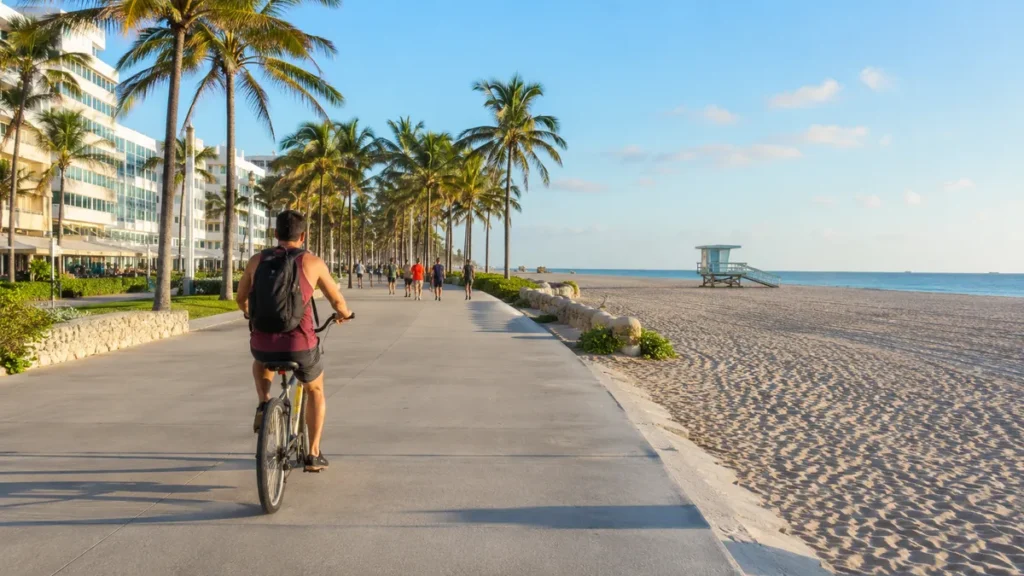
The Miami Beach Boardwalk showed me how much more there is to Miami Beach beyond South Beach.
The farther I moved from the busiest area, the calmer the beachfront became.
Hotels lined one side.
The Atlantic stayed beside me on the other.
Runners, cyclists, walkers, and hotel guests shared the route.
I started on foot, but it quickly became obvious why so many people rent bikes.
Miami Beach is long.
Cycling lets you cover much more of it without sitting in traffic.
The biggest issue was the heat.
By midday, the sun felt much stronger than it had earlier near the water.
Best time: Morning or late afternoon
Time needed: 1–3 hours
My Tip
Carry water even if the ocean breeze makes the temperature feel comfortable at first.
The humidity catches up with you.
5. Take a Break at Lummus Park
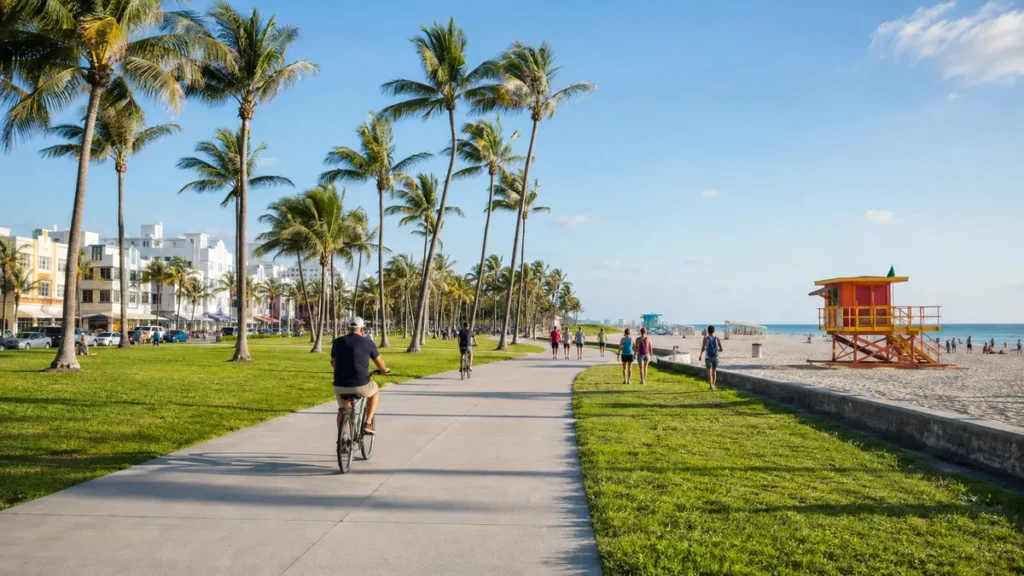
Lummus Park was the easiest place to stop when I needed a break from the sun and crowds.
The park sits between Ocean Drive and the beach.
Palm trees break up the grassy areas. Volleyball courts sit close to the sand. Cyclists and skaters move along the paths.
It is also one of the easiest places to see Miami Beach’s colorful lifeguard towers.
I did not treat Lummus Park as a major attraction.
It worked better as part of my South Beach walk.
I stopped for a while, watched people passing through, and then continued toward Ocean Drive.
Time needed: 30–60 minutes
Cost: Free
My Take
Lummus Park is more of a place to pause than a destination.
But after walking under the Miami sun, that pause feels very welcome.
6. Watch the Sunset at South Pointe Park
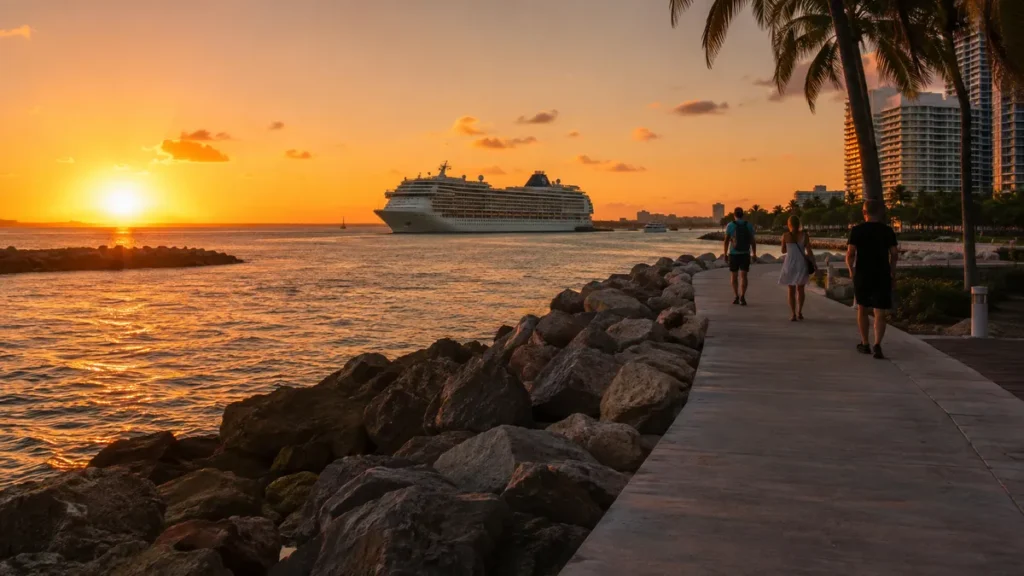
South Pointe Park became my favorite free place to end a day in Miami Beach.
The atmosphere felt calmer almost as soon as I reached the southern end of the island.
There was more open space and less noise.
I walked toward South Pointe Pier and watched boats moving through Government Cut.
Then a large cruise ship passed nearby.
I had seen plenty of cruise ships in photos before, but seeing one this close was different. It looked huge beside the smaller boats around it.
The best part came later.
As the sun dropped, the harsh afternoon light softened. The temperature became more comfortable, and the distant skyline started to light up.
Time I spent: About 1½ hours
Cost: Free
Best time: Around one hour before sunset
My Take
If I had to choose between another hour sitting on South Beach and watching the sunset at South Pointe Park, South Pointe won easily.
7. Walk Lincoln Road in the Late Afternoon
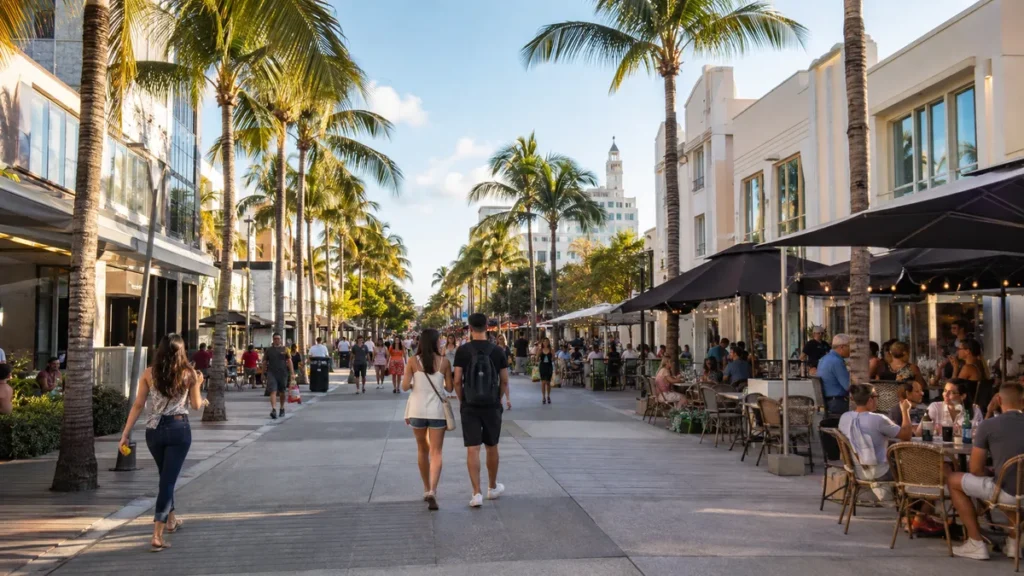
Lincoln Road was a good place to slow down after several hours around the beach.
The pedestrian street is lined with shops, cafés, restaurants, and outdoor seating.
It felt calmer than Ocean Drive.
I did not come here looking for a major landmark.
That was actually the point.
After walking in the heat, it was nice to sit down, get something cold to drink, and browse a few shops without feeling rushed.
The area became more pleasant later in the afternoon as the temperature dropped.
Time needed: 1–2 hours
My Take
Lincoln Road is useful rather than essential.
It works best when you are already exploring South Beach and need food, shopping, or a break.
8. See Española Way After Dark
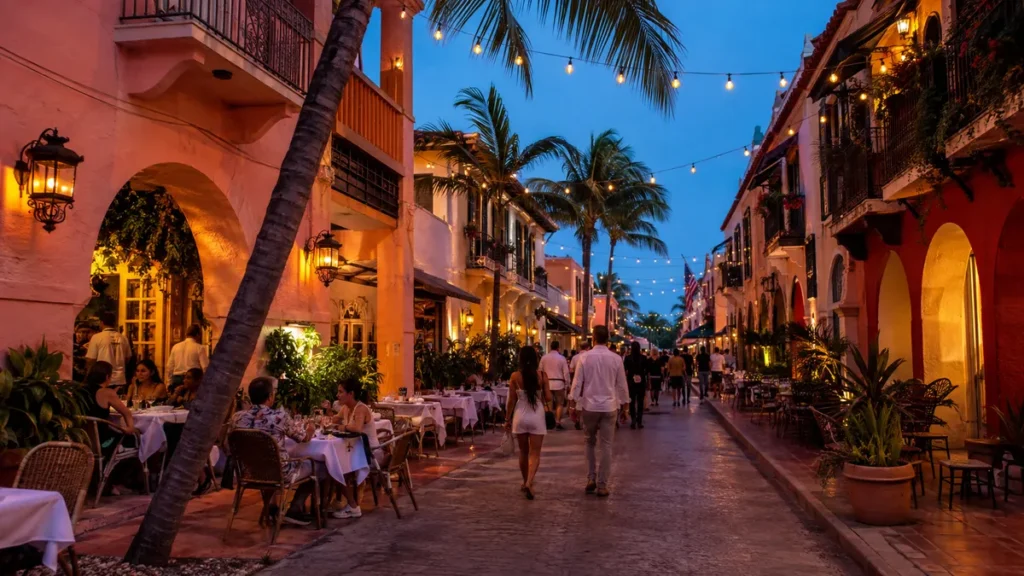
Española Way looked much better once the lights came on.
The street is short, so the atmosphere hits quickly.
Colorful buildings sit above restaurant tables. Balconies, palms, and warm lights make the area feel more intimate than Ocean Drive.
I walked through before dinner, and the street was already filling up.
Music mixed with restaurant noise, and almost every outdoor table seemed busy.
It did not take long to explore.
That was part of the appeal.
Time needed: 30–90 minutes
Best time: Evening
My Take
Española Way is not worth crossing the city for by itself.
But if you are already around South Beach, it is an easy evening stop.
9. Spend More Time in Little Havana Than You Planned
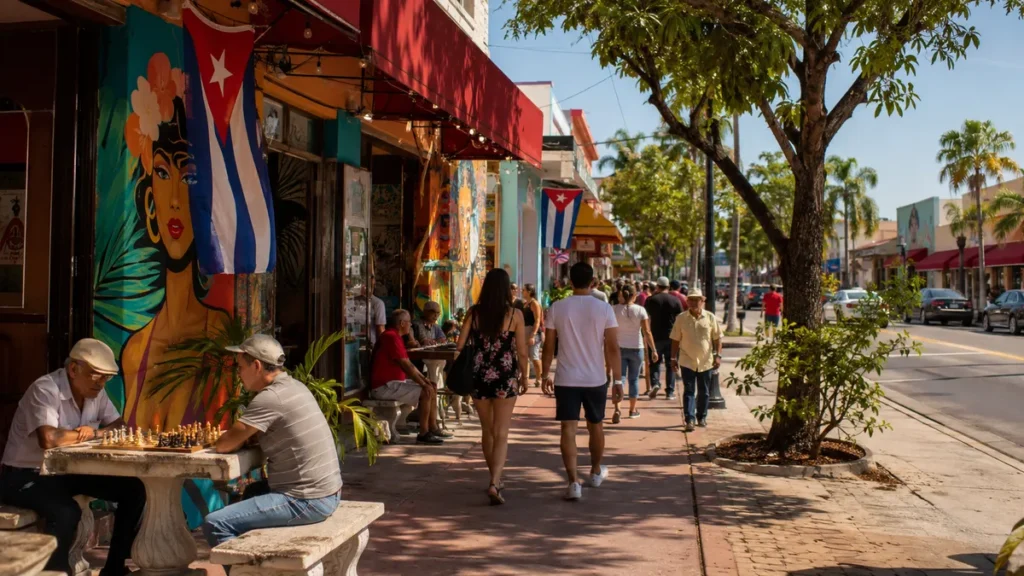
Little Havana was the place that changed my picture of Miami the most.
Calle Ocho felt completely different from South Beach.
Spanish conversations were everywhere.
Cuban flags hung outside businesses.
Murals covered walls.
The smell of coffee and warm pastries came through open doors.
I passed cigar shops, bakeries, restaurants, cafés, and small businesses that made the area feel like a real neighborhood rather than a collection of tourist attractions.
At first, I thought a short walk would be enough.
It was not.
The longer I stayed, the more interesting Little Havana became.
Time I spent: About 3 hours
Best for: Cuban culture, food, and history
My Take
Do not come only for a photo with a Calle Ocho sign.
Drink coffee. Eat something. Watch the domino games. Step into a few small shops.
Little Havana needs time.
10. Watch the Domino Games at Máximo Gómez Park
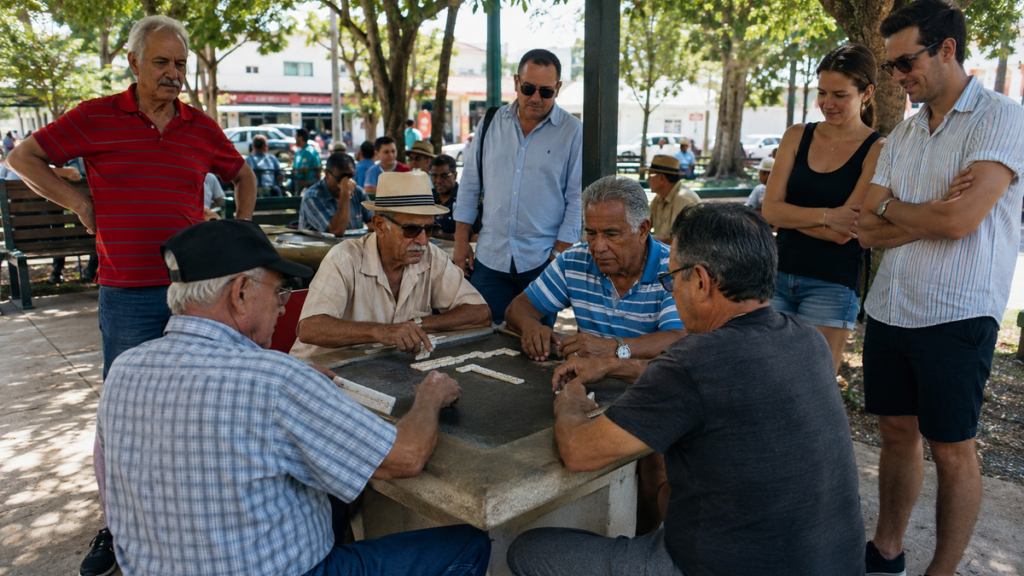
Domino Park was tiny, but it had more personality than several much larger attractions.
Its official name is Máximo Gómez Park.
Most people simply call it Domino Park.
Players sat around small tables talking while games moved quickly in front of them.
The sound stood out.
Domino pieces hit the tabletops with sharp clicks that could be heard from the sidewalk.
I stayed near the edge and watched for a while.
There was not much to “do” in the usual tourist sense.
That was why I liked it.
Time needed: 15–30 minutes
Cost: Free
My Take
This was not about checking off an attraction.
It was about seeing a small part of everyday life in Little Havana.
11. Drink a Cafecito From a Ventanita
My Cuban cafecito was tiny, sweet, and much stronger than I expected.
I ordered it from a ventanita, one of the walk-up coffee windows found around Little Havana.
The cup looked almost too small.
Then I tasted it.
The coffee was rich, strong, and sweet enough that I understood why nobody needed a giant mug.
I added a guava-and-cheese pastelito.
The pastry was flaky, the guava was sweet, and the cheese balanced it perfectly.
The whole stop lasted less than 20 minutes.
It still became one of the small moments I remembered most clearly.
My Take
Miami’s food experiences do not need to be expensive or complicated.
Sometimes a tiny coffee at a window tells you more about the city than another big attraction.
12. Eat a Cuban Sandwich in Little Havana
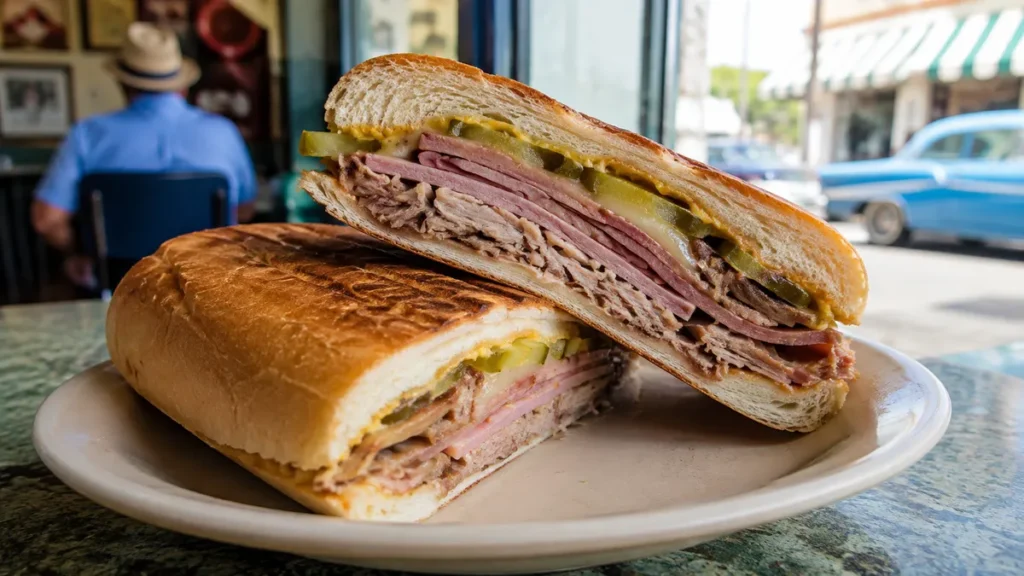
A warm Cubano was one of the meals that felt most connected to Miami.
The sandwich was simple: Cuban bread, roast pork, ham, Swiss cheese, pickles, and mustard.
The difference came from the pressing.
The bread had a crisp exterior, while the cheese and meat stayed hot inside.
It was also more filling than it looked.
Eating it in Little Havana made the experience feel complete because the food matched everything happening around me.
My Take
Come hungry.
Trying Cuban coffee, pastelitos, and a full Cubano too close together can become a challenge very quickly.
13. Explore Wynwood Beyond Wynwood Walls
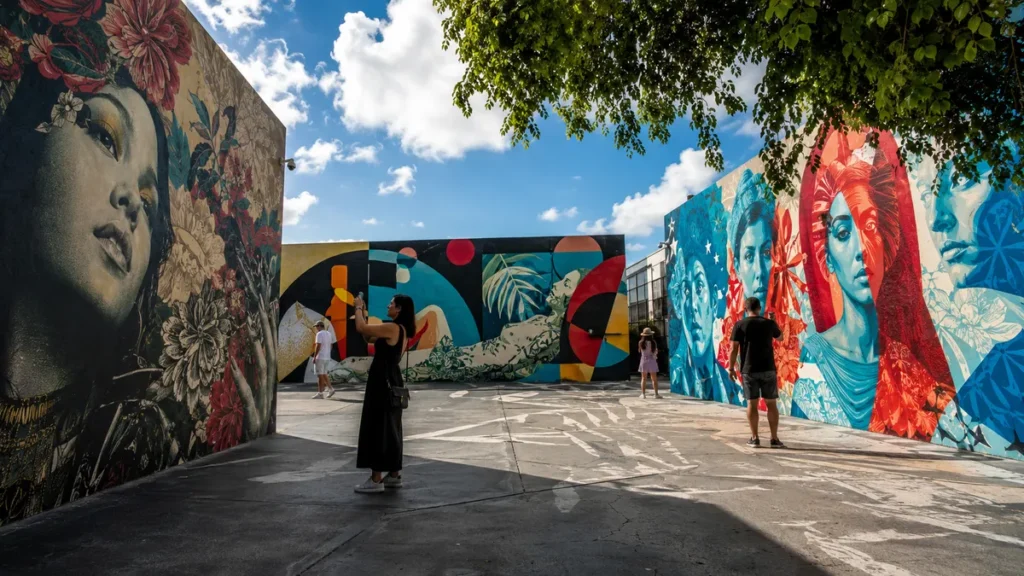
Wynwood became more interesting when I stopped following the main streets and simply wandered.
Huge murals covered old warehouse walls.
Then smaller pieces started appearing everywhere.
Doors. Alleys. Side walls. Storefronts.
Some works looked carefully planned. Others still had the rough style of graffiti.
That mix was what made the area fun to explore.
Restaurants, shops, galleries, and cafés now fill many of the old industrial buildings.
But the street art still gives Wynwood its personality.
I arrived in the late afternoon.
That timing worked well because there was enough daylight to see the murals clearly, but the neighborhood became livelier as dinner approached.
Time I spent: About 2½ hours
My Take
Do not keep your eyes only on the most famous walls.
Some of the pieces I liked most were on side streets.
14. Go Inside Wynwood Walls
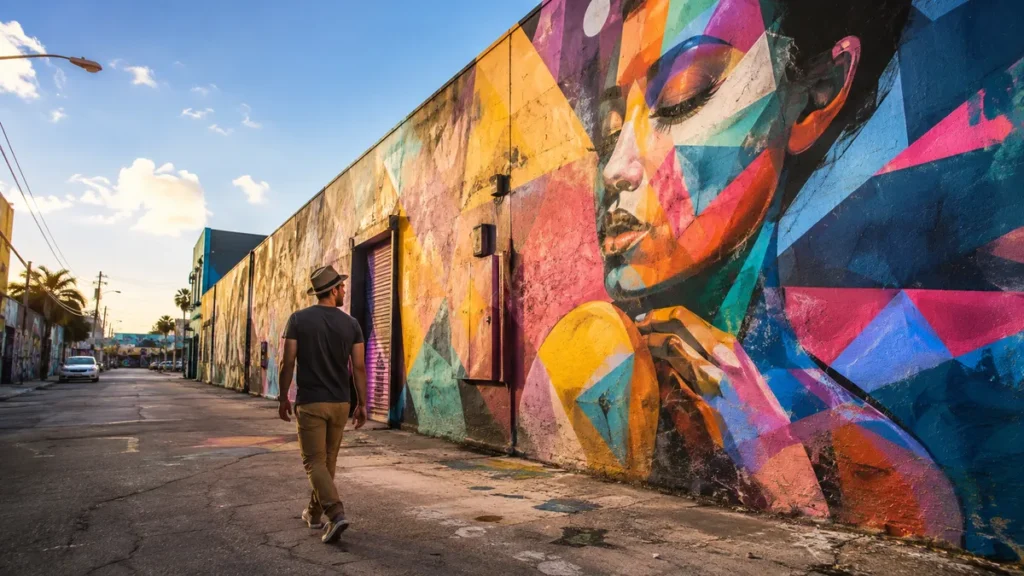
Wynwood Walls gave me a more polished version of the street art I had been seeing around the neighborhood.
The murals here are large and easy to explore.
The space feels more organized than the streets outside.
One thing became clear quickly: Wynwood and Wynwood Walls are not the same thing.
That matters for budget travelers.
You can see plenty of public art around Wynwood without paying admission.
Wynwood Walls itself is a ticketed attraction.
I was glad I had explored the surrounding neighborhood first because it made the contrast easier to notice.
Time needed: 1–2 hours
My Take
Street-art fans will probably enjoy both.
If money is tight, walking around Wynwood still gives you plenty to see.
15. Continue Into the Miami Design District
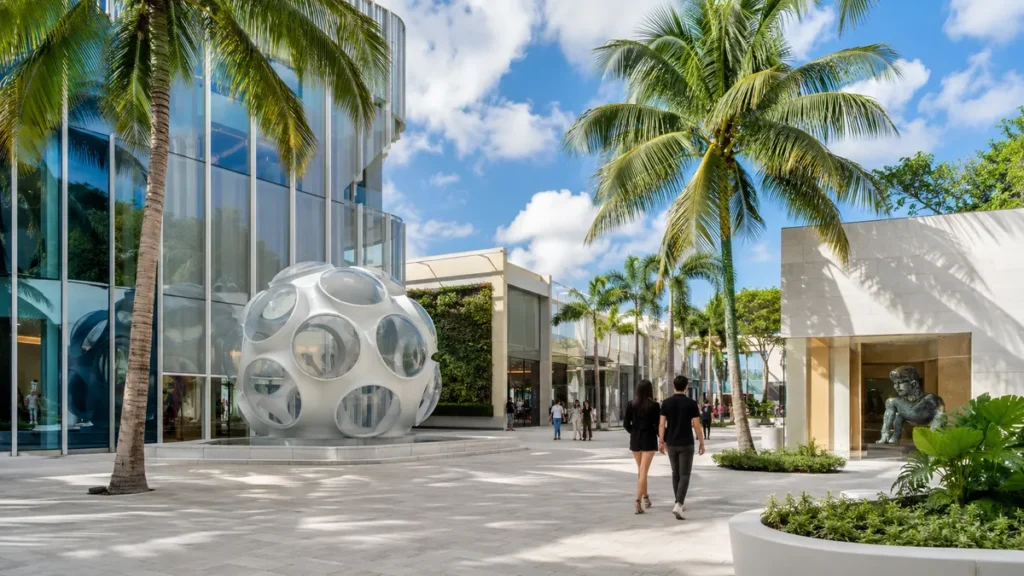
The Miami Design District felt like a cleaner, more polished cousin of Wynwood.
The change was immediate.
The rough warehouse walls disappeared.
In their place were modern buildings, luxury stores, public art, sculptures, and carefully designed spaces.
I did not come here to shop.
I came to walk.
That turned out to be enough.
The architecture itself gave me plenty to look at.
Since the Design District sits relatively close to Wynwood, combining both areas on the same day worked well.
My Take
Wynwood felt creative and messy.
The Design District felt creative and controlled.
Seeing both made the contrast more interesting.
16. Slow Down at Vizcaya Museum and Gardens
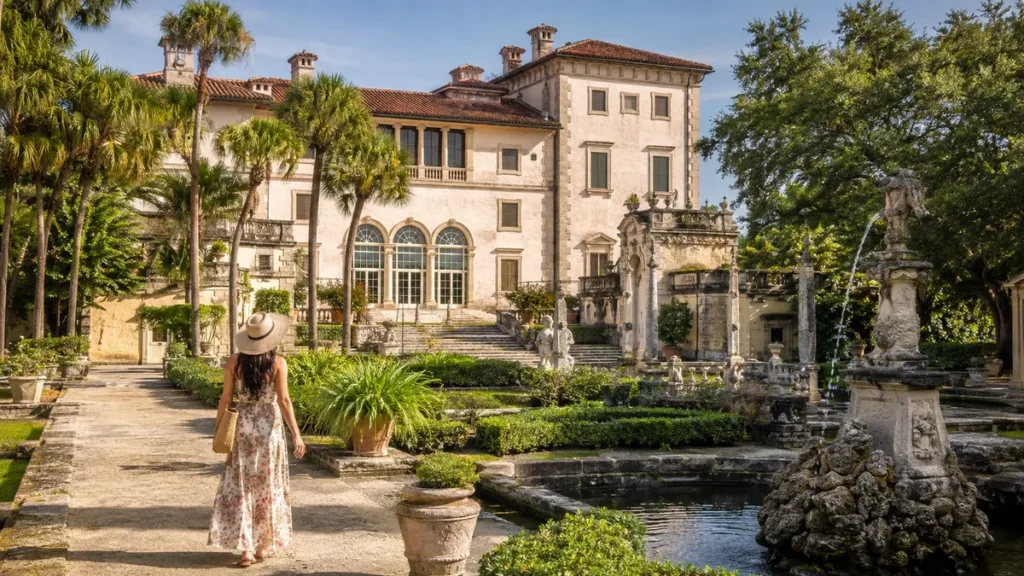
Vizcaya Museum and Gardens was one of the places where Miami suddenly felt far away.
The estate sits beside Biscayne Bay, but the villa looks more European than Floridian.
Inside, the rooms are filled with old furniture, artwork, decorative details, and elaborate architecture.
Then I stepped outside.
The gardens were the part I enjoyed most.
Fountains, statues, stone paths, trimmed plants, and tropical greenery stretched around the property.
The waterfront added another layer.
After several days of beaches and busy neighborhoods, Vizcaya felt quiet.
Time I spent: About 2½ hours
Best time: Morning
My Take
Do not rush through the villa just to reach the gardens.
Both deserve time.
17. See the Skyline From Biscayne Bay
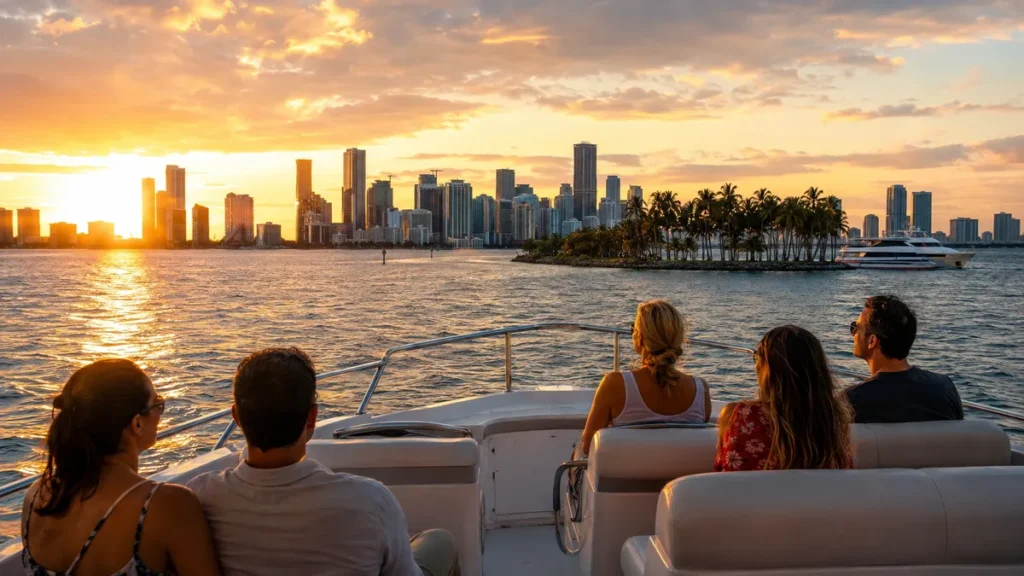
A Biscayne Bay cruise gave me one of the best views of Miami’s skyline.
Downtown looked completely different from the water.
Once the boat moved away from the shore, the skyscrapers lined up behind Biscayne Bay.
We passed boats, islands, bridges, and waterfront homes.
The city slowly looked smaller.
The best part came near sunset.
The light softened, the water picked up warmer colors, and the Downtown buildings began to glow.
After several long walking days, sitting down on the boat also felt better than expected.
Time: About 1½–2 hours
Best time: Sunset
My Take
For a short first trip, this was one paid experience I was glad I kept in the itinerary.
18. Stop at Bayside Marketplace Without Giving It Half a Day
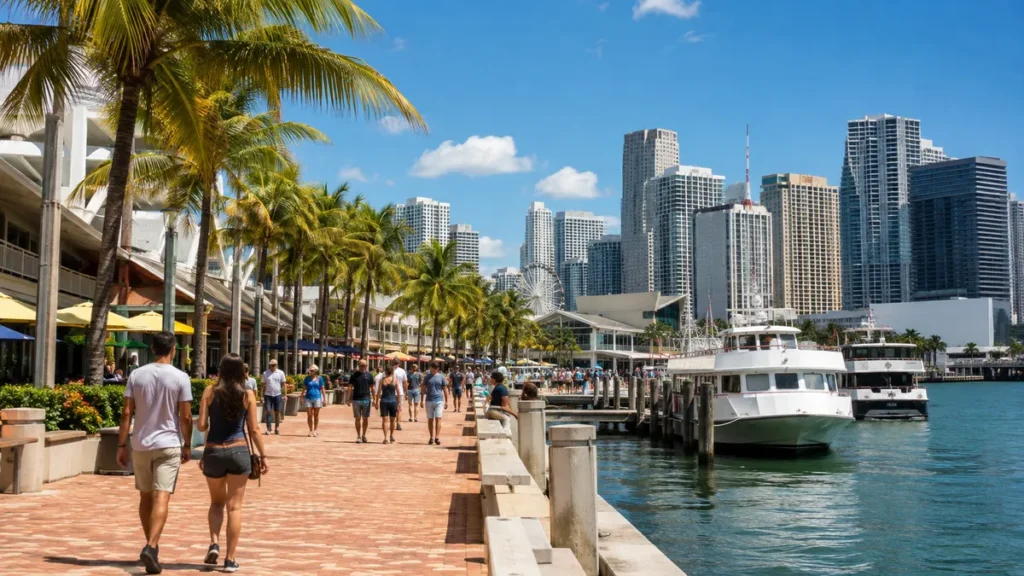
Bayside Marketplace was useful because of its location more than the shopping itself.
The waterfront area has shops, restaurants, music, and plenty of visitors.
It definitely feels touristy.
I did not mind that for a short stop.
Several Biscayne Bay cruises leave from around this area, and Bayfront Park is nearby.
That made Bayside an easy place to walk through before continuing elsewhere.
Time needed: 1–2 hours
My Take
Unless shopping is a big part of your trip, you probably do not need several hours here.
Use it as part of a Downtown day.
19. Walk Through Bayfront Park
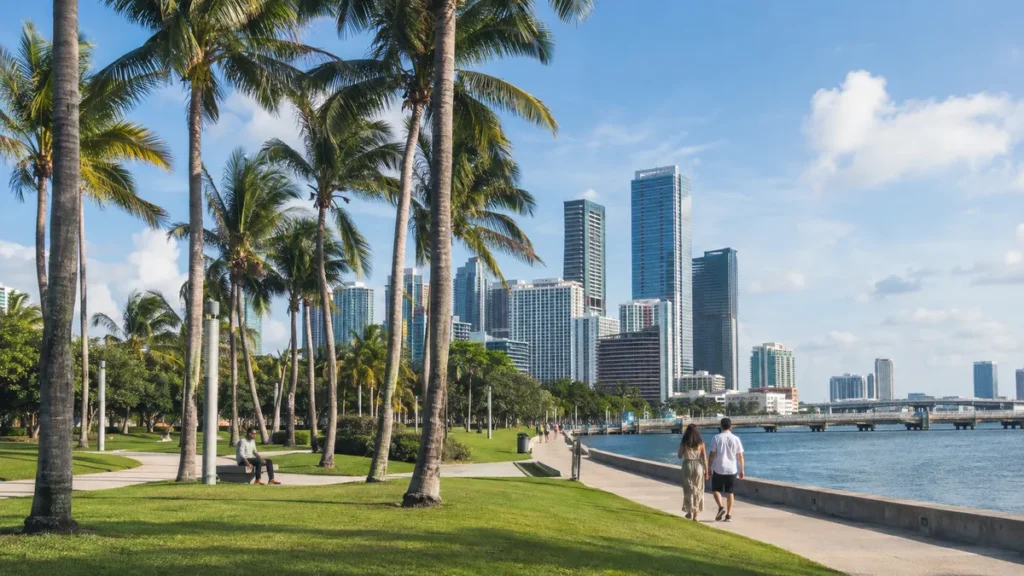
Bayfront Park gave me an easy free break from Downtown Miami’s glass towers.
The park sits right beside Biscayne Bay.
Palms, open spaces, paths, and waterfront views make it pleasant for a short walk.
I could still see the city around me, but being beside the water made everything feel less busy.
There was no need to make a special trip just for Bayfront Park.
It fit naturally with Bayside Marketplace and the Downtown waterfront.
Cost: Free
My Take
Miami has several parks that work better as part of a larger route than as stand-alone attractions.
Bayfront Park is one of them.
20. Visit Pérez Art Museum Miami on a Hot Afternoon
Pérez Art Museum Miami was one of my best escapes from the afternoon heat.
PAMM focuses on modern and contemporary art.
But the building itself caught my attention almost as much as the exhibitions.
Outdoor shaded areas look over Biscayne Bay.
That meant I could move between art and waterfront views without spending the whole afternoon outside in the sun.
The museum also worked well because several Downtown attractions sit nearby.
Time needed: 2–3 hours
My Take
Even travelers who do not normally spend hours in art museums may enjoy PAMM because of its architecture and waterfront setting.
21. Spend a Few Hours at Frost Science
Frost Science was one of the easiest Miami attractions to recommend for families.
The Phillip and Patricia Frost Museum of Science combines science exhibits, an aquarium, and a planetarium.
That variety keeps things moving.
The indoor setting also makes a huge difference in Miami.
Heavy rain or strong afternoon heat can change plans quickly, and Frost Science gives you a solid backup option.
I also liked how close it was to PAMM and Maurice A. Ferré Park.
You can spend a large part of the day in this small Downtown area.
Time needed: 3–4 hours
My Take
This is one of the attractions that makes the most sense during the hottest part of the day or when bad weather arrives.
22. Ride the Metromover Through Downtown
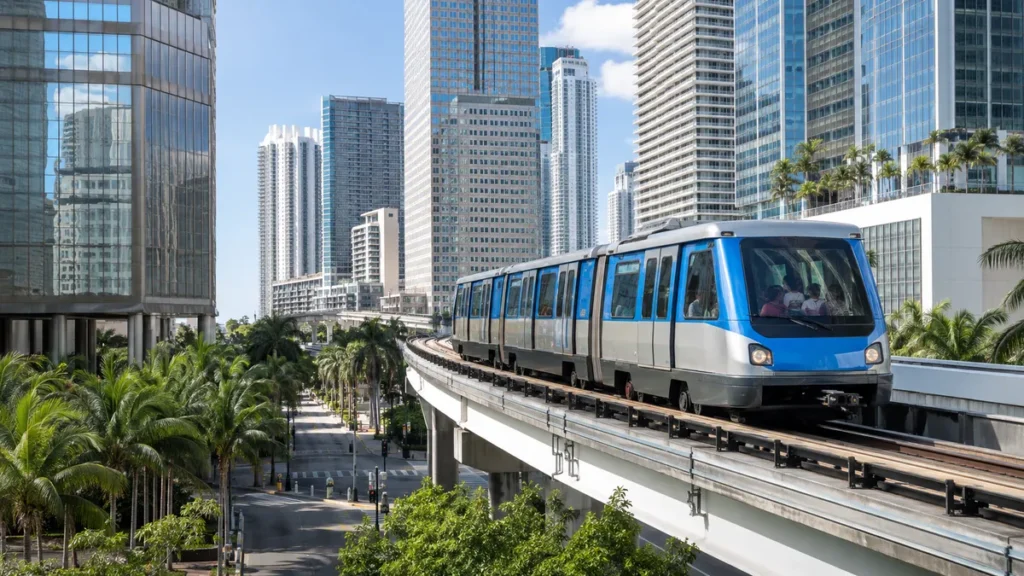
The free Metromover was one of the most useful things I found in Downtown Miami.
The elevated trains move through parts of Downtown and Brickell.
From above street level, I could see tall buildings, busy roads, and parts of the city that would have looked completely different from a car.
The best part was simple.
It was free.
I did not ride it only for sightseeing.
I used it to move around and treated the view as a bonus.
My Take
Not every useful Miami experience needs to be an attraction.
Good transportation can make the whole trip easier.
23. Spend a Slow Afternoon in Coconut Grove
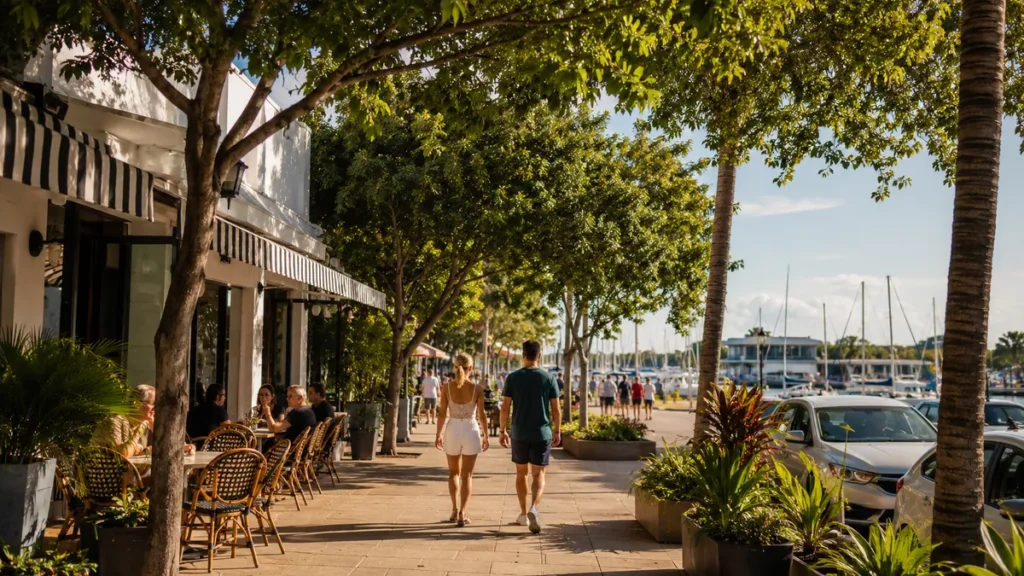
Coconut Grove was where Miami finally slowed down for me.
The neighborhood felt greener and quieter than Downtown or South Beach.
Tree-lined streets led toward cafés, restaurants, parks, and marinas.
There was less pressure to keep moving from one major sight to another.
That was what I liked.
Coconut Grove paired especially well with Vizcaya.
After spending the first part of the day at the museum and gardens, the Grove gave me somewhere relaxed to walk and eat.
My Take
This is not the neighborhood I would prioritize with only one day in Miami.
With three or four days, though, it adds a calmer side to the trip.
24. Cool Down at Venetian Pool
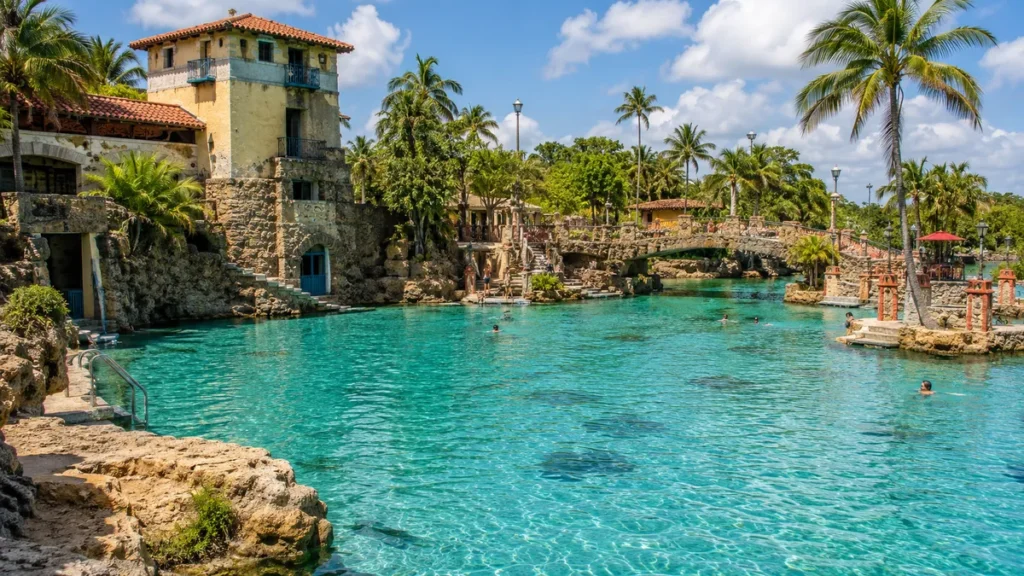
Venetian Pool was one of the most unusual swimming spots I saw around Miami.
It does not look like a normal public pool.
Palm trees, rock features, bridges, stonework, and tropical landscaping make the place feel more like an old resort.
The setting was the main reason it stood out.
It is located in Coral Gables, so getting there takes some planning.
That is why I combined it with other places in the area instead of making a special trip for a quick swim.
My Take
Check the current schedule and admission rules before going.
This is one attraction where opening details can affect the whole plan.
25. Walk Around Coral Gables
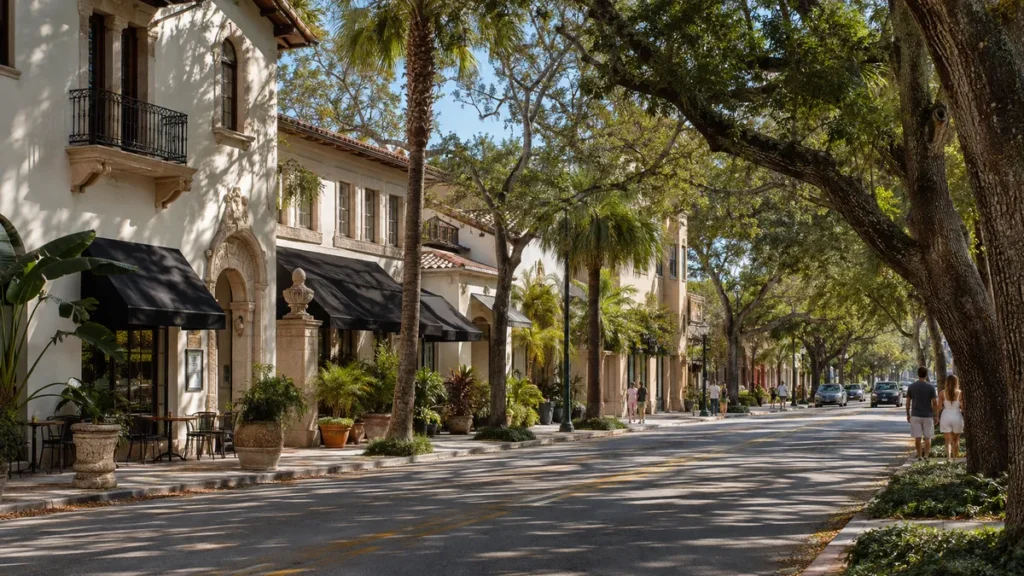
Coral Gables gave me another quiet break from central Miami.
Wide streets, large trees, Mediterranean-style buildings, restaurants, and landscaped areas gave the city a very different look.
It felt more residential.
The pace was slower.
There was less pressure to chase big attractions.
That made it a good place to combine with Venetian Pool.
My Take
Coral Gables makes more sense on a longer Miami trip.
First-time visitors with only one or two days can focus on South Beach, Little Havana, Wynwood, and Downtown first.
26. Escape to Key Biscayne
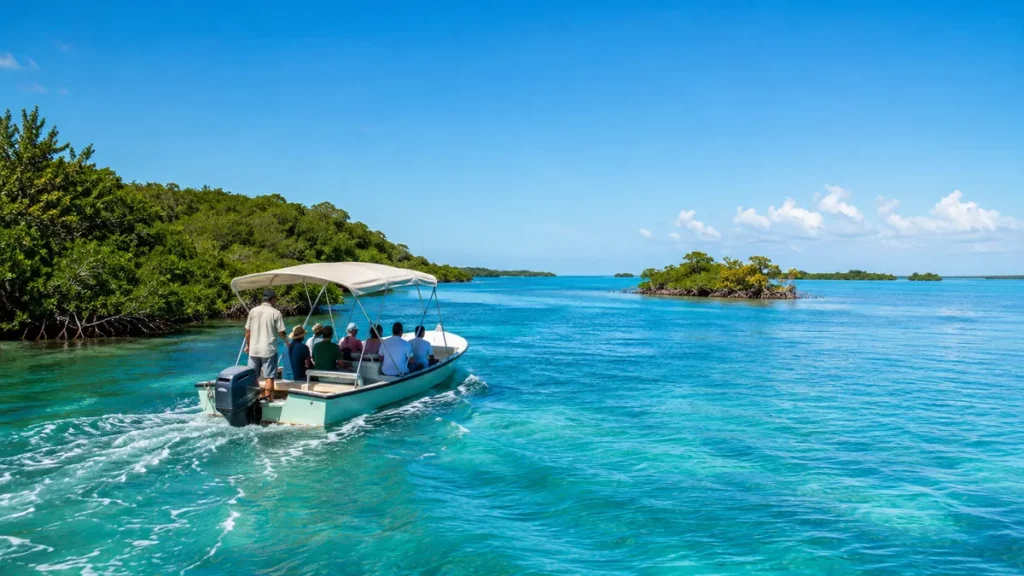
Key Biscayne felt like leaving Miami without actually going very far.
The drive onto the island was part of the experience.
Busy city views slowly gave way to palms, water, beaches, and parks.
Crandon Park was one of the easiest places to stop.
The atmosphere felt calmer than South Beach.
There was more space, less noise, and none of the heavy nightlife feel.
I spent more time walking and sitting than trying to “do” anything.
That was exactly what I needed.
Time needed: Half day
My Take
If South Beach feels too busy, Key Biscayne shows a softer side of Miami’s coast.
27. Visit Bill Baggs Cape Florida State Park
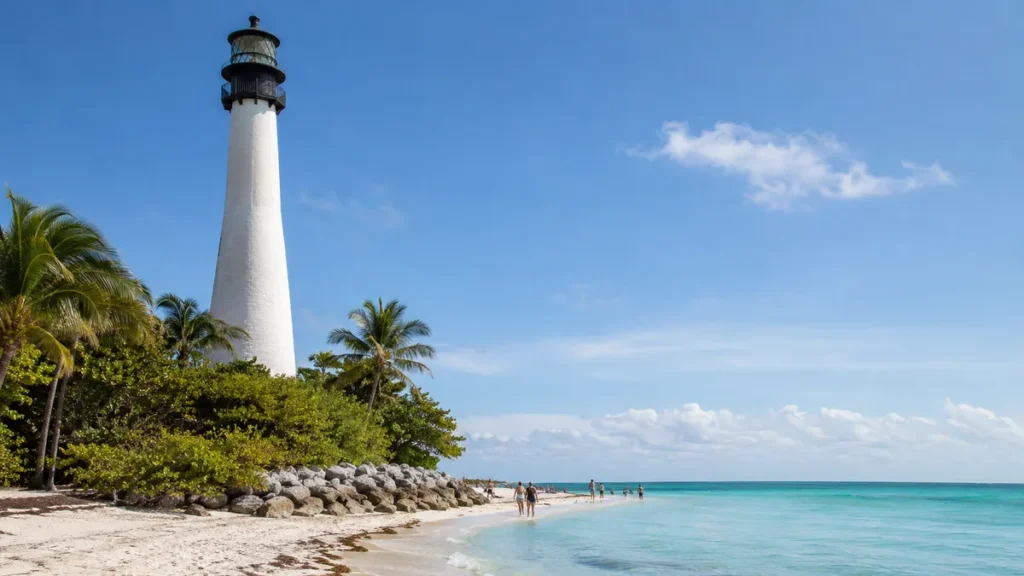
Bill Baggs Cape Florida State Park was one of my favorite outdoor stops on Key Biscayne.
The park sits at the southern end of the island.
Beaches and paths stretch around the area, but the Cape Florida Lighthouse is the landmark that stands out.
The setting felt peaceful.
Boats moved across the water while palms bent in the breeze.
The Miami skyline was not far away, yet the city felt distant.
I stopped checking the time here.
That rarely happened in the busier parts of the trip.
My Take
Combine Bill Baggs with the rest of Key Biscayne.
The island deserves at least half a day.
28. Walk Through Fairchild Tropical Botanic Garden
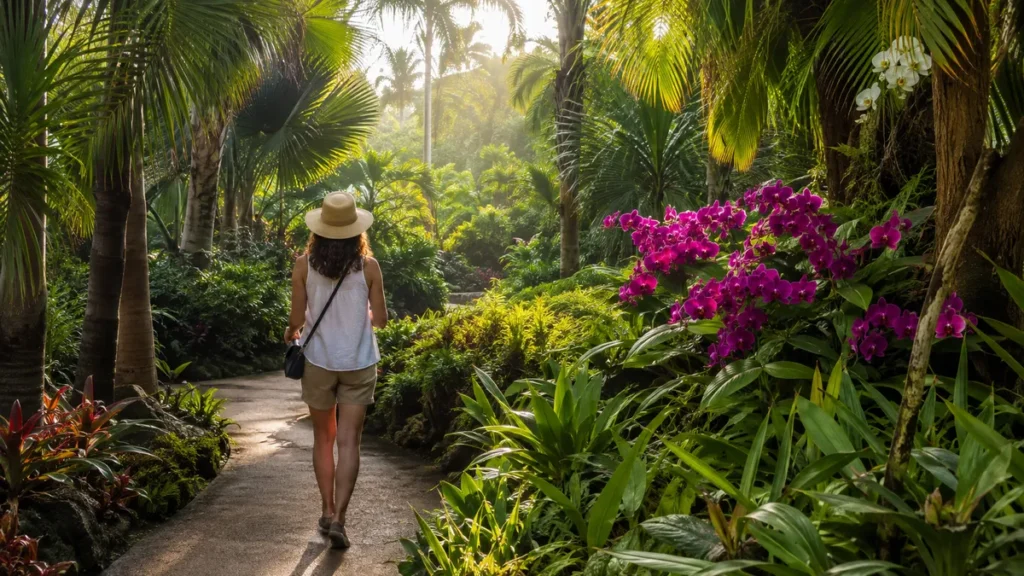
Fairchild Tropical Botanic Garden showed me how green South Florida can be away from the beach.
The paths moved through palms, flowering plants, and thick tropical landscapes.
Some areas felt bright and open.
Others were shaded by heavy greenery.
I am not someone who needs to know every plant name to enjoy a garden.
The walk itself was enough.
Morning worked much better than afternoon.
Even with shade, the Miami heat becomes tiring later in the day.
Time needed: 2–3 hours
My Take
This is a good choice when you want a peaceful morning after several busy sightseeing days.
29. Get Active at Oleta River State Park
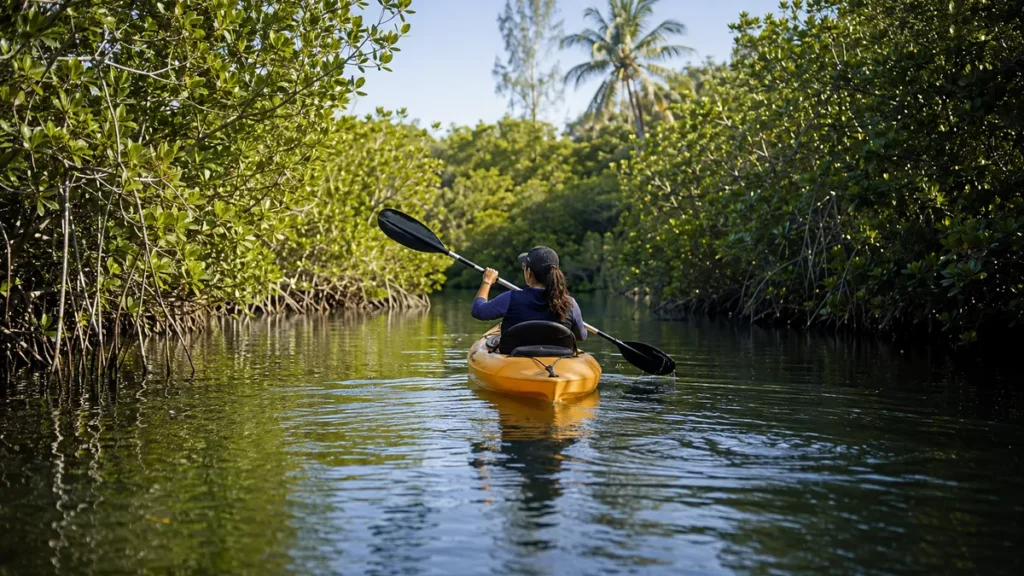
Oleta River State Park gave me a completely different type of Miami outdoor experience.
Instead of beaches and city parks, this area is known for kayaking, biking, and waterways surrounded by mangroves.
The mangroves changed the whole mood.
The water felt calmer and more enclosed than the open ocean.
It was easy to forget that a large city was nearby.
This was also one of the places where proper sun protection and plenty of water mattered.
Outdoor activities in South Florida become tiring quickly when the heat climbs.
My Take
Oleta is a good choice for active travelers who want nature without giving up a full day to the Everglades.
30. Get on the Water at Biscayne National Park
Biscayne National Park made the most sense once I understood that most of the park is water.
This is not a national park where you simply park the car, walk a trail, and feel as though you have seen everything.
The water is the main attraction.
Boat tours and kayaking are much better ways to experience it.
The marine environment felt completely different from Downtown Miami, even though the city was not that far away.
This was one of the places that needed more planning.
You cannot treat it like an unplanned stop between other attractions.
Time needed: Half day to full day
My Take
Anyone who enjoys boating, kayaking, or marine landscapes should look beyond the Everglades and consider Biscayne National Park too.
31. Leave Time for the Everglades
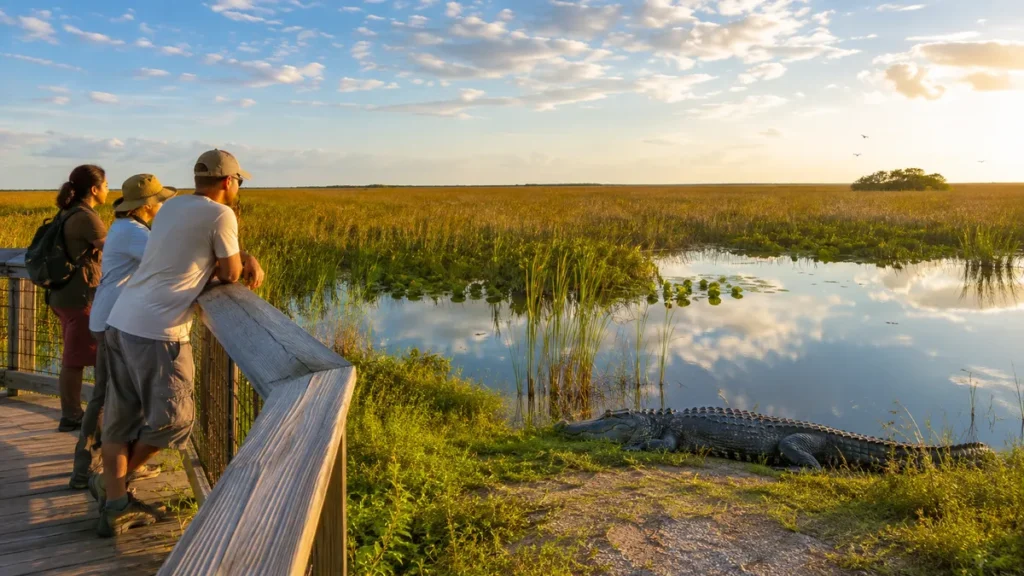
The Everglades gave me the biggest change of scenery of the whole Miami trip.
The city gradually disappeared behind us.
Buildings became fewer.
Then the landscape opened into flat wetlands stretching toward the horizon.
The quiet was the first thing that stood out.
Birds moved around the water.
Then an alligator appeared, and almost everyone nearby stopped what they were doing.
That moment alone made the trip feel different from anything I had done in Miami.
One useful thing I learned was that the Everglades and commercial airboat attractions are not always the same thing.
Some airboat tours operate outside Everglades National Park.
Check exactly where a tour goes before booking.
Time needed: Half day to full day
My Take
After several days of beaches, food, murals, and skyscrapers, the Everglades felt like a reset.
It also showed me why a Miami trip should include more than the city itself.
Best Free Things to Do in Miami
Some of my favorite Miami experiences did not cost anything.
South Beach, Ocean Drive, Lummus Park, South Pointe Park, Little Havana, Wynwood’s outdoor murals, Bayfront Park, and the Metromover can all be enjoyed without paying an admission fee.
My favorite free day was around Miami Beach.
I started at South Beach, walked through Lummus Park, explored Ocean Drive and the Art Deco Historic District, and then finished at South Pointe Park.
That route covered a large part of the classic Miami experience without an attraction ticket.
Food and transportation were the main costs.
Best Things to Do in Miami With Kids
Frost Science was the easiest Miami attraction to recommend for families.
The aquarium, science exhibits, and planetarium offer enough variety to keep children interested for several hours.
But I would not build a family trip around museums alone.
South Beach, Key Biscayne, South Pointe Park, Biscayne Bay cruises, Fairchild Tropical Botanic Garden, Zoo Miami, and wildlife experiences around the Everglades can all work well.
The biggest lesson for families is to plan around the heat.
Outdoor attractions are easier in the morning.
Indoor attractions work better during the hottest part of the afternoon.
Best Things to Do in Miami for Couples
Miami worked surprisingly well for a trip built around sunsets, food, and slower evenings rather than clubs.
A sunset cruise on Biscayne Bay was one of the strongest choices.
South Pointe Park was another.
Vizcaya Museum and Gardens felt more romantic than I expected, especially outside near Biscayne Bay.
Key Biscayne, Coconut Grove, Española Way, Wynwood, and Fairchild Tropical Botanic Garden also worked well for slower days together.
Miami nightlife gets a lot of attention.
But some of my favorite evenings involved nothing more than sunset, dinner, and a walk.
Things to Do in Miami at Night Besides Clubs
Miami still had plenty to do after dark even when I skipped the nightclub scene.
Ocean Drive looked completely different once the neon lights came on.
Española Way became busier around dinner.
Wynwood stayed lively into the evening.
A sunset cruise stretched naturally into the first part of the night.
Little Havana also had restaurants, music, and plenty of atmosphere after dark.
Miami’s nightlife reputation is real.
But you do not have to build your trip around drinking or clubs to enjoy the city at night.
Things to Do in Miami When It Rains
PAMM and Frost Science became the easiest answers when Miami’s weather changed suddenly.
South Florida rain can arrive quickly.
I learned not to cancel an entire day just because the forecast showed showers.
Instead, I kept indoor places ready.
Pérez Art Museum Miami, Frost Science, the Art Deco Museum, indoor galleries, cafés, restaurants, and shopping all work when the weather turns.
The rain can also disappear almost as quickly as it arrives.
Keeping the schedule flexible worked much better than trying to control every hour.
How I Got Around Miami Without Wasting the Whole Day
Grouping attractions by neighborhood saved me more time than any transportation trick.
South Beach worked well on foot.
Downtown had the free Metromover.
Miami Beach was easy to explore by walking or biking.
Rideshares helped when moving between areas such as Little Havana and Wynwood.
A car became more useful for Key Biscayne, Coral Gables, the Everglades, and attractions farther from central Miami.
The biggest mistake was assuming two places were close because they looked close on a map.
Miami traffic can change everything.
Final Thoughts: Miami Got Better Every Time I Left South Beach
South Beach was the Miami I expected.
The places beyond it were the Miami I remembered.
I remembered the tiny cup of Cuban coffee that tasted much stronger than it looked.
I remembered the sound of dominoes hitting tables in Little Havana.
I remembered turning a corner in Wynwood and finding another huge mural covering a warehouse wall.
I remembered watching the skyline grow smaller from Biscayne Bay.
I remembered the quiet on Key Biscayne.
And I remembered how quickly Miami’s towers disappeared once the road led toward the Everglades.
That was the biggest surprise of the trip.
Miami was not one experience.
It was several completely different experiences packed into the same destination.
If this is your first visit, do not worry about checking off all 31 places.
See fewer places properly.
Walk the neighborhoods.
Try the food.
Leave space in the schedule.
Stay until sunset.
And most importantly, do not spend the entire trip on South Beach.
The Miami I enjoyed most usually started just after I left it.