



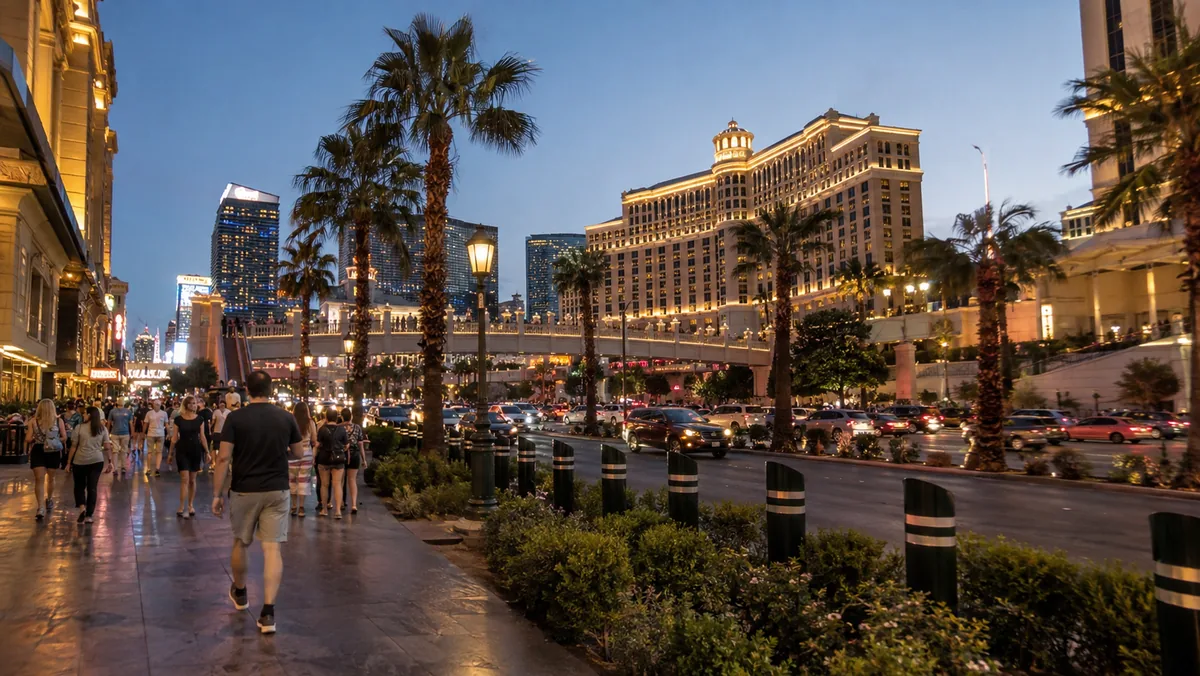
Las Vegas became much easier to enjoy once I stopped treating it as one enormous attraction and started planning it in sections.
I visited Las Vegas in 2026, and the biggest mistake I made at first was trusting the map too much. Bellagio, Caesars Palace, The Venetian, Sphere, Fremont Street, and AREA15 can look surprisingly close on a phone. On the ground, huge casino floors, pedestrian bridges, resort entrances, traffic, and desert heat made even short-looking moves take longer than expected.
For a first trip, three days felt right for the Strip, Downtown Las Vegas, one major show, several free attractions, and one off-Strip experience. Four days makes more sense if you also want Red Rock Canyon or Hoover Dam without turning the trip into a race.
Visited: 2026
Last fact-check: September 20, 2026
The main lesson I brought home was simple: Vegas was better when I chose fewer things and grouped them geographically.
Las Vegas attractions at a glance
| Experience | Area | Realistic Time | Typical Cost | Book Ahead? | Best Time |
|---|---|---|---|---|---|
| Bellagio Fountains | Central Strip | 20–30 min | Free | No | After dark |
| Bellagio Conservatory | Central Strip | 30–45 min | Free | No | Morning |
| Sphere | Near The Venetian | 2–3 hrs with an event | Roughly $80–250+ | Yes | Evening |
| High Roller | LINQ Promenade | 45–60 min | About $25–60 | Helpful | Sunset/night |
| Fremont Street Experience | Downtown | 2–3 hrs | Free | No | Evening |
| Mob Museum | Downtown | 2–3 hrs | $34.95 adult admission | Helpful | Afternoon |
| Neon Museum | Downtown area | About 1 hr | From $25 day / $35 evening | Yes | Evening |
| Omega Mart | AREA15 | 2–3 hrs | From $45 | Yes | Afternoon |
| Red Rock Canyon | West of Strip | 3–5 hrs | $20 vehicle + reservation fee when required | Yes in reservation season | Morning |
| Cirque du Soleil | Strip resorts | 2–2.5 hrs with arrival | From about $69–77+ | Yes | Evening |
25 things to do in Las Vegas
1. Watch the Bellagio Fountains after dark
The Bellagio Fountains were one of the easiest famous Las Vegas attractions to fit into the trip. There was no ticket, no long commitment, and no need to structure half a day around them.
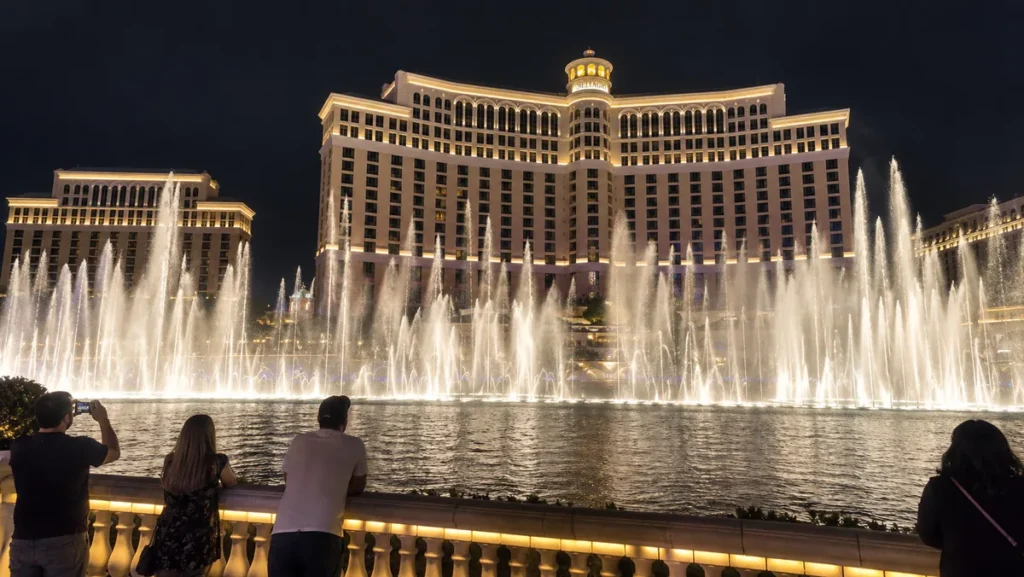
I preferred seeing the fountains after dark. The water show was impressive on its own, but the illuminated Strip made the evening performances feel much more like the Vegas I had pictured before arriving.
Bellagio currently runs shows every 30 minutes from 3 p.m. to 7:30 p.m. Monday through Friday, then every 15 minutes from 8 p.m. to midnight. Weekend and holiday performances begin earlier. Weather can affect the schedule.
Official Bellagio fountain schedule
Time needed: 20–30 minutes
Cost: Free
My take: One of the easiest first-night stops in Vegas
2. Walk through the Bellagio Conservatory
The Conservatory made sense immediately after the fountains because I was already inside Bellagio.
The 14,000-square-foot space changes throughout the year with seasonal installations. During my planning pass for this update, Bellagio’s fall 2026 display was scheduled from September 19 to November 7.
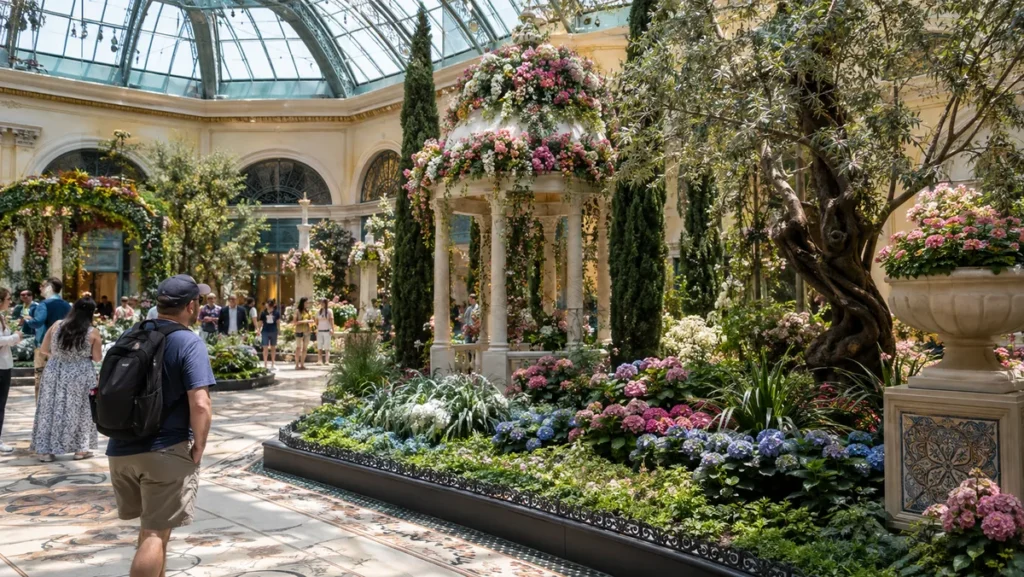
About 30 minutes was enough for me. It was attractive, free, indoors, and easy to combine with other central Strip sights.
Time needed: 30–45 minutes
Cost: Free
Best time: Morning for lighter crowds
Combine with: Bellagio Fountains and Caesars Palace
3. See Sphere before deciding whether to buy a ticket
Sphere was impossible to ignore.
Even the exterior display after dark felt like an attraction because it changed constantly and looked completely different depending on the animation.
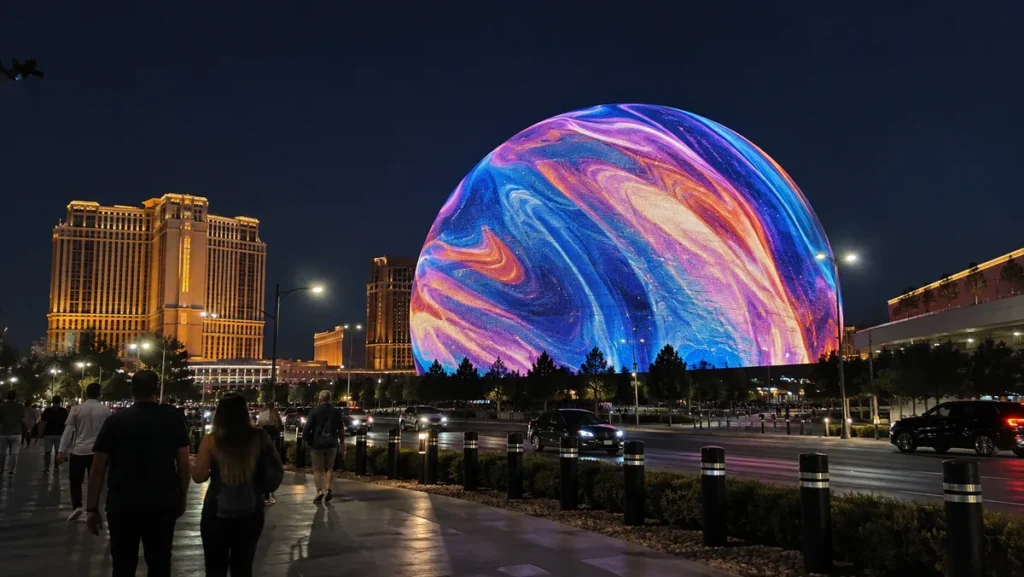
Inside is a bigger commitment. Current programming includes The Wizard of Oz at Sphere and major concert residencies. The Wizard of Oz experience itself runs about 75 minutes, but I would allow roughly two to three hours once arrival, security, and exiting are included.
Ticket prices change dramatically by event, seat, and date, so I would budget roughly $80–250+ rather than assume one fixed price.
Time needed: 2–3 hours for a ticketed visit
Cost: Free to see outside; roughly $80–250+ for many events
My take: See the exterior regardless; treat the indoor experience as one of your premium entertainment choices
4. Ride the High Roller when the Strip lights come on
The High Roller worked well because it gave me a skyline view without taking over the whole evening.
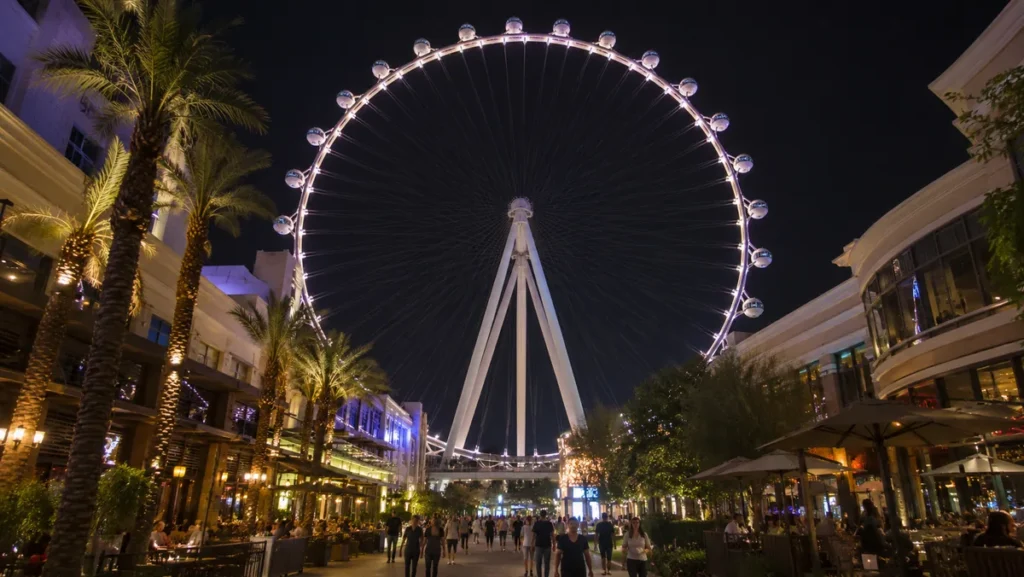
A rotation lasts around 30 minutes, but I would allow closer to an hour after walking through LINQ Promenade, boarding, and waiting.
Tickets vary by date and package, so about $25–60 per adult is a useful planning range.
Night was more memorable for me than daytime. Vegas looked much more distinctive once the Strip was illuminated.
Time needed: 45–60 minutes
Estimated cost: About $25–60
Best time: Sunset into night
Combine with: LINQ Promenade, Flamingo, Caesars Palace
5. Walk through The Venetian without paying for everything
The Venetian was one of the Strip resorts I genuinely enjoyed exploring rather than simply walking through to reach somewhere else.
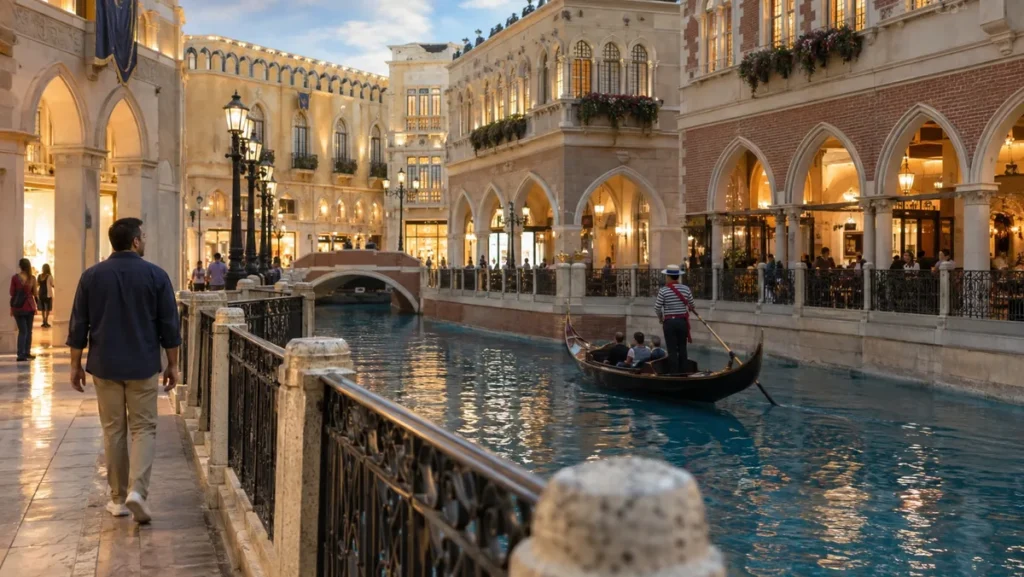
The Grand Canal Shoppes, painted ceilings, canals, indoor streets, and elaborate architecture gave me plenty to see without buying anything.
Gondola rides cost extra and commonly land around $40–50 per person, depending on the option. I skipped the ride because walking through the resort already gave me most of the atmosphere I wanted.
That became a useful Vegas rule: not every themed resort needs to become a paid attraction.
Time needed: 60–90 minutes
Cost: Free to explore; gondola roughly $40–50 per person
My take: Worth walking through even if you skip the ride
6. Give Caesars Palace a time limit
Caesars Palace showed me how easily a Las Vegas resort can quietly eat into an itinerary.
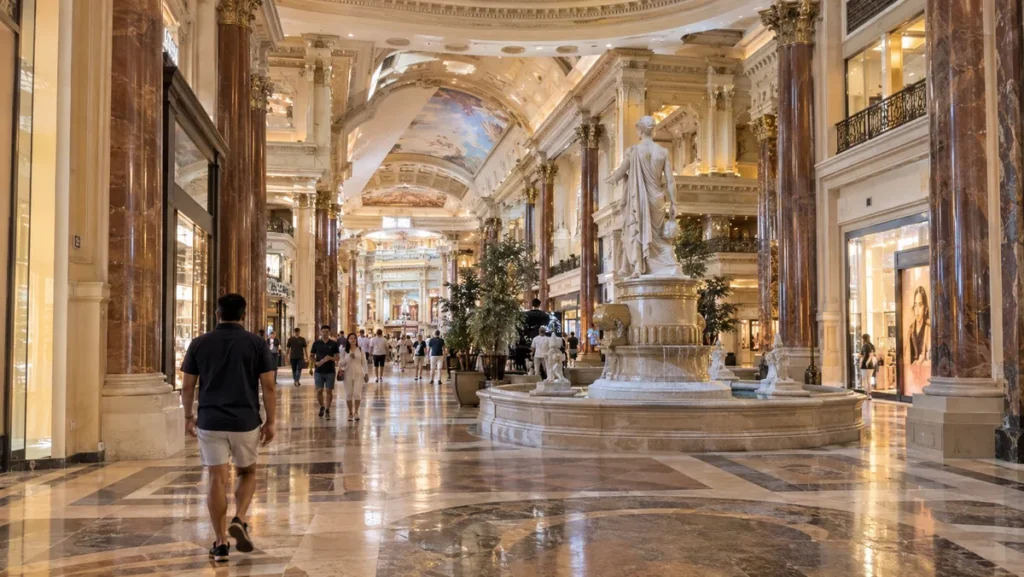
The Forum Shops, casino floor, fountains, restaurants, statues, and long corridors kept making the building feel bigger than it looked outside.
It was worth seeing, but I would give it roughly an hour unless shopping is one of the main reasons for your trip.
Time needed: 45–90 minutes
Cost: Free to explore
Planning lesson: Do not schedule every large resort as a separate half-day attraction
7. Spend money on one really good Las Vegas show
A good show was one place where spending extra made sense.
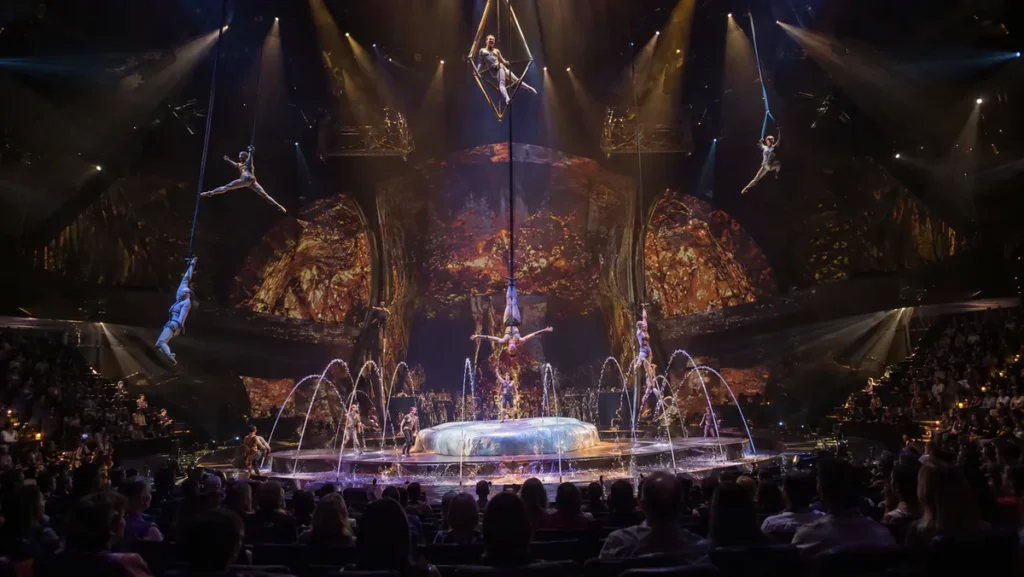
Cirque du Soleil currently has several productions in Las Vegas. Michael Jackson ONE starts at $69 plus fees, while Mystère starts at $77 and runs for 90 minutes. Better seats and busy dates cost more.
I would rather pay for one strong production and let it anchor an evening than stack expensive shows on consecutive nights.
Time needed: 2–2.5 hours including arrival
Cost: From roughly $69–77; commonly $100–200+ for better seats
Book ahead: Yes, especially on weekends
My take: One of the places where paying more can genuinely improve the trip
8. Give Fremont Street its own evening
Downtown Las Vegas felt much more different from the Strip than I expected.
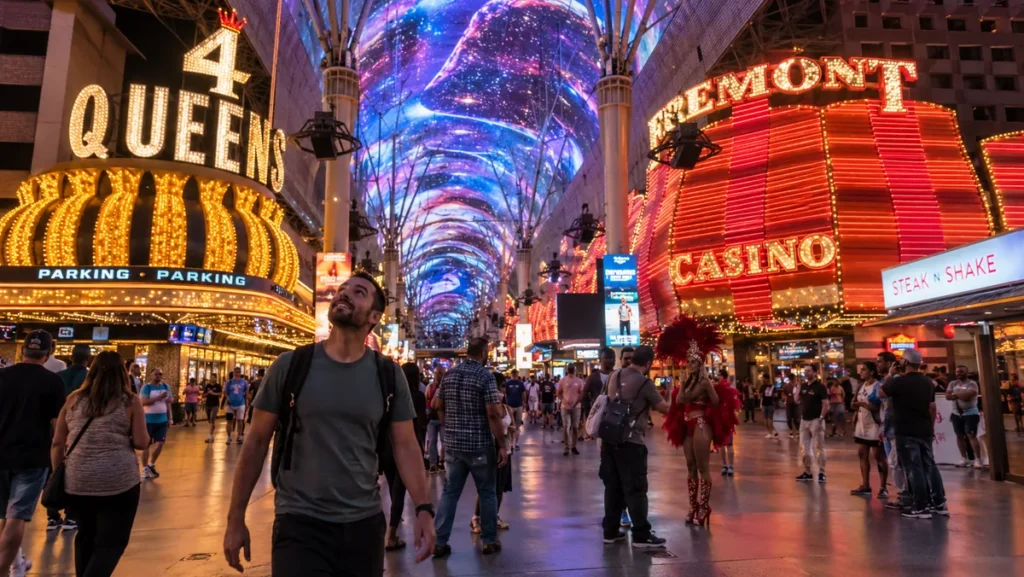
Fremont Street was louder, tighter, easier to walk, and more concentrated. Historic casino facades, neon, live music, bars, street performers, and the Viva Vision canopy all sat within a relatively compact area.
I had originally treated Fremont as a quick evening stop. That was a mistake. Once I was there, two or three hours disappeared easily.
Time needed: 2–3 hours
Cost: Free to explore
Best time: After dark
Combine with: Mob Museum or Neon Museum
9. Give the Mob Museum at least two hours
The Mob Museum was one of the strongest things I did in Las Vegas that had nothing to do with gambling.
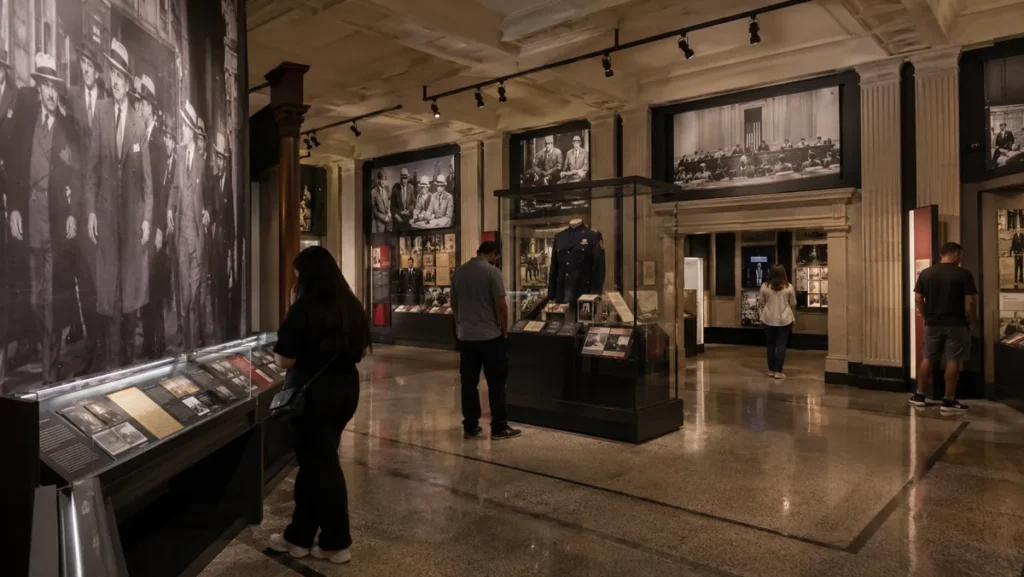
It covers organized crime, Prohibition, law enforcement, surveillance, forensic science, and the relationship between organized crime and Las Vegas. The setting also matters: the museum occupies the city’s former federal courthouse.
Current non-local adult general admission is $34.95, and regular museum hours are 9 a.m. to 9 p.m. The museum itself suggests allowing one to three hours.
Official Mob Museum visitor information
Time needed: 2–3 hours
Cost: $34.95 general adult admission
My take: One of the best non-casino attractions in Vegas
10. Visit the Neon Museum after the sun starts dropping
The Neon Museum became much more interesting once I stopped thinking of it as simply a collection of old signs.
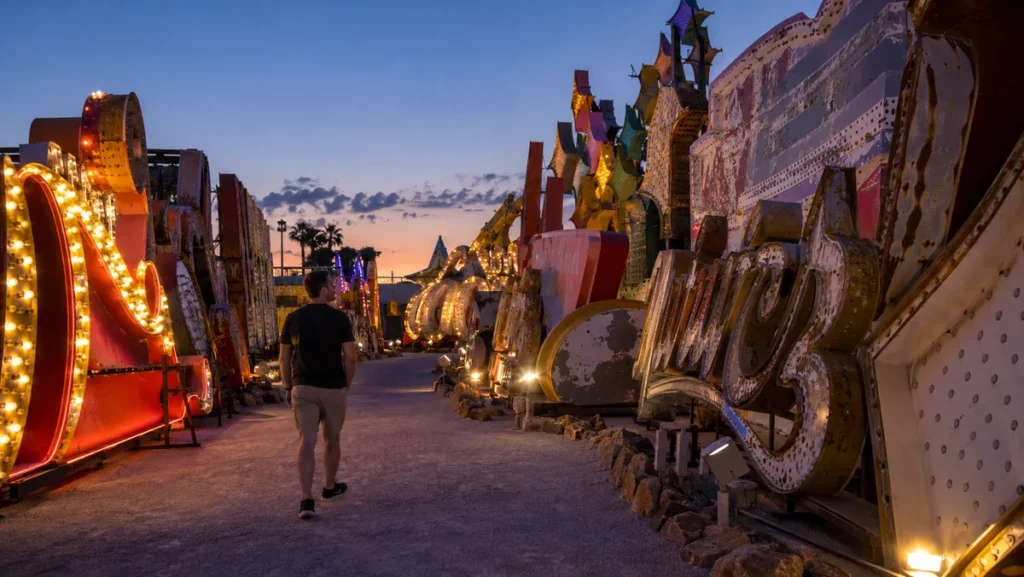
The Boneyard preserves pieces of vanished casinos, motels, restaurants, and businesses, so the visit felt more like walking through fragments of older Las Vegas.
Through the end of 2026, daytime admission starts at $25, while evening admission starts at $35. From September through May, the museum is generally open from 3 p.m. to 11 p.m., with evening admission beginning at 6 p.m.
Official Neon Museum tickets and hours
Time needed: About 1 hour
Cost: From $25 daytime / $35 evenin
Book ahead: Yes for popular evening slots
My take: I would pay the extra $10 for evening
11. Slow the trip down in the Arts District
The Arts District was where Vegas finally stopped feeling like one continuous casino corridor.
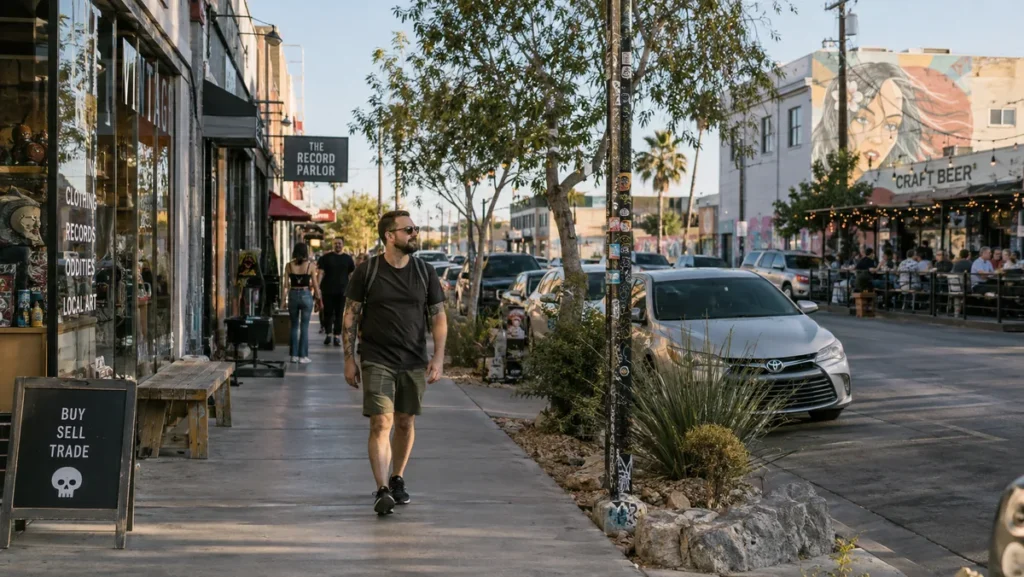
Murals, galleries, breweries, antique shops, vintage stores, and smaller restaurants made the neighborhood easier to wander without constantly entering another enormous resort.
I stayed longer than planned because there was less pressure to scan a ticket, queue, or be somewhere at a fixed time.
Time needed: 1.5–3 hours
Cost: Free to explore
Best for: Art, vintage shopping, cafés, breweries, repeat visitors
12. Give AREA15 more time than the map suggests
AREA15 looked like one attraction when I was planning. It is really an entertainment district packed with separate experiences.
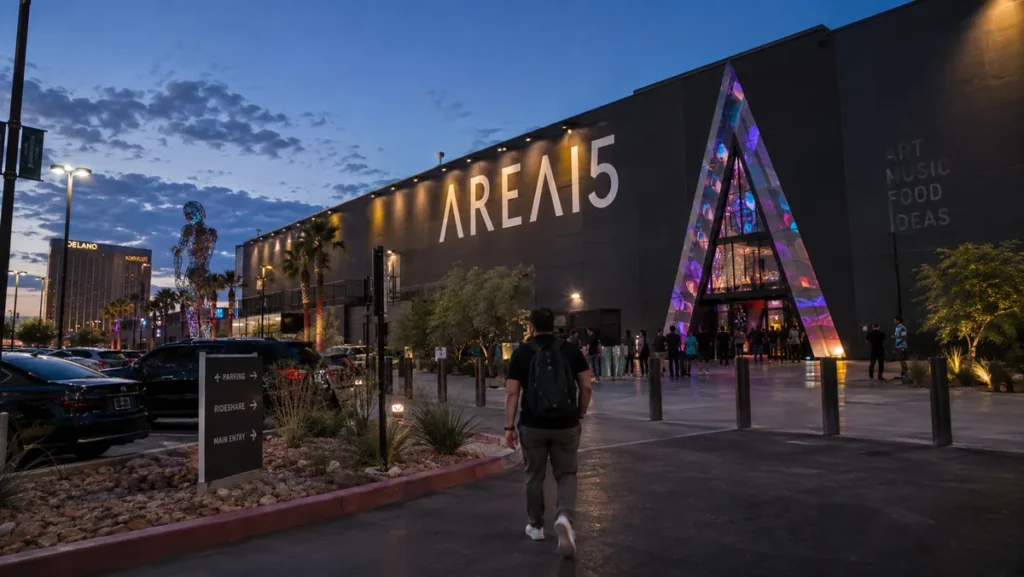
General access is free, while the attractions are paid individually or through bundles. Current experience passes begin at $49, with larger packages rising considerably higher.
My mistake was assuming I could casually fit AREA15 into two hours. Once Omega Mart was involved, that stopped being realistic.
Time needed: 2–6 hours depending on what you book
Cost: Free general access; paid attractions vary
My take: Pick one anchor attraction rather than trying to do everything
13. Give Omega Mart enough time to get strange
Omega Mart was much better once I stopped treating it like a quirky supermarket and started exploring properly.
Behind the shelves are surreal rooms, art installations, clues, hidden passages, and an optional story.
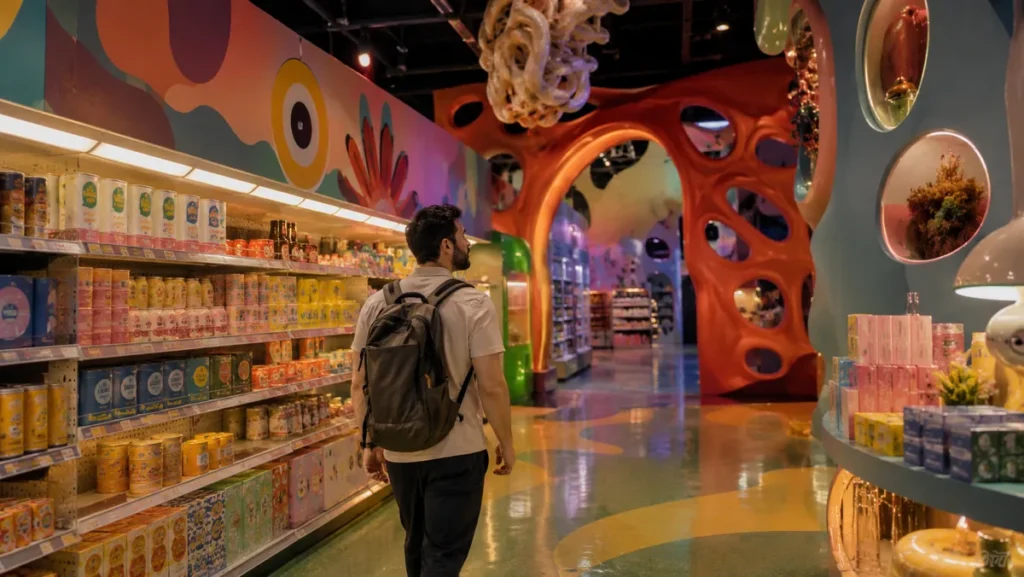
Current general admission starts at $45, flexible entry at $75, and VIP tickets at $90.
Official Omega Mart ticket options
If you only want a handful of photographs, $45 may feel expensive. If you enjoy immersive art and investigating details, two or three hours passes quickly.
Time needed: 2–3 hours
Cost: From $45
Book ahead: Recommended
14. Pick Universal Horror Unleashed only if horror is actually your thing
Universal Horror Unleashed is one of the newer Las Vegas attractions and a good example of why old Vegas lists age quickly.
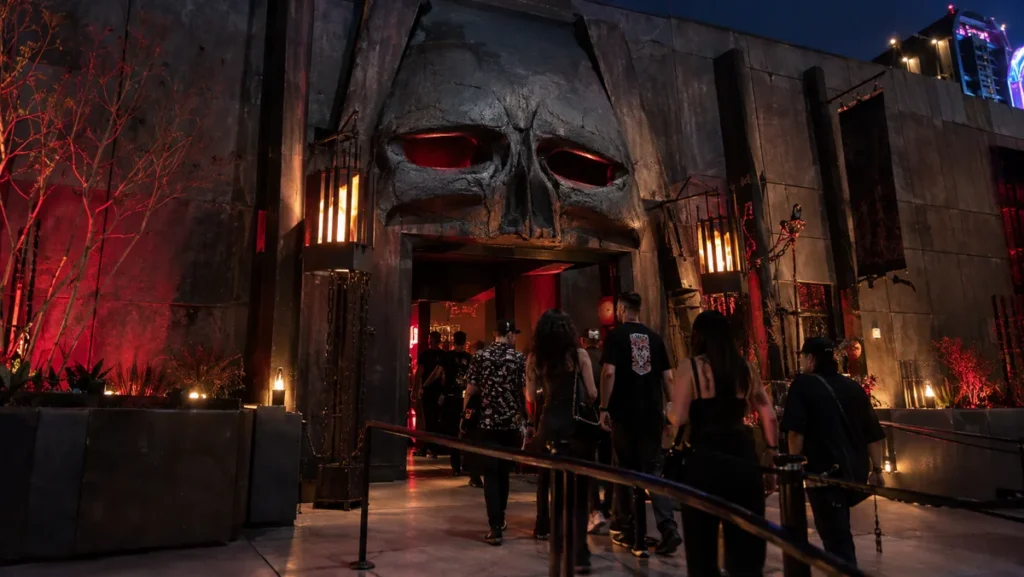
The year-round AREA15 experience includes four haunted houses, live entertainment, themed food and drinks, and intense scare environments. Tickets start at $69, and AREA15 suggests anywhere from two to six hours depending on how deeply you explore. It is recommended for ages 13 and older.
I would not call this essential for everyone. If jump scares and haunted houses do nothing for you, put the money toward a show or museum.
Time needed: Roughly 3–4 hours for most visitors
Cost: From $69
Best for: Horror fans and groups
15. Use the STRAT for the view
The STRAT sits north of the main central Strip cluster, which mattered more than I expected when planning.
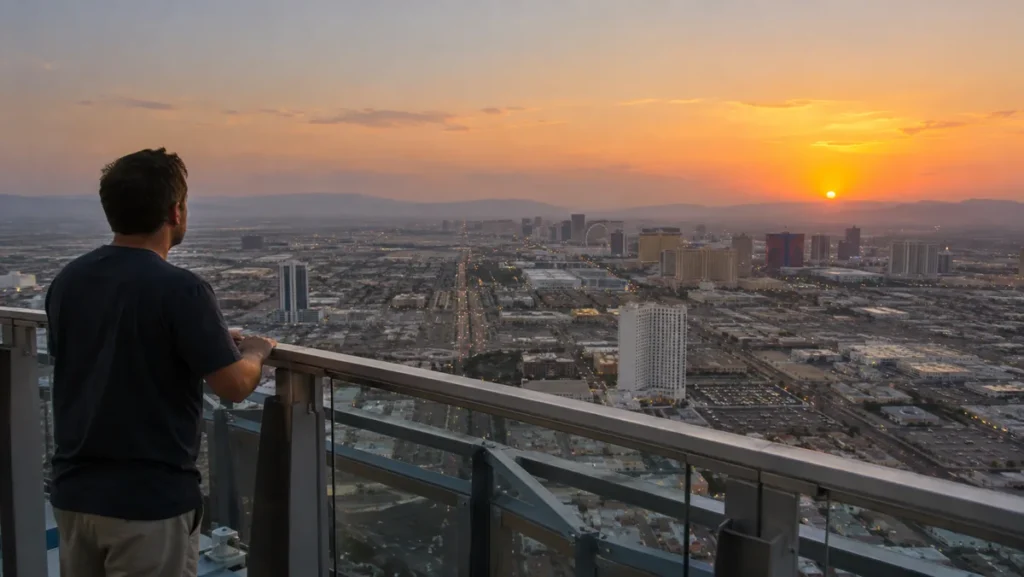
The observation levels and thrill rides can make it a useful stop, but I would combine it with the Arts District or Downtown instead of traveling north and immediately back south.
Time needed: 1–2 hours
Estimated cost: Roughly $25–60+ depending on package
Best time: Sunset into evening
16. Photograph the Welcome to Fabulous Las Vegas sign early
The famous sign was worth seeing, but it did not need to become a major event.
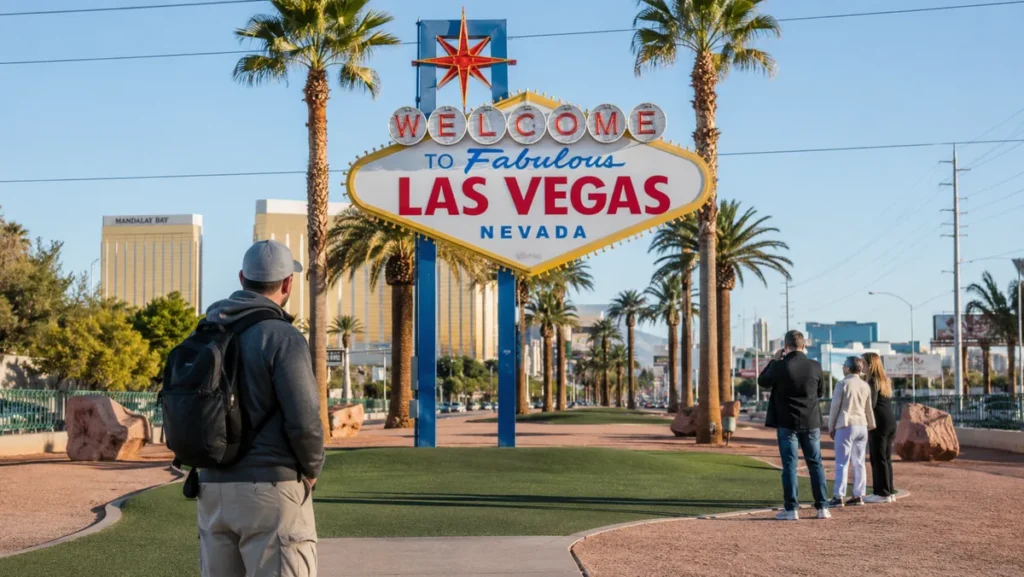
I stopped early, took the photograph, and moved on rather than spending a long time standing in stronger midday heat.
Time needed: 15–30 minutes
Cost: Free
Best time: Early morning
My take: Worth the stop if it fits your route; not worth reorganizing half a day
17. Visit Shark Reef Aquarium if it fits your route
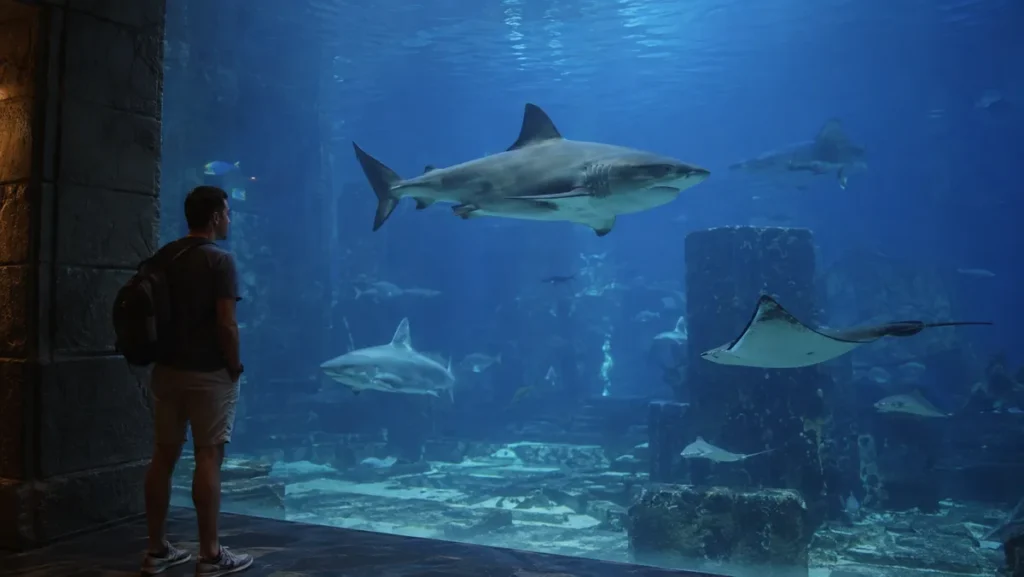
Shark Reef Aquarium at Mandalay Bay makes the most sense for families or travelers already spending time at the south end of the Strip.
Current timed-entry adult admission is $29, while the more flexible anytime ticket is $36. The aquarium operates daily from 10 a.m. to 8 p.m., with last entry at 7 p.m.
I would not cross the entire city specifically for it on a short adults-only trip. If you are staying nearby or traveling with children, the decision is much easier.
Time needed: 1–1.5 hours
Cost: $29 timed entry / $36 anytime adult ticket
Best for: Families and hot afternoons
18. Use the Flamingo Wildlife Habitat as a free reset
Not every worthwhile Vegas stop needed to be spectacular.
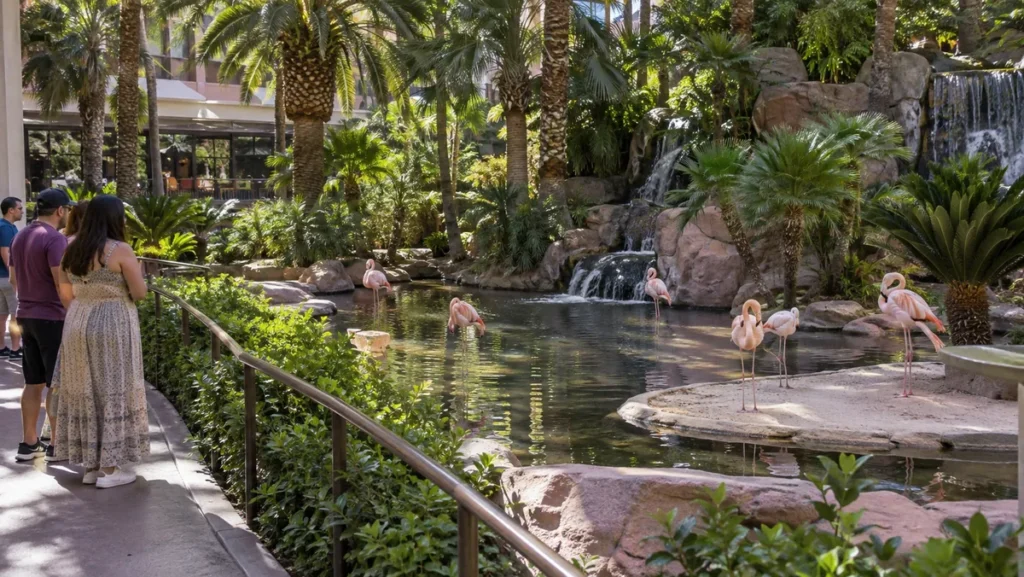
The Flamingo Wildlife Habitat gave me a quieter break between casinos, with flamingos, fish, turtles, gardens, and water features.
Its location is the real advantage. You can add it while moving between Caesars Palace, LINQ, Flamingo, and the High Roller without creating another cross-city trip.
Time needed: 20–40 minutes
Cost: Free
My take: Worth adding when you are already nearby
19. Spend a few dollars at the Pinball Hall of Fame
The Pinball Hall of Fame was the rare Vegas attraction where a few dollars lasted surprisingly long.
Entry is free, and many vintage machines cost roughly 25–50 cents per play.
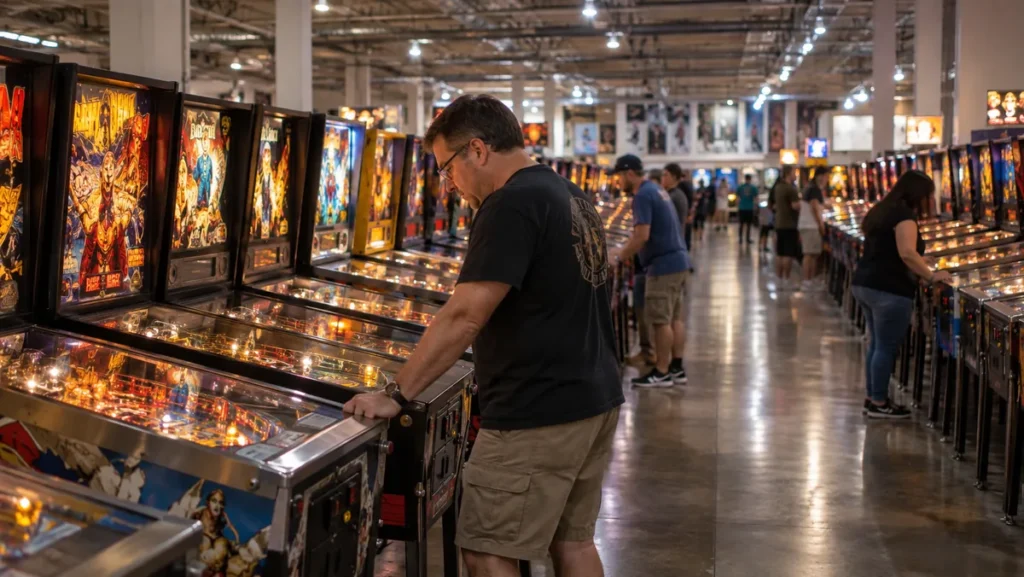
It felt completely different from casino gambling: casual, nostalgic, and inexpensive enough that winning or losing did not matter.
Time needed: 45–90 minutes
Cost: Free entry; many games about $0.25–0.50
Best for: Retro gaming, families, budget travelers
20. Spend a morning at Red Rock Canyon
Red Rock Canyon was the best change of pace from Las Vegas itself.
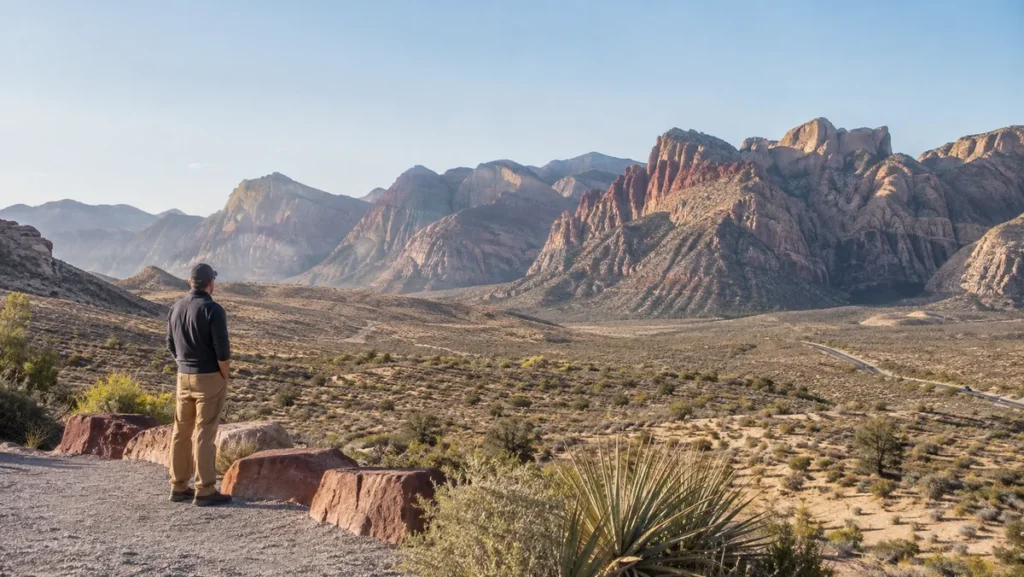
The desert landscape, sandstone formations, trails, and 13-mile Scenic Drive made the casinos feel much farther away than they actually were.
The planning rules matter. Timed-entry reservations are required from October 1 through May 31 between 8 a.m. and 5 p.m. Reservations open on a rolling schedule, and parking areas can fill on busy days.
Official Red Rock Canyon timed-entry information
Time needed: 3–5 hours
Vehicle entry: About $20, with a reservation fee when timed entry is required
Best time: Morning
Transport: A rental car is simplest for independent travelers
21. Choose Hoover Dam when you want an easier day trip
Hoover Dam made more sense for a short Vegas itinerary than committing an entire day to the Grand Canyon.
The drive from central Las Vegas typically takes about 45 minutes each way when traffic is reasonable.
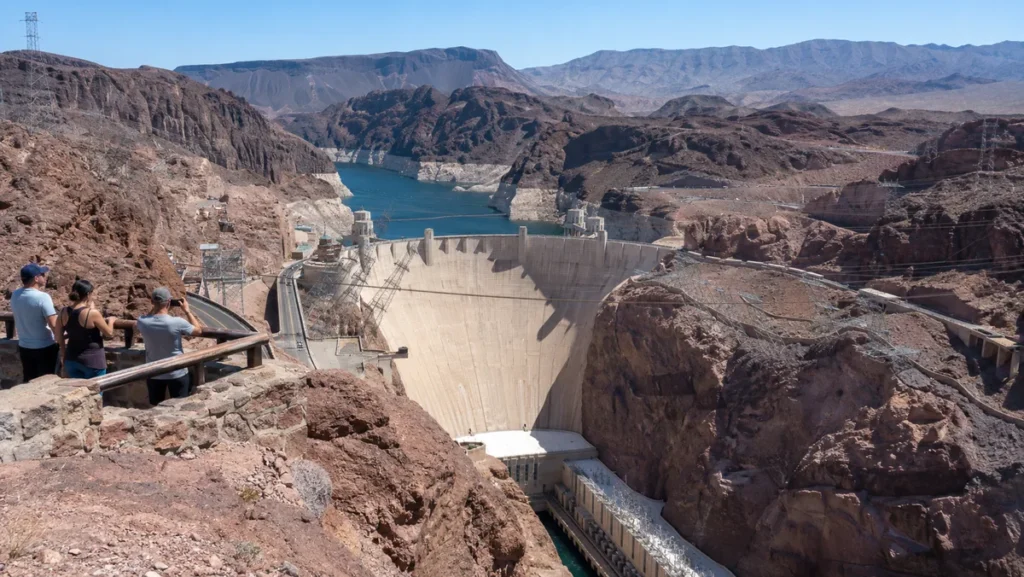
Organized half-day trips commonly cost roughly $60–120 per person. Self-driving can work out cheaper for couples or small groups.
Time needed: 4–6 hours
Estimated cost: Around $60–120 for many organized tours
Best for: Engineering, history, and visitors short on time
22. Treat Grand Canyon West as a full-day decision
“Grand Canyon from Las Vegas” sounded much easier before I looked carefully at the logistics.
Grand Canyon West is the closest major Grand Canyon option, but once driving, stops, admission, meals, queues, and sightseeing are included, the trip often takes 9–12 hours.
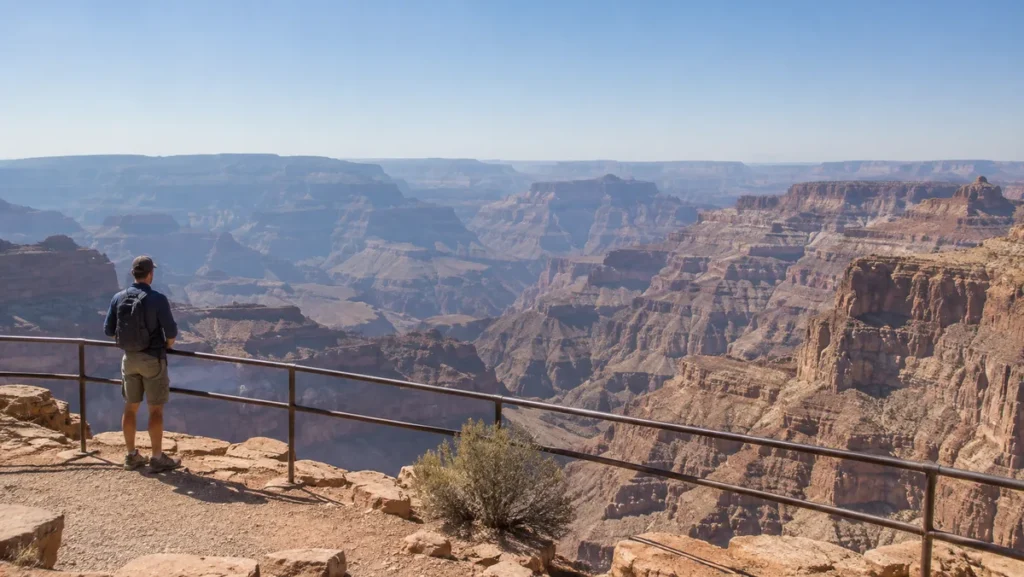
Coach excursions frequently cost around $100–200+ per person, with helicopter combinations much higher.
With three days in Las Vegas, I preferred Red Rock Canyon or Hoover Dam. With four or five days, the Grand Canyon becomes much easier to justify.
Time needed: 9–12 hours
Estimated cost: Roughly $100–200+
My take: Do not force this into an already crowded three-day itinerary
23. Watch Lake of Dreams at Wynn
Lake of Dreams is an easy nighttime add-on when you are already around Wynn or the north-central Strip.
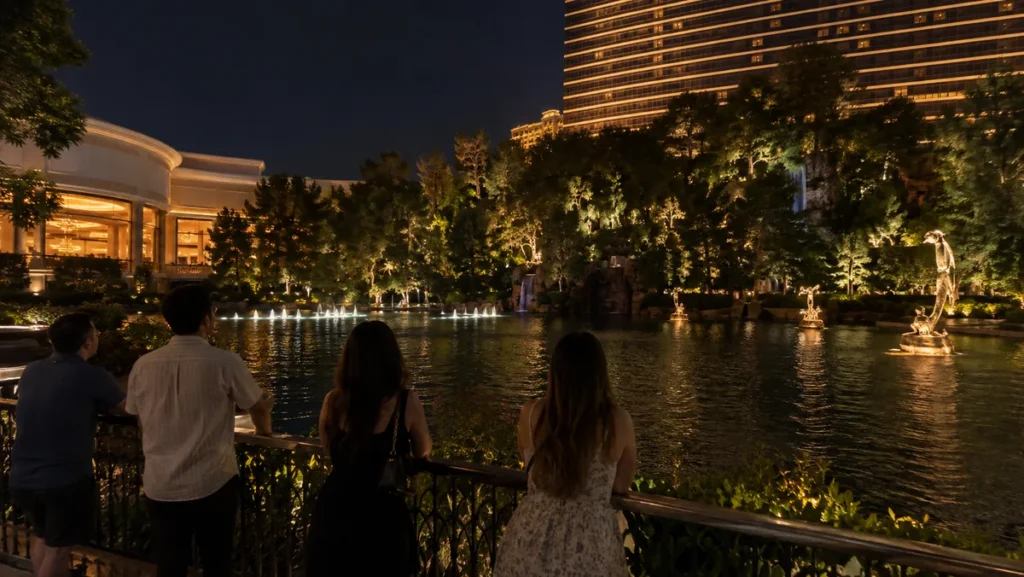
The multimedia show combines lighting, music, video, and large-scale puppetry. Shows begin at dusk and currently run every half hour until 11:30 p.m. The experience can be viewed free by the public from designated areas.
Time needed: 20–30 minutes
Cost: Free from public viewing areas
Best time: After dark
My take: A good free alternative when you do not want another ticketed attraction
24. Eat at least one meal away from the big resort restaurants
Some of my most useful food planning happened once I looked beyond the casino dining rooms.
Las Vegas has expensive celebrity restaurants, but Chinatown and other off-Strip areas make it much easier to find Korean barbecue, Japanese food, Vietnamese dishes, Chinese restaurants, bakeries, and casual late-night meals.
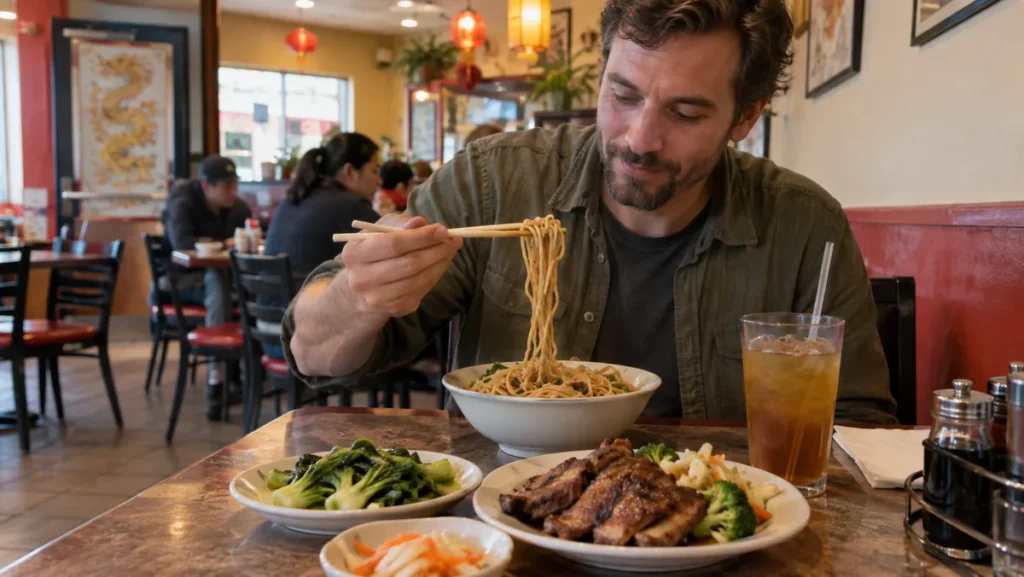
A reasonable food budget is:
- Quick meal: about $15–25
- Casual sit-down meal: about $25–45 per person
- Upscale restaurant: roughly $60–120+ per person before drinks
- Major resort buffet: often about $45–85+
For a three-day trip, I would book one memorable dinner and keep the other meals simpler.
25. Finish one night somewhere with a view
After filling the first part of the trip with attractions, I appreciated having one evening that did not require another formal ticket.
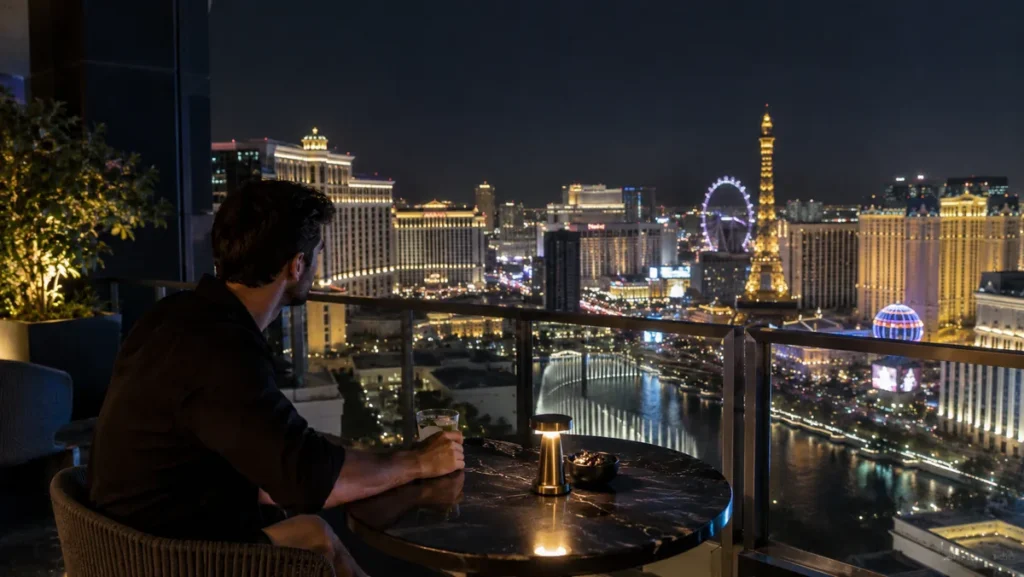
A rooftop or high-floor bar worked well because I still got the city lights without spending another two or three hours inside an attraction.
Cocktails at Strip venues commonly run around $20–30+, and some lounges may have minimum spends or cover charges.
Time needed: 1–2 hours
Estimated cost: Roughly $25–60+ per person
My take: Better at the end of a busy day than squeezing in another attraction
The free things to do in Las Vegas I would prioritize
The free attractions did more than save money. They gave me flexibility between reservations.
My strongest choices were:
- Bellagio Fountains
- Bellagio Conservatory
- Fremont Street Experience
- Flamingo Wildlife Habitat
- Welcome to Fabulous Las Vegas sign
- Walking through The Venetian
- Caesars Palace and the Forum Shops
- Arts District
- Seeing Sphere from outside
- Lake of Dreams
- Pinball Hall of Fame entry
A first-time visitor could easily fill half a day with free sightseeing without feeling as though they had settled for second-rate attractions.
Las Vegas was easy to enjoy without making gambling the point
Before the trip, it was easy to imagine gambling dominating the experience.
In reality, I could have filled three days with shows, museums, immersive art, restaurants, desert scenery, Downtown Las Vegas, resort architecture, and viewpoints without spending serious time at a table or slot machine.
For a non-gambling first trip, I would prioritize one show, Fremont Street, the Mob Museum, Bellagio, Sphere, High Roller, one AREA15 experience, and Red Rock Canyon.
That still felt unmistakably Las Vegas.
A realistic 3-day Las Vegas itinerary
| Time | Day 1 — Central Strip | Day 2 — Downtown + AREA15 | Day 3 — Red Rock + Final Night |
|---|---|---|---|
| 9:00 a.m. | Bellagio Conservatory | Mob Museum | Drive to Red Rock Canyon |
| 10:00 a.m. | Caesars Palace | Continue Mob Museum | Scenic Drive + short hike |
| 12:00 p.m. | Lunch near LINQ | Lunch Downtown | Return toward Las Vegas |
| 1:30 p.m. | Venetian + Grand Canal | Arts District | Lunch and hotel break |
| 4:00 p.m. | Hotel rest | Omega Mart / AREA15 | High Roller or STRAT |
| 6:30 p.m. | Dinner | Dinner Downtown | Dinner on the Strip |
| 8:00 p.m. | Bellagio Fountains | Fremont Street | Cirque or Sphere |
| 10:00 p.m. | High Roller / drinks | Neon Museum | Drinks or an open evening |
The biggest improvement here is not fitting in more attractions. It is keeping each day geographically sensible.
Getting around Las Vegas without wasting hours
Walking was the cheapest option and occasionally the least efficient.
My early mistake was measuring distance building-to-building. In Vegas, reaching the actual entrance can involve pedestrian bridges, escalators, shopping arcades, casino floors, and several unexpected turns.
| Transport | Current/Typical Cost | Best Use |
|---|---|---|
| Walking | Free | Nearby attractions in the same cluster |
| Deuce bus | $4 single / $6 2-hour / $8 24-hour / $20 3-day | Strip and Downtown |
| Las Vegas Monorail | $5.50 eTicket single / $13.45 1-day ePass | East side of Strip |
| Rideshare | Roughly $10–30 for many central trips | Fast point-to-point travel |
| Taxi | Roughly $15–35 for many central rides | Airport and hotel transfers |
| Rental car | Roughly $40–80/day plus parking | Red Rock and Hoover Dam |
RTC currently lists visitor fares of $4 for a single ride, $6 for two hours, $8 for 24 hours, and $20 for three days. The Deuce normally runs about every 15 minutes along the Strip and Downtown corridor.
The Las Vegas Monorail currently charges $5.50 for an eTicket single ride and $13.45 for a one-day ePass, with multi-day passes available.
Check current RTC Las Vegas fares
The system that worked best for me was simple: walk within one cluster, then use transit or rideshare when changing areas.
Where I would stay on a first Las Vegas trip
For sightseeing, the central Strip was the easiest base.
Bellagio, Caesars Palace, Flamingo, LINQ, The Venetian, and several other major attractions were close enough to combine, even if the actual walks took longer than I expected.
| Area | Best For | Typical Room Range | Main Trade-off |
|---|---|---|---|
| Central Strip | First visits and sightseeing | About $120–300+ | Higher prices on busy dates |
| South Strip | Larger resorts and potential value | About $80–220+ | Longer travel to central sights |
| North Strip | Newer resorts, quieter base | About $100–250+ | Less convenient for Bellagio/LINQ |
| Downtown | Fremont nightlife and value | About $60–180+ | Separate from Strip attractions |
| Off-Strip | Budget stays and road trips | About $70–180+ | Greater dependence on car/rideshare |
These are planning ranges, not fixed rates. Weekends, conventions, concerts, Formula 1, sporting events, and major holidays can push room prices much higher.
The bigger lesson was not to judge a Las Vegas hotel by the headline room rate alone. Resort fees, taxes, parking, and extras can make the final total noticeably higher. I compared the final checkout price rather than the first number shown in search results.
A realistic Las Vegas daily budget
These estimates exclude gambling and major shopping.
| Travel Style | Accommodation | Food | Transport + Attractions | Estimated Daily Total |
|---|---|---|---|---|
| Budget | $70–120 | $35–60 | $20–60 | $125–240 |
| Mid-range | $140–250 | $60–110 | $70–150 | $270–510 |
| Comfortable | $250–450+ | $120–220 | $150–300+ | $520–970+ |
My best cost-control strategy was one meaningful paid experience per day, then building free or inexpensive stops around it.
That worked better than repeatedly spending $30, $40, or $60 on smaller attractions and discovering that those minor purchases had cost more than one excellent show.
The best time to visit Las Vegas
The season changes how practical the Strip feels.
| Period | Weather | Crowd/Price Pattern | Best For | My Take |
|---|---|---|---|---|
| March–May | Mild to increasingly hot | Busy around events/weekends | Walking, Red Rock | Strong overall period |
| June–August | Very hot | Some better midweek rates | Pools, indoor attractions | Limit midday walking |
| September–November | Hot becoming mild | Busy around major events | Outdoor sightseeing + nightlife | Another strong period |
| December–February | Cool days, colder nights | Highly event-dependent | Shows and museums | Comfortable for city sightseeing |
Summer heat is not a small planning detail. It changes the day. I would put outdoor stops and longer walks in the morning or evening and use museums, resorts, AREA15, restaurants, and shows during the hottest hours.
The mistakes I would avoid on a first Las Vegas trip
My biggest mistake was trying to cover too much distance.
The second was assuming every famous attraction deserved the same amount of time. The Welcome sign needed minutes. Bellagio Conservatory needed around half an hour. The Mob Museum could justify several hours. Red Rock Canyon deserved most of a morning.
I would also avoid stacking several expensive timed attractions together. Once every stop had a reservation time, the trip started feeling more like an appointment calendar than a vacation.
Another easy mistake is forgetting how quickly the small costs accumulate. Resort fees, drinks, rideshares, attraction upgrades, parking, and meals inside large resorts can move a moderate budget upward surprisingly fast.
After the trip, my preferred first-time formula became much simpler:
one strong show + one Downtown evening + one off-Strip experience + several free Strip attractions.
That gave me variety without making every hour feel scheduled.
Final thoughts
The Las Vegas trip I enjoyed most was not the version where I tried to collect the largest number of attractions.
It was the version where I stopped crossing the city unnecessarily, stayed longer at places that genuinely interested me, and left enough space for Vegas to be spontaneous.
If I planned the same first trip again, I would protect three things in the itinerary: one memorable show, one proper Downtown evening, and one experience away from the casino floor.
Everything else could fit around those.