



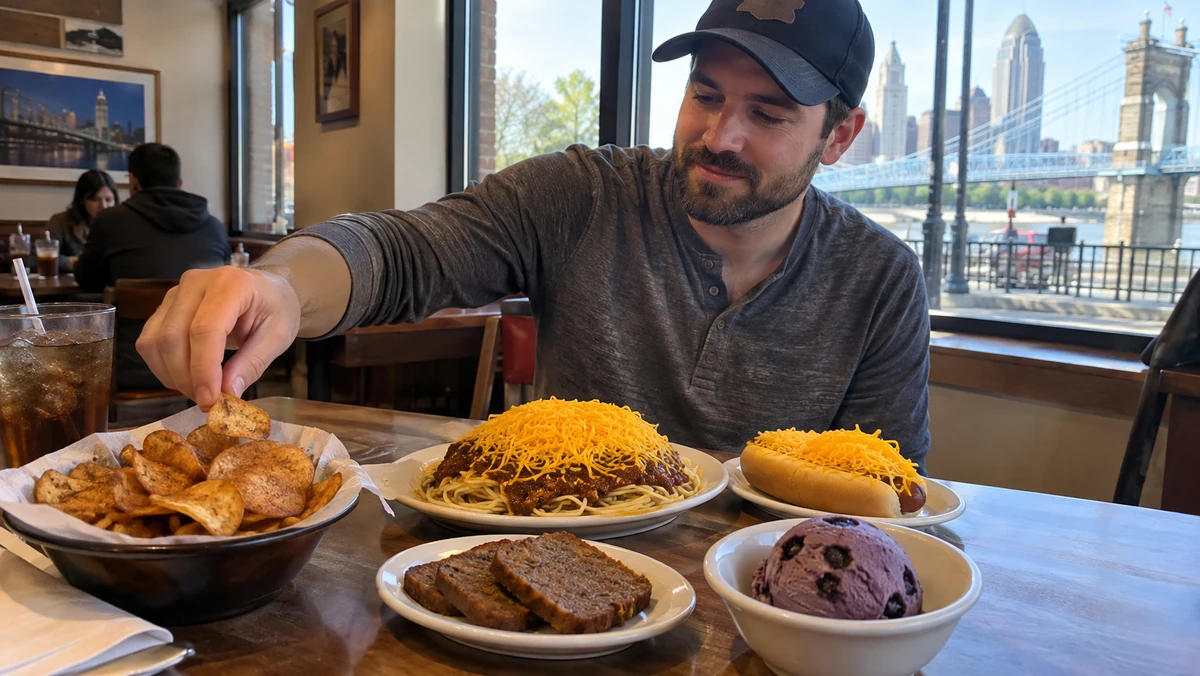
Cincinnati food surprised me more than I expected on my first visit. I arrived knowing about Cincinnati chili and Skyline, but I knew almost nothing about goetta, hot metts, opera creams, or how strongly German food traditions still shape the city.
The biggest thing I learned was that the foods Cincinnati is known for are not always the same as the best restaurants in Cincinnati. Some specialties grew directly from the city’s immigrant and industrial history. Others became local institutions because generations of families grew up eating them.
If you have limited time, start with Cincinnati chili, a cheese coney, goetta, Graeter’s Black Raspberry Chip, and Findlay Market. Those gave me the clearest introduction without turning the trip into one long meal.
Cincinnati Food at a Glance
| Food | What It Is | Priority | My Take |
|---|---|---|---|
| Cincinnati chili | Spiced meat sauce over spaghetti | Essential | Better once I stopped comparing it with regular chili |
| Cheese coney | Hot dog with chili and cheddar | Essential | Easy introduction to Cincinnati chili |
| Goetta | Meat and steel-cut oat breakfast sausage | Essential | One of the most distinctive foods |
| Graeter’s Black Raspberry Chip | French Pot ice cream | Essential | Easiest local favorite to love |
| Hot metts | Seasoned smoked sausage | High | Worth trying for the German influence |
| Grippo’s Bar-B-Q chips | Heavily seasoned potato chips | High | Excellent inexpensive snack |
| Schnecken | Rich German-style pastry | High | Worth saving breakfast room for |
| Opera creams | Cream-filled chocolates | High | Good take-home treat |
| LaRosa’s pizza | Cincinnati-born pizza chain | Medium | Local institution, but not essential |
| Montgomery Inn ribs | Famous local ribs | Medium | More institution than regional dish |
| Buckeyes | Peanut butter and chocolate candy | Medium | More Ohio than Cincinnati |
| Mock turtle soup | Historic beef-based soup | Medium | Best for food-history travelers |
| Clunker doughnut | Dense glazed cake doughnut | Medium | Good bakery deep cut |
| Sauerkraut balls | Fried sauerkraut-and-meat snack | Medium | Fits the German food tradition |
| Kings Island blue ice cream | Blueberry soft serve | Medium | Mostly about local nostalgia |
1. Cincinnati Chili
Cincinnati chili was the food I misunderstood most before arriving.
My mistake was expecting chili.
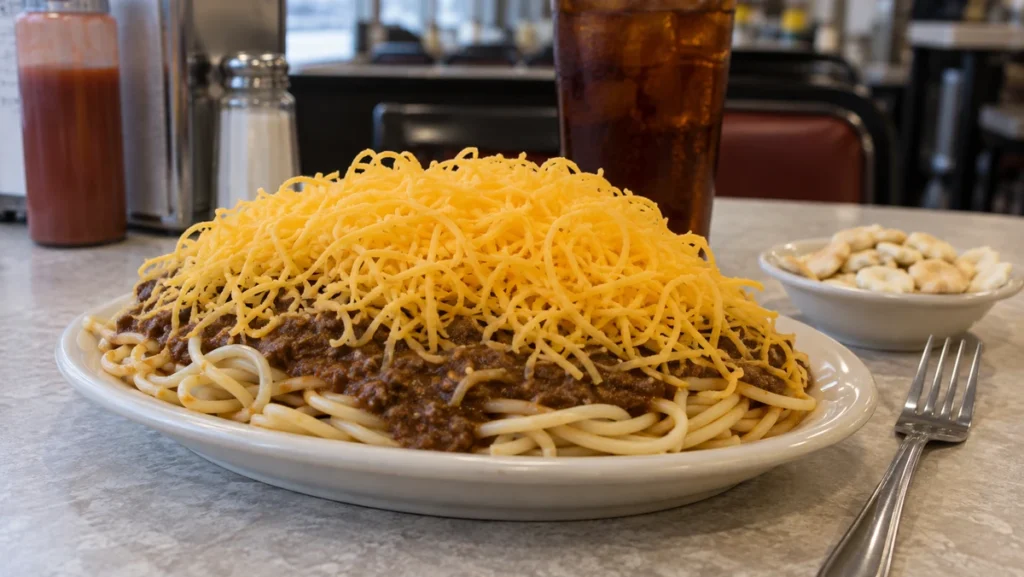
What arrived looked more like spaghetti covered with a thin, finely textured meat sauce and buried under shredded cheddar. Once I stopped comparing it with Texas-style chili, it made far more sense.
The flavor is warm and aromatic rather than intensely hot. The spaghetti softens the sauce, while the cheddar adds richness and salt.
The official Visit Cincy guide to Cincinnati-style chili explains how the dish grew from immigrant restaurant traditions and Mediterranean-influenced seasoning.
How to Order Cincinnati Chili
| Order | What You Get |
|---|---|
| 3-Way | Spaghetti + chili + shredded cheddar |
| 4-Way | 3-Way + onions or beans |
| 5-Way | 3-Way + onions + beans |
I started with a 3-Way, which was enough to understand the basic combination before adding anything else.
Skyline is the name most visitors recognize, but Cincinnati chili is bigger than one chain. Gold Star is another major brand, while places such as Camp Washington Chili represent the neighborhood chili-parlor tradition.
If you have time for two stops, trying one major chain and one independent parlor gives a better comparison than visiting several branches of the same type.
2. Cheese Coneys
The cheese coney was an easier introduction to Cincinnati chili than the spaghetti version.
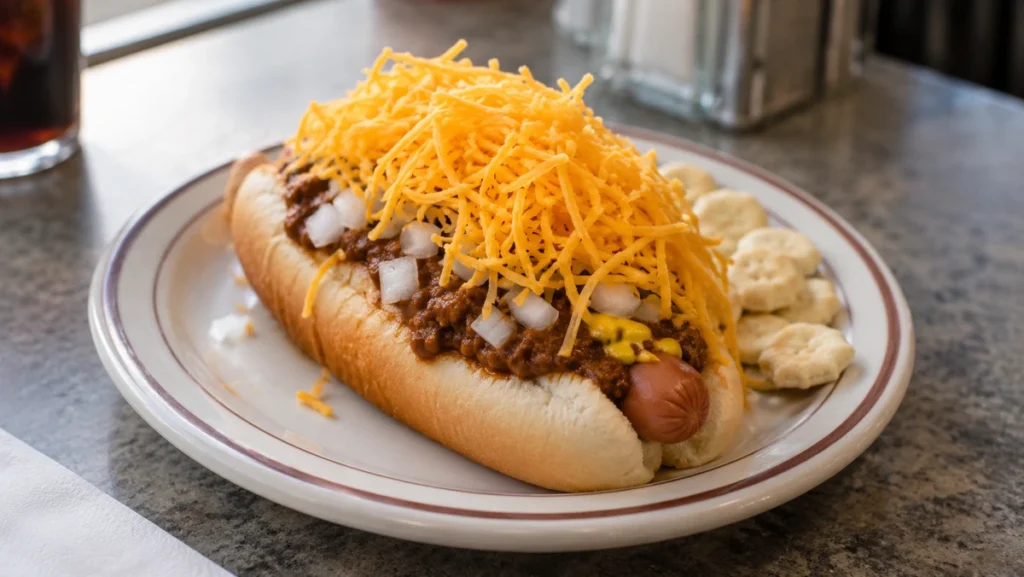
A typical coney combines a small hot dog, steamed bun, mustard, Cincinnati chili, diced onion, and a large pile of shredded cheddar.
The mustard cuts through the cheese, and the hot dog gives the chili a more familiar role as a topping.
It also fits a food crawl better than another full plate of spaghetti. Cincinnati’s traditional foods get heavy quickly, and ordering smaller portions made the day much more enjoyable.
If Cincinnati chili sounds strange, I would start with a coney.
3. Goetta
Goetta was the biggest surprise of the trip.
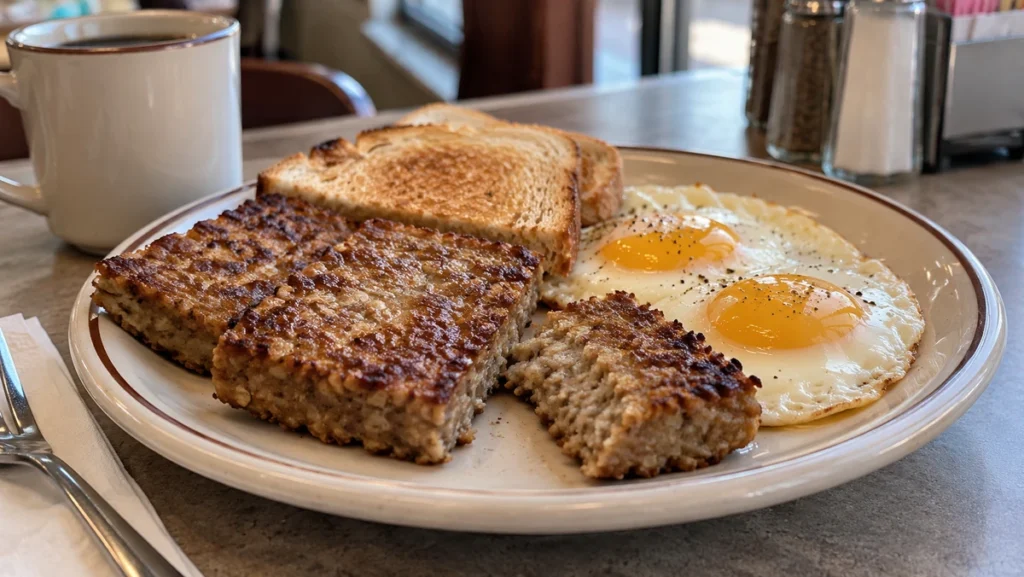
It combines ground meat with steel-cut oats and seasoning, then gets sliced and fried. The official Visit Cincy guide to goetta traces it to the German immigrant traditions of Cincinnati and Northern Kentucky.
The oats change the texture more than I expected.
A well-cooked slice had crisp browned edges while the middle stayed softer and slightly grainy. It was clearly a breakfast meat, but it did not taste or feel like an ordinary sausage patty.
I tried it simply rather than starting with one of the modern versions served on pizza, tacos, or appetizers.
That was the better approach. Plain goetta explained the food before the creative versions complicated it.
For a first Cincinnati breakfast, this is the local specialty I would prioritize.
4. Graeter’s Black Raspberry Chip Ice Cream
Graeter’s required no adjustment period.
It was simply excellent ice cream.
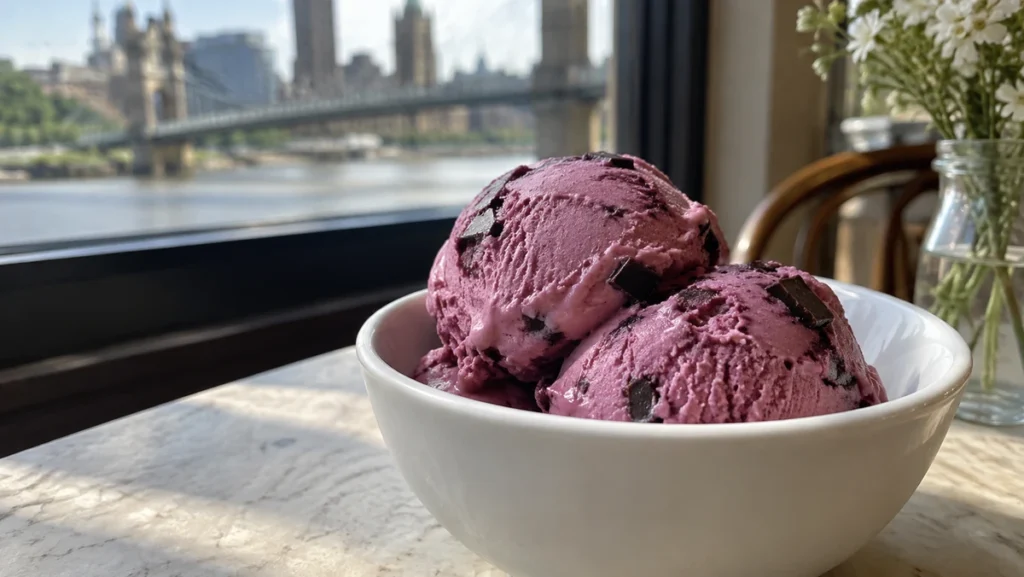
The Cincinnati company dates to 1870 and still uses its traditional French Pot method. Its official history explains how the company continues producing ice cream in small batches.
I ordered Black Raspberry Chip, its signature flavor.
“Chip” made me expect tiny pieces of chocolate. Instead, some spoonfuls had thin fragments while others contained much larger chunks.
The raspberry was slightly tart, which balanced the rich cream and chocolate well.
Of all the Cincinnati foods I tried, this was the easiest one to recommend without qualifications.
5. Hot Metts
Hot metts were one of the foods I was happiest to find beyond the usual Cincinnati checklist.
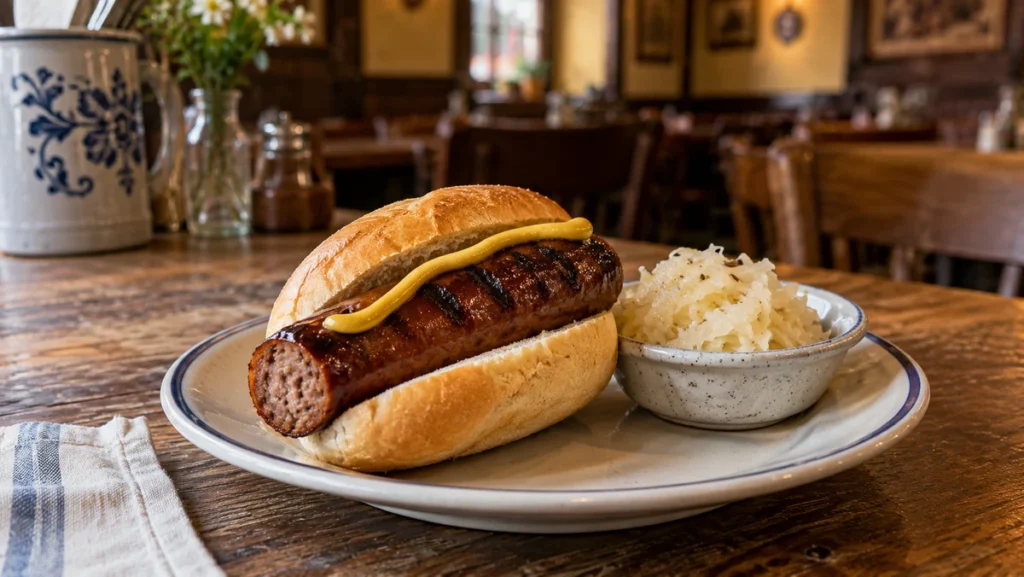
A mett is part of the region’s German sausage tradition. The one I tried was smoky, salty, well-seasoned, and more assertive than a mild bratwurst.
The food makes more sense when you know Cincinnati’s history. The city became a major pork-processing center in the 19th century and even gained the nickname Porkopolis.
Combined with generations of German immigration, that helps explain why goetta, metts, butcher shops, and sausages remain so closely tied to Cincinnati.
If you like sausage, I would put a hot mett above several more famous branded foods.
6. Grippo’s Bar-B-Q Potato Chips
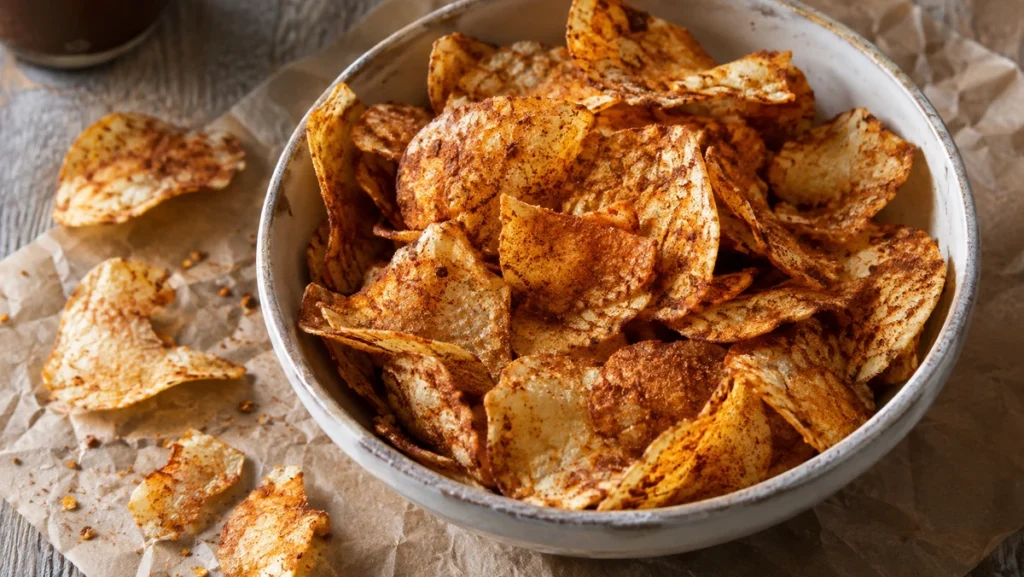
Grippo’s required no itinerary planning, which was part of their appeal.
I bought a bag expecting ordinary barbecue chips and immediately noticed how heavily seasoned they were.
The flavor was sweet, smoky, salty, and noticeably spicy.
After several heavy meals, I also appreciated trying something local without sitting down for another restaurant meal.
They were one of the easiest Cincinnati foods to buy for the hotel or take home.
7. Schnecken
Schnecken gave me a welcome break from sausage and chili.
The German-style pastry is rolled into a spiral and commonly includes butter, cinnamon, and sweet toppings or fillings.
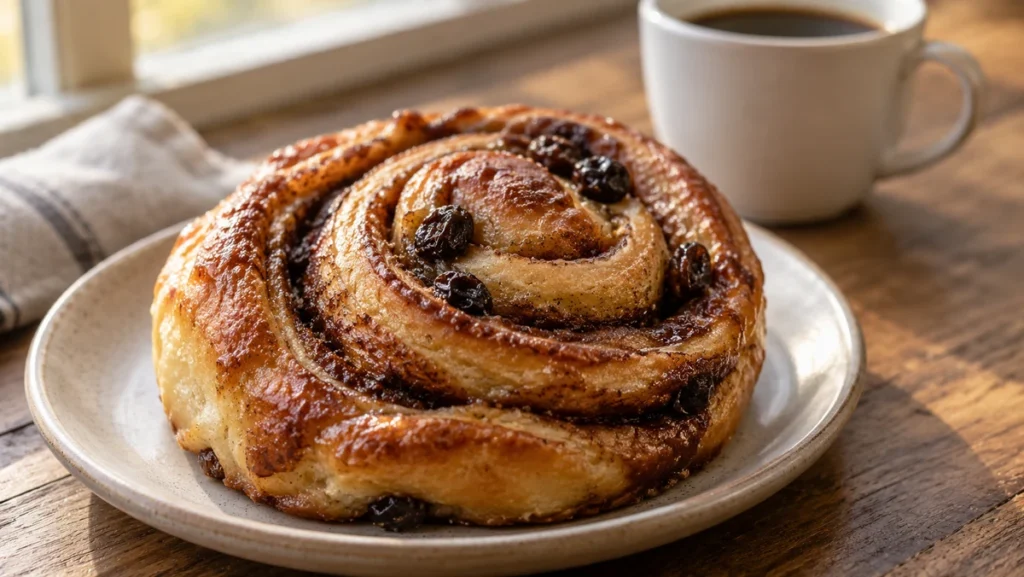
I expected something close to an ordinary cinnamon roll. It was denser, richer, and more buttery.
If you enjoy old-fashioned bakeries, this is worth adding to breakfast. I nearly filled up completely on goetta and eggs before realizing Cincinnati’s German food story extends well beyond meat.
8. Opera Creams
Opera creams were one of the quieter discoveries of the trip.
These chocolates have a soft cream center and a long association with confectioners in Cincinnati and Northern Kentucky.
They do not come with the recognition of Skyline or Graeter’s, which was part of their appeal.
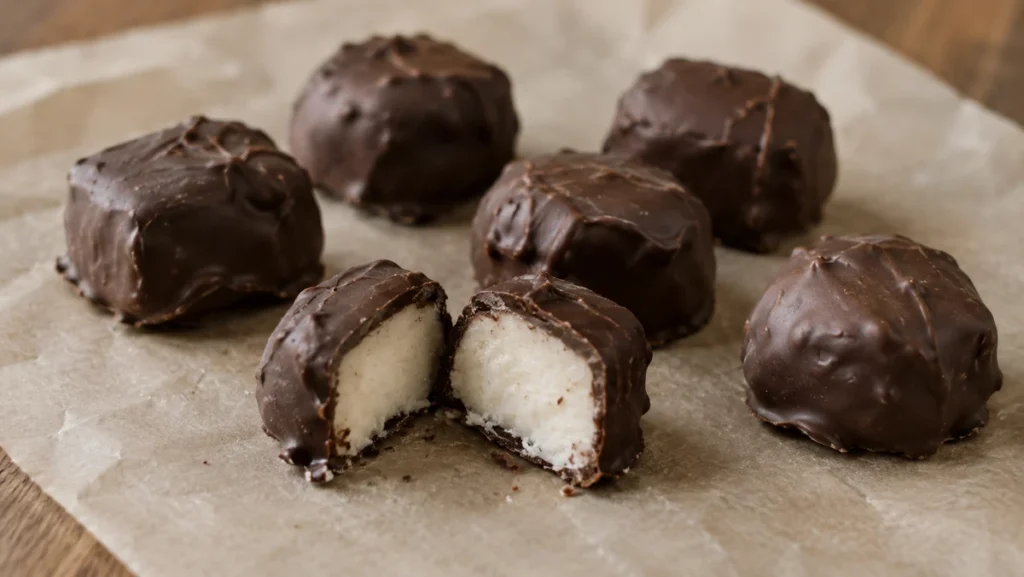
I could buy a few, eat one later, and take the rest home.
They also felt more specifically tied to the Cincinnati region than buckeyes, making them one of my favorite edible souvenirs.
9. LaRosa’s Pizza
LaRosa’s was one of the foods where I understood the local loyalty more than I needed a second serving.
Its pizza has a recognizable sauce-and-cheese profile, and the Cincinnati-born chain is deeply tied to local family meals and sporting events.
For somebody with only a day or two in town, though, I would put goetta, chili, and Graeter’s first.
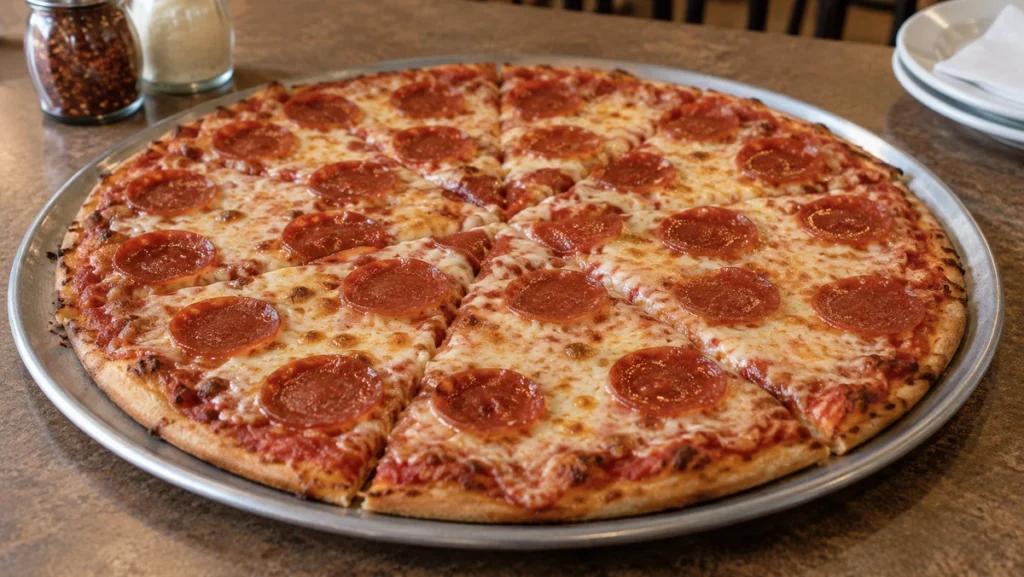
LaRosa’s made more sense to me as a Cincinnati institution than as an essential regional dish.
That distinction helped keep my limited meals focused.
10. Montgomery Inn Ribs
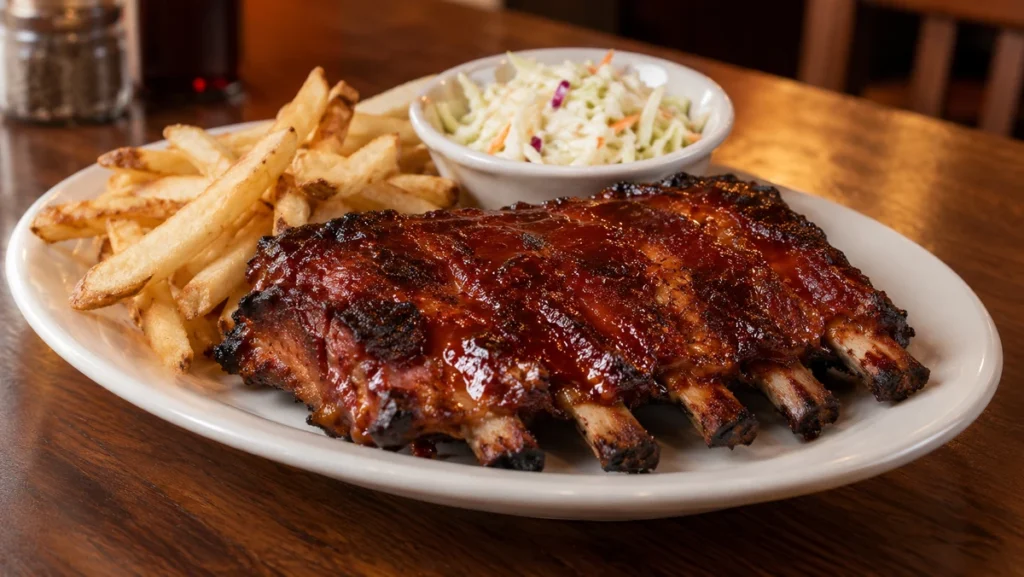
Montgomery Inn fits the same category.
Its ribs and barbecue sauce have been associated with Cincinnati for decades, but barbecue itself is not uniquely Cincinnati.
I treated it as an iconic local restaurant experience rather than a food that explains the region as clearly as goetta or Cincinnati chili.
Barbecue fans may rank it much higher. On a short first trip, I didn’t.
11. Buckeyes
Buckeyes combine peanut butter and chocolate and are shaped to resemble the nut of Ohio’s buckeye tree.
They are rich, simple, and easy to like.
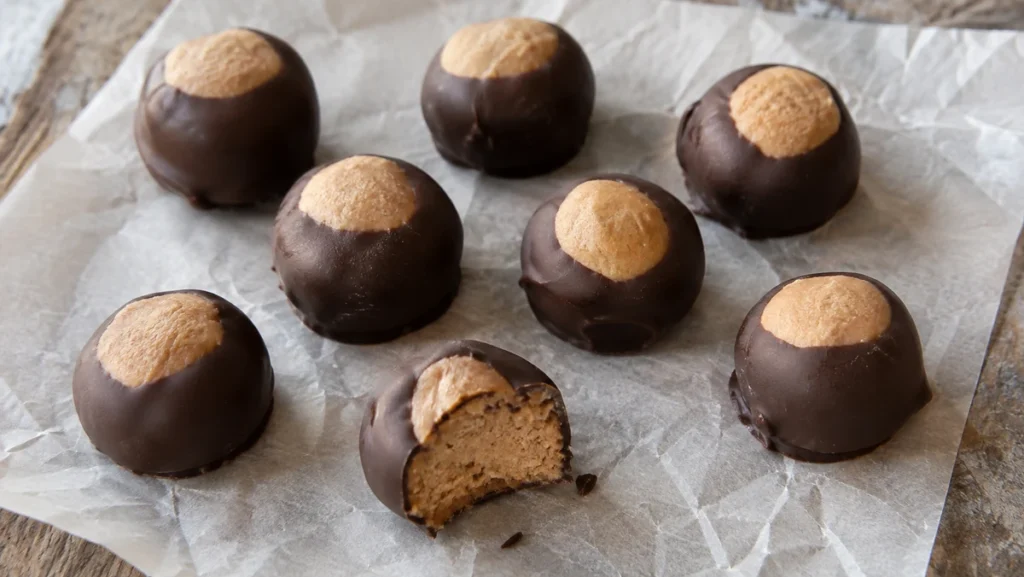
But I would classify them as an Ohio specialty rather than a uniquely Cincinnati food.
That moved them below opera creams on my list. Still, they are inexpensive, widely available, and easy to add if you are already trying regional sweets.
12. Mock Turtle Soup
Mock turtle soup was the most unusual historical food I encountered.
Despite the name, Cincinnati versions traditionally associated with old restaurants use beef rather than turtle.
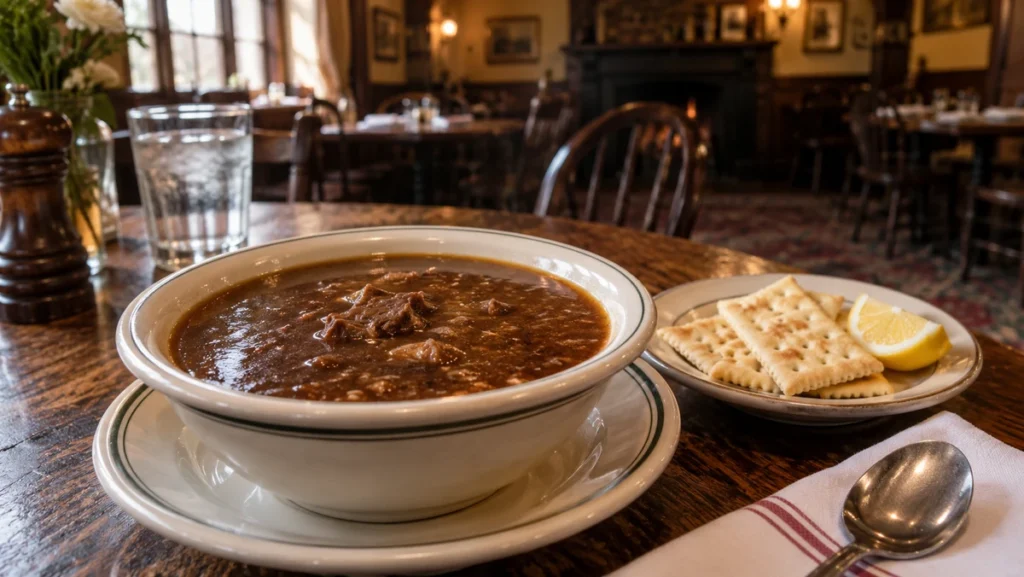
This is not something every visitor needs to hunt down. Its appeal is mainly historical.
What interested me was less the question of whether it tasted better than chili and more why the dish survived in Cincinnati after disappearing from so many other American menus.
For travelers interested in old restaurants and food history, that makes it worthwhile.
13. Clunker Doughnuts
Clunkers took me deeper into Cincinnati bakery territory.
They are dense, cake-like doughnuts with irregular exteriors that hold plenty of glaze.
This is not an airy pastry, and I was glad I saved mine for later rather than adding it to an already heavy breakfast.
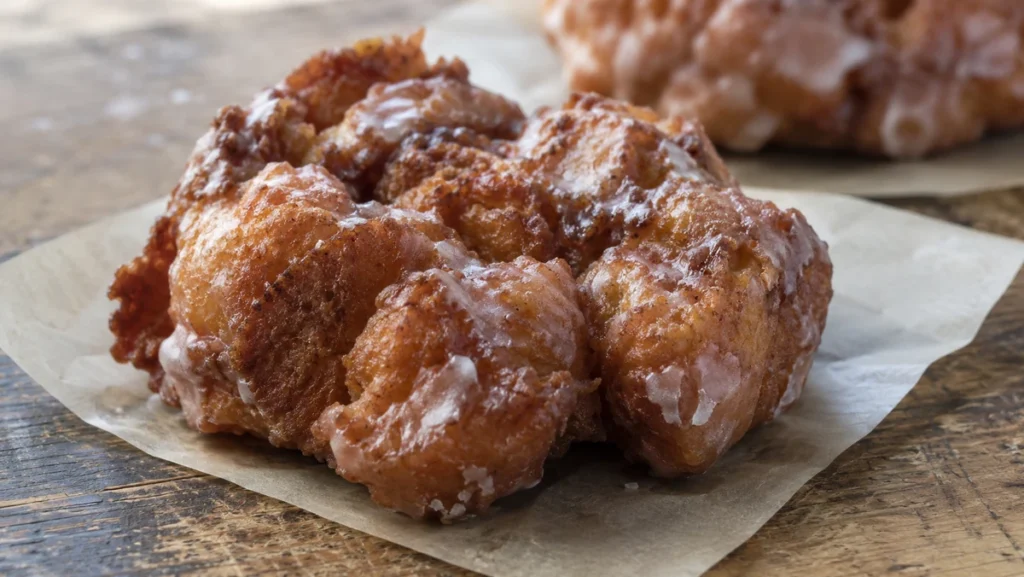
Clunkers are not essential on a short visit, but bakery lovers may enjoy finding something beyond the city’s nationally recognized foods.
14. Sauerkraut Balls
Sauerkraut balls sounded less appealing than they tasted.
Versions vary, but they generally combine sauerkraut with meat or sausage, then bread and fry the mixture.
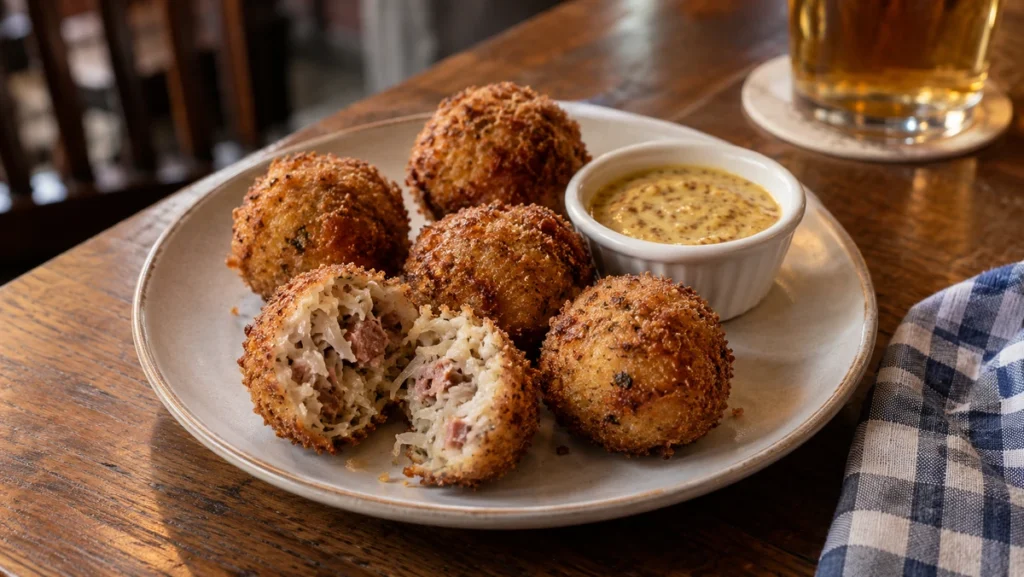
The crisp coating softened the sharpness of the sauerkraut, while the meat made the filling richer.
They are not exclusively Cincinnati, so I would not present them as a local invention. They do, however, fit naturally into the region’s German-influenced food culture.
Sharing one order was plenty.
15. Kings Island Blue Ice Cream
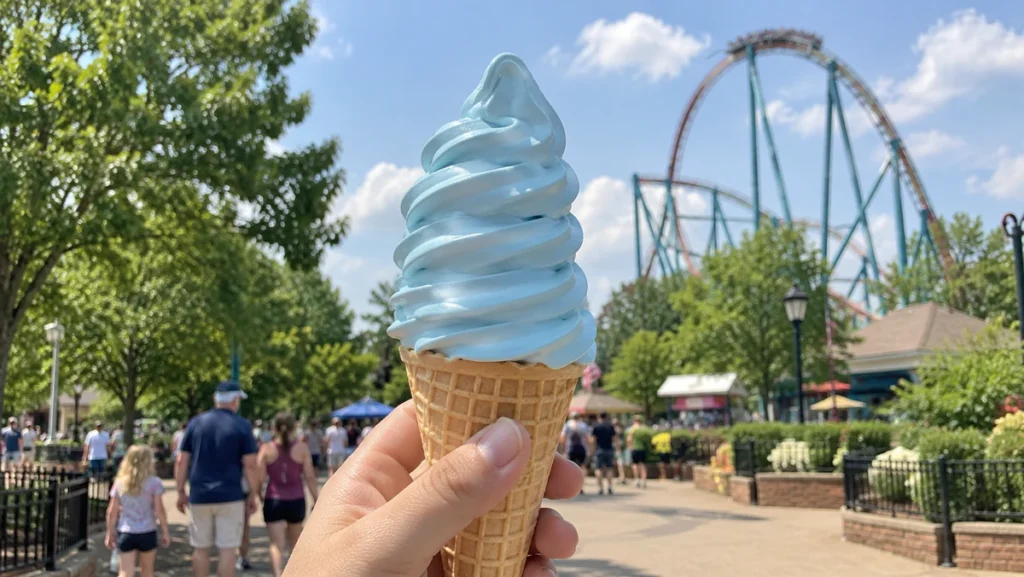
Kings Island’s blue soft serve is more Cincinnati-area nostalgia than serious food tourism.
The blueberry-flavored ice cream became associated with generations of visits to the amusement park.
Graeter’s was easily the better ice cream for me.
The blue cone was more about the experience.
I would not travel to Kings Island solely to eat one, but if the park is already part of your trip, trying it makes sense.
Findlay Market Was My Best Cincinnati Food Stop
If I had to choose one place rather than one dish, I would choose Findlay Market.
The market opened in 1855, and the official Findlay Market history documents its long role in Cincinnati’s public-market tradition.
Walking through it helped connect many of the foods I had been trying.
Instead of one famous dish, I found butcher counters, produce, prepared foods, specialty groceries, and independent merchants gathered in historic Over-the-Rhine.
My first instinct was to buy from the first stall that looked good.
Walking the market once before ordering anything worked much better. It stopped me from becoming full before I had seen what was available.
For a first-time visitor interested in Cincinnati food rather than just famous restaurants, this was one of the most useful stops of the trip.
Why Cincinnati Food Makes More Sense Once You Know the History
Cincinnati’s traditional foods began connecting once I understood the city’s history.
German immigration left a lasting mark on sausages, bakeries, brewing, goetta, and Over-the-Rhine. Cincinnati’s large meat-processing industry reinforced those traditions.
Another immigrant story produced the city’s most famous food. Mediterranean-influenced restaurateurs developed Cincinnati chili into its distinctive system of spaghetti Ways and cheese coneys.
The result is not one tidy cuisine.
It is a mix of German meat and bakery traditions, Mediterranean-influenced chili parlors, old confectioners, Ohio sweets, long-running family food brands, and a much broader modern restaurant scene.
The official Visit Cincy food and drink guide is useful for checking current restaurants and neighborhoods before a trip.
How I’d Plan One Cincinnati Food Day
Trying all 15 foods in a single day would be miserable.
Most are heavy, salty, sweet, or meat-forward. Spacing them out worked much better.
Breakfast: goetta with eggs or in a breakfast sandwich.
Late morning: walk through Findlay Market and share a snack rather than ordering another full meal.
Lunch: try a smaller 3-Way and a cheese coney, especially if you can share.
Afternoon: Grippo’s or opera creams.
Dessert: Graeter’s Black Raspberry Chip.
Dinner: eat beyond the famous Cincinnati checklist. I used later meals to explore the wider restaurant scene rather than repeating legacy brands.
That balance gave me a better impression of Cincinnati than trying to eat every famous item consecutively.
Getting Around Downtown, OTR, and Findlay Market
Downtown, Over-the-Rhine, and Findlay Market can be combined without driving between every stop.
The Connector streetcar links these central areas and is currently free to ride. The City of Cincinnati’s official Connector guide provides current route and service information.
That was more convenient than repeatedly moving the car and searching for parking.
For a food-focused day around Findlay Market, OTR, downtown, and The Banks, it is worth checking before you set out.
Cincinnati Food Mistakes I’d Avoid
Expecting Cincinnati Chili to Taste Like Regular Chili
This caused most of my initial confusion.
Think of it as a seasoned meat sauce for spaghetti and hot dogs rather than a bowl of conventional chili.
Ordering Full Portions at Every Stop
Sharing let me taste much more without making every new dish feel like work.
Eating Only at Famous Chains
Skyline, Graeter’s, and LaRosa’s matter, but they are not the entire food scene.
An independent chili parlor, butcher, bakery, or Findlay Market vendor adds much more context.
Ignoring Northern Kentucky
The Ohio River is a state border, not a food border.
Communities such as Covington and Newport share much of Greater Cincinnati’s food culture, especially around goetta and traditional regional businesses.
Calling Every Good Dish “Cincinnati Food”
A restaurant can serve some of the best food in Cincinnati without serving a traditional Cincinnati specialty.
Keeping those two ideas separate made planning meals much easier.
The Five Cincinnati Foods I’d Prioritize
If I repeated my first trip, these would be my first five:
- Goetta
- Cincinnati chili
- A cheese coney
- Graeter’s Black Raspberry Chip
- Something from Findlay Market
The lesser-known foods I was happiest to discover were hot metts, opera creams, schnecken, and Grippo’s Bar-B-Q chips.
LaRosa’s, Montgomery Inn, buckeyes, clunkers, and mock turtle soup made more sense after I had covered the essentials.
FAQ About Cincinnati Food
What food is Cincinnati most famous for?
Cincinnati is best known for Cincinnati-style chili, particularly 3-Ways, 4-Ways, 5-Ways, and cheese coneys. Goetta and Graeter’s ice cream are also strongly associated with the region.
What is goetta?
Goetta combines ground meat with steel-cut oats and seasoning. It developed from German immigrant food traditions in Cincinnati and Northern Kentucky and is usually sliced and fried.
Is Skyline the only place to try Cincinnati chili?
No. Skyline is the best-known chain, but Cincinnati also has Gold Star and independent chili parlors. Trying a chain and an independent parlor gives a more useful comparison.
Is Findlay Market worth visiting for food?
Yes. It was one of my best stops because it brought butcher counters, prepared foods, produce, specialty merchants, and local vendors together in one historic market.
Is Cincinnati good for food besides chili?
Yes. Goetta, sausages, German pastries, Graeter’s, confectionery traditions, independent markets, local snacks, and the modern restaurant scene make Cincinnati much broader than its chili reputation suggests.
Final Thoughts
The Cincinnati foods I enjoyed most made more sense when I stopped comparing them with versions from somewhere else.
Cincinnati chili does not need to taste like Texas chili. Goetta does not need to behave like ordinary breakfast sausage. LaRosa’s does not need to replace anyone’s favorite hometown pizza.
The more useful question was whether each food taught me something about Cincinnati.
Goetta did. Chili did. Cheese coneys did. Findlay Market certainly did. So did the sausages, pastries, old-fashioned sweets, and a scoop of Graeter’s at the end of the day.
For a first visit, I would eat fewer specialties with more context rather than treating Cincinnati food like a checklist.