



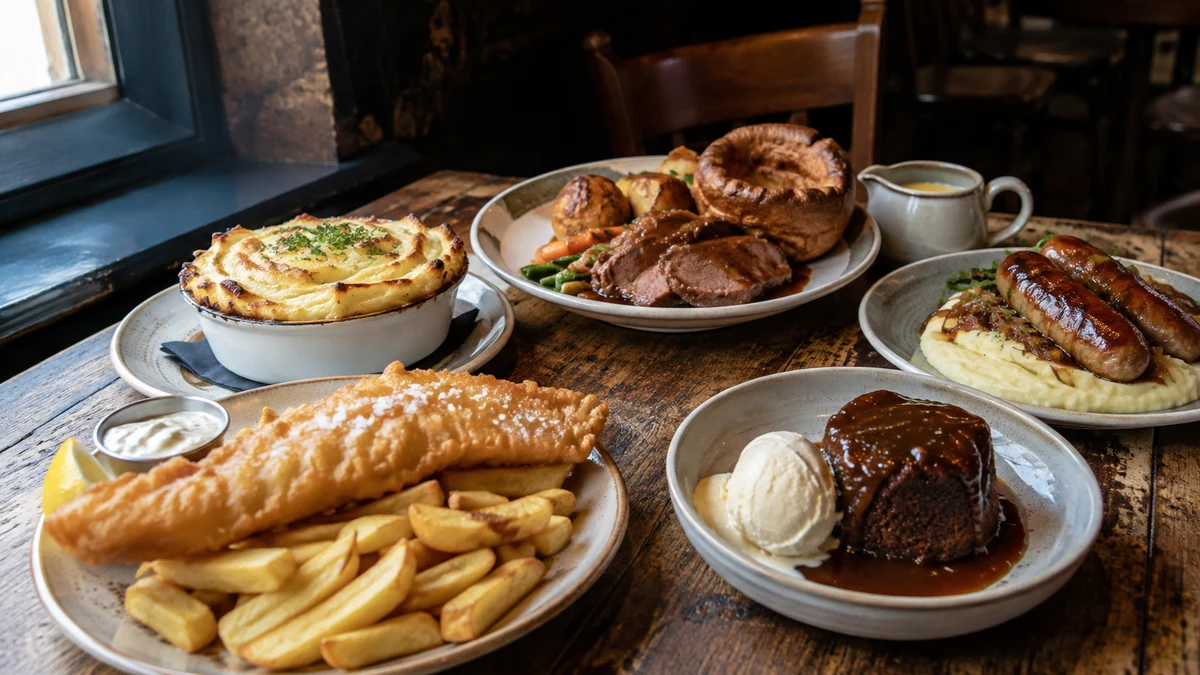
British food made much more sense to me once I stopped treating it as a checklist of fish and chips, pies, and oversized breakfasts.
I expected plenty of potatoes, pastry, sausages, and gravy, and I certainly found them. What surprised me was how regional the food became once I traveled beyond the most familiar classics. A smoky bowl of Cullen skink in Scotland felt completely different from a warm Welsh cake, while an Ulster fry in Northern Ireland stood apart because of its soda farls and potato bread.
The biggest takeaway from my trip was simple: British food is much broader than English food. England, Scotland, Wales, and Northern Ireland have distinct dishes and traditions, while modern British cuisine has also been shaped by immigration, regional produce, pub culture, seafood, and changing eating habits.
For a first trip, I found it far more rewarding to try a few famous dishes and then start looking for whatever belonged to the region I was actually visiting.
What Is British Food?
British food covers the cooking traditions associated with Britain and, in everyday travel conversation, often the wider United Kingdom.
That distinction matters because the food changes noticeably by region. Yorkshire pudding belongs to a different culinary tradition from Scottish haggis. Welsh cawl has little in common with London’s historic pie and mash, while an Ulster fry is not simply another name for a full English breakfast.
I found it easiest to think of British cuisine as a mix of traditional home cooking, regional specialties, pub food, pies, seafood, afternoon tea, puddings, and modern multicultural cooking.
The official VisitBritain food and drink guide gives a useful overview of that wider food culture.
British Food vs. English Food: What’s the Difference?
This confused me before traveling because the terms are often used interchangeably.
They are not.
English food refers specifically to England’s cooking traditions. British food can include food from England, Scotland, and Wales. Travelers also commonly use the term more broadly when talking about food across the UK, including Northern Ireland.
| Region | Traditional Foods Worth Knowing |
|---|---|
| England | Fish and chips, Yorkshire pudding, Cornish pasty, Lancashire hotpot |
| Scotland | Haggis, Cullen skink, cranachan, Arbroath Smokies |
| Wales | Cawl, Welsh rarebit, Welsh cakes, bara brith |
| Northern Ireland | Ulster fry, soda farls, potato bread, wheaten bread |
That regional variety became one of the most interesting parts of eating around the UK.
Traditional British Foods Worth Trying
1. Fish and Chips
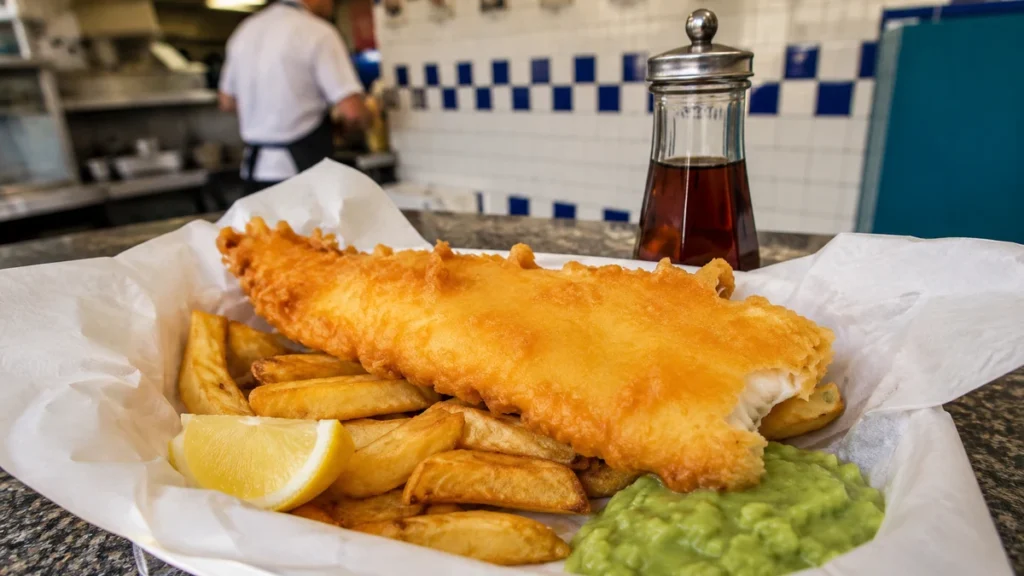
Fish and chips was the dish I expected to feel most touristy.
A mediocre version can. A good one explains why the dish remains so popular: crisp batter, flaky white fish, chunky chips, salt, and enough malt vinegar to cut through the richness. Cod and haddock are common choices, with mushy peas often served alongside.
One mistake taught me something useful. I bought takeaway fish and chips and waited too long before eating them. The trapped steam softened the batter quickly. After that, I ate them while they were properly hot.
Best tip: choose a busy chippy where food is being cooked regularly rather than somewhere simply because it sits on a sightseeing route.
2. Full English Breakfast
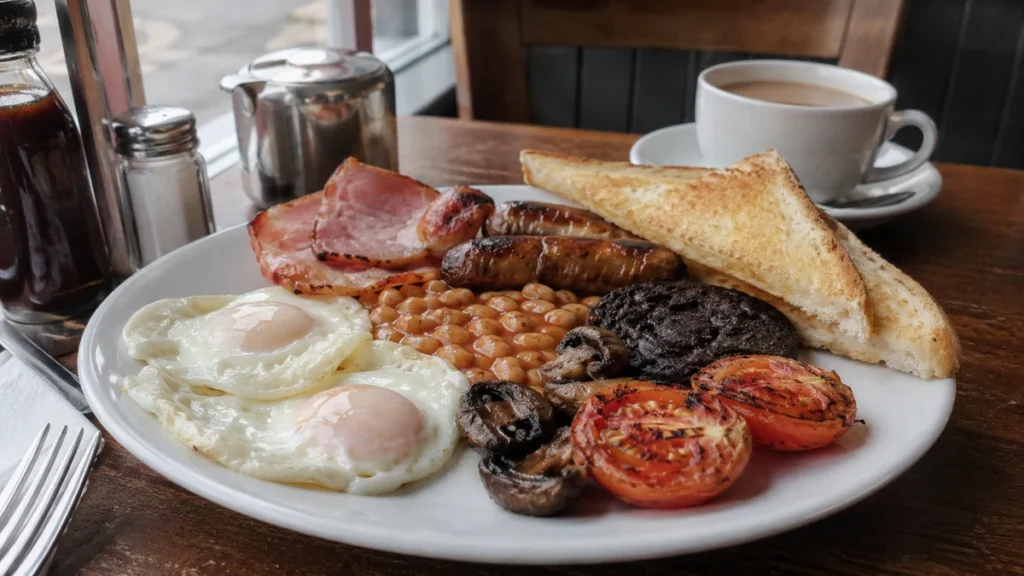
A full English looked excessive until I realized it was closer to a complete meal than an ordinary breakfast.
A typical plate can include eggs, bacon, sausages, baked beans, tomatoes, mushrooms, toast, and black pudding.
British bacon was different from the thin streaky bacon I was used to, and the sausages varied more in flavor and texture than expected.
I enjoyed trying a full English, but I did not need one every morning. After a plate that large, planning a normal lunch a few hours later was unrealistic.
3. Sunday Roast
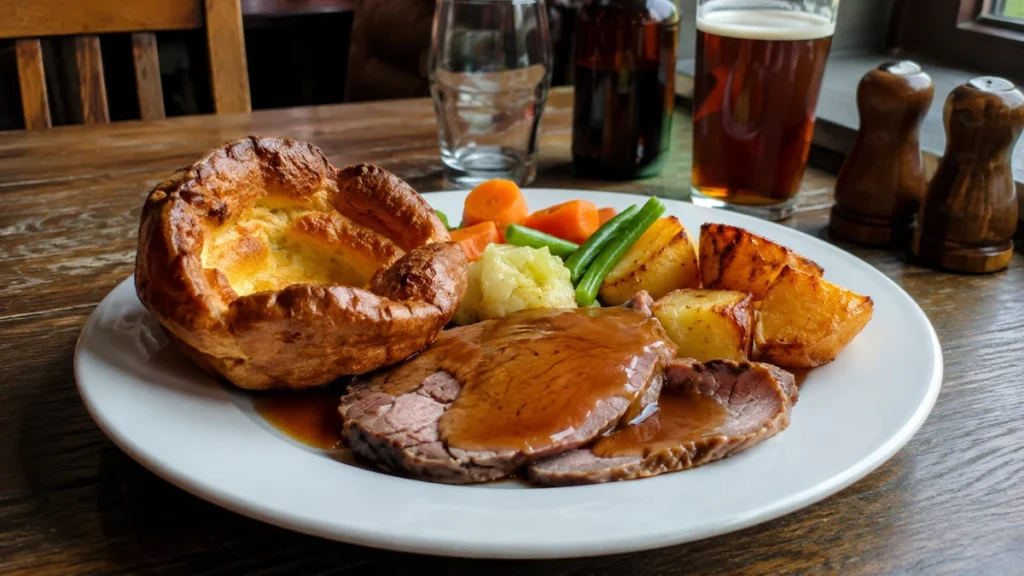
Of all the traditional British meals I ate, the Sunday roast felt least like something preserved for tourists.
A typical roast dinner combines roasted meat, roast potatoes, vegetables, gravy, and Yorkshire pudding. Beef is classic, although chicken, pork, lamb, and vegetarian alternatives are common.
The Yorkshire pudding surprised me most. Before the trip, I had treated it as an optional side. Once it arrived crisp around the edges and started soaking up gravy, it became one of the best parts of the meal.
Popular pubs can be busy for Sunday lunch, so I learned to check booking policies when a particular roast mattered to me.
4. Yorkshire Pudding
For Americans, the name creates the wrong mental picture.
Yorkshire pudding is not a dessert. It is a savory batter made with flour, eggs, and milk, traditionally served with roast meat and gravy.
The flavor is mild; the texture is the attraction—crisp around the edges and airy inside. The closest American comparison is probably a savory popover.
5. Shepherd’s Pie and Cottage Pie
Shepherd’s pie is traditionally made with lamb beneath a layer of mashed potato. A similar dish made with beef is called cottage pie.
Both are classic British comfort foods. I enjoyed them more in cooler weather, though after several days of pies, mash, and gravy, I also understood why spacing out the heavier dishes matters.
6. Bangers and Mash
Bangers and mash is simple pub food: sausages, mashed potatoes, and usually onion gravy.
On a cold or rainy evening, it made much more sense than it had while reading menus at home.
The sausage makes the biggest difference. British regional sausages vary in herbs, seasoning, texture, and meat content, so the same basic dish can taste quite different from one pub to another.
7. British Meat Pies
British pies felt like their own food category.
Steak and ale pie, steak and kidney pie, chicken and leek pie, pork pie, and regional versions all appeared during the trip.
Some are fully enclosed in pastry, while others have a pastry lid. Pork pies are different again and are often eaten cold.
My mistake was ordering too many pie-based meals close together because each sounded different. They were, but pastry, gravy, meat, and potatoes soon became repetitive.
8. Cornish Pasty
A Cornish pasty was one of the most practical traditional foods for sightseeing.
The classic version is folded pastry filled with meat and vegetables. It also proved far more filling than it looked through the bakery window.
For a train journey or quick lunch, I often preferred one to another sit-down pub meal.
9. Toad in the Hole
No toads are involved.
Toad in the hole consists of sausages baked into Yorkshire pudding-style batter, usually served with gravy and vegetables.
It is one of those British food names that sounds strange to an American but turns out to involve very familiar ingredients.
10. Pie and Mash
Pie and mash deserves separate mention because of its strong connection with London.
Traditionally, it combines a meat pie with mashed potato and a green parsley sauce called liquor.
It was more interesting to me culturally than visually. This is plain, filling food tied closely to London’s working-class history rather than a dish designed to look elegant.
11. Scotch Egg
A Scotch egg is a boiled egg wrapped in sausage meat, coated in breadcrumbs, and cooked until crisp.
The better ones had a good contrast between the crunchy coating, seasoned meat, and softer egg. Less impressive versions could feel dense and dry, so freshness mattered more than I expected.
12. Sausage Roll
Sausage rolls were among the most useful foods I found while traveling.
Seasoned sausage meat wrapped in flaky pastry made a cheap, quick lunch that fitted easily around sightseeing. A good bakery version often satisfied me more than another large pub meal.
Scottish Food Goes Far Beyond Haggis
13. Haggis
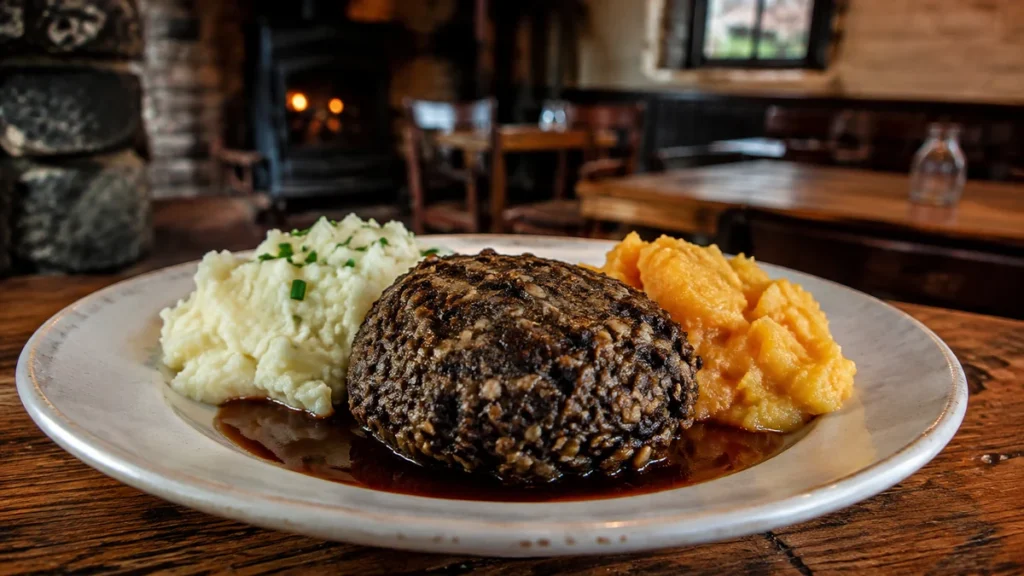
Haggis gets more attention from visitors than almost any Scottish dish, mostly because people spend so much time worrying about its ingredients.
The taste was far less dramatic than the description. I found it savory, peppery, rich, and warmly spiced.
A traditional serving is haggis, neeps and tatties—haggis with turnip or swede and potatoes. It is especially associated with Burns Night.
I was glad I tried it before reading too many dramatic descriptions.
Travelers exploring Scotland in more depth can use the official VisitScotland food and drink guide to find regional specialties.
14. Cullen Skink
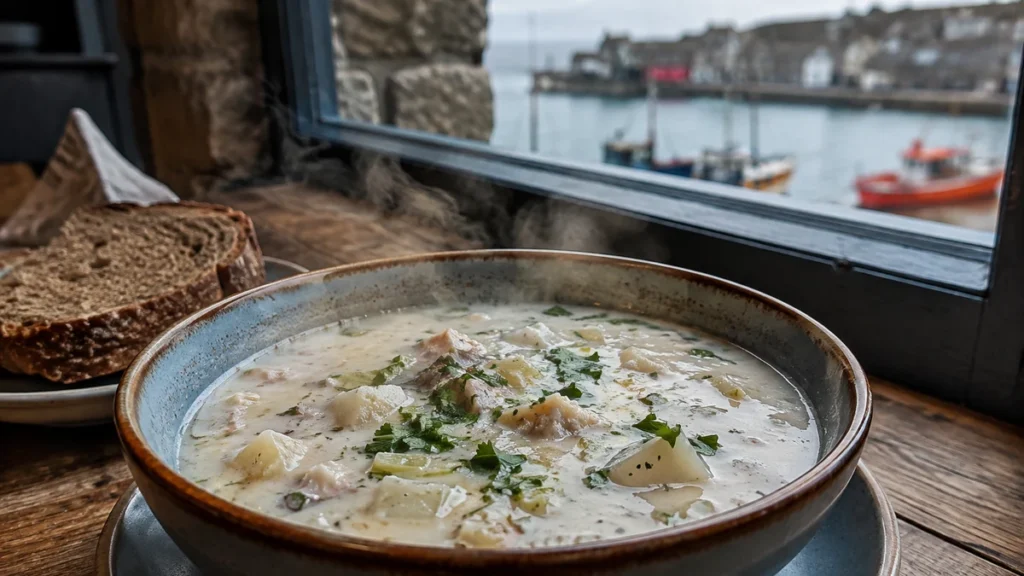
Cullen skink became one of my favorite regional dishes.
It is a creamy Scottish soup made with smoked haddock, potatoes, and onions. The smoked fish gave it far more character than I expected from such simple ingredients.
On a cold day, I preferred it to several heavier pub meals.
15. Arbroath Smokies
Scotland’s seafood deserves more attention than it gets in generic British food lists.
Arbroath Smokies are haddock traditionally smoked over hardwood, giving the fish a deep, smoky flavor. Along with salmon and shellfish, they helped break up the run of heavier meat-and-potato meals during my trip.
16. Cranachan
Cranachan combines raspberries, cream, toasted oats, honey, and whisky.
After several rich puddings, it felt surprisingly light. It was also a good example of how varied Scottish desserts can be once you look beyond the better-known savory dishes.
Welsh Food Worth Looking For
17. Cawl
Cawl is a traditional Welsh soup or stew made with meat and vegetables, with recipes varying by family and region.
It was hearty without feeling as heavy as another pie-and-gravy meal, which made it a welcome change.
18. Welsh Rarebit
Welsh rarebit is often described as cheese on toast.
That is accurate but undersells it.
A good version uses a seasoned cheese mixture melted over bread, sometimes with mustard, ale, or Worcestershire-style seasoning.
19. Welsh Cakes
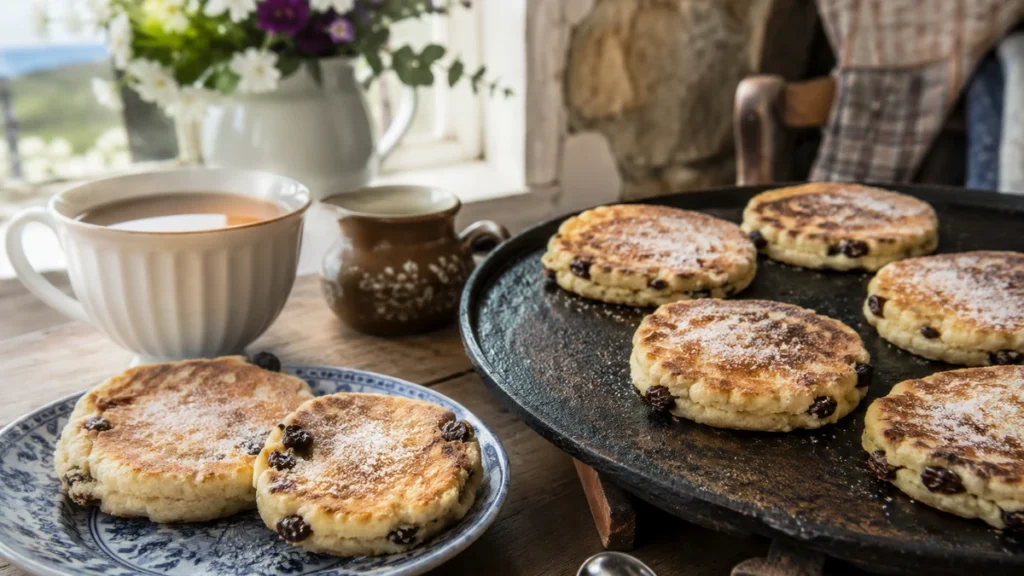
Welsh cakes were among the simplest foods that surprised me.
They sit somewhere between a small pancake, biscuit, and griddle cake, usually with dried fruit and a little sugar.
The best one I ate was still warm, which made a huge difference.
The official Visit Wales food and drink guide is useful for finding more regional specialties.
20. Bara Brith
Bara brith is a traditional Welsh fruit loaf, commonly made with dried fruit soaked in tea and served sliced with butter.
I liked that it was not excessively sweet. It made more sense to me as something to eat slowly with tea than as a heavy dessert after dinner.
Northern Irish Food: Don’t Stop at the Full English
One easy mistake for overseas visitors is assuming cooked breakfasts across the UK are basically identical.
They are not.
21. Ulster Fry
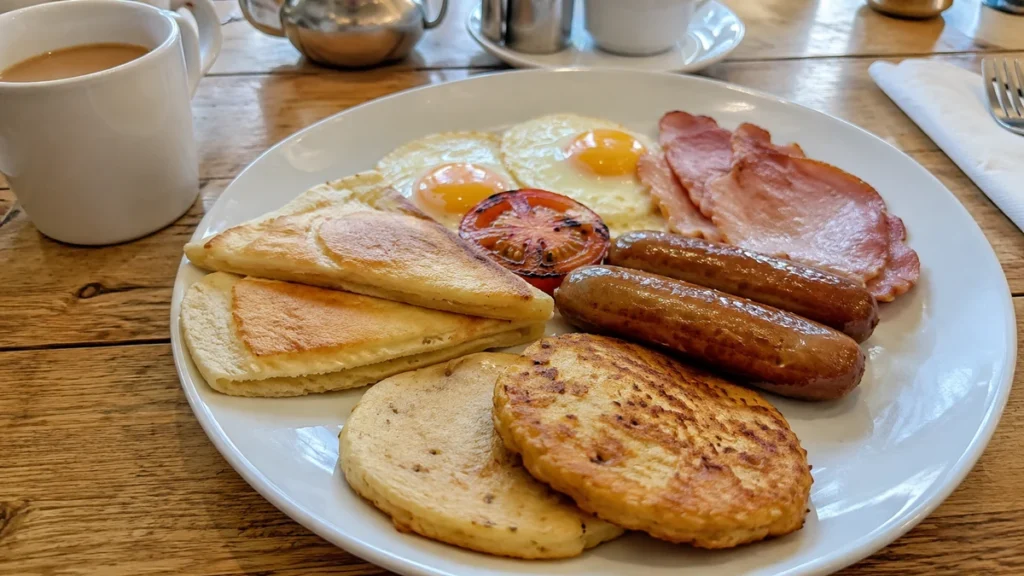
The Ulster fry shares familiar ingredients with other cooked breakfasts, including eggs, bacon, and sausages, but the breads made it distinctive for me.
Soda farls and potato bread are key parts of the plate. Once they had soaked up a little egg yolk, I understood why the Ulster fry is treated as something separate from a full English.
Other regional foods worth noticing include wheaten bread, seafood, dulse, and local traybakes.
The official Discover Northern Ireland food and drink guide is a useful starting point for regional planning.
British Desserts and Puddings Worth Trying
British food becomes easier to understand once you realize that pudding does not only mean the custard-like dessert familiar to many Americans. In Britain, it can also be a general word for dessert.
22. Sticky Toffee Pudding
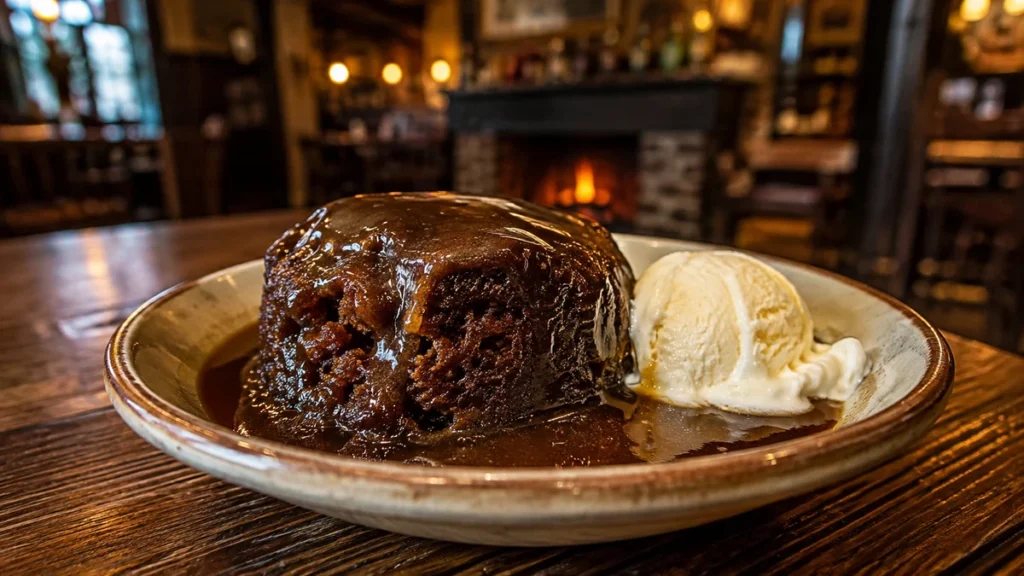
Sticky toffee pudding became the dessert I returned to most often.
It is usually a soft sponge made with dates and served with warm toffee sauce. Custard or ice cream often comes with it.
It is extremely rich. After a large dinner, sharing one was often enough.
23. Bread and Butter Pudding
Bread and butter pudding turns simple bread into a baked dessert with custard and often dried fruit.
It sounded plain before I tried it, but that simplicity was part of what I liked.
24. Spotted Dick
Spotted dick is a traditional steamed pudding containing dried fruit and commonly served with custard.
The name gets plenty of attention, but the dish itself is straightforward comfort food and a useful example of how confusing British food terminology can sound to first-time American visitors.
25. Eton Mess
Eton mess combines strawberries, broken meringue, and cream.
Compared with the heavier puddings I tried, it felt fresher and much better suited to warm weather.
26. Trifle
Trifle usually contains layers of sponge, fruit, custard, jelly, cream, or some combination of them depending on the recipe.
It was another reminder that British desserts are much more varied than the stereotype of dense steamed puddings suggests.
Afternoon Tea: Worth It or Overrated?
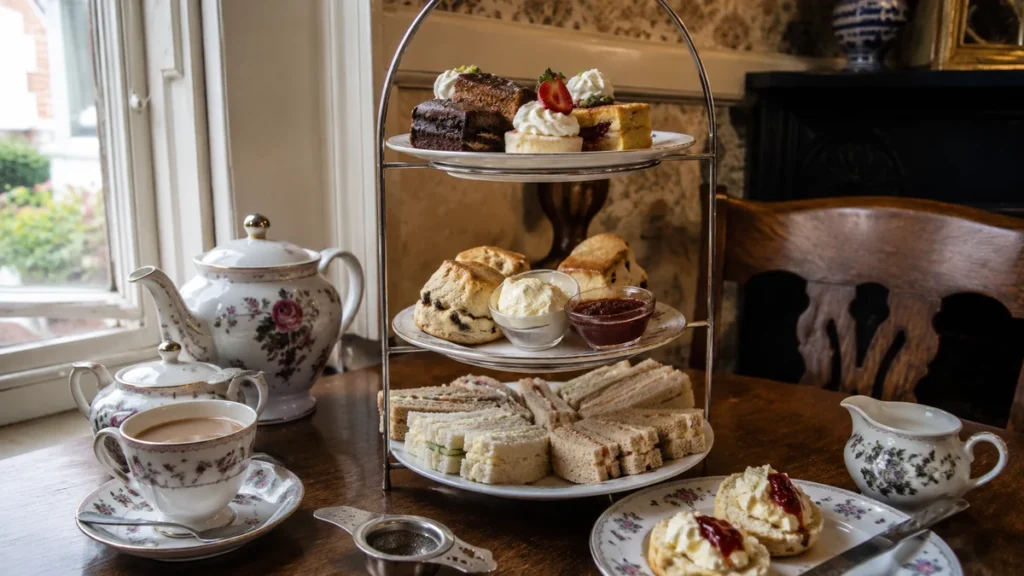
Afternoon tea sits somewhere between a meal and an experience.
A traditional setup generally includes tea, finger sandwiches, scones with jam and clotted cream, and small cakes or pastries.
I enjoyed it, but I also learned that it is one of the easiest British food experiences to overspend on.
At a grand hotel, much of the price can be for the room, service, tableware, and ceremony. If that setting matters to you, paying more can make sense.
If your main goal is simply to enjoy tea, scones, jam, and clotted cream, a smaller tearoom can provide the part that matters for much less.
And yes, you will eventually encounter the debate over whether jam or cream goes on the scone first. I was more concerned with eating mine while it was still warm.
British Pub Food: What I Learned
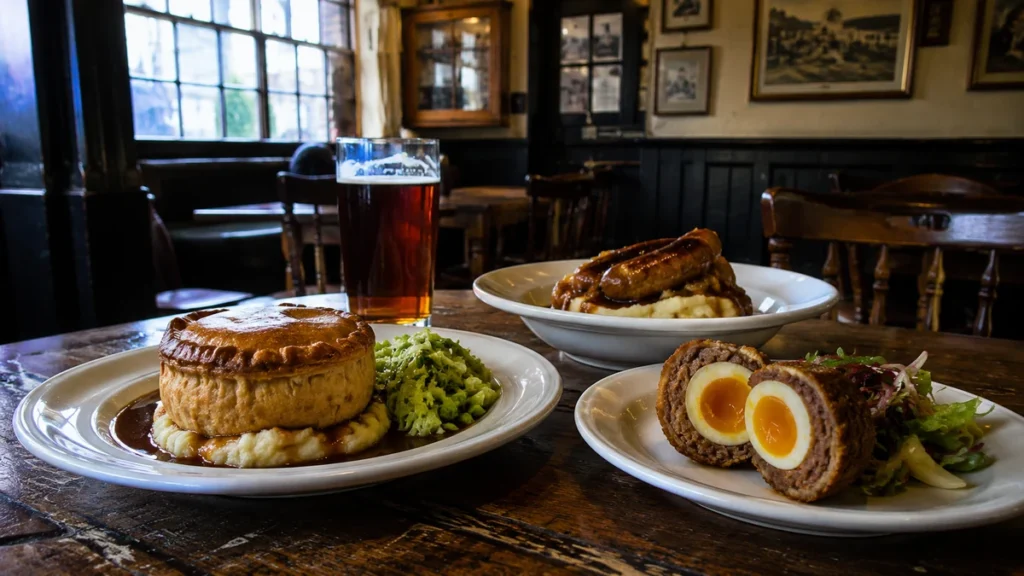
Pubs were some of the easiest places to try traditional British comfort food without structuring an entire day around restaurants.
Common dishes included fish and chips, bangers and mash, steak and ale pie, shepherd’s pie, Sunday roast, Scotch eggs, and more modern gastropub dishes.
The main lesson was that not every historic-looking pub serves excellent food.
I assumed that early in the trip and had a couple of forgettable meals. After that, I checked the actual menu rather than choosing somewhere only for its old beams, polished bar, or convenient location.
That simple change improved my meals considerably.
British Food Words That Confuse Americans
Learning a handful of terms saved me from several menu misunderstandings.
| British Term | What an American Visitor Should Expect |
|---|---|
| Chips | Thick fries |
| Crisps | Potato chips |
| Biscuit | Usually a cookie |
| Pudding | Dessert generally, or a specific dish |
| Banger | Sausage |
| Mince | Ground meat |
| Jacket potato | Baked potato |
| Aubergine | Eggplant |
| Courgette | Zucchini |
| Rocket | Arugula |
| Clotted cream | Thick cream served especially with scones |
| Takeaway | Takeout |
Two terms are especially misleading.
Black pudding is not dessert. It is a blood sausage commonly served at breakfast.
Yorkshire pudding is not dessert either. It is savory batter served with roast meat and gravy.
Once I understood those two, menus became much easier.
British Sauces and Condiments Worth Knowing
A surprising amount of traditional British food changed once the condiments arrived.
Malt vinegar cut through the richness of fish and chips.
English mustard was much hotter than the yellow American mustard I expected. The first time I used it, I applied far too much.
Brown sauce is sweet, tangy, and savory and commonly appears with bacon and sausages.
Gravy is almost structural to Sunday roast, Yorkshire pudding, bangers and mash, and several pies.
And then there is Marmite, a salty yeast-extract spread famous for dividing opinion. A thin layer was enough for my first attempt.
Why Does British Food Have a Bad Reputation?
The old stereotype of British food as bland did not match most of what I ate, although the reputation has historical context.
Britain experienced severe food shortages and rationing during and after the Second World War. Meat, sugar, butter, cheese, eggs, and other ingredients were restricted for long periods. The Imperial War Museums’ overview of wartime rationing gives useful context for how limited ingredients shaped everyday eating.
That history does not describe modern British cuisine very well.
What I found instead was regional cooking, strong seafood traditions, bakeries, vegetarian food, gastropubs, immigrant-run restaurants, street food, and modern chefs using British ingredients in completely different ways.
The real problem I encountered was not blandness.
It was repetition.
If I ordered meat, pastry, potatoes, fried food, and gravy at every meal, British cuisine started to feel much narrower than it was.
Eating regionally fixed that quickly.
Modern British Food Is Part of the Story
Many “traditional British food” lists make Britain sound as though people still eat inside a historical museum.
Modern British food is far broader.
Indian, Pakistani, Bangladeshi, Caribbean, Chinese, Middle Eastern, African, European, and other communities have influenced everyday eating across the country.
Curry is part of Britain’s food culture. So are kebabs, modern bakeries, vegetarian cooking, street-food markets, gastropubs, and restaurants combining British produce with international techniques.
London made this especially obvious. In one day, I could move from an old pie shop to South Asian food, a bakery, a market stall, and modern British small plates.
Traditional dishes still mattered. They were simply one part of the story.
What British Food Should a First-Time American Try?
If your trip is short, trying to complete all 26 British dishes is unnecessary.
These give a better cross-section:
| Food | Why Try It | My Take |
|---|---|---|
| Fish and chips | Classic takeaway food | Best when freshly cooked |
| Sunday roast | British meal tradition | One of the best cultural food experiences |
| Yorkshire pudding | Classic roast side | Better than the name suggests |
| Full English breakfast | Traditional breakfast | Try once; it is very filling |
| Shepherd’s or cottage pie | Comfort food | Best in cooler weather |
| Sausage roll | Everyday bakery food | Excellent quick lunch |
| Sticky toffee pudding | Classic dessert | One of my favorites |
| Haggis | Scottish tradition | Less intimidating than expected |
| Cullen skink | Scottish specialty | Excellent if you like smoked fish |
| Welsh cake | Welsh snack | Best warm |
| Cawl or Welsh rarebit | Welsh regional food | Worth choosing over another generic pub meal |
| Ulster fry | Northern Irish breakfast | The breads make it distinctive |
If I had only a few days in London, I would focus on fish and chips, one proper Sunday roast, a bakery snack, sticky toffee pudding, and perhaps afternoon tea.
Once traveling beyond England, replacing generic “British dishes” with regional specialties made every meal more interesting.
Mistakes I Made While Exploring British Food
My biggest mistake was ordering too many heavy classics in a row.
Traditional British comfort food can involve a lot of pastry, potatoes, sausage, fried food, meat, and gravy. By the third similar meal, even a good pie felt less exciting.
I also underestimated portion sizes. A full English breakfast followed by a planned lunch a few hours later simply did not work.
Another mistake was assuming expensive meant traditional or better. Some of my favorite meals were soups, bakery snacks, breakfasts, and simple regional dishes.
Most importantly, I spent too much time at first looking for foods I had already heard of.
Once I started asking what was local instead of what was famous, the meals improved.
FAQ About British Food
What is the most famous British food?
Fish and chips is probably the British dish best known internationally. Sunday roast, Yorkshire pudding, full English breakfast, shepherd’s pie, and traditional pies are also strongly associated with British cuisine.
What food is Britain known for?
Britain is known for fish and chips, roast dinners, Yorkshire pudding, pies, sausages, cooked breakfasts, afternoon tea, regional seafood, baked goods, and traditional puddings.
Is British food the same as English food?
No. English cuisine is one part of British food. Scotland and Wales have distinct traditions, while Northern Ireland adds another regional food culture when traveling around the wider UK.
Why is British food considered bland?
The stereotype was influenced partly by wartime and post-war rationing. Modern British cuisine is much more diverse than that reputation suggests.
What is pudding in Britain?
“Pudding” can describe a specific dish, but it is also commonly used as a general word for dessert. Yorkshire pudding, despite the name, is savory.
What British food should Americans try first?
Start with fish and chips, a Sunday roast with Yorkshire pudding, a full English breakfast, a savory pie, a sausage roll, and sticky toffee pudding. Add regional dishes such as haggis, Cullen skink, Welsh cakes, cawl, and an Ulster fry if your route goes beyond England.
Final Thoughts
The best part of exploring British food was learning when to stop ordering the most famous dishes.
Fish and chips, Yorkshire pudding, a full breakfast, and sticky toffee pudding deserved their place on my list. But Cullen skink, Welsh cakes, Northern Irish breads, local pies, and dishes I barely knew before traveling told me much more about where I actually was.
That is how I would approach another trip: try a few British classics, then start asking what belongs to the region.
The food became far more interesting once I stopped expecting Britain to taste the same everywhere.