



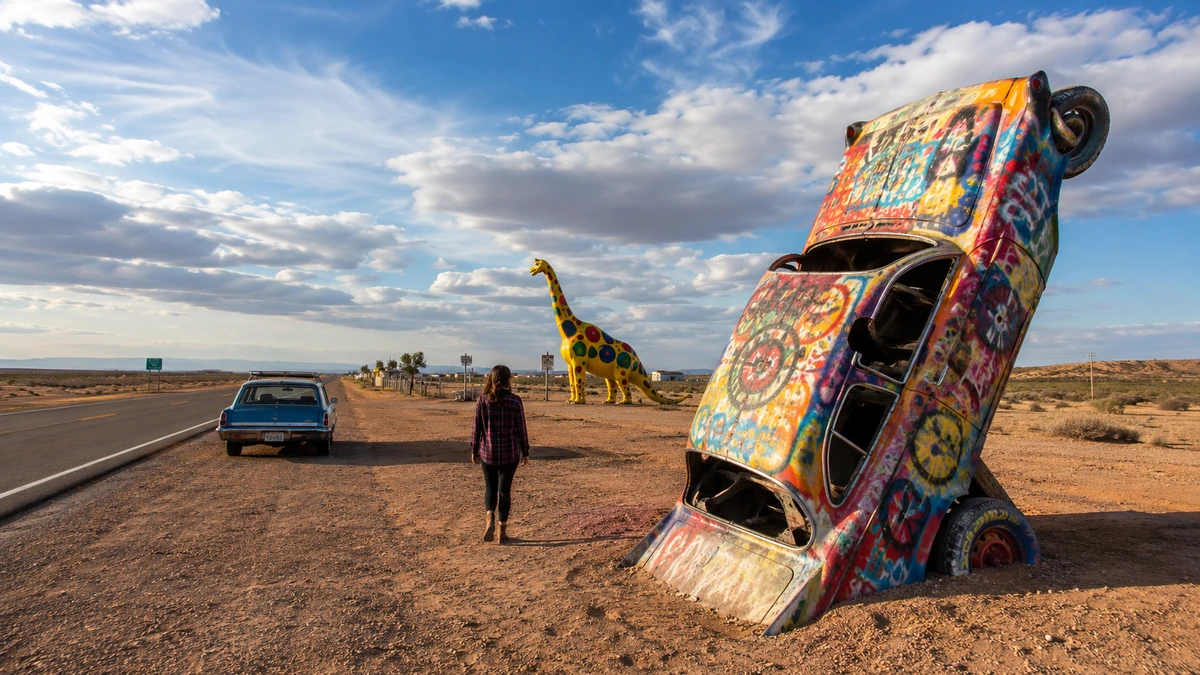
America does weird road trips better than anywhere else.
A giant ball of twine, half-buried Cadillacs, a building shaped like an elephant, and a palace decorated with corn sounded ridiculous when I first started saving stops on my map. That was exactly what made them fun.
Some of my favorite roadside attractions barely took 20 minutes. I pulled over, stretched my legs, stared at something completely unnecessary, took a few photos, and got back on the highway smiling.
Others looked far better online than they felt after a long detour.
That changed how I planned the rest of the trip. I stopped treating every roadside oddity as a must-see and started asking a more useful question:
Is this weird roadside attraction actually worth leaving the highway for?
The best stops had three things going for them. They were reasonably easy to reach, had an interesting story behind them, and didn’t consume half the driving day.
Some were pieces of roadside Americana. Others were folk-art projects, advertising stunts, oversized sculptures, odd museums, or objects that existed for reasons I still didn’t completely understand.
That variety was the best part.
2026 was also a fun year to explore America’s roadside culture because historic Route 66 celebrated its 100th anniversary. The National Park Service Route 66 program has useful background on the road and its history.
Below are the weird roadside attractions that stood out most, plus the stops that made the most sense when time was limited.
Weird Roadside Attractions at a Glance
I learned quickly that a map covered in exciting stops could turn a six-hour drive into a ten-hour day.
This is the comparison I wish I had before starting.
| Roadside attraction | State | Time to allow | Detour level | Weirdness | My verdict |
|---|---|---|---|---|---|
| Cadillac Ranch | Texas | 20–30 min | Very short | 9/10 | Don’t miss |
| Carhenge | Nebraska | 30–45 min | Moderate | 10/10 | Worth it |
| Wall Drug | South Dakota | 45–90 min | Very short | 8/10 | Worth it |
| Corn Palace | South Dakota | 30–45 min | Short | 8/10 | Worth it |
| Ball of Twine | Kansas | 15–20 min | Route dependent | 10/10 | Worth the absurdity |
| Lucy the Elephant | New Jersey | 30–60 min | Short | 9/10 | Worth it |
| The Thing | Arizona | 30–45 min | Very short | 9/10 | Fun stop |
| Salvation Mountain | California | 30–60 min | Longer | 10/10 | Worth it nearby |
| Enchanted Highway | North Dakota | 1.5–2.5 hrs | Long | 9/10 | Plan for it |
| Catsup Bottle | Illinois | 10–15 min | Short | 8/10 | Quick photo |
| Blue Whale of Catoosa | Oklahoma | 20–30 min | Short | 9/10 | Worth it |
| South of the Border | South Carolina | 30–60 min | Almost none | 8/10 | See it once |
My sweet spot became simple: less than 15 minutes off my route and under an hour at the attraction.
Anything farther away needed to be genuinely special.
1. Cadillac Ranch, Texas
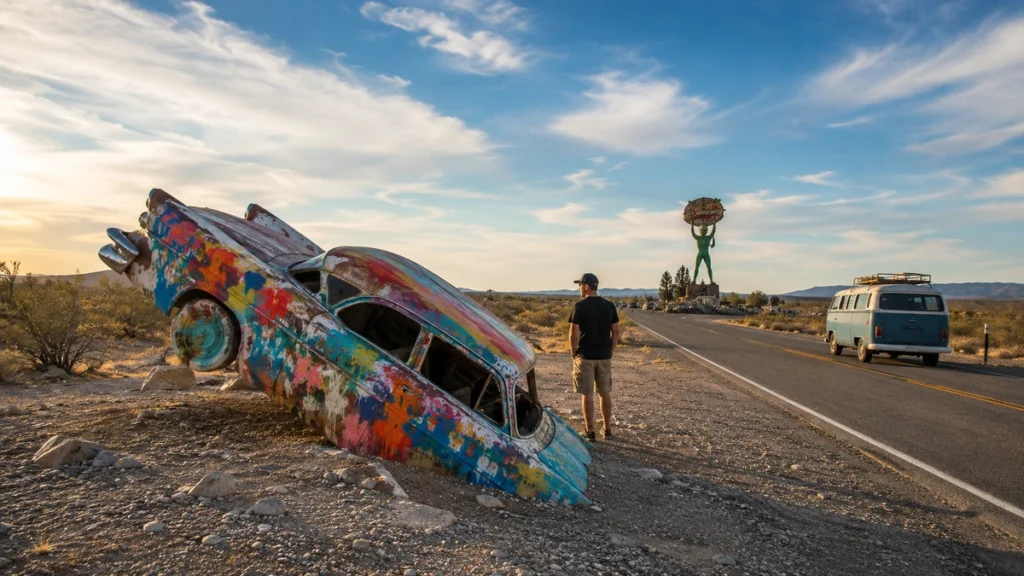
Cadillac Ranch sounded silly until I saw it sitting against the huge Texas sky.
Ten Cadillacs were buried nose-first in a field outside Amarillo, and almost every visible inch had been covered with layers of spray paint.
What surprised me most was the setting. There wasn’t a polished museum experience. I walked across an open field with the wind pushing against me, and this row of brightly painted cars appeared against miles of flat land.
It worked.
The location also made it an easy road-trip stop near I-40. I checked the Visit Amarillo Cadillac Ranch page before going.
Worth the detour: Yes.
Time needed: 20–30 minutes.
Practical tip: Avoid shoes you care about after wet weather.
2. Carhenge, Nebraska
Carhenge made me laugh before I even got out of the car.
Someone had recreated Stonehenge using old American automobiles.
Actual cars stood upright while others rested across the top. The shape was recognizable enough that I kept switching between thinking it was completely ridiculous and surprisingly clever.
Other car-part sculptures around the site gave me more to explore than expected.
Nebraska Tourism says Jim Reinders and his family created Carhenge in 1987. Current visitor information is available through the Nebraska Tourism Carhenge page.
Worth the detour: Yes.
Weirdness: 10/10.
What surprised me: It felt more like outsider art than a roadside joke.
3. Wall Drug, South Dakota
Wall Drug started long before I actually reached Wall.
The billboards kept coming.
Then another appeared.
And another.
By the time I pulled in, the advertising had created so much buildup that I half expected an amusement park.
Inside was a sprawling mix of shops, Western displays, food, souvenirs, and deliberately kitschy photo spots.
It was touristy. Very touristy.
But that was part of its personality.
I enjoyed it more once I stopped judging it as a normal attraction and saw it as a surviving piece of American roadside culture.
Worth the detour: Yes on an I-90 road trip.
Time needed: 45–90 minutes.
My take: Overrated as a destination, fun as a driving break.
4. Corn Palace, South Dakota
The name confused me at first.
I pictured an entire palace built out of corn.
The reality was different but more detailed. The Corn Palace in Mitchell is a permanent building decorated with murals made from corn, grains, and grasses.
The designs became much more impressive once I stood close enough to see the individual materials.
It also felt connected to the farming history of the area rather than existing only for a funny photograph.
The official Corn Palace visitor information is useful for checking current access before stopping.
Worth the detour: Yes.
Time needed: 30–45 minutes.
Best for: Anyone already traveling through Mitchell or along I-90.
5. World’s Largest Ball of Twine, Kansas
Few sentences summed up this road trip better than:
“I’m stopping to see a giant ball of twine.”
Cawker City’s enormous ball didn’t need an elaborate explanation.
It was twine.
A lot of twine.
What made the stop more interesting was its community connection. It wasn’t simply built once and forgotten. Local residents kept the tradition alive by continuing to add to it.
I didn’t spend long here.
There wasn’t any reason to.
That was fine.
Worth the detour: Yes if it fits your route.
Time needed: 15–20 minutes.
Weirdness: 10/10.
6. Lucy the Elephant, New Jersey
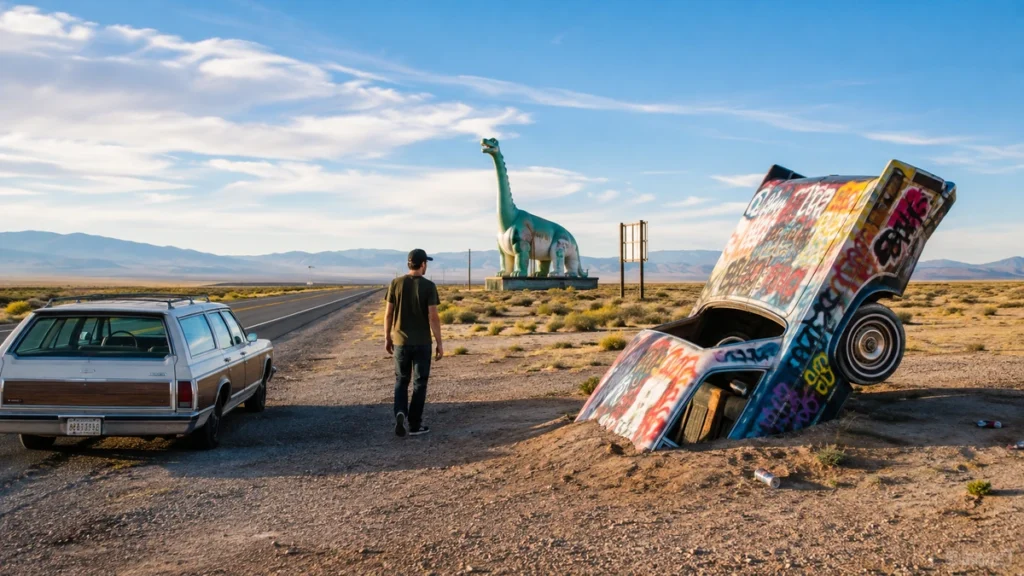
Lucy wasn’t simply a giant elephant statue.
She was an elephant-shaped building.
That made a big difference.
Standing beside the Jersey Shore, the six-story structure looked like an idea from an era when roadside advertising could be wonderfully excessive.
I expected a novelty photo and found much more history behind it.
The size surprised me most. Pictures hadn’t prepared me for standing directly below an enormous elephant-shaped building.
Worth the detour: Yes.
Time needed: 30–60 minutes.
Best for: Unusual architecture, history, and photos.
7. The Thing, Arizona
The Thing understood curiosity better than most modern advertising campaigns.
Signs along I-10 kept teasing the same mystery.
What is The Thing?
After enough miles, I needed to know.
The stop mixed roadside mystery, alien imagery, unusual displays, and unapologetic tourist-trap energy.
Was the final reveal worth all the buildup?
Maybe not.
But the buildup itself made the drive more entertaining.
Worth the detour: Yes because it sits conveniently along the route.
Time needed: 30–45 minutes.
My take: The mystery was almost more fun than the answer.
8. Salvation Mountain, California
Salvation Mountain felt very different from the oversized commercial attractions.
The surrounding desert was dry and muted. Then this enormous burst of paint appeared.
Hearts, flowers, religious messages, and bright handmade details covered the structure.
I slowed down here.
The closer I looked, the more details appeared.
The only downside was location. This wasn’t a five-minute interstate stop. It made more sense as part of a Salton Sea-area trip.
Worth the detour: Yes when already nearby.
Time needed: 30–60 minutes.
What surprised me: The colors felt much stronger against the empty desert than they did in photos.
9. Enchanted Highway, North Dakota
The Enchanted Highway broke my usual roadside-attraction rule because it wasn’t really one stop.
It was a drive.
Enormous metal sculptures appeared across the rural North Dakota landscape, separated by long stretches of farmland and open sky.
That spacing made it better.
Each sculpture seemed to appear from nowhere.
North Dakota Tourism says the route begins near I-94 and continues about 32 miles toward Regent. I checked the North Dakota Tourism Enchanted Highway guide before giving it enough room in the schedule.
Worth the detour: Yes, but plan for it.
Time needed: About 1.5–2.5 hours.
Practical lesson: Don’t squeeze it between two already long driving days.
10. Abita Mystery House, Louisiana
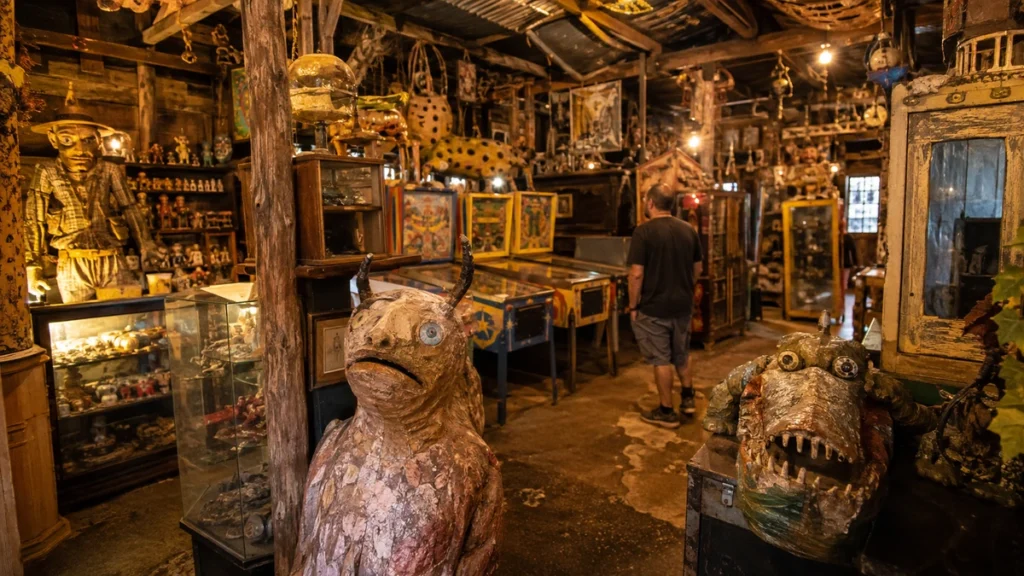
Abita Mystery House felt like somebody had spent years collecting everything strange they could find and refused to throw anything away.
That was a compliment.
Old machines, folk art, odd creatures, homemade displays, and found objects seemed to fill every available corner.
I kept noticing something new.
The lack of polish was part of the charm. A slick redesign probably would have ruined it.
Worth the detour: Yes.
Time needed: Roughly 30–60 minutes.
Best for: Oddity museums, outsider art, and people who enjoy genuinely strange collections.
11. Cathedral of Junk, Texas
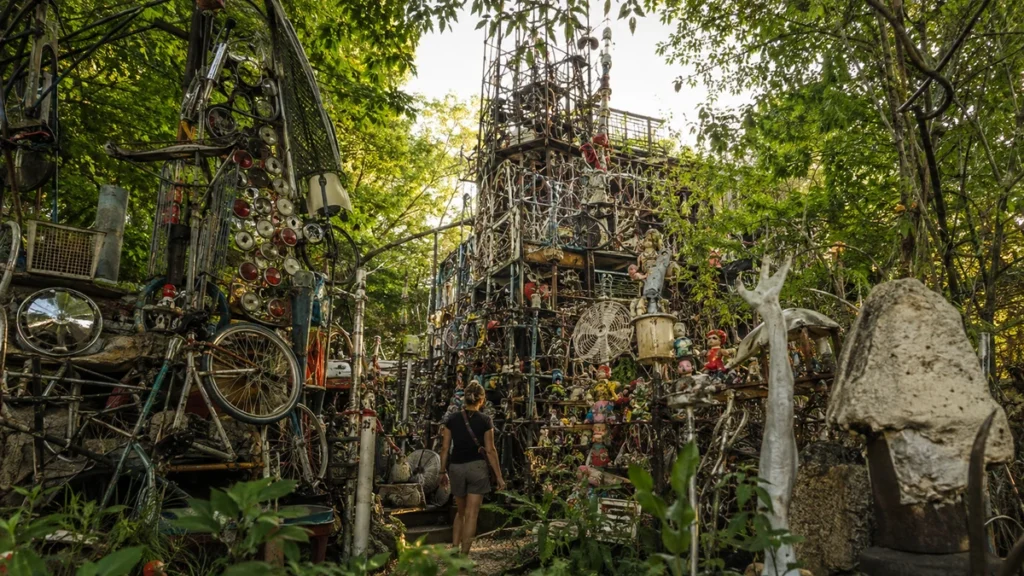
The Cathedral of Junk showed what could happen when discarded objects stopped being trash and became building materials.
Bicycles, signs, metal, toys, and household objects rose into a structure somewhere between art installation and organized chaos.
At first, I didn’t know where to look.
Then individual details started appearing.
This was one of the strongest examples of outsider art on the trip.
Worth the detour: Yes for unusual-art fans.
My take: More memorable than another giant plastic statue.
12. Blue Whale of Catoosa, Oklahoma
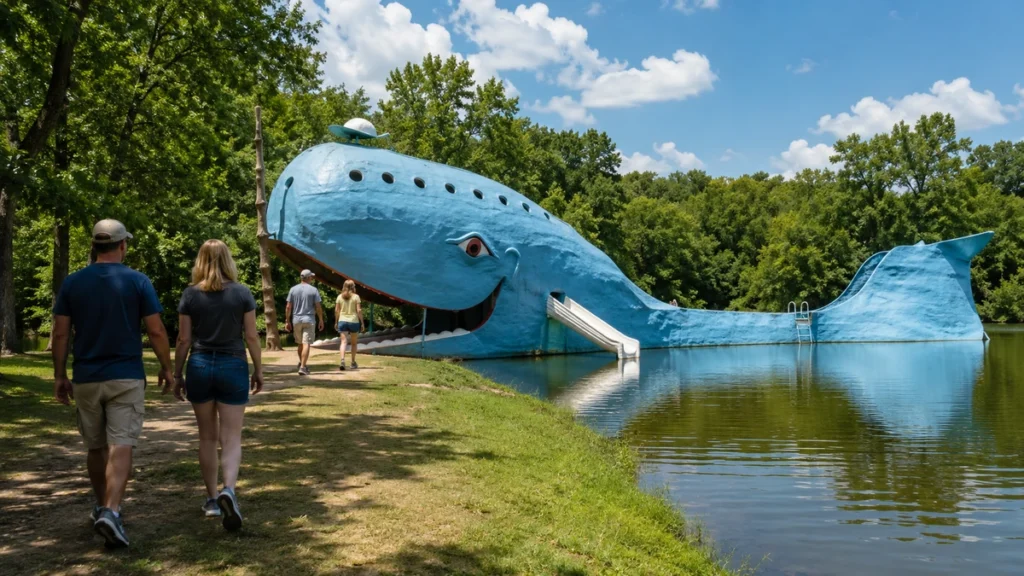
The Blue Whale was wonderfully simple.
A huge smiling blue whale sat beside a pond.
That was basically it.
But on Route 66, it made perfect sense.
I walked around, stretched my legs, took a few photos, and stayed just long enough to enjoy the absurdity without turning it into a major sightseeing stop.
Worth the detour: Yes.
Time needed: 20–30 minutes.
Best for: Route 66 road trips.
13. World’s Largest Catsup Bottle, Illinois
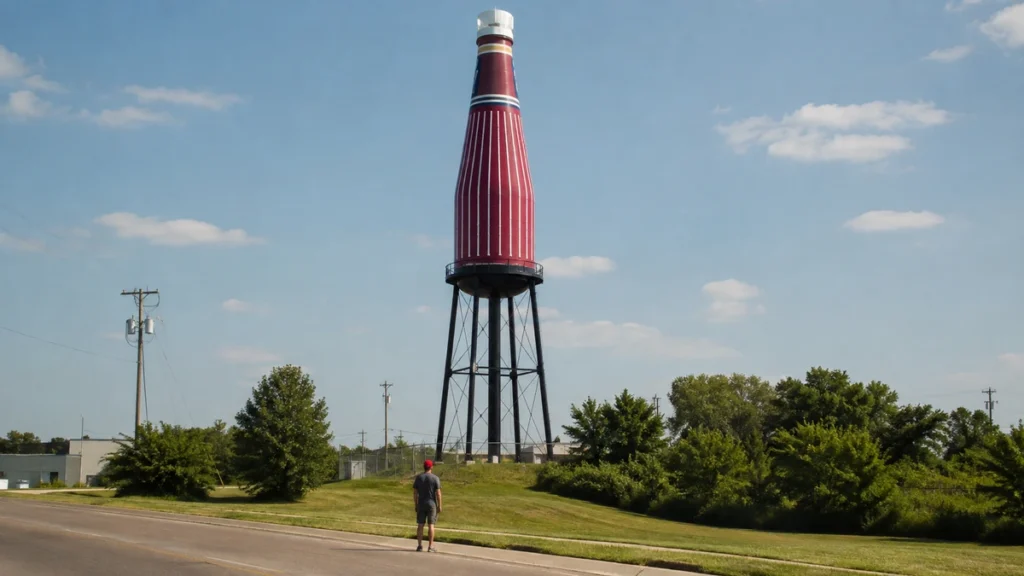
I expected a giant ketchup bottle.
Technically, I got a giant water tower shaped like one.
That somehow made it better.
The attraction in Collinsville came from an era when businesses used oversized roadside objects to make passing drivers remember them.
It clearly worked.
There wasn’t enough here for a long visit, and I didn’t try to make it one.
Worth the detour: Yes if nearby.
Time needed: 10–15 minutes.
My take: Exactly what a quick roadside photo stop should be.
14. South of the Border, South Carolina
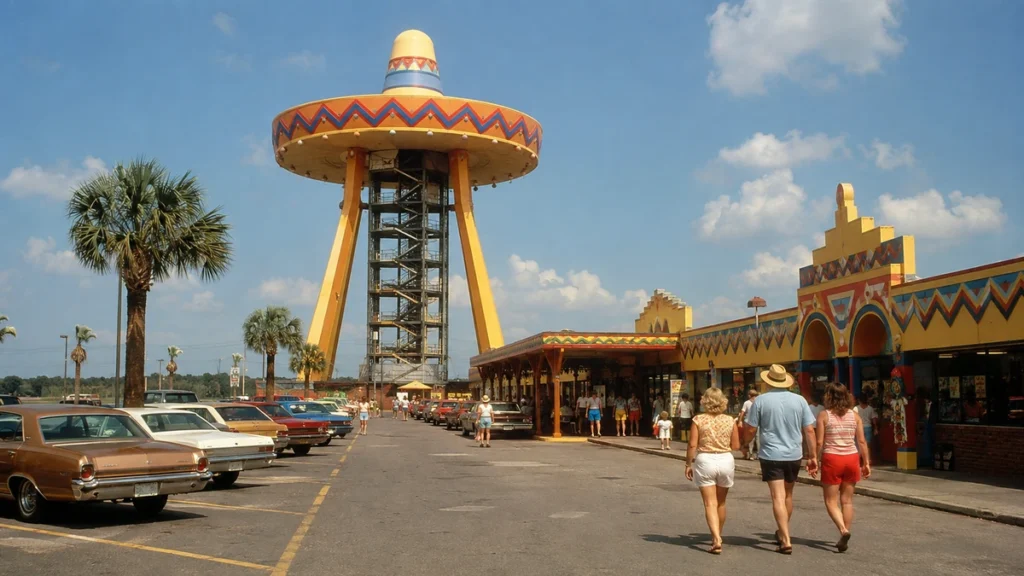
South of the Border announced itself long before I reached it.
Billboards built up the stop mile after mile along I-95.
By the time the giant sombrero appeared, subtlety had completely left the conversation.
Parts of the complex felt dated.
Oddly, that was what made it interesting.
It felt like a surviving piece of another era of highway travel when enormous signs and exaggerated roadside attractions competed for drivers’ attention.
Worth the detour: Once.
Time needed: 30–60 minutes.
Best for: An I-95 driving break.
15. Haines Shoe House, Pennsylvania
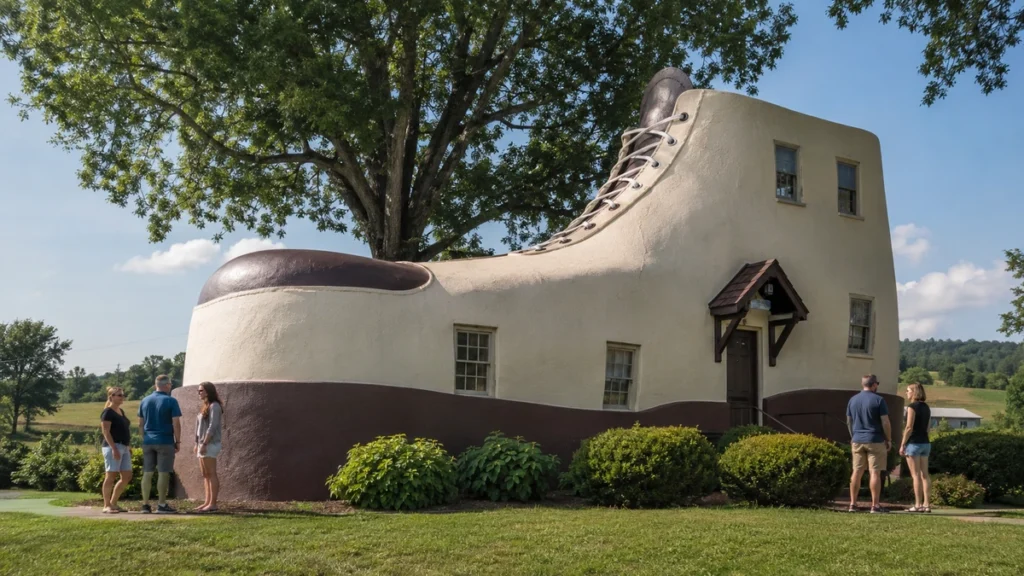
The Haines Shoe House looked exactly like somebody had taken a shoe and enlarged it until people could fit inside.
The story made more sense once I learned that it began as an advertising idea connected to a shoe business.
That pattern repeated throughout the trip.
Many roadside oddities started because someone wanted passing drivers to notice a product or business.
Decades later, the advertising became the attraction.
Worth the detour: Yes when already near York.
16. World’s Largest Chest of Drawers, North Carolina
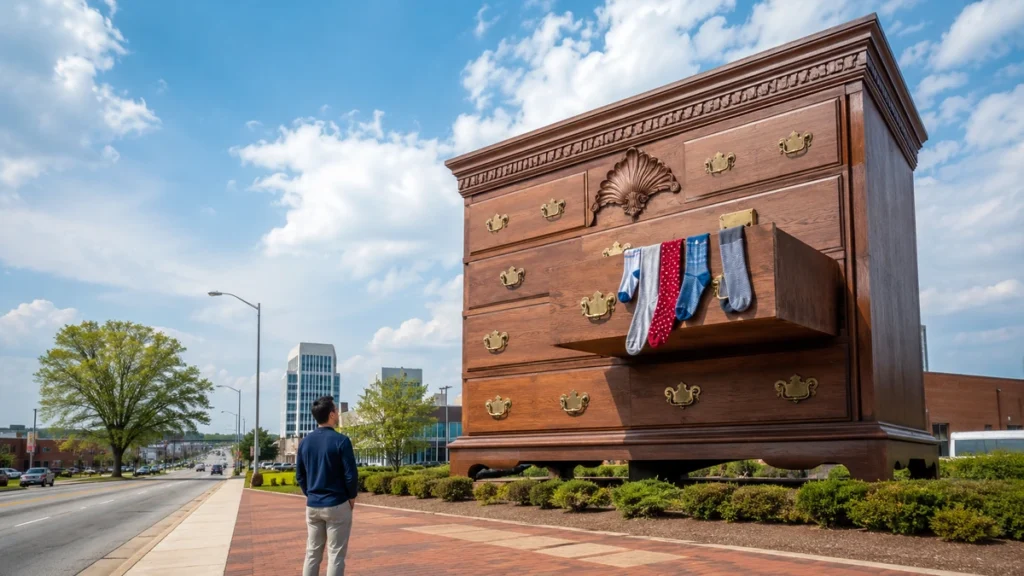
High Point is famous for furniture.
So naturally, somebody built an enormous chest of drawers.
The socks hanging from one drawer completed the joke.
This wasn’t a place that needed an hour of exploration.
I stopped, looked, laughed, took the obvious photo, and continued driving.
That was enough.
Worth the detour: Yes for a quick stop.
Time needed: 10–15 minutes.
17. International UFO Museum, New Mexico
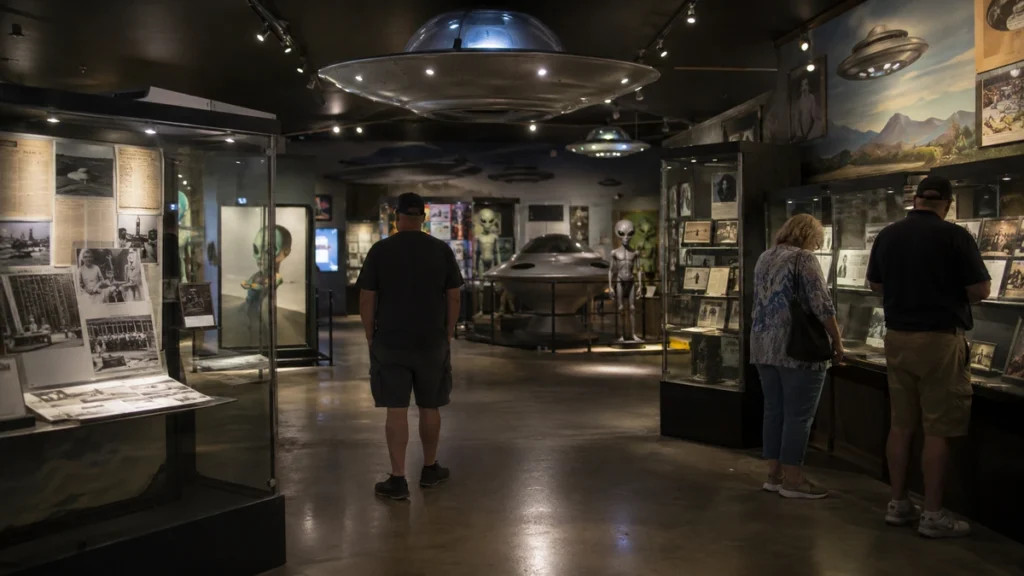
By the time I reached Roswell, aliens seemed to be everywhere.
Storefronts, signs, souvenirs, and decorations made the entire city feel committed to its extraterrestrial reputation.
The International UFO Museum gave the story more context through exhibits connected to the 1947 Roswell incident, UFO reports, documents, and alien lore.
I liked the contrast between people treating the subject seriously and the town having fun with it.
Worth the detour: Yes for UFO fans.
Time needed: Around an hour.
My take: Roswell itself felt like part of the attraction.
18. Winganon Space Capsule, Oklahoma
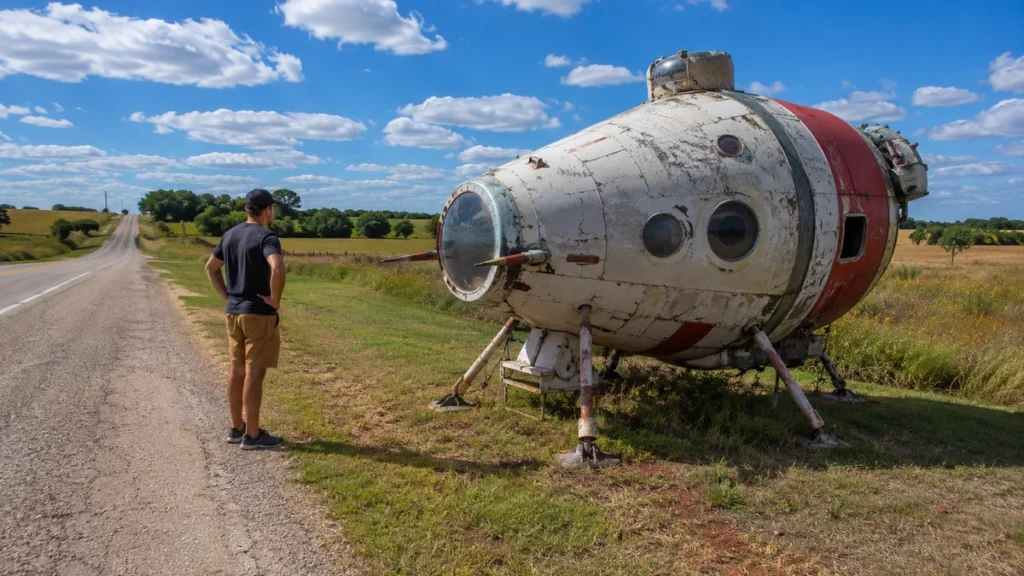
The Winganon Space Capsule looked surprisingly convincing from a distance.
Then I learned its origin.
It had started as part of a cement mixer.
That instantly made it better.
A discarded industrial object had been transformed into something that looked like a spacecraft beside a rural Oklahoma road.
This was exactly the kind of stop I wanted to find: strange, homemade, and unexpected.
Worth the detour: Yes if nearby.
Time needed: 10–15 minutes.
19. Hole N” The Rock, Utah
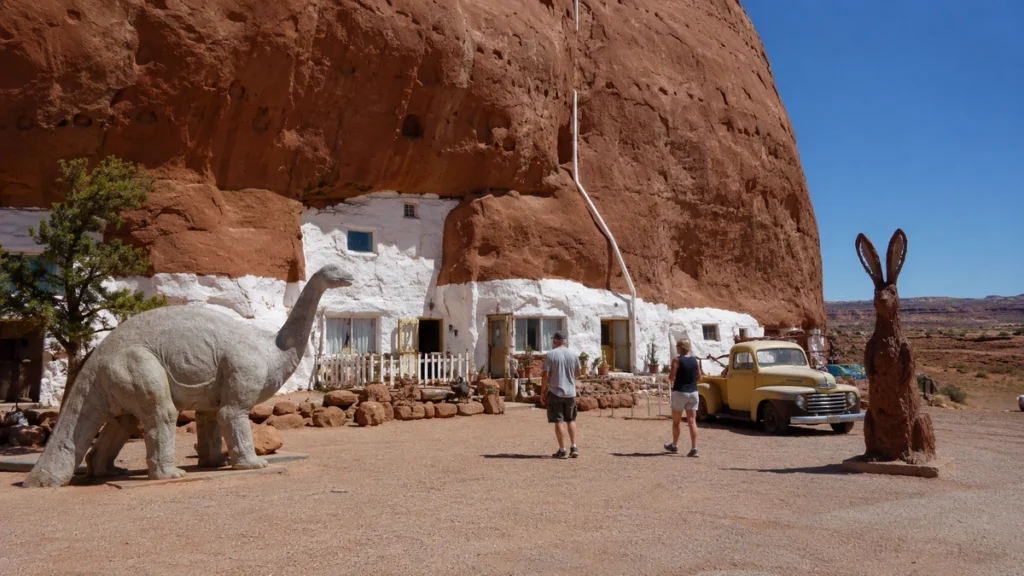
Utah already had more strange rock formations than I could count.
Hole N” The Rock added a very human version.
The roadside attraction near Moab centered on a home carved into sandstone, surrounded by other quirky displays and tourist-stop extras.
It was more commercial than expected.
I enjoyed it more once I treated it as an old-school roadside stop rather than a major Utah attraction.
Worth the detour: Yes near Moab.
My take: Fun, but the natural scenery nearby still won.
20. International Car Forest of the Last Church, Nevada
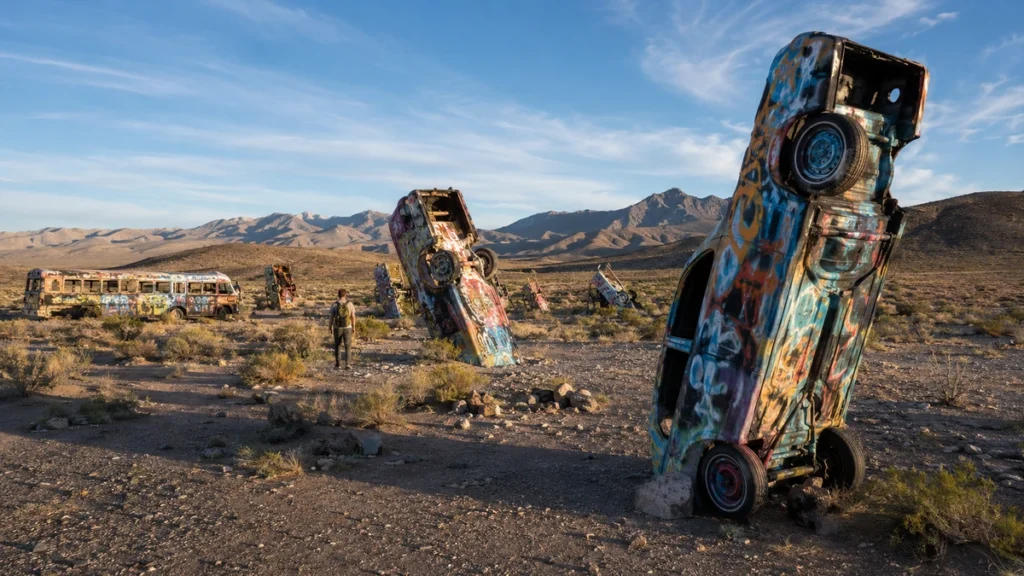
Nevada seemed like the right place for a forest made from old vehicles.
Cars and buses stood at strange angles in the desert, covered with paint and graffiti.
The empty surroundings made everything look even more surreal.
Unlike a polished sculpture garden, this place felt rough around the edges.
That worked.
Worth the detour: Yes for photographers and roadside-art fans.
Time needed: Around 30–60 minutes.
21. Jolly Green Giant, Minnesota
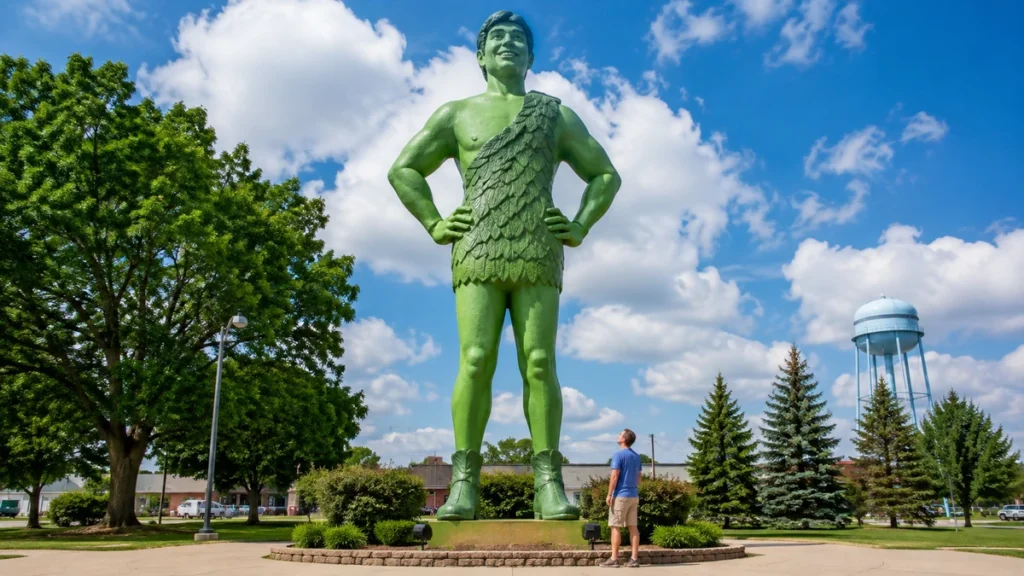
I knew the Green Giant from supermarket packaging.
Seeing him towering above Blue Earth was much stranger.
The enormous figure looked like a vegetable-company superhero watching over the town.
This was classic commercial roadside Americana: advertising that became a landmark because generations of travelers kept stopping.
Worth the detour: Yes on an I-90 trip.
Time needed: 15–20 minutes.
22. World’s Largest Teapot, West Virginia
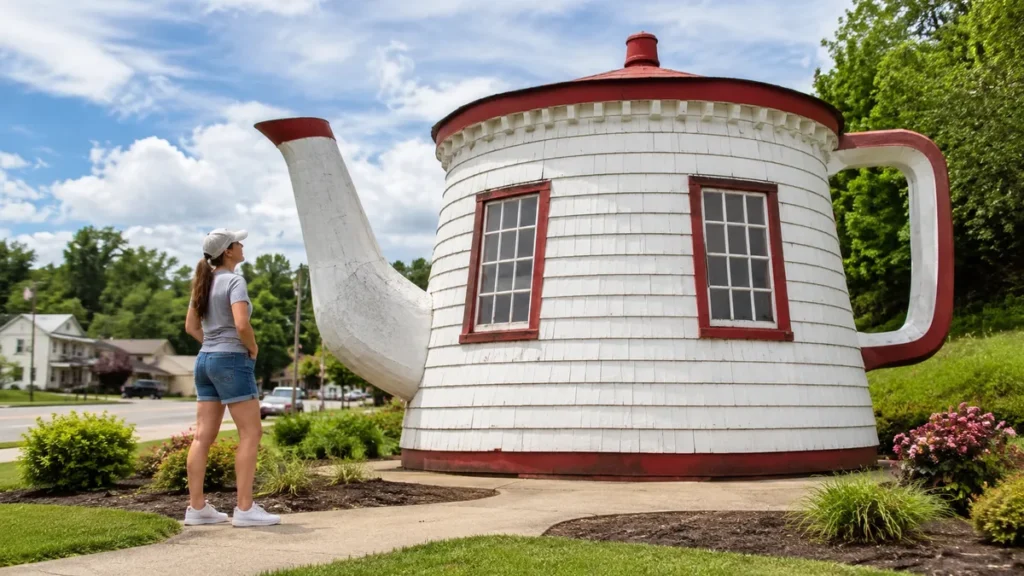
Chester had a giant teapot beside the road.
That sentence almost explained the entire attraction.
And I mean that affectionately.
After several hours of driving, I appreciated places that didn’t demand much from me.
No complicated tour.
No half-day commitment.
Just an enormous teapot, a quick laugh, and back to the road.
Worth the detour: Yes when close to your route.
Time needed: 10–15 minutes.
23. Wild Blueberry Land, Maine
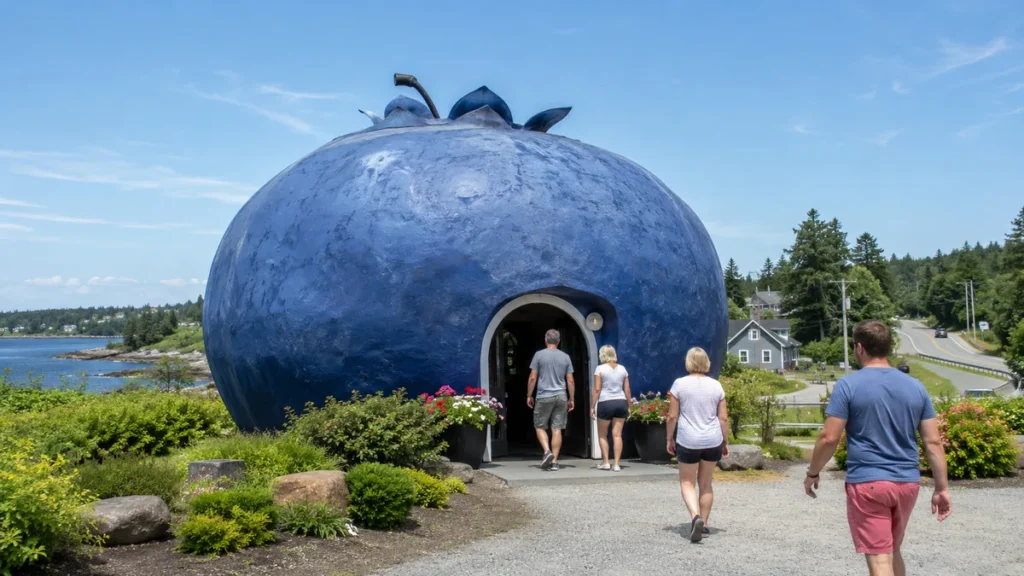
Wild Blueberry Land looked like someone had sliced an enormous blueberry in half and added doors.
I immediately liked it.
Unlike some completely random giant objects, this one connected naturally to Maine’s blueberry culture.
That made the attraction feel playful rather than forced.
Worth the detour: Yes on a Down East Maine road trip.
Best for: Families, food stops, and quirky architecture.
24. World’s Smallest Post Office, Florida
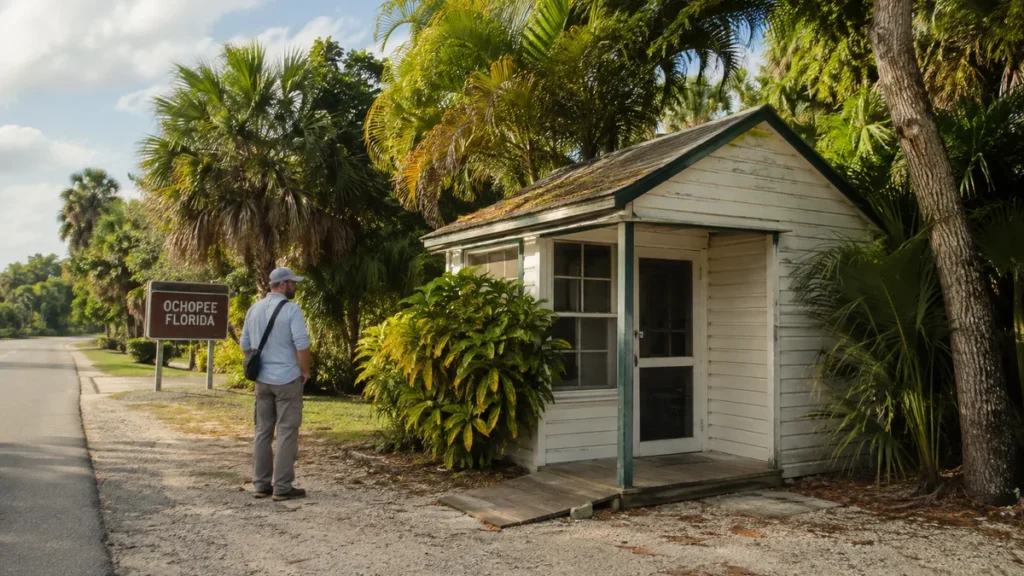
After seeing so many “world’s largest” attractions, the World’s Smallest Post Office felt like a perfect correction.
The tiny building in Ochopee looked almost too small to function.
What made it interesting was that this wasn’t simply a novelty structure built for tourists. Its history came from practical circumstances.
That gave the little building more personality than I expected.
Worth the detour: Yes when crossing the Everglades area.
Time needed: 10–20 minutes.
25. Paper House, Massachusetts
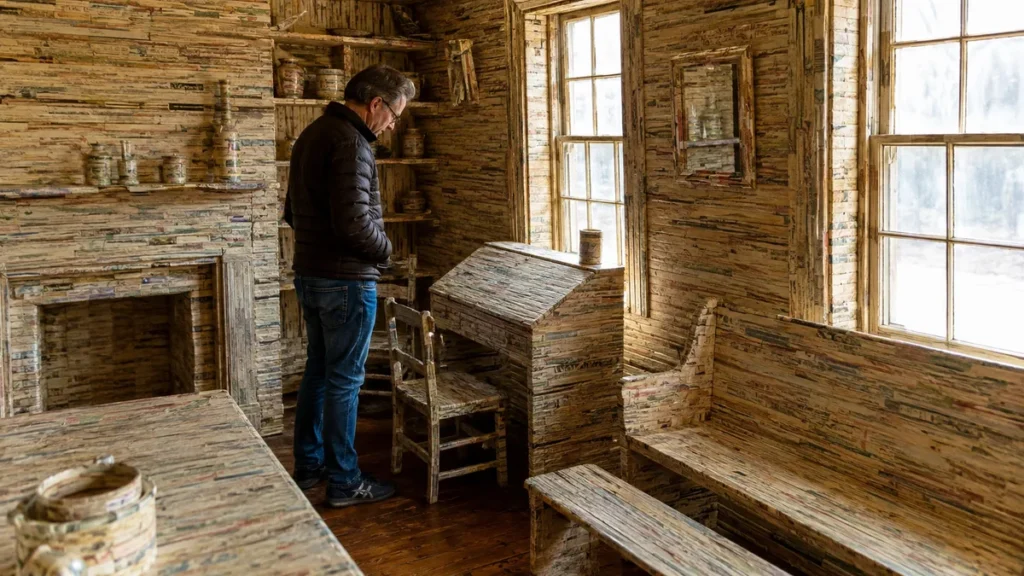
The Paper House didn’t look strange enough from a distance.
Then I started noticing what it was made from.
Newspapers had been used throughout the structure and in pieces of furniture.
The attraction became better the closer I looked.
This wasn’t giant-roadside-object weird.
It was patient, handmade weird.
I preferred that.
Worth the detour: Yes for unusual architecture and handmade art.
Time needed: Around 30–45 minutes.
26. Big Blue Bug, Rhode Island
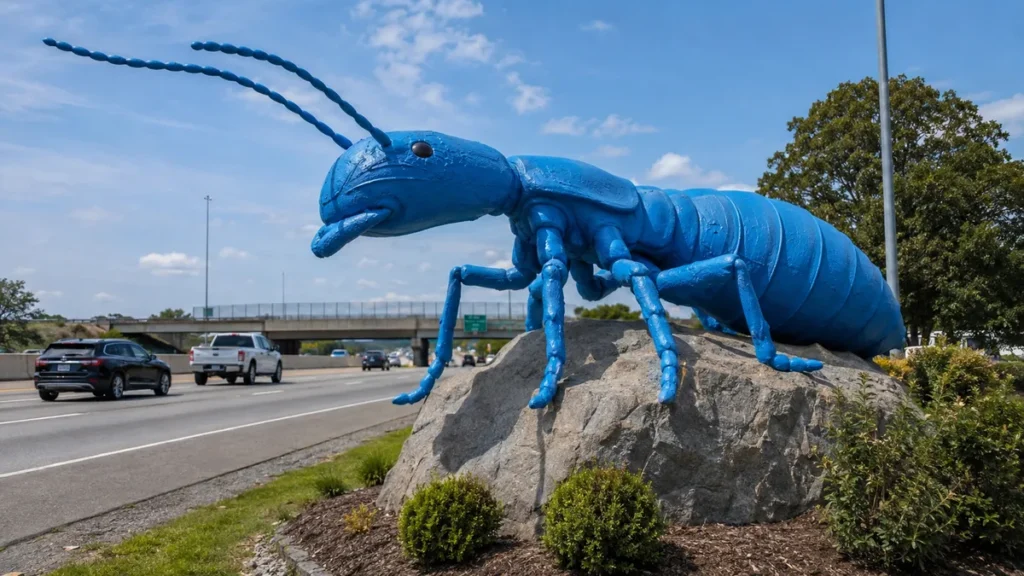
Rhode Island’s giant blue termite didn’t ask me to exit the highway and spend an afternoon understanding its importance.
It simply appeared beside I-95.
Known as Nibbles Woodaway, the oversized bug had become one of those landmarks drivers recognized even when they didn’t know its name.
Sometimes spotting the attraction from the road was enough.
Worth the detour: No real detour needed.
27. World’s Largest Pancake Griddle, New York
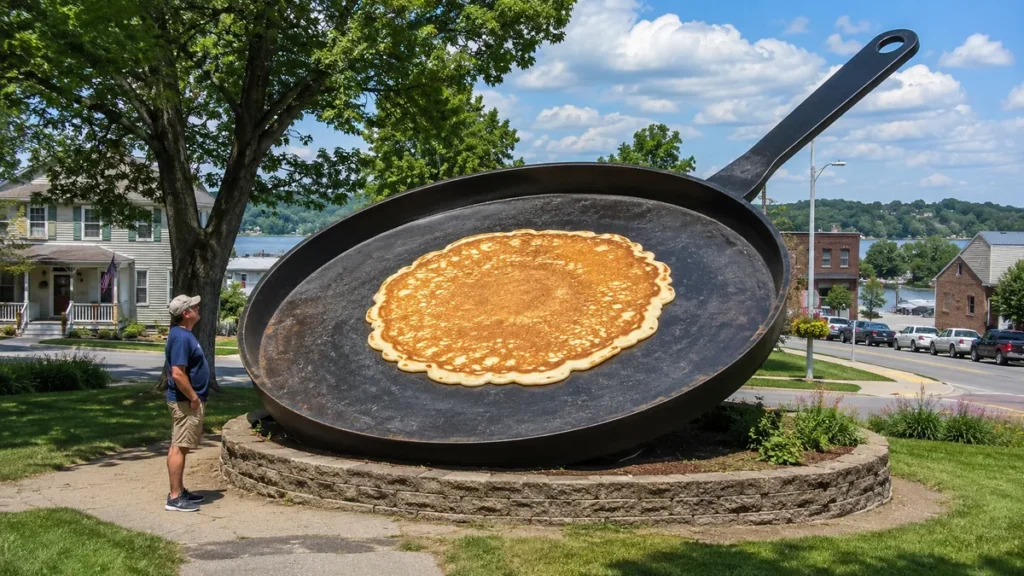
The giant pancake griddle in Penn Yan came with the sort of story that made roadside attractions better.
An enormous cooking object created for a record-sized pancake eventually became a landmark itself.
I spent more time wondering how anybody handled a pancake that large than looking at the actual griddle.
That probably counted as getting the full experience.
Worth the detour: Yes around the Finger Lakes.
Time needed: 10–15 minutes.
28. Future Birthplace of Captain James T. Kirk, Iowa
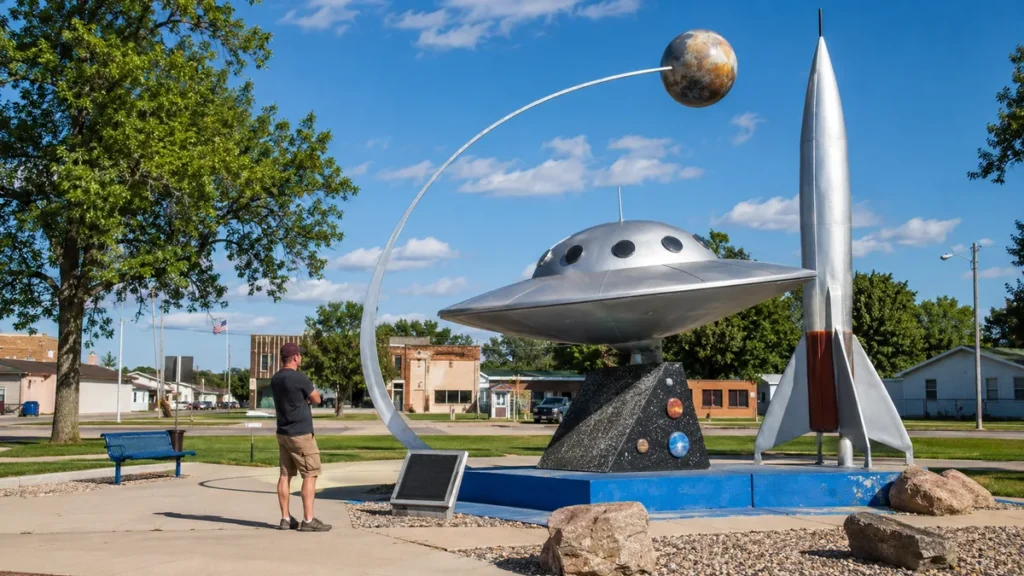
This might have been the cleverest stop.
Riverside, Iowa, became known as the future birthplace of Captain James T. Kirk from Star Trek.
Not birthplace.
Future birthplace.
The entire idea worked because the town committed to the joke instead of treating it halfway.
Worth the detour: Absolutely for Star Trek fans.
Everyone else: Stop if it already fits the route.
29. Chandelier Drive-Thru Tree, California
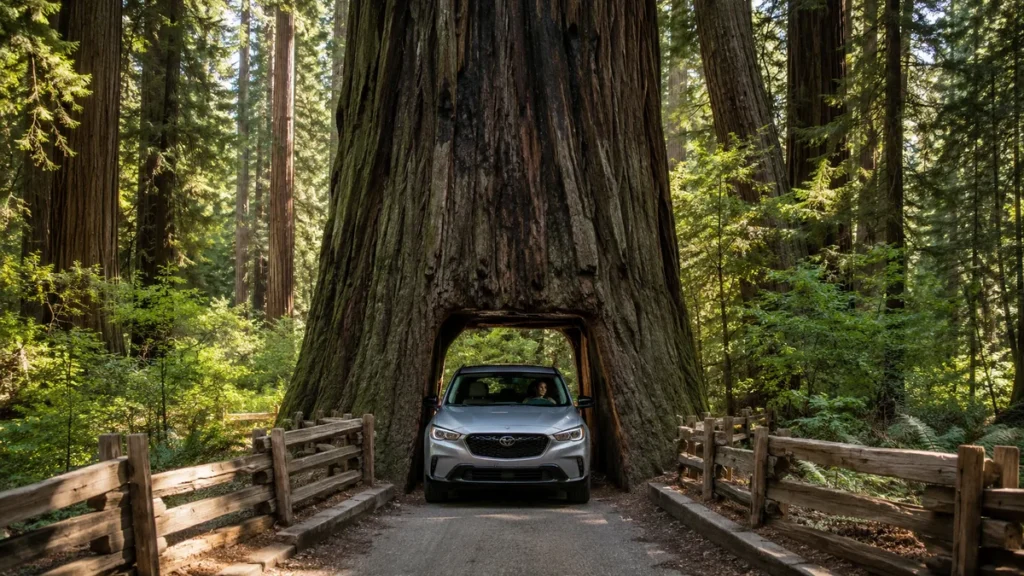
Driving through a living redwood felt like an experience from an older era of American road travel.
The Chandelier Tree near Leggett was exactly that.
I felt more nervous about fitting through the opening than expected.
Still, slowly passing beneath the enormous trunk became one of those simple road-trip moments that stayed with me.
Worth the detour: Yes on Highway 101.
Best for: Classic California roadside nostalgia.
30. BoatHenge, Missouri
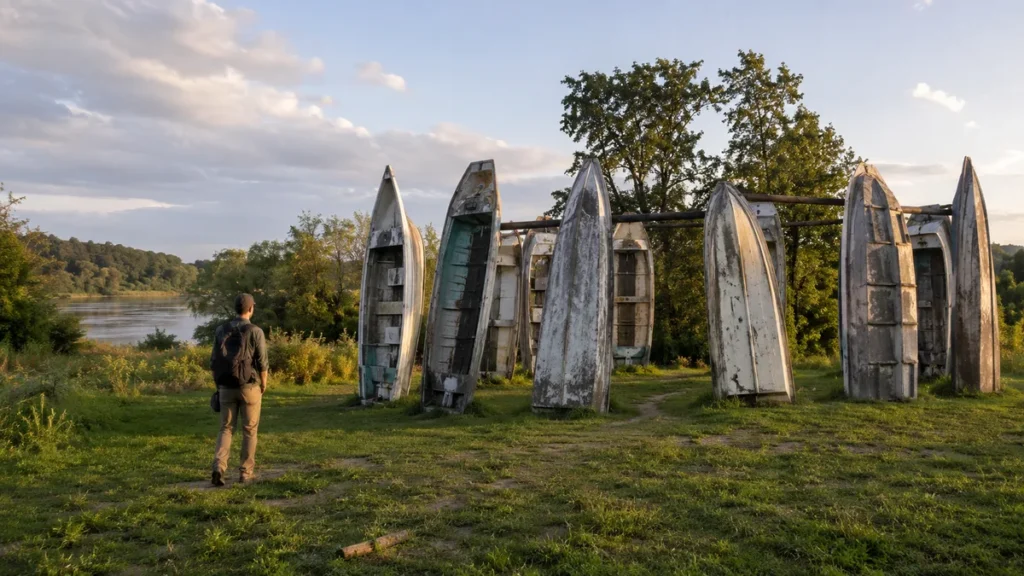
BoatHenge took the Stonehenge-parody idea in another direction.
Instead of cars like Carhenge, boats stood nose-down in the ground.
The faded surfaces and strange arrangement made it feel less commercial than many roadside attractions.
It looked more like something I had stumbled across than something designed by a tourism board.
I liked that.
Worth the detour: Yes if already nearby.
Best for: Oddball outdoor art.
31. Iowa’s Largest Frying Pan
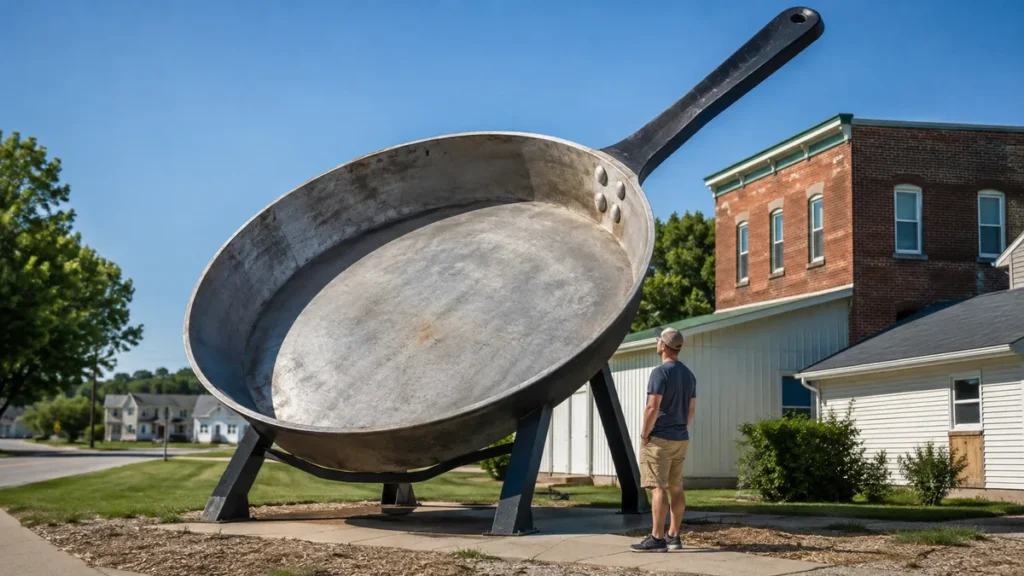
The final stop needed almost no explanation.
It was a giant frying pan.
After giant cars, giant furniture, giant bugs, giant teapots, and a giant ball of twine, that felt like the correct ending.
I spent only a few minutes here.
It was enough.
That was one lesson I kept coming back to: a roadside attraction didn’t need to be important to be worth stopping for.
Sometimes five minutes of complete silliness broke up a long driving day better than another gas-station coffee.
Worth the detour: Yes if you’re already passing nearby.
Time needed: 5–15 minutes.
Which Weird Roadside Attractions Were Most Worth the Stop?
Not all 31 deserved the same amount of time.
If my schedule were tight, this is how I’d narrow them down.
| Category | My picks |
| Best overall | Cadillac Ranch, Carhenge, Lucy the Elephant |
| Weirdest | Carhenge, Ball of Twine, The Thing |
| Best quick stops | Catsup Bottle, Giant Frying Pan, Giant Teapot |
| Best roadside Americana | Wall Drug, Corn Palace, South of the Border |
| Best roadside art | Cadillac Ranch, Salvation Mountain, Enchanted Highway |
| Best Route 66 stops | Cadillac Ranch, Blue Whale of Catoosa |
| Best unusual architecture | Lucy the Elephant, Haines Shoe House |
| Best for UFO fans | The Thing, International UFO Museum |
| Best “why does this exist?” stop | Winganon Space Capsule, Ball of Twine |
If I had time for only five, I’d choose Cadillac Ranch, Carhenge, Wall Drug, Lucy the Elephant, and The Thing.
Each represented a different side of America’s roadside culture.
Weird Roadside Attractions on Route 66
Route 66 deserved extra attention in 2026 because the historic highway celebrated its 100th anniversary.
The National Park Service treats Route 66 as an important part of America’s transportation and automobile history.
Some of the stops that fitted the Route 66 experience best included:
- Cadillac Ranch in Texas
- Blue Whale of Catoosa in Oklahoma
- old neon motel signs
- restored gas stations
- giant fiberglass figures
- tiny roadside museums
- eccentric souvenir shops
- vintage roadside architecture
My biggest planning mistake was trying to pin every famous stop before leaving.
Route 66 became more enjoyable when I left gaps in the schedule.
A faded sign, strange building, or restored gas station I hadn’t planned for sometimes became more memorable than the attraction I had saved weeks earlier.
Free Weird Roadside Attractions Can Be the Most Fun
Some of my favorite strange stops didn’t need an expensive ticket.
That mattered during a longer road trip.
Fuel, food, hotels, admission fees, parking, and small purchases added up much faster than expected.
I became more selective about paying for something that was essentially a giant object and a photograph.
For a proper museum or longer experience, paying admission made sense.
For a 15-minute roadside oddity, free was hard to beat.
How I Decided if a Roadside Attraction Was Worth the Detour
My standards became stricter after a few overpacked driving days.
Less Than 10 Minutes Off the Route
I almost always stopped.
Even a mediocre giant chicken could make a long highway day more interesting when it cost only 20 minutes.
10 to 30 Minutes Off the Route
The attraction needed a good story, something genuinely unusual, or another worthwhile place nearby.
This was where planning mattered most.
More Than 30 Minutes Off the Route
At that point, I stopped treating it as a casual roadside stop.
It had become part of the itinerary.
Salvation Mountain and the Enchanted Highway fitted this category much better.
Roadside Attraction Mistakes I Stopped Making
My first mistake was saving too many places.
The map looked exciting at night.
The next morning, those innocent pins turned a straightforward drive into an exhausting day.
After that, I usually picked one main roadside attraction and left room for one or two spontaneous stops.
My second mistake was assuming every attraction was always accessible.
It wasn’t.
Museums closed. Private attractions had limited hours. Seasonal schedules changed.
If a stop required a major detour, I checked its official information on the same day.
Another mistake was ignoring basic road-trip needs.
A strange museum became considerably less charming when I needed gas, food, a restroom, and another three hours behind the wheel.
Combining fuel, food, a short walk, and something weird in the same town made a much better driving break.
Why Does America Have So Many Weird Roadside Attractions?
Many of America’s strangest roadside attractions started with a practical purpose.
Businesses needed passing motorists to notice them.
Small towns wanted travelers to leave the highway.
Artists had big ideas and inexpensive materials.
Local companies built enormous versions of their products.
Then something interesting happened.
The advertising gimmicks outlived the advertisements.
A giant shoe became local architecture. A water tower shaped like a ketchup bottle became a landmark. Old cars became public art.
That mixture of commerce, humor, outsider art, local pride, and automobile culture created the roadside Americana I kept finding across the country.
The giant object itself was often funny.
The story of why somebody built it there was usually better.
Final Thoughts on America’s Weird Roadside Attractions
The roadside attractions I remembered most weren’t necessarily beautiful.
Some were rusty.
Some were ridiculous.
Several took less than 15 minutes.
A few were obvious tourist traps.
But they interrupted long driving days in exactly the right way.
I remembered Carhenge because somebody decided old cars could replace the stones at Stonehenge.
I remembered Cadillac Ranch because abandoned vehicles had become an ever-changing piece of roadside art.
I remembered Wall Drug because decades of highway advertising had effectively turned advertising itself into an attraction.
And I remembered the giant ball of twine because there was absolutely no sensible reason for me to care about it.
That was the point.
The best weird roadside attractions weren’t always the destination.
They were the stories that happened between destinations.
On a long road trip across the USA, those strange little stops often made the road itself the part I remembered most.