



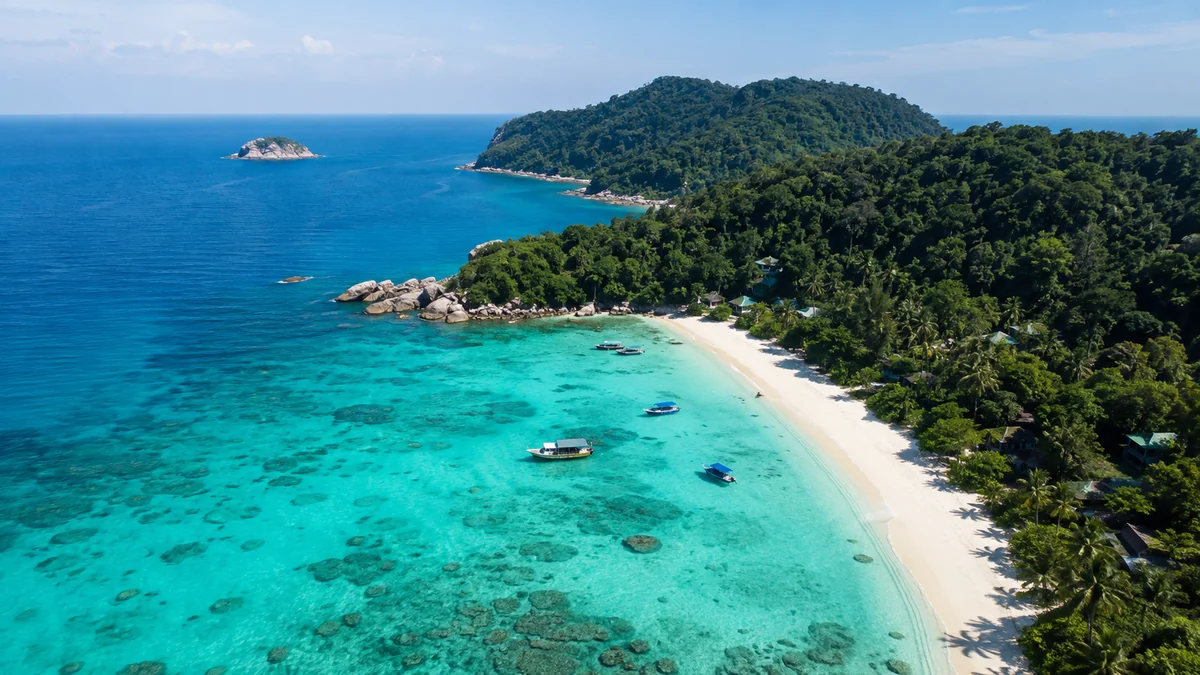
The Perhentian Islands looked straightforward to plan at first: choose a beach, book a room, take a boat, and spend a few days snorkeling. Once I started putting the trip together, a few decisions mattered much more than I expected.
Choosing Perhentian Kecil or Perhentian Besar mattered more than choosing the nicest-looking hotel. The beach mattered too. There is no normal island-wide road network, boats are an important part of getting around, and the northeast monsoon can completely change the experience.
My biggest takeaway was simple: choose one good base, stay at least three or four nights, and leave enough space in the itinerary for weather and sea conditions to change the plan.
The islands lie off the coast of Terengganu on the east coast of Peninsular Malaysia. The two main islands are Pulau Perhentian Kecil and Pulau Perhentian Besar, both known for beaches, coral reefs, snorkeling, scuba diving, and marine life. Tourism Malaysia provides a useful official overview of the islands and how to reach them.
Tourism Malaysia’s official Terengganu travel guide
Perhentian Islands at a Glance
| Planning question | Quick answer |
|---|---|
| Kecil or Besar? | Kecil for activity and a social atmosphere; Besar for quieter resort stays |
| Main gateway | Kuala Besut Jetty |
| Nearest useful airport | Kota Bharu |
| Boat crossing | Roughly 20–30 minutes in normal conditions |
| Ideal first stay | Around 4 nights |
| Main activities | Snorkeling, diving, swimming, kayaking, beaches, jungle walks |
| Getting around | Walking trails and water taxis |
| Best broad period | Outside the northeast monsoon |
| Cash or cards? | Carry enough Malaysian ringgit; do not depend entirely on cards |
| Best for | Snorkeling, diving, beaches, and slow island travel |
Tourism Malaysia identifies Kuala Besut Jetty as the main jumping-off point and gives the usual boat journey to the islands as about 20–30 minutes. Kota Bharu is the nearest useful airport to Kuala Besut.
Perhentian Kecil vs Perhentian Besar: Which Should You Choose?
This was the decision that shaped the rest of my trip.
At first, I spent too much time comparing room photos. Once I understood the difference between the islands, choosing accommodation became much easier.
| Island | Best for | Main advantages | Main drawback |
|---|---|---|---|
| Perhentian Kecil | Backpackers, solo travelers, divers, social trips | More activity, restaurants, dive shops, wider budget range | Some areas can feel busy or noisy |
| Perhentian Besar | Couples, families, quieter holidays | Relaxed atmosphere, resort-style stays, quieter beaches | Fewer choices within easy walking distance |
Perhentian Kecil
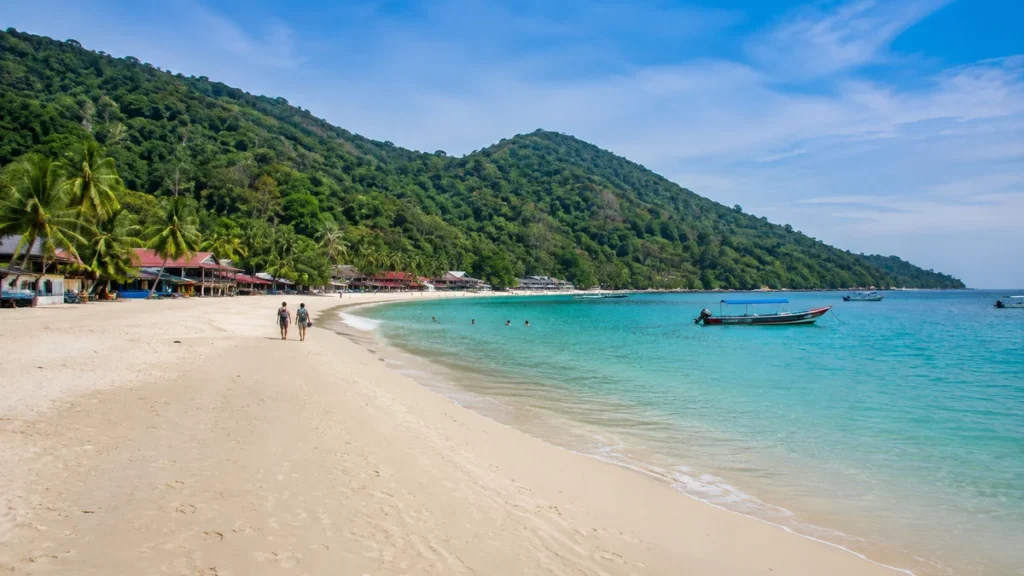
Kecil felt like the easier base for an independent trip.
Long Beach has one of the strongest concentrations of restaurants, dive operators, accommodation, and evening activity. That convenience is useful, but it is not the part of the Perhentians I would choose for complete quiet.
Coral Bay felt calmer. I still had access to Kecil’s useful infrastructure, but evenings were more relaxed and the sunset side of the island appealed to me more.
One small mistake was assuming short-looking routes on the map would feel equally short on foot. Heat and humidity change walking times quickly, especially away from the beach.
Perhentian Besar
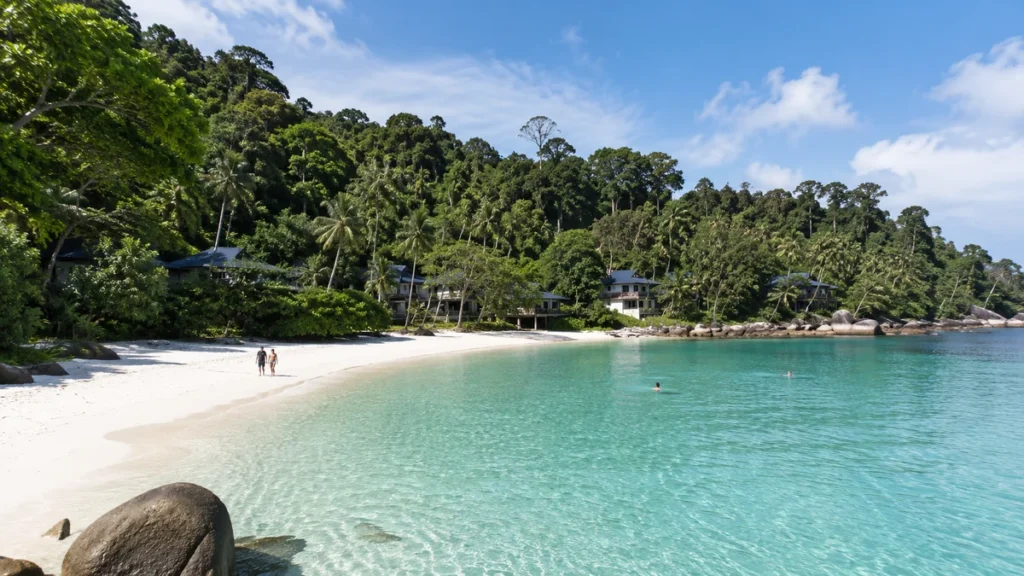
Besar suits a different style of trip.
It generally feels more resort-focused and slower paced, with accommodation that works particularly well for couples and families who plan to spend much of the day around their beach or resort.
The trade-off is convenience. If your accommodation sits away from other restaurants or beaches, water taxis become part of the daily routine and budget.
For a three- or four-night first visit, I found it more sensible to choose one island rather than lose time changing hotels halfway through.
The Best Beaches Depend on What You Want
I would not rank the beaches from one to ten. The better question is what you want from them.
Some make convenient bases. Others are better for snorkeling, swimming, sunsets, or escaping busier parts of the islands.
| Beach | Island | Best for | My take |
|---|---|---|---|
| Long Beach | Kecil | Restaurants, diving, social atmosphere | Convenient but busy |
| Coral Bay | Kecil | Sunsets and quieter evenings | Best balance for me |
| Adam and Eve Beach | Kecil | Escaping the main beaches | Better if you enjoy quieter stops |
| D’Lagoon | Kecil | Snorkeling and diving | More secluded |
| Teluk Keke | Besar | Swimming and snorkeling | Worth prioritizing for water time |
| Teluk Pauh | Besar | Reef access | Useful snorkeling base |
| Turtle Beach | Besar | Scenery and quiet | Better for slowing down |
| Teluk Dalam / Flora Bay | Besar | Peaceful resort stays | Calm rather than action-packed |
Long Beach or Coral Bay?

This is probably the most useful comparison for travelers staying on Kecil.
Long Beach won on convenience. Coral Bay won on atmosphere.
Long Beach makes more sense if you want dive shops, restaurants, other travelers, and activity close by.
Coral Bay suited me better when I wanted a quieter end to the day. For someone who wants Kecil without staying in its busiest area, it is an appealing compromise.
Snorkeling Was More Worthwhile Than Trying to See Every Beach
I underestimated how much of the Perhentian experience happens under the water rather than on the sand.
The islands form part of Malaysia’s protected marine-park network. The Department of Fisheries lists the Pulau Perhentian Archipelago among Terengganu’s marine-park areas, established to protect marine habitats and aquatic life.
Common names on snorkeling trips include:
- Turtle Point
- Shark Point
- Teluk Keke
- Turtle Beach
- Rawa Island
- coral and reef areas around Kecil and Besar
Current Tourism Malaysia packages also use several of these locations on snorkeling itineraries, including Shark Point, Turtle Point, Turtle Beach, Teluk Keke, and Pulau Rawa. The exact route varies by operator and conditions.
That last part matters.
A place called Turtle Point does not guarantee a turtle. Shark Point is not an aquarium. Wildlife encounters depend on the day, conditions, and luck.
Shore snorkeling or a boat trip?
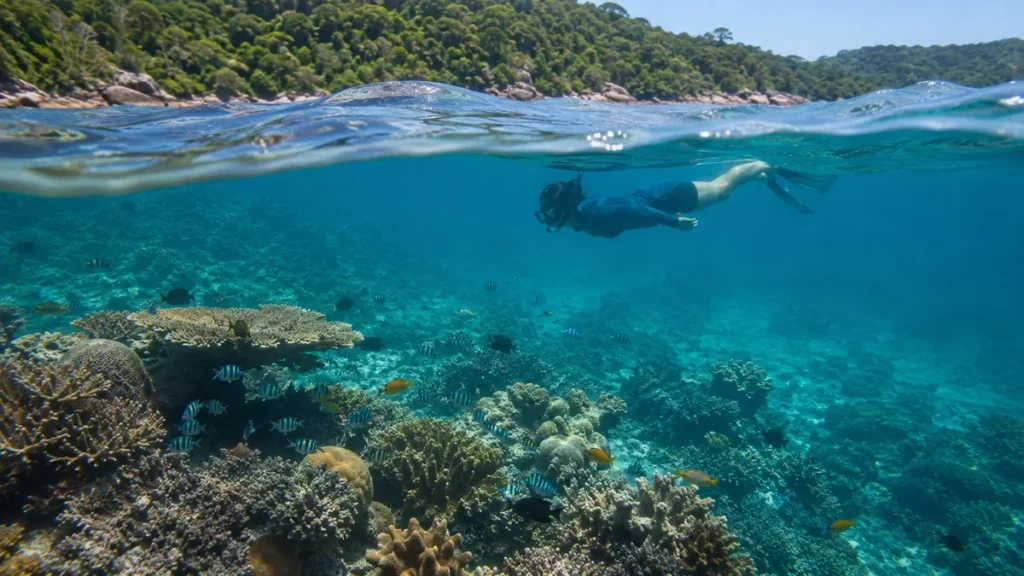
I found value in both.
Shore snorkeling gave me freedom. When visibility was good, I could stay in the water without watching a tour schedule.
A snorkeling boat trip made more sense for reaching several different reef areas during a short stay. If the price difference is reasonable, a smaller group can be worth paying for. Popular stops lose some of their appeal when several boats arrive at the same time.
The reef also deserves more care than it sometimes gets from visitors. I avoided standing on coral, touching marine life, or following turtles too closely.
Department of Fisheries Malaysia marine-park information
Scuba Diving in the Perhentian Islands
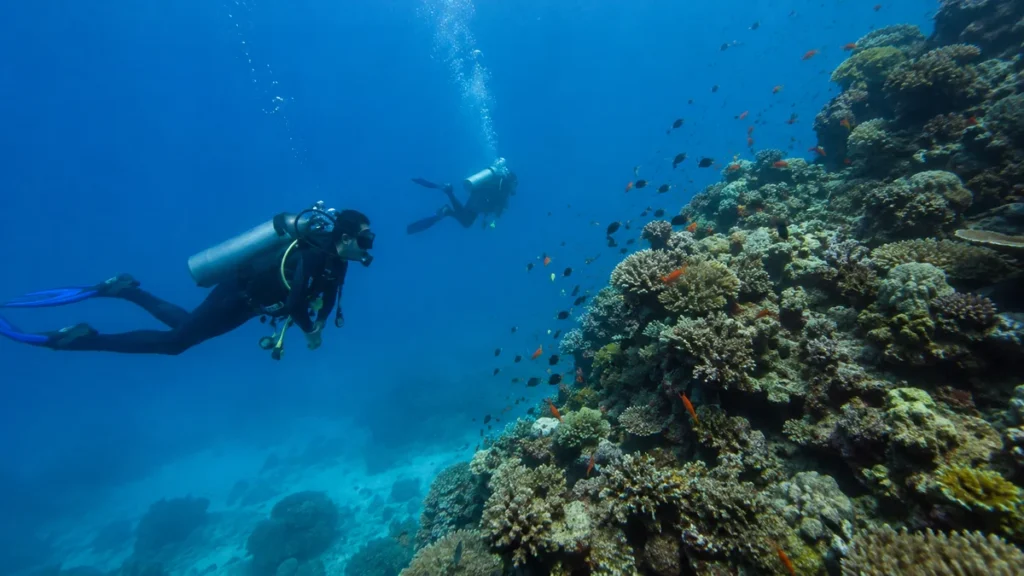
Diving is one of the better reasons to extend a stay.
Dive operators are found on both islands, with plenty of activity around Kecil. The combination of reef sites, relatively short boat transfers, and beginner courses makes the Perhentians attractive to both certified divers and first-timers.
What I would avoid is trying to combine an Open Water course with an aggressive sightseeing itinerary.
Theory, equipment preparation, training, dives, meals, and recovery time fill more of the day than they appear to on a schedule. If diving is one of the main reasons for coming, give it enough space rather than squeezing it between beach-hopping plans.
How to Get to the Perhentian Islands
For most travelers, the route eventually narrows down to:
mainland Malaysia → Kuala Besut Jetty → Perhentian Kecil or Besar
From Kuala Lumpur
One practical route is:
Kuala Lumpur → Kota Bharu → Kuala Besut → Perhentian Islands
Tourism Malaysia identifies Kota Bharu as the nearest airport to Kuala Besut and says the drive from Kota Bharu to the jetty takes about half an hour. In real travel conditions, I would still allow more time for airport pickup, traffic, stops, and getting checked in at the jetty.
Long-distance buses are another option for travelers who prefer to save money rather than time.
Kuala Besut to the Perhentians
Boats leave from Kuala Besut Jetty.
Tourism Malaysia gives the crossing as roughly 20–30 minutes, although some current 2026 accommodation packages quote transfers closer to 30–45 minutes. That difference is a good reminder not to plan the journey down to the minute. Your operator, weather, sea conditions, and final drop-off point can all affect it.
A few simple choices made the transfer less stressful:
- I kept my passport, phone, and electronics in a dry bag.
- I confirmed the accommodation drop-off point before boarding.
- I left a sensible buffer around the return journey.
- I reconfirmed departure arrangements before leaving the island.
The mistake I would avoid is pairing a small-boat transfer with a tight flight connection.
Marine Park Conservation Fee
Visitors to Malaysian marine parks pay a conservation charge.
At the time of this final update in August 2026, the Department of Fisheries publishes these rates for visitors without a Malaysian MYKAD:
| Visitor | Conservation charge |
|---|---|
| Adult | RM30 |
| Child aged 6–12 | RM15 |
| Senior aged 60+ | RM15 |
| Disabled visitor | Free |
The department says the money goes into the Marine Parks and Marine Reserves Trust Fund to support management and maintenance.
Because government fees can change, I would check again shortly before travel.
Check current Malaysian marine-park conservation fees
Also check what your accommodation or transfer package includes. Some current Tourism Malaysia-listed packages show the marine-park charge, local jetty fee, and tourism tax separately rather than including everything in the advertised rate.
Getting Around Without Roads
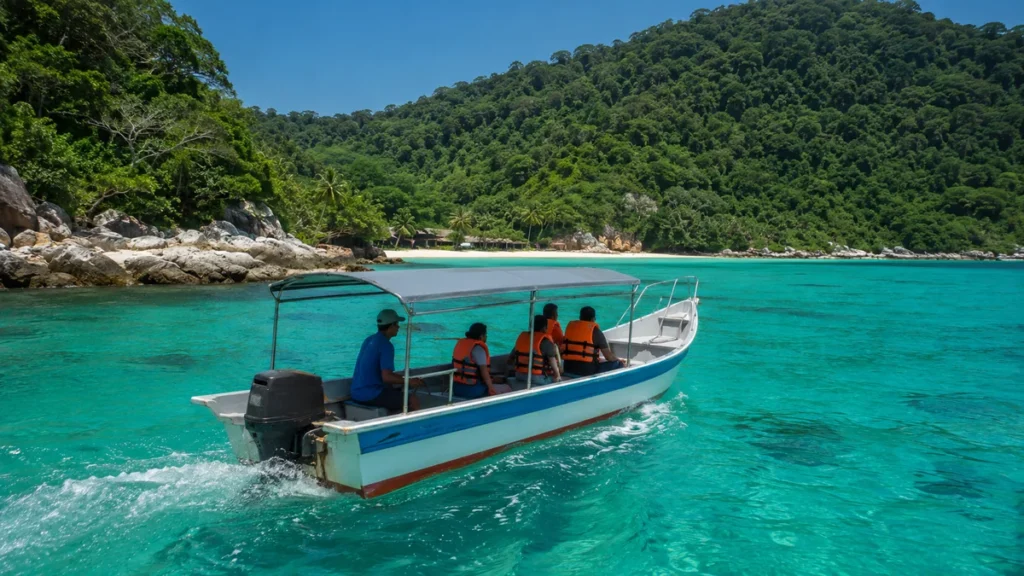
The Perhentians require a different travel mindset from larger Malaysian islands.
There is no island-wide road system that lets visitors rent a car or scooter and move freely between every beach.
Most trips involve a mix of:
- water taxis
- walking trails
- snorkeling or diving boats
- kayaks for suitable short routes
This made accommodation location more important than I expected.
A cheaper room becomes less of a bargain if every dinner or beach visit requires another boat ride. On a short stay, paying slightly more for the right location can be better value than upgrading the room itself.
Walking between some areas of Kecil is realistic, but jungle paths, heat, humidity, and darkness after sunset all deserve more respect than a map suggests.
Where to Stay
I would choose the area first and the property second.
Long Beach: best for convenience
Long Beach works best if you value:
- dive shops
- restaurants
- social atmosphere
- easy access to tours
- more activity close to the room
The compromise is noise and a busier beach.
Coral Bay: best balance on Kecil
Coral Bay was the better fit for me when I wanted Kecil without staying in its liveliest area.
The quieter evenings and sunset views outweighed the small loss of convenience.
Besar: best for a resort-focused trip
Besar makes more sense when the resort and beach are intended to be a large part of the holiday.
It works particularly well for couples and families who do not need nightlife or a long restaurant list outside the hotel.
Before booking an isolated property, I would check three things: what can be reached on foot, where the nearest food options are, and how much water taxis are likely to become part of the stay.
How Many Days Do You Need in the Perhentian Islands?
For a first trip, four nights felt about right.
Two nights
Possible, but rushed.
A large percentage of the trip disappears into reaching Kuala Besut, crossing to the island, settling in, and then preparing to leave.
Three nights
Enough for a snorkeling trip, beach time, and some exploring.
The weakness is weather. One poor day has a much bigger impact.
Four nights
This is the better balance for most first-time visitors who are not taking a dive course.
It leaves time for snorkeling, another beach, a slower day, and some flexibility.
Five to seven nights
This makes more sense for:
- scuba divers
- travelers completing dive courses
- families
- slow travelers
- people splitting time between Kecil and Besar
A full week can feel long if your ideal holiday needs shopping, museums, and a new attraction every few hours.
A Practical 4-Day Perhentian Islands Itinerary
Day 1: Arrive and stay local
I kept arrival day deliberately light.
After the mainland journey and boat transfer, committing to an important excursion would have made the day unnecessarily fragile.
I checked in, swam, explored the immediate beach, and figured out where I actually wanted to eat.
Day 2: Snorkeling
This was the day to prioritize the water.
A multi-stop snorkeling trip gave me more variety than trying to organize several locations independently.
I left the afternoon loose. Several hours of swimming and tropical sun were more tiring than they looked on my original itinerary.
Day 3: Explore another beach
On Kecil, this is a good day to combine Long Beach or Coral Bay with a quieter stretch of the island.
On Besar, a water taxi can be more sensible than forcing several beaches into one day because they appear close on a map.
Day 4: Keep it flexible
This ended up being one of the better planning decisions.
Depending on conditions, the day can become another snorkeling trip, a dive, kayaking, a trail walk, or simply more time on the beach that turned out to be your favorite.
In the Perhentians, a free day is often more useful than another reservation.
Best Time to Visit the Perhentian Islands
The northeast monsoon is the main seasonal issue to understand.
METMalaysia says the Northeast Monsoon generally runs from November to March and brings heavy rainfall particularly to the east coast of Peninsular Malaysia.
| Period | General planning picture |
|---|---|
| March | Transitional; check whether resorts and boat services are fully operating |
| April–May | Increasingly favorable island conditions |
| June–July | Strong period for an east-coast beach trip |
| August–September | Popular period; book earlier |
| October | Increasing weather uncertainty |
| November–February | Northeast monsoon makes a normal beach holiday much less reliable |
I would not choose dates based only on a monthly weather icon. Island travel depends heavily on the sea.
Before an important boat journey, the source I care about most is the official forecast.
Check METMalaysia weather information
METMalaysia also publishes dedicated marine forecasts, which are more useful than a generic weather app when wind and wave conditions matter.
Check METMalaysia marine forecasts
What to Budget For
I would avoid publishing one supposedly universal “daily budget” for the Perhentians. The difference between a basic room, a beachfront resort, and a diving package is too large for that number to be genuinely useful.
Instead, budget separately for:
| Expense | What changes the cost |
|---|---|
| Accommodation | Island, beach, room standard, season |
| Mainland transfer | Bus versus flight and private transfer |
| Boat transfer | Operator and package |
| Marine park fee | Government-set visitor category |
| Local/jetty charges | Current local requirements |
| Water taxis | How often you change beaches |
| Food | Local meals versus resort dining |
| Snorkeling | Group versus private/small-group tour |
| Diving | Number of dives, equipment, certification course |
The two places where spending a little more made the most sense to me were location and water activities.
A conveniently located room can reduce repeated boat costs, while a smaller snorkeling group can improve the experience far more than a cosmetic hotel upgrade.
What I Ate
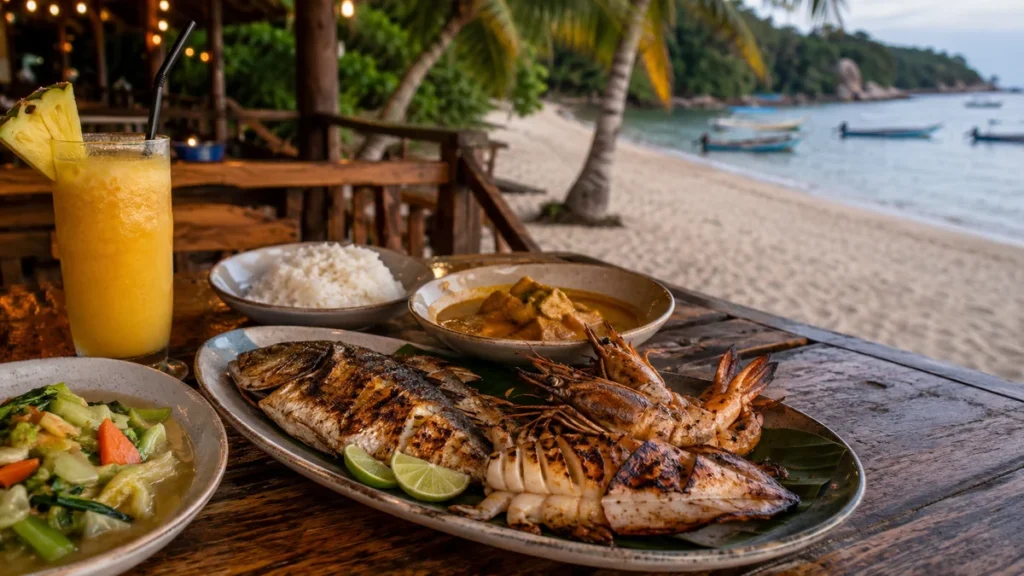
The Perhentians were not the part of Malaysia where I went looking for the country’s deepest food scene.
I kept meals fairly simple: roti, fried noodles, fried rice, curries, grilled fish, seafood, and fruit drinks.
Fresh fish by the beach was more memorable than the Western-style dishes I tried. Those often cost more without being the reason I had come to the islands.
There was also a noticeable island premium compared with mainland Malaysia. Supplies have to reach the islands by boat, so I did not expect Kuala Lumpur prices.
If staying more than a few nights, having several places to eat within walking distance is a bigger accommodation advantage than it first appears.
Cash, Wi-Fi and What I Was Glad I Packed
Bring enough Malaysian ringgit
I did not treat card acceptance as guaranteed.
Cash was useful for smaller food places, boat taxis, and local services. Even when a business normally accepts cards, unreliable connectivity can become the real problem.
I carried enough for expected spending plus a buffer.
Do not book on the promise of “free Wi-Fi” alone
Internet quality varies by property and location.
If connectivity matters for remote work, ask the accommodation directly about its current connection rather than relying on a booking-site Wi-Fi icon.
A Malaysian SIM or eSIM gives useful backup, although mobile reception can vary too.
The items that actually mattered
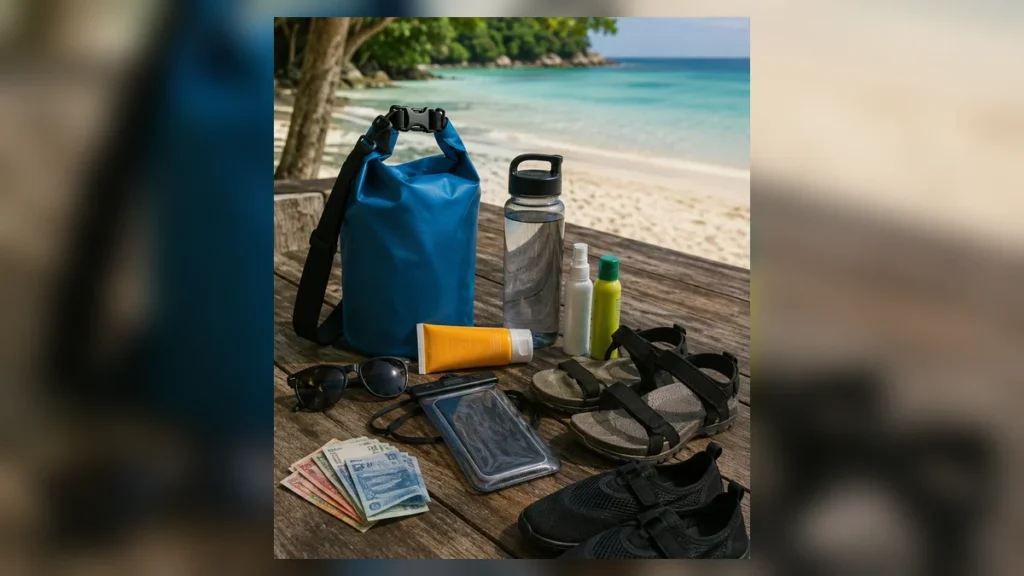
I was glad I packed:
- a dry bag
- waterproof phone protection
- reusable water bottle
- mosquito repellent
- lightweight rain layer
- strong sun protection
- footwear suitable for trails
- basic medication
- enough personal toiletries
The dry bag earned its place almost immediately.
Traveling to the Perhentian Islands From the United States
For most Americans, the Perhentians are easier to treat as part of a wider Malaysia trip than as the first stop after a long-haul flight.
A common journey looks roughly like:
United States → Kuala Lumpur → Kota Bharu → Kuala Besut → Perhentian Islands
I would not deliberately connect a long-haul international arrival to the final possible boat of the day. One late flight can break the entire sequence.
As of August 2026, the U.S. State Department says U.S. visitors traveling to Malaysia for tourism or business do not need a visa for stays of 90 days or less. It also states that travelers must complete the Malaysia Digital Arrival Card before travel. Entry rules can change, so these are details I would always verify again before departure.
Check current U.S. State Department guidance for Malaysia
Malaysia’s Immigration Department operates the official Malaysia Digital Arrival Card (MDAC) system and states that eligible travelers submit it within the required three-day pre-arrival period.
Use the official Malaysia Digital Arrival Card portal
I would use the government portal rather than a paid third-party site.
Common Mistakes I Would Avoid
A few mistakes can change the trip more than expected.
Booking a hotel before deciding between Kecil and Besar.
The island and beach affect the experience more than small differences between rooms.
Staying only two nights after a long journey.
Getting there takes enough effort that a rushed visit rarely makes sense.
Planning the return boat too close to a flight.
Sea conditions deserve a buffer.
Assuming every beach is an easy walk away.
Some routes involve jungle paths, heat, or water taxis.
Trying to collect every snorkeling spot.
One uncrowded reef experience can be better than rushing through six stops.
Depending entirely on cards.
Cash removes an avoidable source of stress.
Choosing monsoon dates only because the room is cheap.
Low prices do not compensate for poor sea conditions when the main reasons for visiting are beaches, diving, and snorkeling.
Are the Perhentian Islands Worth Visiting?
For me, yes—but for specific reasons.
The Perhentian Islands are worth visiting for snorkeling, scuba diving, beaches, and a slower island rhythm. They are not the Malaysian destination I would choose for shopping, polished transport, constant nightlife, or a packed cultural sightseeing schedule.
Long Beach was busier than the untouched-island image I had in my head. A few journeys were less convenient than they appeared on a map. Food and supplies cost more than on the mainland.
None of those things spoiled the trip.
What stayed with me was simpler: getting into clear water without turning the day into a major expedition, spending longer snorkeling than planned, watching Kecil slow down toward sunset, and realizing that the best part of the itinerary was the time I had left empty.
That is how I would plan the Perhentian Islands again: one carefully chosen island, about four nights or more, enough cash, at least one good snorkeling trip, and enough flexibility to let the sea decide part of the schedule.